

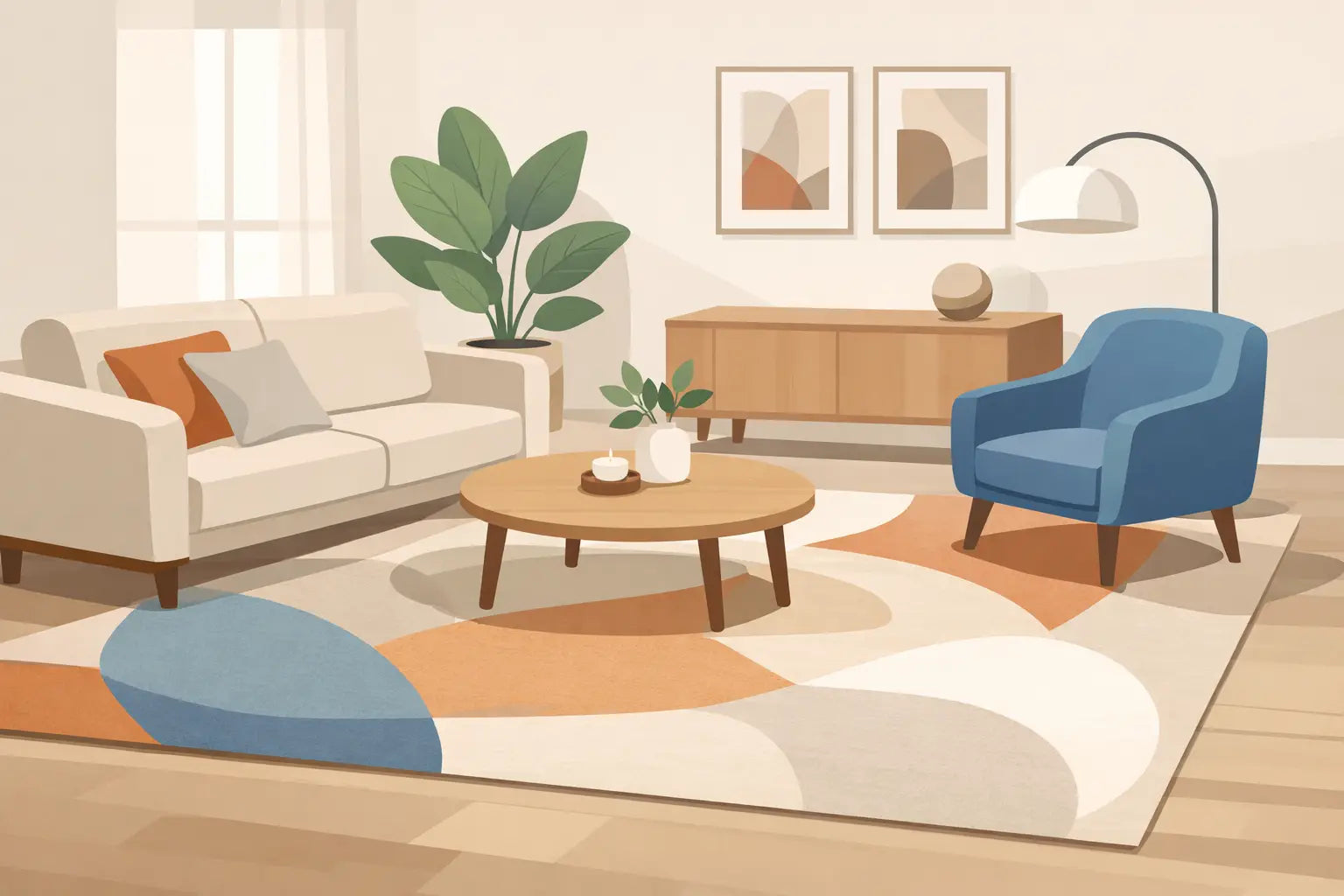
A living room can have beautiful furniture, layered lighting, and the right paint color, yet still feel slightly unfinished. Usually, the missing piece is underfoot. The best living room rugs do more than fill floor space - they soften the room, define the layout, and give everything around them a stronger sense of purpose.
Choosing one is rarely just about pattern. It is about proportion, texture, traffic, and the mood you want the room to hold at the end of a long day. A rug can bring tranquil harmony to a formal seating area, add character to a family room that sees constant motion, or introduce a fresh point of contrast in a neutral space. The right choice feels artful, but it also needs to make sense for real life.
What makes the best living room rugs?
The answer depends on how your living room is actually used. A quiet sitting room with sculptural furniture and light entertaining can support a different rug than a den with pets, kids, and nightly movie marathons. The most successful rugs balance visual impact with practical performance.
Size is usually the first factor that separates a good rug from a frustrating one. When a rug is too small, the room can feel disconnected, as if each piece of furniture is floating on its own island. In most living rooms, a rug should at least anchor the front legs of the sofa and chairs. If the room is spacious enough, placing all furniture legs on the rug creates a more tailored, designer-finished look.
Material matters just as much. Wool often offers rich texture, natural resilience, and an elevated feel, which makes it a favorite for classic and transitional interiors. Synthetic fibers, including polypropylene and polyester blends, tend to be especially appealing in high-traffic homes because they are easier to maintain and often more forgiving of everyday messes. Viscose and other sheen-forward fibers can look luminous in a low-traffic living room, but they usually require a gentler approach.
Pile height changes the experience in subtle but meaningful ways. A low-pile rug feels crisp, polished, and easier to clean, especially under coffee tables and in rooms with frequent movement. A plush or higher-pile option adds softness and warmth, though it may show footprints more easily and can be less practical if your living room doubles as a major pathway.
Best living room rugs by style
The most beautiful living rooms usually feel collected rather than overly matched. That is why style selection is less about following a rule and more about choosing a rug that creates balance with the furniture, art, and architecture already in place.
Traditional rugs for timeless elegance
Traditional rugs remain a go-to for a reason. Their intricate motifs, layered color stories, and graceful borders bring instant depth to a room. In a living room with clean-lined upholstery, they create welcome contrast and prevent the space from feeling too stark. In a more classic interior, they reinforce a sense of permanence and quiet luxury.
They are especially effective when you want the room to feel settled and sophisticated. Faded vintage-inspired palettes can soften formal furniture, while richer navy, rust, and sand combinations add warmth without overwhelming the space.
Transitional rugs for versatile balance
If your style falls somewhere between classic and current, transitional rugs often make the most sense. These designs borrow the structure of traditional patterns but simplify the palette or distress the detailing for a more relaxed effect.
This category works beautifully for shoppers who want a rug with presence but not too much visual weight. A transitional rug can bridge a tailored sofa, modern accent chairs, and a mix of old and new accessories without making the room feel pulled in competing directions.
Modern and contemporary rugs for a cleaner look
Modern rugs tend to rely on bold geometry, abstract movement, or minimal color blocking. They can sharpen the look of a room and help a living space feel more edited. If your furniture has sculptural silhouettes or your palette is restrained, a modern rug can make the room feel intentional rather than plain.
The trade-off is that highly graphic rugs often become the visual center of the room. If you already have statement art, dramatic wallpaper, or heavily patterned upholstery, a quieter design may create better balance.
Global and bohemian rugs for warmth and personality
For rooms that need soul, global and bohemian styles bring ease, texture, and lived-in charm. These rugs often feature earthy tones, tribal-inspired motifs, or softly weathered finishes that add movement without feeling stiff.
They pair well with layered textiles, wood accents, and softer, more relaxed seating arrangements. They are also forgiving in everyday spaces because pattern naturally helps disguise minor wear between cleanings.
Solid and border rugs for subtle refinement
Sometimes the best rug is the one that supports the room rather than stealing attention. Solid rugs and border styles are ideal when the furniture, lighting, or architecture should remain the focus. They bring texture and structure while preserving a calm, open feeling.
This approach works especially well in smaller living rooms, coastal-inspired interiors, and spaces where you want serenity more than visual drama. A soft ivory, warm taupe, muted blue, or tonal gray can make a room feel brighter and more expansive.
How to choose the right rug size for your living room
If there is one decision worth slowing down for, it is size. A beautiful rug in the wrong dimensions will never look quite right. In a compact seating area, an 8x10 often provides enough coverage to connect the key furniture pieces. In larger living rooms, a 9x12 or 10x14 may create the proportion the space really needs.
There are exceptions, of course. If your room has an unusual footprint, multiple conversation zones, or an open-concept layout, you may need to think less in standard formulas and more in terms of visual boundaries. The rug should define the main seating area clearly, while leaving enough visible flooring around the edges to frame it.
Round rugs can work beautifully in living rooms with curved furniture, small apartment layouts, or distinctive architectural moments. They tend to soften hard lines and create a more relaxed rhythm. Square rugs can also be effective, but usually only when the room itself is fairly symmetrical.
Materials that suit real life
The best living room rugs are not always the most delicate or the most expensive. They are the ones that suit the pace of your home.
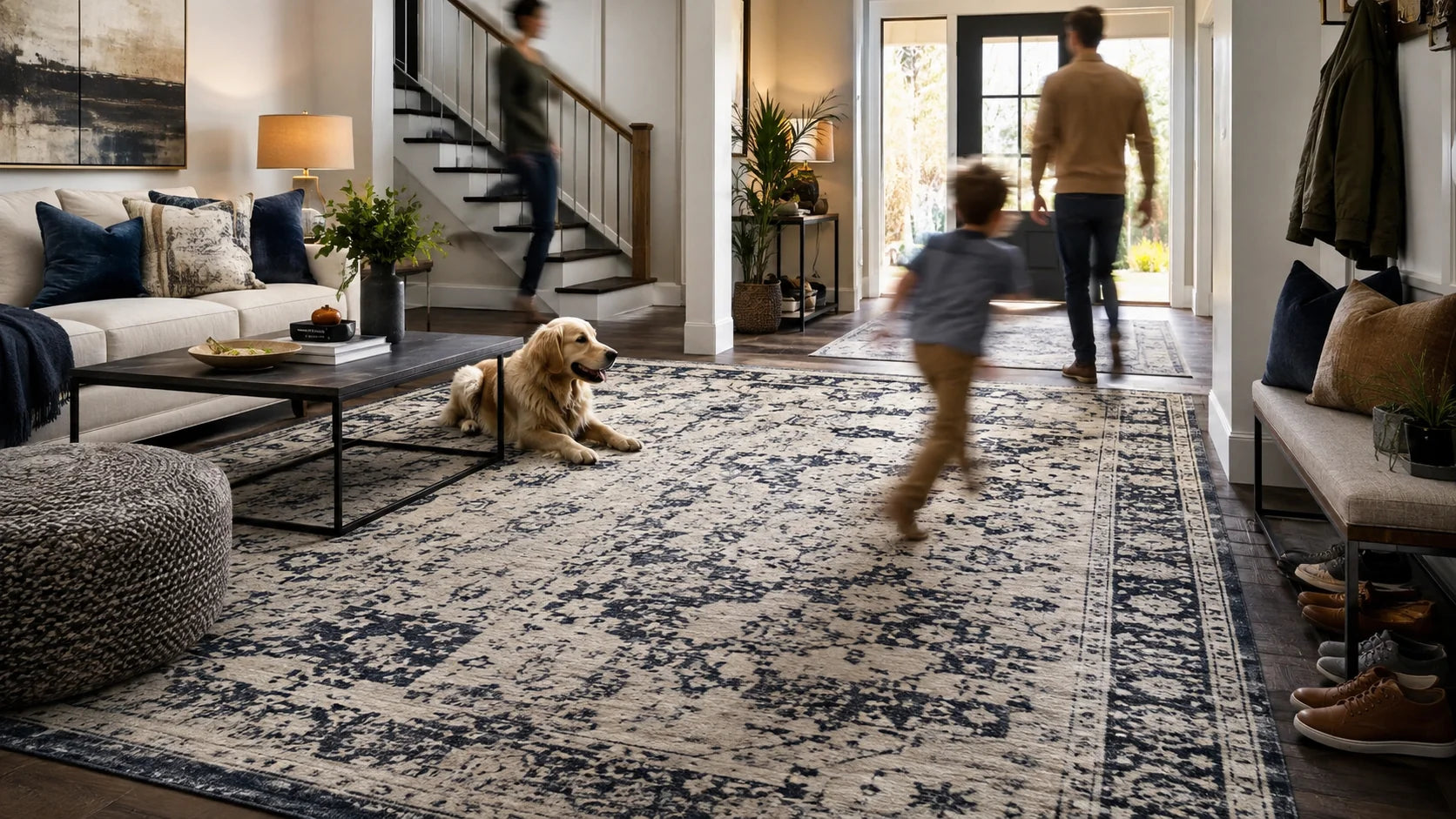
For homes with children, pets, or frequent guests, a durable low-pile rug often delivers the best mix of comfort and ease. It slides more easily under furniture, tends to trap less debris, and usually performs better in busy zones. Performance-minded synthetic constructions are especially appealing when spill resistance and simple upkeep are top priorities.
For a more elevated, touchable finish, wool remains a standout. It has a natural richness that gives a room depth, and it often ages beautifully when cared for well. If softness is the priority, some blended constructions offer a comfortable middle ground - visually refined, but easier to live with than more delicate fibers.
A rug pad is worth considering in nearly every living room. It helps the rug stay in place, adds cushioning, and can extend the life of the rug over time. That detail may not be the most glamorous part of the purchase, but it often makes the biggest difference in daily comfort.
Color and pattern decisions that change the room
Color has a quiet but powerful influence on how a living room feels. Light rugs can open up a space and make it feel airy, though they may show wear more quickly in active households. Darker rugs add grounding and drama, and they can be more forgiving in rooms with constant use.
Pattern is equally strategic. A large-scale motif can make a simple room feel more dynamic. A subtle tonal design creates depth without visual noise. If your sofa and chairs are patterned, the rug often looks best when it is calmer. If your furniture is mostly solid, the rug has more room to speak.
This is where shopping with confidence matters. Clear details around pile height, construction, and color variation can help translate what you are seeing on a screen into what will actually work in your home. Visible stock status, reliable shipping, and a fair return window also matter more than many shoppers expect, because scale and tone can shift once a rug is in the room.
When the best living room rug is the one that calms the whole space
A great rug does not just match the room. It steadies it. It can make a compact layout feel thoughtful, help a large room feel inviting, and give everyday routines a softer landing. If you choose with equal attention to beauty and function, the result is not just a better floor covering. It is a living room that feels more complete every time you walk in.

Share:
Erin Gates Orchard Area Rug Style Guide
Best Rugs for Bedrooms That Feel Just Right