

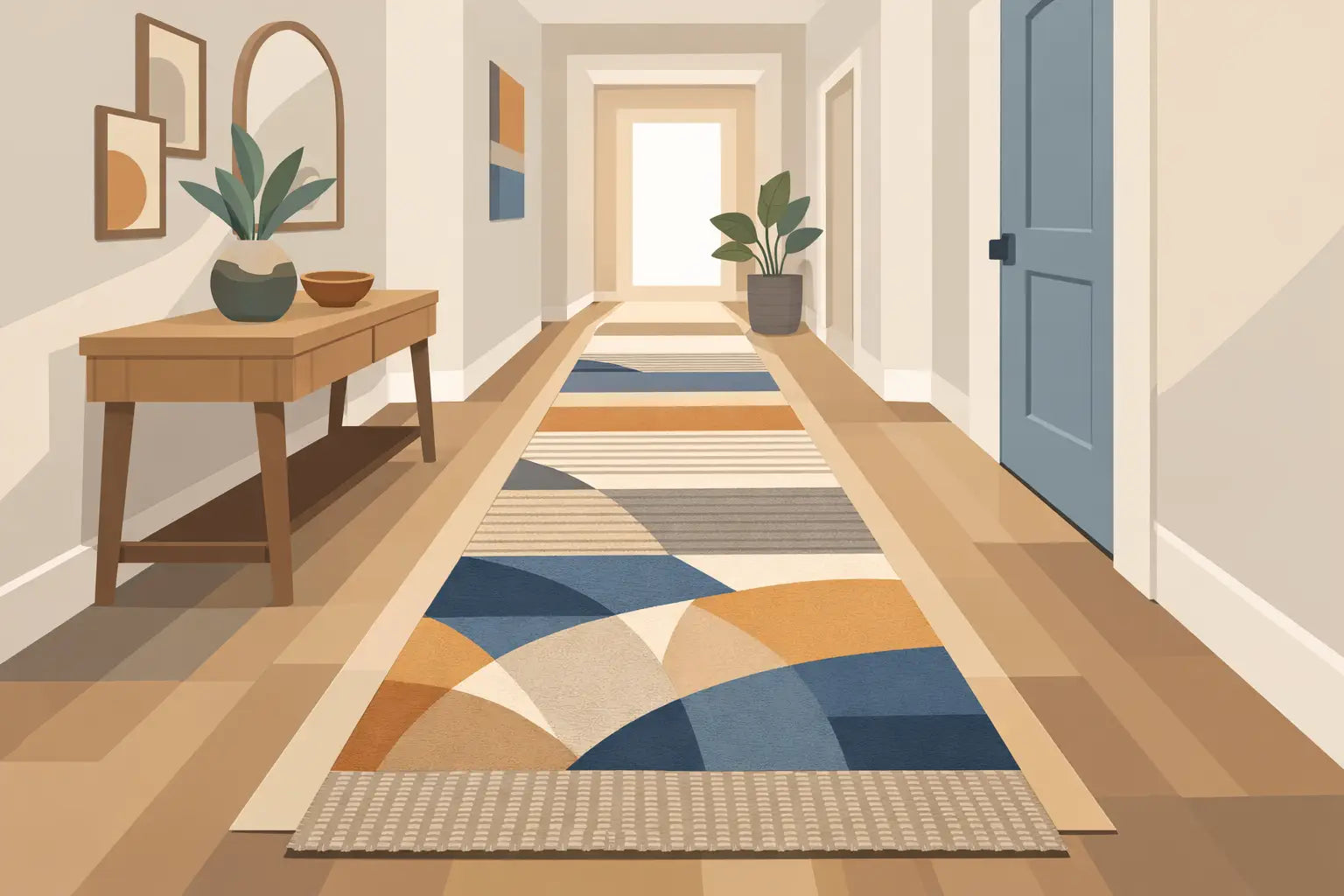
A hallway rug has a harder job than almost any rug in the house. It greets muddy shoes, absorbs daily foot traffic, softens narrow passages, and quietly sets the tone for everything beyond it. That is why choosing the best rugs for hallways is less about filling empty floor space and more about balancing beauty with real-life performance.
A good hallway rug should feel intentional. It can bring warmth to a long corridor, add character to an entry passage, or create a sense of flow between rooms that might otherwise feel disconnected. But hallways are also unforgiving. The wrong pile height catches doors. The wrong material shows wear too quickly. The wrong size can make a well-designed home feel slightly off.
What makes the best rugs for hallways?
The answer usually comes down to four things: proportion, durability, ease of care, and visual rhythm. Hallways are transitional spaces, so the rug needs to support movement rather than interrupt it. That often means a runner with enough length to guide the eye, enough grip to stay in place, and enough resilience to handle constant use.
Proportion matters first. In most hallways, a runner should leave a border of visible flooring on both sides. That frame helps the rug feel tailored rather than wall-to-wall. If the rug is too narrow, it can look skimpy. If it is too wide, the hallway loses that crisp, finished outline that makes runners so effective.
Durability is just as important. Hallways are not quiet, low-contact rooms. They are active spaces, often used by kids, pets, guests, and anyone crossing the home several times a day. A rug that works beautifully in a formal sitting room may not be the right choice here.
The best hallway rug materials for everyday life
Material is often where smart shopping begins. If you want a hallway rug that stays handsome through daily wear, low-maintenance fibers tend to win.
Wool remains a favorite for good reason. It has a naturally rich texture, a tailored look, and an impressive ability to bounce back from foot traffic. Wool runners can feel timeless and elevated, especially in traditional, transitional, or softly modern interiors. The trade-off is price, and in some homes, a wool rug may need a bit more attentive care than a synthetic option.
Polypropylene is one of the most practical choices for busy hallways. It is durable, often stain-resistant, and easy to maintain, which makes it especially appealing for family homes and high-traffic entry corridors. Today’s design-driven polypropylene rugs also offer far more sophistication than they once did, with detailed patterns, nuanced color palettes, and soft finishes that still feel polished.
Polyester can be a strong option if softness and color clarity are priorities. It tends to hold vibrant tones well and can offer a plush hand at a more accessible price point. In very busy hallways, though, it may not wear quite as beautifully over time as wool or certain tightly woven synthetics.
Natural fibers like jute and sisal can look striking in the right setting. They bring texture, calm, and a grounded organic quality that works beautifully in relaxed, coastal, or minimalist homes. Still, they are not always the easiest choice for every hallway. Rougher texture, sensitivity to moisture, and limited stain forgiveness can make them less ideal for entry corridors or homes with lots of daily activity.
Pile height matters more than most people think
In a hallway, lower pile usually works best. A flatwoven or low-pile runner creates a smoother path, keeps the profile refined, and reduces the chance of bunching or catching under doors. It also tends to be easier to vacuum and maintain.
High-pile rugs can feel inviting, but they are often less practical in narrow traffic zones. They show footprints more easily, can shift underfoot, and may wear unevenly in areas where people consistently walk the same path. If your hallway includes door swings, closets, or a tight visual footprint, thick rugs can quickly become frustrating.
That does not mean hallway rugs need to feel plain. A low pile can still have beautiful depth through pattern, weaving, and color variation. In fact, the most successful hallway rugs often feel visually layered rather than physically heavy.
Best rug patterns and colors for hallways
Pattern is your ally in a hallway. Since these spaces take regular wear, rugs with movement in the design tend to be more forgiving than solid light tones. Vintage-inspired motifs, subtle geometrics, bordered styles, and tonal abstracts all help disguise minor dust and footprints while adding personality.
For classic homes, traditional or transitional runners offer lasting appeal. They bring structure and softness at once, and they pair especially well with wood floors, painted trim, and layered decor. In more contemporary interiors, a restrained geometric or modern abstract design can add energy without overwhelming a narrow space.
Color should reflect both your style and your lifestyle. Cream, ivory, and pale beige can be beautiful in a hallway, especially when you want a serene, airy effect. But they will usually ask for more upkeep. Mid-tone palettes such as taupe, slate, sand, denim, olive, and warm rust often strike a better balance. They feel sophisticated, hide everyday wear more gracefully, and still keep the space bright.
If your hallway is dark or narrow, a rug with some contrast can help define the path and lift the space visually. If the surrounding rooms are already layered with color and pattern, a quieter runner may create the calm that connects everything.
Sizing tips for the best rugs for hallways
A hallway rug should feel custom to the space, even when it is not custom-made. Most often, that means leaving roughly 3 to 5 inches of exposed floor on each side, depending on the hallway width. In larger hallways, a little more border can look elegant. In narrow ones, too much exposed floor can make the rug feel undersized.
Length depends on the architecture. A long corridor can handle a runner that stretches most of the way through, while still leaving breathing room at each end. Shorter halls may only need a compact runner that centers the space. The goal is visual balance, not strict formulas.
If your hallway turns a corner or opens into an entry, you may need to think in zones. Sometimes one runner is enough. In other layouts, using coordinated rugs rather than forcing one oversized piece creates a more natural flow.
Don’t skip the rug pad
A hallway rug without a proper pad is rarely at its best. Rug pads help prevent slipping, reduce shifting, and add a layer of cushioning that makes the rug feel more substantial underfoot. They also help protect the floor underneath and can extend the life of the rug by reducing friction.
This matters even more in high-traffic areas, where constant movement can cause a runner to creep, wrinkle, or wear unevenly. A well-fitted pad makes the whole space feel more secure and more finished.
Style direction: what works where
In a formal hallway, a traditional runner with refined pattern and soft, age-inspired color can create immediate timeless elegance. It gives the passage a sense of permanence and quiet luxury, especially when paired with classic millwork or warm hardwood floors.
In a casual family home, washable-inspired looks, performance fibers, and forgiving patterns often make the most sense. Here, the rug should still feel artfully chosen, but it also needs to keep pace with real life.
In modern interiors, the best rugs for hallways often lean into simplicity. Think tonal pattern, subtle texture, or a border design with crisp lines. These choices keep the look clean while still adding warmth and movement.
For bohemian or globally inspired spaces, a hallway rug can become a moment of character. Layered color, faded motifs, or hand-crafted texture can make even the smallest corridor feel collected and expressive. The key is to keep scale in mind so the pattern enhances the hallway rather than crowding it.
How to shop with confidence online
Buying a hallway rug online is easier when you focus on the details that truly affect daily use. Look closely at dimensions, pile height, material, and the traffic performance of the construction. Product imagery helps with style, but specifications are what protect you from getting a rug that is beautiful and impractical.
It is also worth paying attention to in-stock availability, shipping speed, and return policies. Hallway projects often sit in that satisfying space between quick refresh and meaningful upgrade, so fast fulfillment matters. Confidence matters too. When a retailer presents product information clearly and supports the purchase with practical service, the process feels much closer to shopping with a trusted design resource than taking a guess.
At Rug Resources, that balance of inspiration and practicality is part of what makes the search easier. You can shop with an eye for color, mood, and style, while still making a grounded decision about performance.
The best hallway rug is the one that makes a hardworking space feel considered. It should soften the path, support the pace of your home, and add just enough character to make passing through feel like part of the design, not an afterthought.

Share:
How to Choose Modern Area Rugs
10 Best Washable Style Rugs for Real Homes