

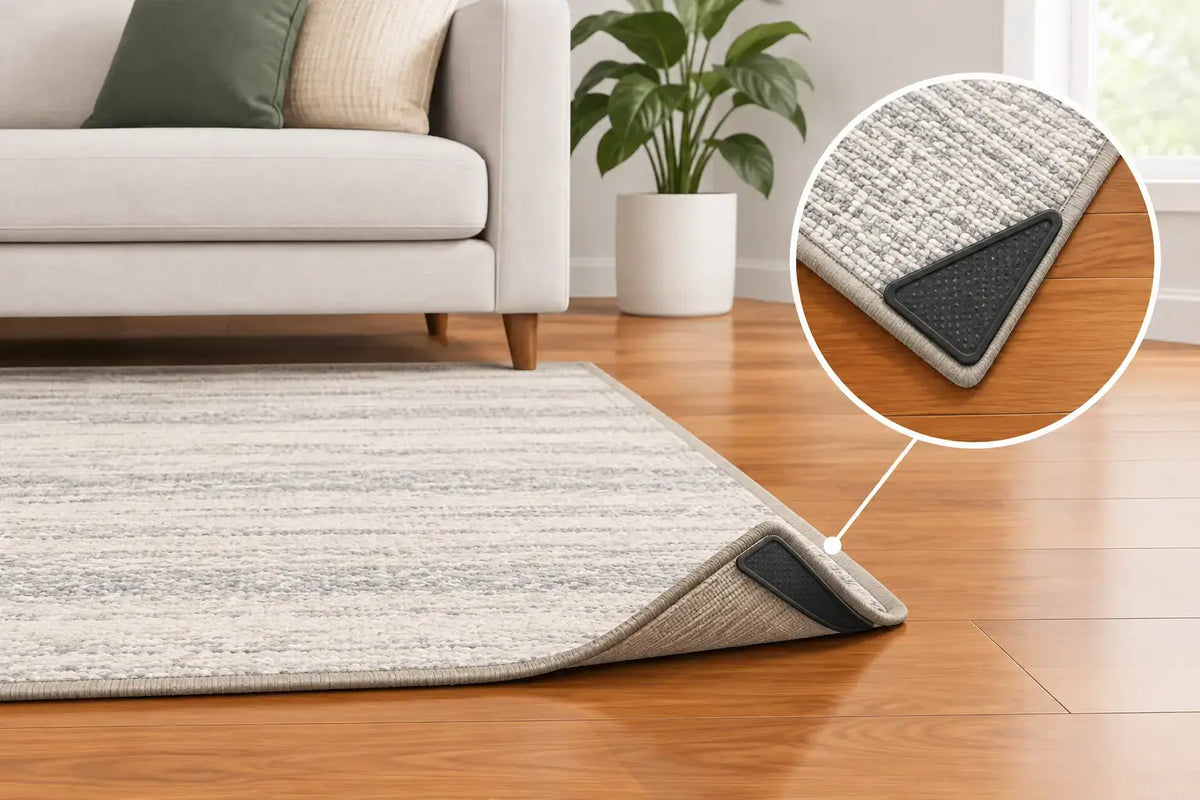
A beautiful area rug should soften a room, define its furniture, and bring color or texture into focus - not creep across the floor every time someone walks by. Hardwood rug anchoring is the thoughtful process of keeping a rug stable without risking scratches, residue, discoloration, or damage to a finished wood surface. The right approach depends on the rug’s size, pile, placement, and how your household actually lives in the space.
Why rugs slip on hardwood floors
Hardwood is smooth by design, especially when it has a polished polyurethane or aluminum oxide finish. Add a lightweight flatweave, a low-profile runner, or a rug with a slick backing, and there is little friction holding it in place. Foot traffic, energetic kids, pets rounding a corner, and chair legs all create small movements that gradually shift the rug.
That motion is more than a visual annoyance. A curled corner or traveling runner can become a tripping hazard. Grit trapped beneath a rug can also act like sandpaper against the finish when the rug shifts. Anchoring a rug properly protects the calm, polished look of the room while helping preserve the floor beneath it.
The best hardwood rug anchoring starts with a pad
For most living rooms, bedrooms, dining rooms, and hallways, a quality rug pad is the most reliable choice. It creates a grip between the rug and hardwood while adding a subtle layer of cushion and improving the rug’s overall drape. A pad can make a thinner rug feel more substantial underfoot and help reduce wear caused by repeated pressure in high-traffic areas.
Not every pad is appropriate for wood floors. Look for a pad specifically labeled safe for hardwood or hard surfaces, ideally made from natural rubber, felt, or a felt-and-rubber combination. The floor-facing side should be non-staining and free from adhesives, plastics, or chemical coatings that could react with your finish over time.
A pad should sit just inside the rug’s perimeter, usually about one inch shorter on all sides. That keeps the pad hidden, avoids a raised edge, and gives the rug a clean, tailored appearance. For a custom-sized look, trim a pad carefully with household scissors before placing the rug on top.
Choose thickness for the room, not just comfort
The thickest pad is not always the best pad. In a bedroom, a plush felt-and-rubber pad can create a luxurious first step in the morning and add welcome softness beneath a low-pile rug. In a busy family room, a medium-density pad offers cushioning while keeping furniture stable.
For dining rooms and entryways, choose a thinner, firmer pad. Dining chairs need to slide back without catching on a deep rug edge, while an entry rug should lie low enough to clear the door. Hallway runners also benefit from a slim, grippy pad that keeps the profile neat and reduces the chance of a lifted corner.
When tape or corner grips make sense
Rug tape and corner grips can help with smaller rugs that do not need a full pad, such as a compact accent rug near a vanity or a narrow piece in front of a kitchen sink. They are also useful when a rug’s corners continue to lift even with a properly sized pad underneath.
The trade-off is that adhesive products require more caution on hardwood. Only use products clearly described as removable and safe for finished wood floors. Avoid standard double-sided carpet tape, permanent mounting tape, and products that leave a sticky backing directly against the floor. Heat, humidity, sunlight, and time can make an adhesive much harder to remove than expected.
Before using any adhesive anchoring method, test it in a discreet area and follow the manufacturer’s instructions exactly. If the rug will stay in place for months, lift one corner occasionally to make sure the finish remains clean, dry, and unchanged.
Match the anchoring method to your rug style
A hand-knotted wool rug often has enough weight to stay relatively still, but it can still benefit from a felt-and-rubber pad. The pad supports the rug’s structure, reduces slipping, and adds a gentle buffer between natural fibers and the floor.
Flatweaves, washable rugs, and many indoor-outdoor styles need more attention. Their lighter construction and low pile make them especially likely to slide across hardwood. A non-slip rubber pad is usually the best starting point, although a low-profile version is preferable in doorways and beneath dining furniture.
Vintage-inspired rugs with intentionally softened edges may look relaxed, but they should not become loose at the corners. If a rug is positioned where people turn frequently - at the end of a bed, beside a sofa, or in a busy hall - a secure pad is worth treating as part of the rug, not an optional extra.
Furniture can help anchor a room-sized rug
In a living room, placing the front legs of the sofa and chairs on the rug can help hold a larger rug in position. It also creates the grounded, layered furniture arrangement that makes a seating area feel intentional. Still, furniture alone is not a substitute for a pad. The portions extending beyond the furniture can shift, especially along walkways.
In a bedroom, the bed’s lower legs may help stabilize a generously sized rug, but the exposed sides and foot of the bed should remain supported by a pad. For a runner beside the bed, avoid relying on bedside tables to pin down one end. A properly fitted runner pad will look cleaner and feel safer with every step.
Dining room rugs need a different calculation. The rug should extend far enough beyond the table for chairs to remain on it when pulled out. A thin, firm pad beneath the full rug helps prevent the table arrangement from creeping while preserving easier chair movement.
Protect the hardwood as you protect the rug
A rug can trap what it cannot release. Before laying down a pad and rug, vacuum or sweep the floor thoroughly so tiny particles are not pressed into the finish. Repeat this routine whenever you rotate or move the rug.
Rotation is especially helpful in rooms with strong sun exposure. Even with window treatments, wood can change color gradually over time. Moving the rug periodically helps the floor age more evenly, while giving you a chance to inspect for moisture, debris, or pad wear.
Be alert to dampness near exterior doors, pet water stations, kitchens, and bathrooms. A rug pad is not a moisture barrier, and prolonged moisture beneath a rug can affect both the floor and the rug’s backing. In these spaces, choose a washable, low-pile rug when appropriate and check underneath it more often.
Common hardwood rug anchoring mistakes
The most common misstep is choosing the least expensive open-grid pad without checking whether it is suitable for finished hardwood. Some materials can deteriorate, stick, or leave a pattern on the floor, particularly in warm or sunny rooms. A pad made for hardwood costs more initially, but it is a practical layer of protection for an investment that is always on display.
Another mistake is selecting a pad that is too small. When the rug’s edges lack support, they may ripple or curl, which defeats the point of anchoring. Conversely, a pad that extends beyond the rug creates a visible outline and can collect dust along its edge.
Finally, do not assume a rug that feels secure on day one will remain that way. Seasonal humidity, rearranged furniture, and everyday traffic can change how it performs. A quick check during regular cleaning keeps a small issue from becoming a scuffed floor or a frustrating stumble.
The most inviting rooms balance beauty with ease. Choose a rug that tells the story you want for your home, then give it the quiet support it deserves: a hardwood-safe pad, a thoughtful fit, and a surface that stays polished beneath every gathered moment.


Share:
Indoor Versus Outdoor Rugs: Which Fits Your Home?