

Wool Rugs Are Forgiving. Until They're Not.
Wool is probably the most durable natural fiber you can put on a floor. It resists crushing, it cleans up better than you'd expect, and it tends to look better after a few years than it did on day one. We genuinely believe a quality wool rug is one of the best long-term investments you can make in a room.
But wool has specific needs. Ignore them and you'll see the difference within a year or two: matted pile, fading, or edge damage that's hard to reverse. Follow them and the rug rewards you with decades of reliable beauty.
We carry wool rugs across multiple collections, including hand-woven pieces like the LIVABLISS and Loloi wool collections and construction-forward options from brands like Surya. Because we see so many wool rug questions from customers, we put together the practical care guide we wish every wool rug came with.
Vacuuming: The Thing Most People Do Wrong
Vacuuming is the most routine part of wool rug care, and it's also where the most damage happens.
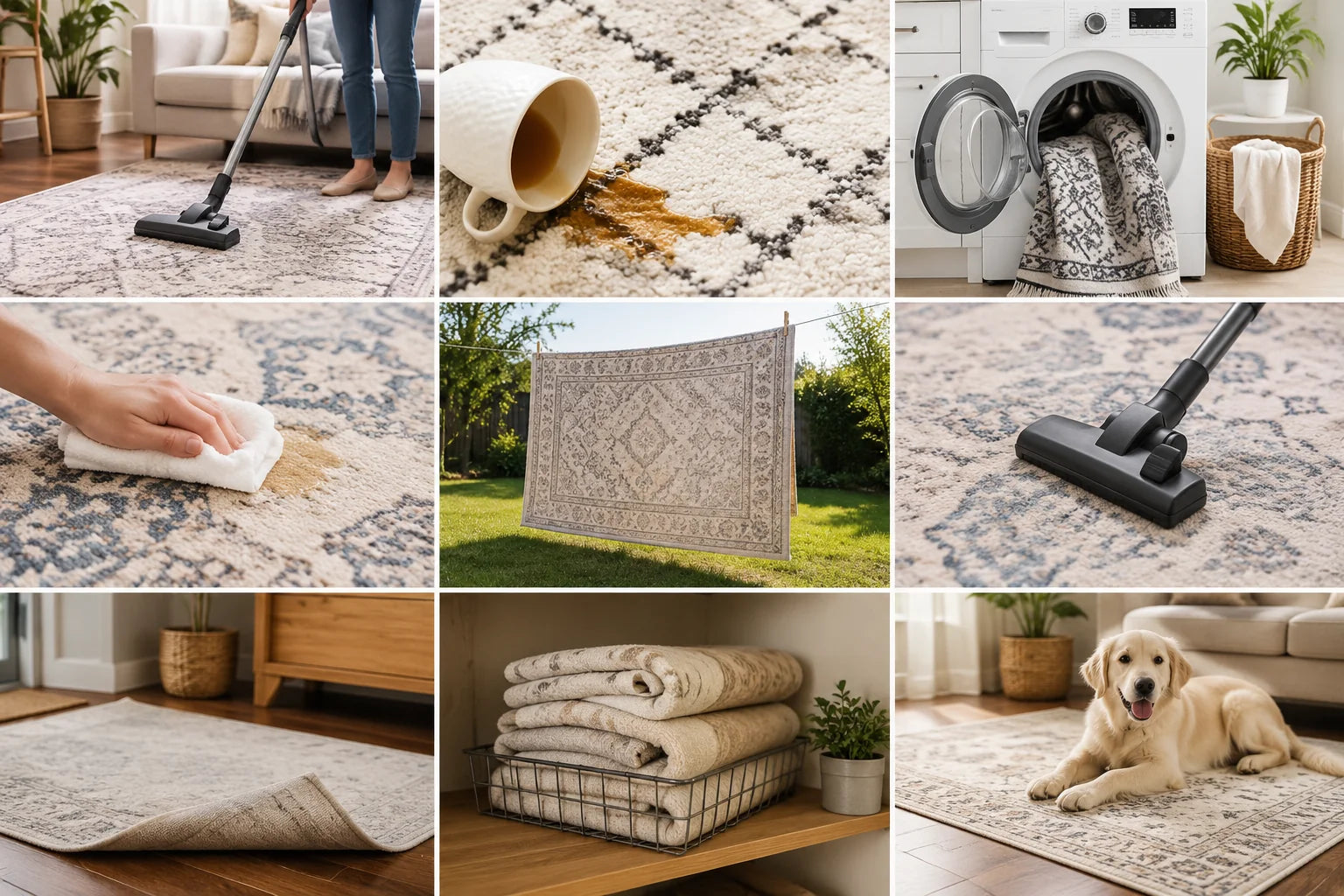
The first rule: avoid the beater bar. Most upright vacuums have a rotating brush that's designed to agitate carpet fibers. On a synthetic wall-to-wall carpet, that's fine. On a wool rug, it breaks down the natural fibers over time and causes premature shedding. Use the suction-only setting, or switch to a canister vacuum with a floor attachment.
The second rule: don't vacuum the fringe. It tangles, it pulls, and once fringe is damaged from repeated vacuuming it's very hard to restore. Vacuum up to the fringe and stop. Turn the rug over occasionally and vacuum the back; this dislodges dirt that has settled into the foundation from below.
Frequency matters too. High-traffic areas should be vacuumed twice a week at minimum. Lower-traffic rooms like guest bedrooms can get away with once a week. The goal is to remove dirt particles before they work their way into the pile and start acting as abrasives.
For flat-weave wool rugs specifically, the beater bar concern is even more pressing. The Wool Care Alliance consistently recommends low-to-medium suction with no rotating brush for flat-woven and hand-woven wool textiles.
Spills: The Three-Minute Rule
Time is the variable that determines whether a spill becomes a stain. Act within three minutes and most substances lift cleanly from wool. Wait thirty minutes and you're dealing with something that has bonded to the fiber.
For liquid spills, blot immediately with a clean white cloth. Press down firmly and lift; don't rub. Rubbing spreads the spill and works it deeper into the pile. Work from the outside of the spill inward to prevent it from spreading.
For semi-solid spills, lift the bulk of the material first with a spoon or dull knife before applying any liquid. Getting the physical material out before adding moisture keeps you from pushing it deeper.
For cleaning solution, mild dish detergent diluted in cool water is your safest option. Apply sparingly, blot, and follow with clean water to remove any soap residue. Soap left in wool fibers attracts dirt faster than the original spill would have.
Hot water is a mistake. Wool is sensitive to temperature, and hot water can cause shrinkage or set stains rather than removing them. Cool or lukewarm water only.
Most wool rug care instructions call for spot cleaning with mild detergent, which aligns with everything above. It's the same approach we'd recommend across virtually every wool or wool-blend rug we carry.
Rotation and Sunlight
Sunlight fades rugs. Not dramatically overnight, but gradually, over months and years, a rug that sits in a sunny room will fade unevenly if it's not moved.
Rotate your wool rug 180 degrees every six months. This distributes foot traffic evenly and ensures any sun exposure hits different sections over time rather than bleaching one end. In rooms with strong directional light from south or west-facing windows, consider UV-filtering window treatments to slow the process.
Rotation also helps with pile compression. High-traffic paths through a room will flatten pile over time. Rotating the rug moves those paths around so no single area takes all the wear.
Furniture legs sitting directly on wool pile create permanent indentations. Rug pads help distribute the weight, and furniture cups or glides under legs reduce concentrated pressure significantly. If you're placing heavy furniture on a wool rug, a quality rug pad is not optional: it's part of protecting the investment.
Professional Cleaning: When and How Often
Professional cleaning for a wool area rug is something most people either do too frequently (unnecessary expense) or not at all (real damage accumulates). The right answer sits in the middle.
For a rug in a standard living room with moderate foot traffic and no pets, professional cleaning every 12 to 18 months is appropriate. For high-traffic rooms, homes with pets, or rooms where food and drink are regularly present, every 12 months is more realistic.
Not all professional cleaning services are appropriate for wool. Look specifically for services that offer hand washing or rug bathing rather than steam cleaning. Steam and high-heat methods risk shrinkage and color bleeding in wool rugs. The Institute of Inspection Cleaning and Restoration Certification maintains standards for professional rug cleaning and can help you identify certified cleaners in your area.
Between professional cleanings, a good outdoor airing helps more than people expect. On a dry day, hang the rug over a railing or fence (pile side down if possible) and let fresh air move through it for a few hours. It refreshes the fibers and removes accumulated dust that vacuuming doesn't fully reach.
Storing Wool Rugs the Right Way
If you're seasonal about your rugs, or rotating pieces in and out of storage, wool storage requires a bit of specific attention.
Roll, don't fold. Folding creates permanent creases in wool that are difficult to remove without professional steaming. Roll pile-side in around an acid-free tube if you have one, or just roll it as tightly as you can manage without forcing it.
Wrap in breathable material. Cotton muslin or a breathable fabric wrap is ideal. Plastic sheeting traps moisture, which can lead to mildew in a wool rug stored for any length of time. Moisture and wool is a bad combination.
Store flat or standing upright, never under other heavy items. Weight compresses the pile and can cause permanent distortion in the foundation.
Cedar or lavender sachets in the storage area help deter moths, which are genuinely attracted to wool fibers. This is less of a concern for rugs in regular use (traffic and light discourage moths), but important for anything going into extended storage.
The Bottom Line on Wool Rug Care
Wool rugs reward consistent, simple maintenance more than any other fiber type. The habits are easy once they're established: vacuum without the beater bar, address spills fast, rotate twice a year, and get professional cleaning annually. Do those things and a quality wool rug will look better at year ten than most synthetic rugs look at year two.
If you're looking for a wool or wool-blend rug built for real life, browse our full collection at Rug Resources. We carry hand-woven wool pieces, wool-blend options for higher-traffic spaces, and collections suited to everything from minimalist modern rooms to globally inspired interiors. Questions about a specific piece or care situation? Contact us by phone Monday through Friday 10 AM to 7 PM EST or by email anytime. We'll get back to you within 24 hours.


Share:
Vintage Distressed Rugs: Why They Work in Modern Home Decor