

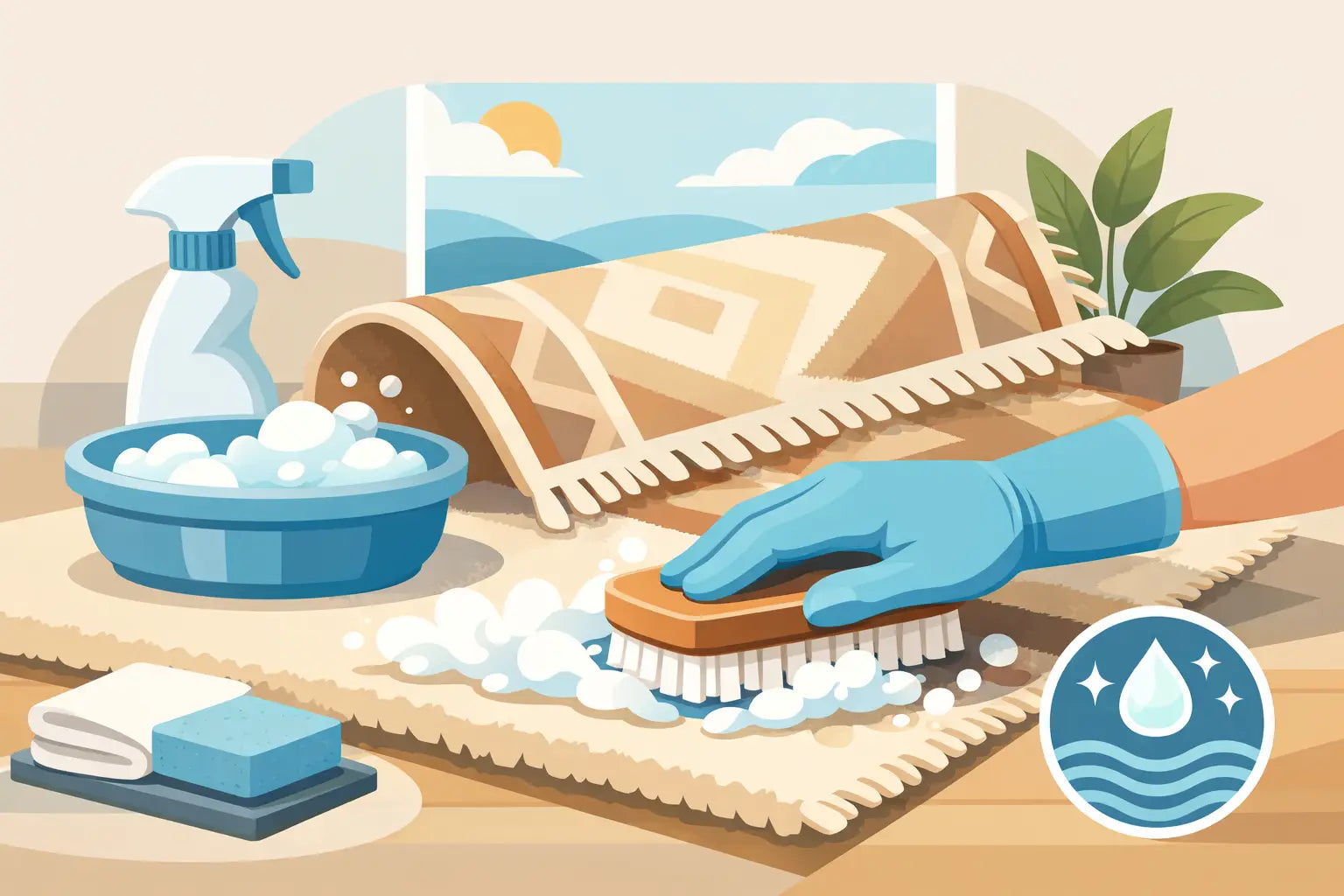
A wool rug earns its place in a room quietly. It softens the acoustics of a busy living area, grounds a bedroom in tranquil harmony, and brings rich texture underfoot. Learning how to clean wool rugs properly protects all of that character. Wool is naturally resilient, but its fibers respond best to patient, low-moisture care rather than aggressive scrubbing or soaking.
The reassuring news is that most wool rug maintenance is simple. A consistent routine, quick attention to spills, and a little restraint with water will help preserve a rug’s color, softness, and artfully crafted finish for years.
Why wool rugs need a gentler approach
Wool is a natural fiber with a protective outer layer that helps repel everyday soil and moisture. That built-in resilience makes wool a beautiful choice for family rooms, bedrooms, and spaces that need both warmth and durability. Yet it also means harsh alkaline cleaners, high heat, and excess water can do more harm than good.
Too much moisture may leave a wool rug with a lingering odor, encourage mildew beneath the rug, or cause dyes to migrate. Friction is another concern. Vigorously rubbing a stain can roughen the pile, spread the spill, and create a visibly worn patch in an otherwise elegant field of texture.
Construction matters, too. A low-pile machine-made wool rug may tolerate careful at-home spot treatment well, while a hand-knotted, hand-tufted, antique, or heavily saturated rug deserves more caution. Before using any cleaner, check the care label and test your method in an inconspicuous corner. If the rug has no label, treating it as a more delicate piece is the safer choice.
Start with regular dry care
The best way to keep a wool rug looking fresh is to remove grit before it settles into the fibers. Dirt can act like fine sandpaper underfoot, dulling the surface over time in high-traffic areas such as hallways, entryways, and the center of a living room.
Vacuum with a light touch
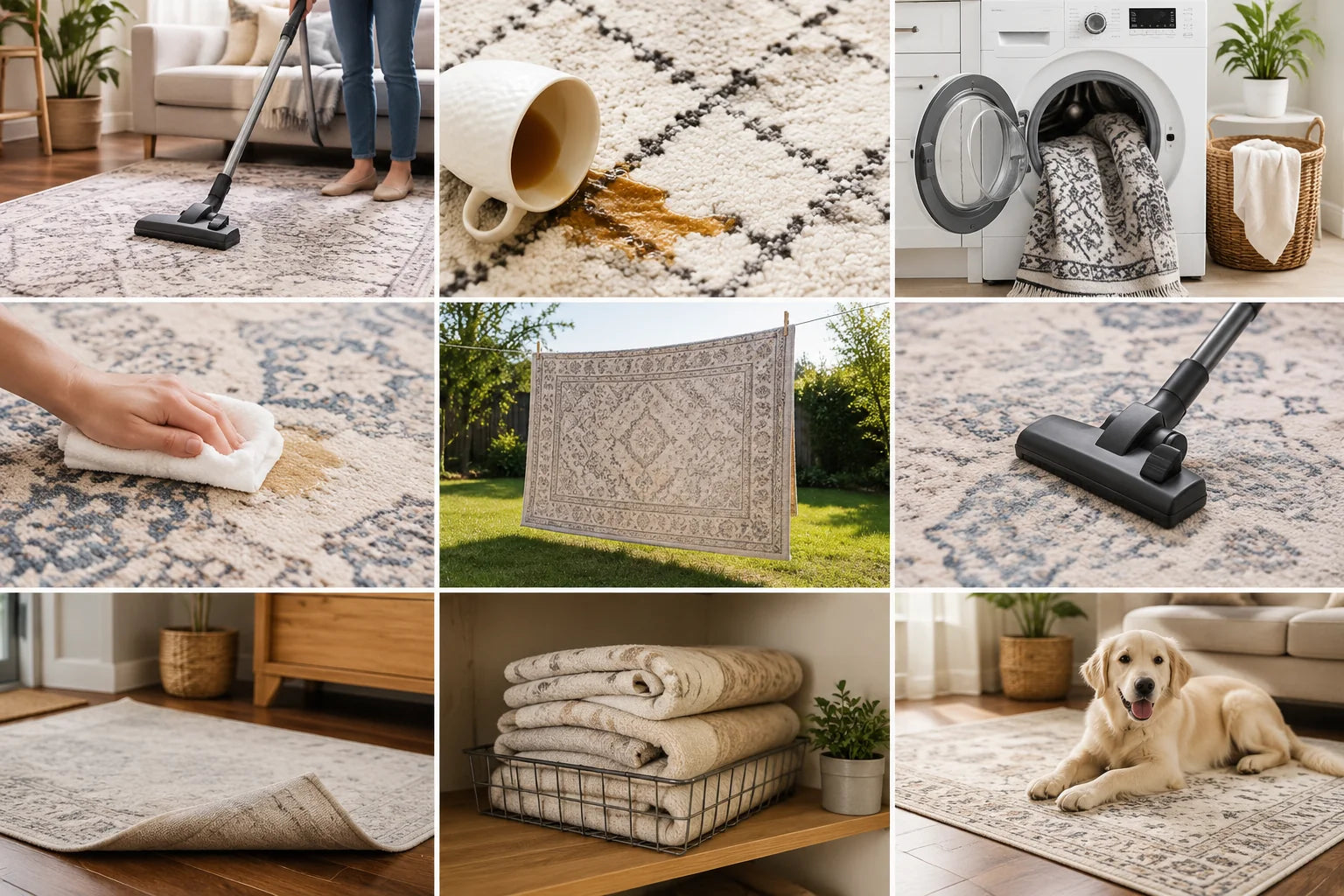
Vacuum a wool rug about once a week, or more often where shoes, pets, and daily activity bring in debris. Use a suction-only setting when possible. A rotating beater bar can be too forceful for some wool piles, especially looped, fringed, or handwoven designs.
Vacuum slowly in the direction of the pile, then make a second pass if needed. For fringe, use the upholstery attachment or gently sweep it by hand instead of running the vacuum directly over it. It is normal for a new wool rug to shed some fibers at first. This usually eases with regular vacuuming and does not mean the rug is coming apart.
Shake out small rugs and rotate large ones
For a smaller wool rug, an occasional outdoor shake removes loose dust that a vacuum may miss. Larger rugs benefit from being rotated every six to twelve months. This keeps foot traffic and sunlight from concentrating wear in one section, particularly in rooms with bright windows or a favorite seating arrangement.
A quality rug pad also helps. It reduces shifting, provides a little extra cushion, and limits abrasion between the rug and the floor beneath it. The right pad should suit both the rug and flooring type, so the materials remain stable without trapping moisture.
How to clean wool rugs after a spill
Speed matters more than strength. When a spill happens, focus on lifting the liquid before it can travel deeper into the fibers or backing.
Blot first, never rub
Use a clean white cloth or plain white paper towel to blot the spill immediately. Press down firmly, lift, and move to a dry section of the cloth as it absorbs moisture. Continue until the cloth comes away nearly dry.
Avoid colored towels, which can transfer dye, and skip the instinct to rub. Rubbing pushes the spill outward and twists wool fibers against one another. If there are solids, such as food or mud, lift them gently with a spoon or dull edge before blotting.
Use a mild cleaning solution sparingly
For many fresh, water-based spills, blotting with a cloth lightly dampened in cool water is enough. If a mark remains, mix a small amount of wool-safe, pH-neutral detergent with cool water. Do not apply the solution directly to the rug. Instead, dampen a white cloth, wring it out well, and blot from the outside edge of the stain toward the center.
Follow with another cloth lightly dampened with cool water to remove any detergent residue. Then press dry towels over the area to pull out moisture. The goal is to clean the surface without saturating the rug, pad, or floor underneath.
For an oily spot, begin by blotting away as much excess as possible. A small amount of wool-safe cleaner may help, but this is a situation where testing first is especially worthwhile. Oil, red wine, ink, and pet accidents can be unpredictable, particularly on richly colored or patterned rugs. When a stain is old, large, or stubborn, professional cleaning is often the wiser investment.
What not to use on a wool rug
A few common cleaning shortcuts can compromise wool’s natural beauty. Avoid bleach, ammonia, strong alkaline detergents, and products marketed for general carpet cleaning unless they specifically state they are safe for wool. These can strip color, weaken fibers, or leave a residue that attracts new soil.
Steam cleaning is also risky for many wool rugs because heat and heavy moisture can affect the pile, dyes, backing, and adhesive used in certain constructions. Renting a carpet-cleaning machine may seem convenient, but it can over-wet an area rug quickly. The same caution applies to pressure washing or hosing down a rug outdoors.
Baking soda deserves a measured approach. While it is often suggested for odor control, fine powder can settle deep into dense wool pile and become difficult to remove completely. If odor persists after gentle blotting and thorough drying, a professional cleaner who understands wool is a better next step.
Dry the rug completely before returning it to use
After spot cleaning, airflow is essential. Keep people and pets off the damp area, open windows if the weather allows, or run a fan nearby. Do not use direct high heat from a hair dryer or place the rug over a radiator. Wool dries best gradually, with good air circulation.
If the rug became wet enough that moisture reached the backing or pad, lift the edge and assess the layers beneath. Drying only the surface can leave hidden dampness against hardwood, laminate, or other flooring. Remove the pad if necessary and allow every layer to dry fully before placing the rug back down.
When professional wool rug cleaning is worth it
Routine vacuuming and careful spot care handle most household moments. Still, professional attention is worthwhile every twelve to eighteen months for a rug in a busy family room, dining area, or entryway. A lower-traffic bedroom rug may need less frequent deep cleaning.
Seek a cleaner experienced with wool when dealing with pet urine, smoke odor, extensive staining, water damage, mold concerns, or a valuable handwoven rug. Ask how they determine fiber type, whether they test for colorfastness, and how they control moisture during cleaning. The right specialist will treat the rug as a textile with its own construction and history, not simply as wall-to-wall carpet.
Keep the beauty in the everyday
A wool rug does not need perfection to look beautiful. The gentle variation that develops with a well-loved home can add to its warmth and narrative. With regular dry care, a calm response to spills, and professional help when the situation calls for it, your rug can remain a soft, timeless anchor for the rooms where life actually happens.


Share:
Fast Shipping Area Rugs for a Finished Room
What Rug Size Under a Queen Bed Works Best?