

A rug can make a room feel finished in a single move, but the material decides how that beauty lives day to day. When comparing polypropylene vs wool rugs, the real question is not which one is better in the abstract. It is which one suits your space, your routine, and the way you want your home to feel underfoot.
For some homes, that means a soft, naturally elegant wool rug that adds depth and quiet luxury. For others, it means a polypropylene rug that handles spills, muddy shoes, and constant traffic with less stress. Both have a place. The difference is in the balance of comfort, performance, maintenance, and budget.
Polypropylene vs wool rugs: the core difference
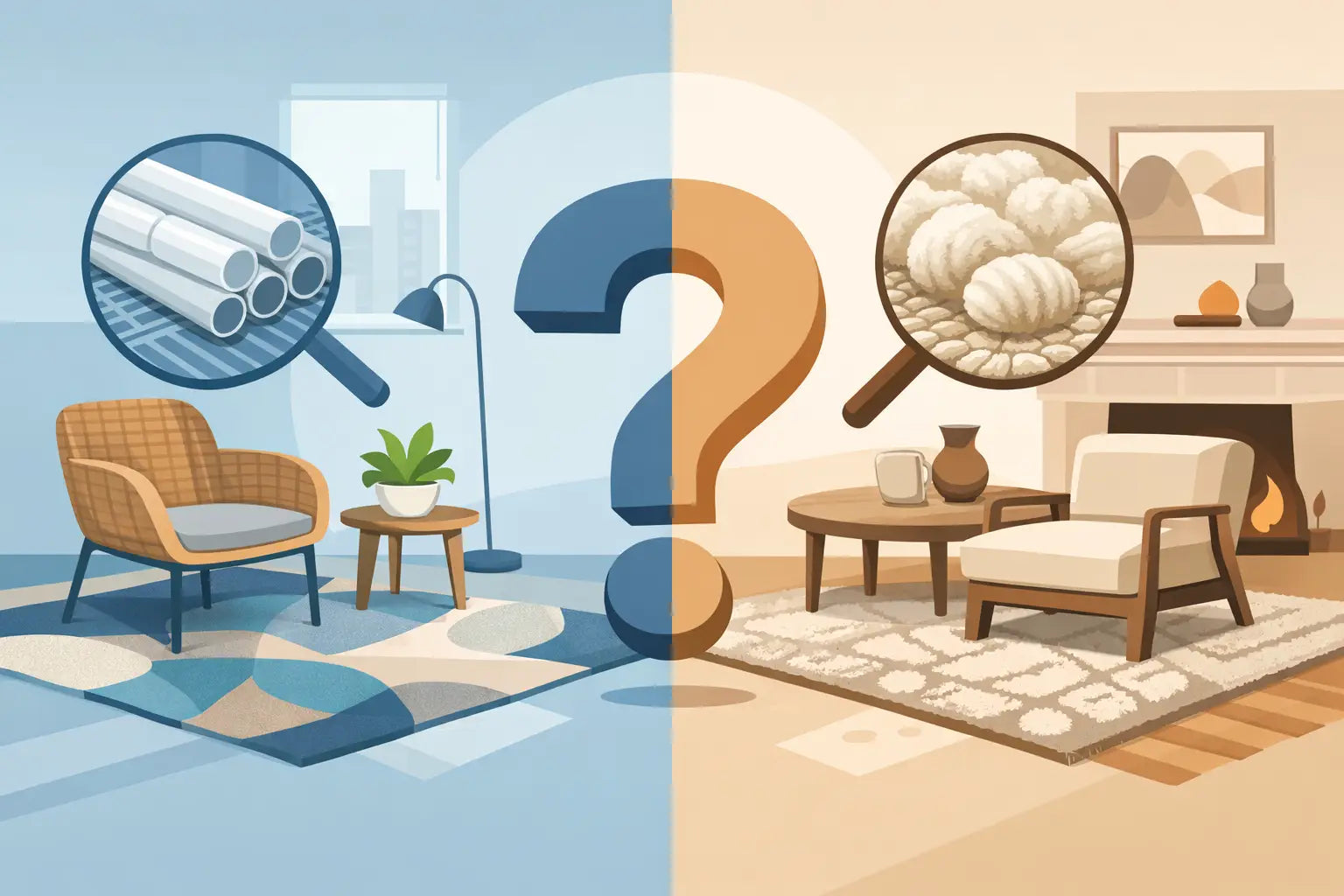
Polypropylene is a synthetic fiber designed for resilience and easy care. It is widely chosen for family rooms, dining spaces, play areas, and entryways because it tends to resist moisture, staining, and wear better than many natural fibers. It is also typically more budget-friendly, which makes it attractive when you want a larger size rug or a fresh style update without a major investment.
Wool is a natural fiber with a more elevated hand and a long-standing reputation for craftsmanship. It has a richness that many shoppers notice immediately, whether in a tailored flatweave, a plush hand-tufted design, or a timeless patterned area rug. Wool often feels denser and more substantial, and it can bring a room a layer of warmth and character that reads beautifully in both classic and modern interiors.
If you are choosing purely by material story, wool often wins the design romance. If you are choosing for easy living, polypropylene often makes the practical case faster.
How each rug feels in a room
Texture changes the mood of a space just as much as color or pattern. Polypropylene rugs can feel soft, especially in newer constructions that are designed to mimic the comfort of natural fibers. They often work well in casual, relaxed rooms where you want comfort without being precious about upkeep. In a busy living room or under a breakfast table, that easygoing quality can be exactly right.
Wool has a different kind of presence. It can feel springy, cushioned, and substantial, with a natural softness that tends to improve the more thoughtfully it is constructed. In a bedroom, reading nook, or refined living space, wool often gives the room a grounded, artfully crafted feel. It is the kind of material that makes a neutral palette look layered instead of flat.
That said, softness is not identical across every rug. Construction, pile height, weave, and backing all matter. A low-pile wool rug may feel firmer than a plush polypropylene style, while a hand-tufted wool rug may feel more luxurious than either. Material is only one part of the sensory experience.
Durability depends on your version of daily life
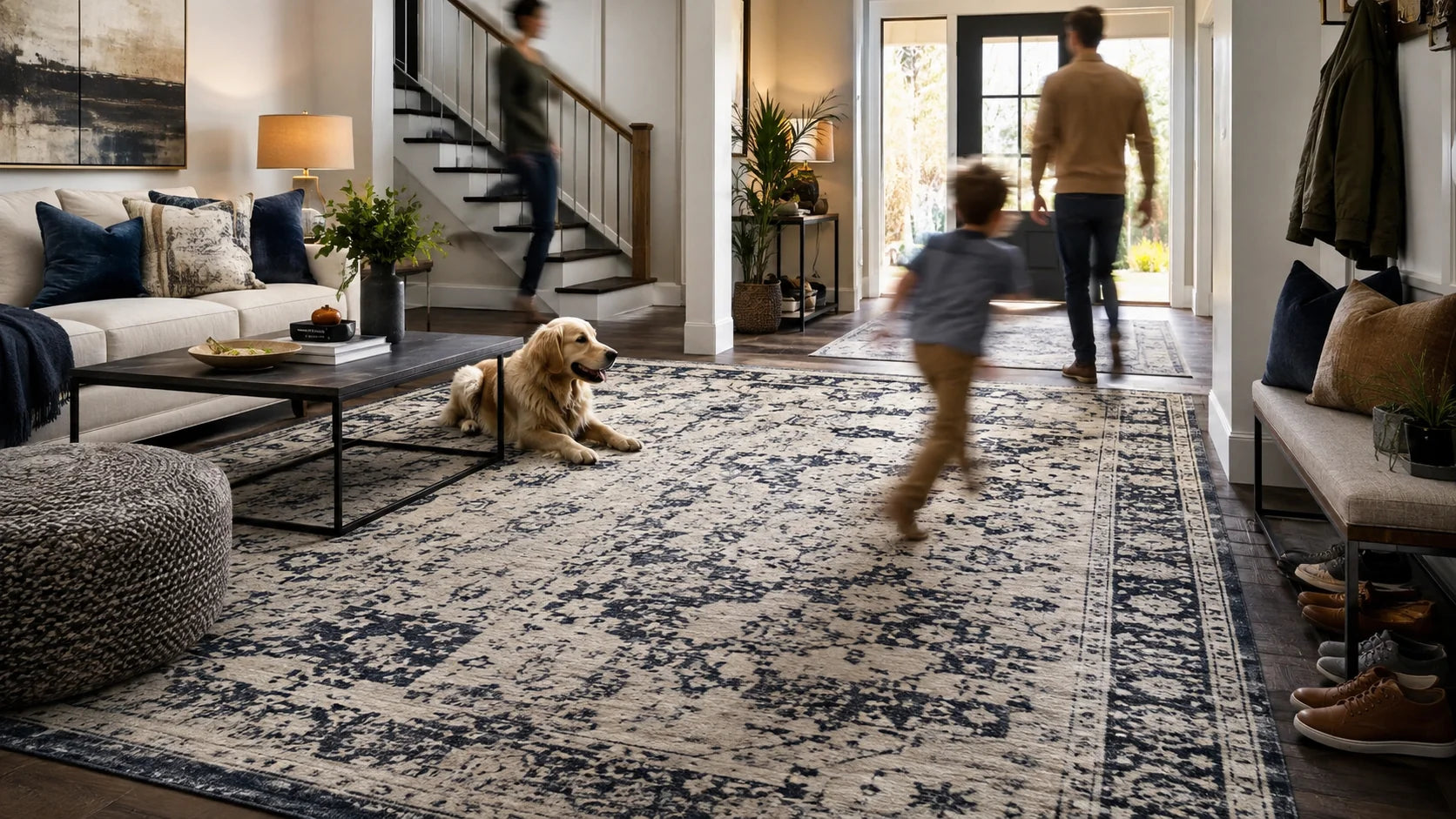
For high-traffic homes, durability is usually where polypropylene shines first. It handles repeated foot traffic well, and because it resists moisture, it tends to be forgiving in homes with kids, pets, or frequent entertaining. If your hallway, family room, or dining area sees constant movement, polypropylene can feel like a smart, low-stress choice.
Wool is also durable, but in a different way. It has natural resilience in the fiber itself, which helps it bounce back and maintain its appearance over time. A well-made wool rug can age beautifully and hold up for years, especially in spaces where it is cared for properly. But it often asks for a bit more attention. Spills should be addressed quickly, and some types of heavy wear may show sooner depending on the weave and pile.
So the trade-off is fairly simple. Polypropylene is often better for mess-prone, hard-working spaces. Wool can be wonderfully long-lasting, but it is usually best for shoppers who value its texture and are comfortable with a little more care.
Cleaning and maintenance
This is where many shoppers make their final decision.
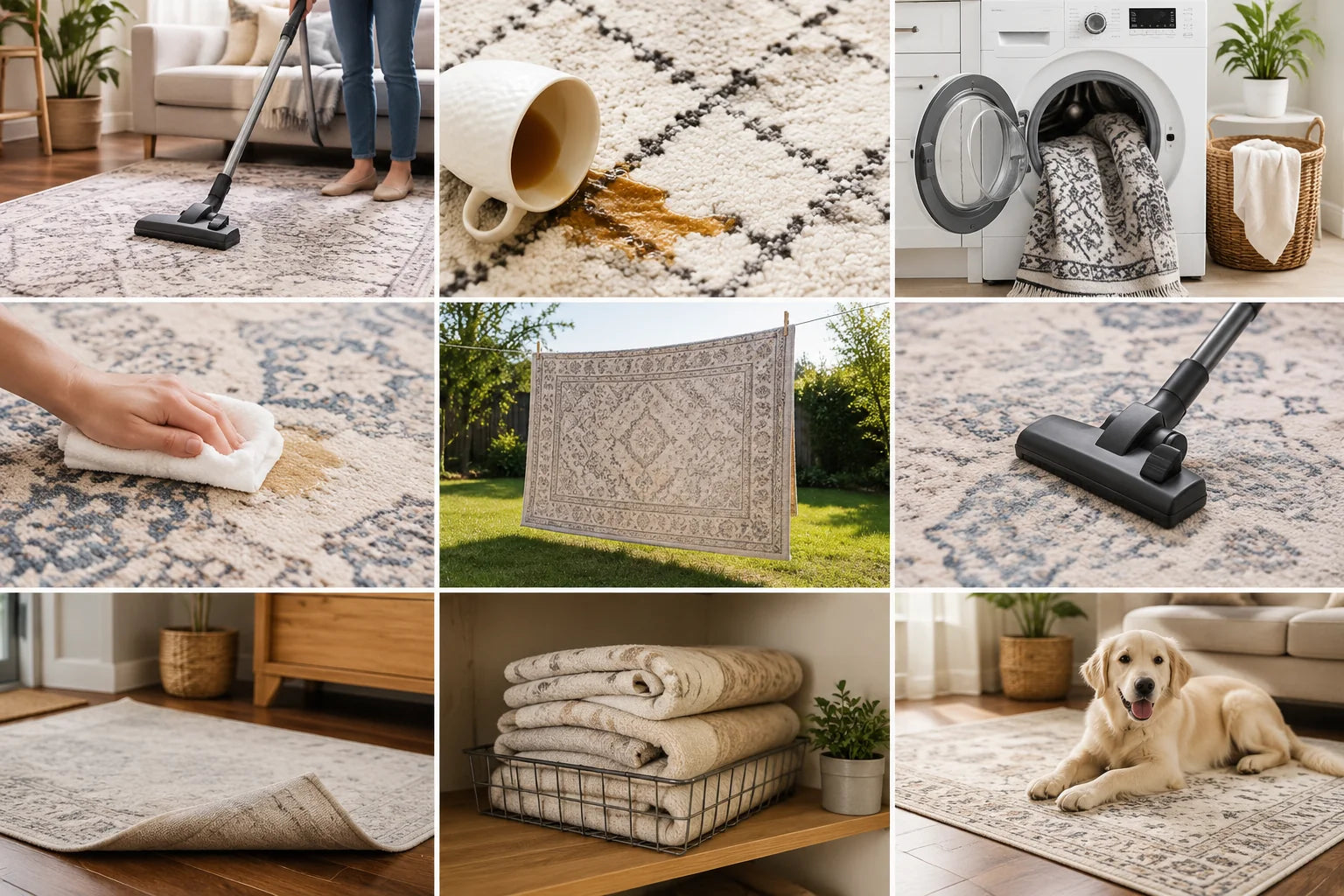
Polypropylene is generally easier to clean and maintain. Because the fiber is less absorbent, spills often sit closer to the surface, which gives you a better chance of blotting them before they become a lasting problem. For homes with snack time on the sofa, pets coming in from the yard, or dining chairs constantly shifting over the same spot, that ease matters.
Wool requires a gentler approach. It has natural oils and a beautiful hand, but it can be more sensitive to moisture, harsh cleaners, and aggressive scrubbing. Some shedding is also common, especially when the rug is new. That does not mean wool is fragile. It means it benefits from care that matches its quality.
If you want a rug that supports a more carefree routine, polypropylene usually has the advantage. If you are furnishing a room where elegance and tactile richness matter most, wool may still be worth the extra effort.
Cost and value over time
Price matters, especially when you are selecting larger sizes, layering multiple rooms, or styling a whole home with cohesion in mind.
Polypropylene rugs are usually more affordable up front. That lower price point opens up flexibility. You might choose a larger statement rug, try a bold pattern you have been hesitant about, or refresh a seasonal room without stretching your budget. For renters, growing families, first homes, and busy multipurpose spaces, that accessibility is a real benefit.
Wool rugs typically sit at a higher price point because of the fiber, craftsmanship, and overall feel. For many shoppers, the value is in the finish. Wool often looks more elevated and can lend a room a timeless elegance that feels collected rather than temporary. If you are investing in a primary bedroom, formal sitting room, or a living room where you want the rug to anchor the entire design story, wool can justify the spend.
The better value depends on your horizon. If you need beauty, durability, and easy replacement at a practical cost, polypropylene makes sense. If you are building a room around depth, texture, and a more enduring design statement, wool may feel like money well spent.
Best rooms for polypropylene vs wool rugs
Room choice can make this decision much easier.
Polypropylene is often ideal for entryways, dining rooms, playrooms, kitchens, sunrooms, and high-traffic living spaces. These are rooms where life happens quickly, and the rug needs to keep pace. It is also a smart choice for homes with pets or young children, where easy maintenance is not a bonus but a requirement.
Wool tends to shine in bedrooms, formal living rooms, home offices, and quieter sitting areas. In these spaces, texture, warmth, and visual depth often matter as much as raw practicality. A wool rug can soften a room beautifully and help create that tranquil harmony many shoppers want when designing a retreat-like interior.
There is also a middle ground. Some households use polypropylene in hardworking zones and wool in more intimate rooms. That approach gives you performance where you need it and luxury where you will feel it most.
Style, pattern, and the look you want
Both materials come in a wide range of aesthetics, from traditional and transitional to modern, global, and softly textured solids. Still, they do tend to present differently.
Polypropylene is excellent for crisp pattern, color variety, and trend-driven designs. If you want a vintage-inspired print in a family-friendly format or a modern neutral rug that can stand up to everyday use, it is a versatile option. It also works well for shoppers who like to refresh their look more often.
Wool often has more visual depth, especially in tonal palettes and textural constructions. The fiber can give patterns a softer, more nuanced expression, which feels especially beautiful in layered interiors. If your goal is a room with warmth, serenity, and a sense of permanence, wool often delivers that with less effort.
This is where personal taste leads. Some rooms call for practical polish. Others ask for tactile richness and quiet character.
Which one should you choose?
If your priority is easy care, stain resistance, and approachable pricing, polypropylene is likely the better fit. It supports real life gracefully and works especially well in busy homes where durability needs to be obvious, not theoretical.
If your priority is natural texture, elevated feel, and timeless elegance, wool is hard to beat. It brings substance and softness that many design-conscious shoppers love, especially in rooms meant to feel calm, collected, and deeply comfortable.
At Rug Resources, that is often the most useful way to shop: not by asking which material sounds more impressive, but by asking how you want the room to live. A rug should support the rhythm of your home while still giving the space its own point of view.
The right choice is the one that lets you enjoy the room more fully, whether that means fewer worries, more softness, or the satisfying feeling that everything has finally come together.

Share:
Loloi Rug Review Guide for Real Homes
How to Buy Rugs Online Without Regret