

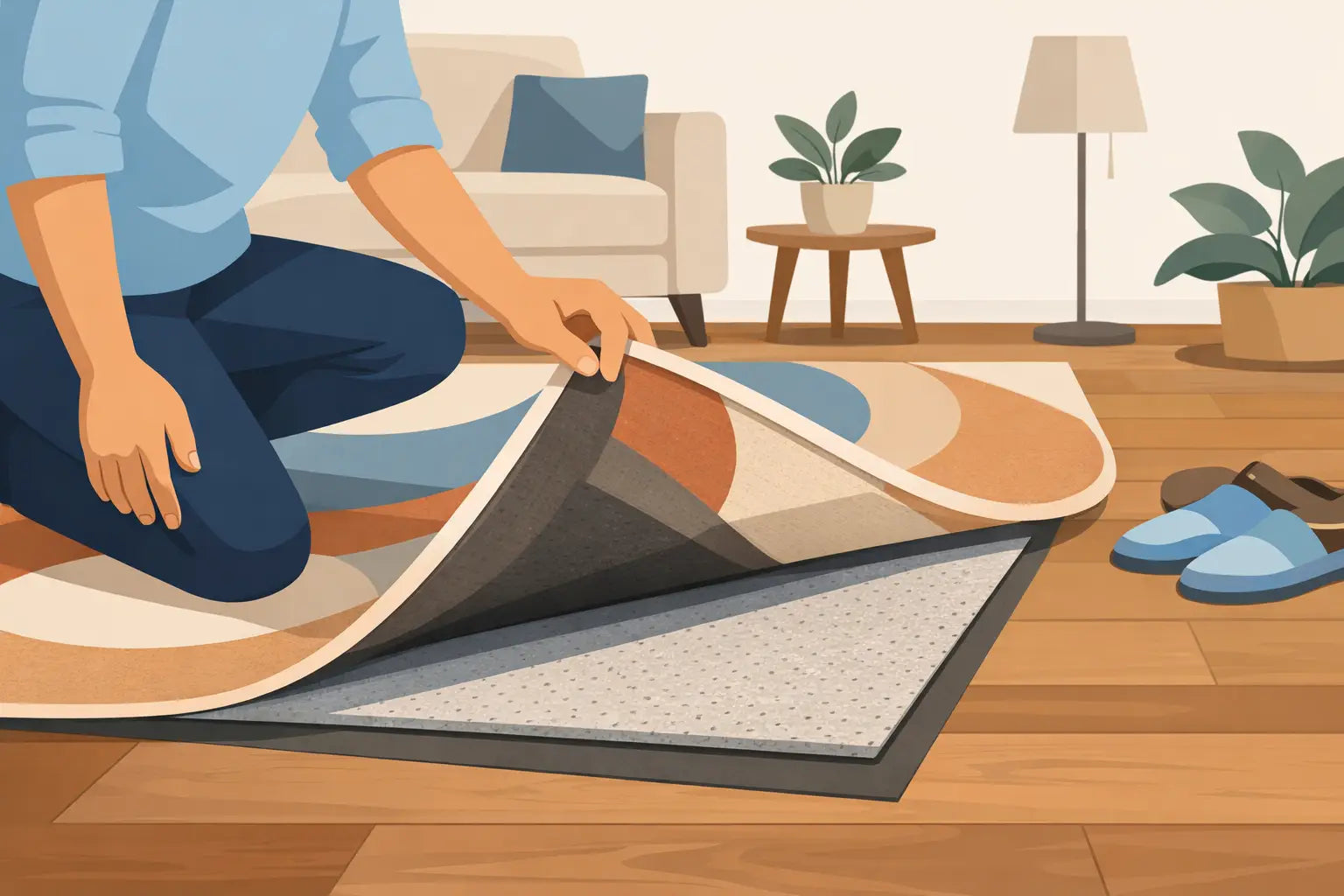
A beautiful rug can set the entire mood of a room, but if it bunches at the corners, slides underfoot, or wears down too quickly, the effect fades fast. Rug pads are the quiet layer that makes a space feel more finished, more comfortable, and far more practical to live in.
For many shoppers, a rug pad feels optional right up until the moment the rug starts drifting across hardwood or curling in a busy hallway. That is usually when function takes center stage. The right pad helps your rug stay in place, softens every step, and protects both the rug and the floor beneath it. It is a small addition that changes how the whole room performs.
What rug pads actually do
The easiest way to think about rug pads is that they give your rug a better foundation. They create traction between the rug and the floor, which reduces slipping and shifting. That matters in high-traffic spaces like living rooms, hallways, and entryways, but it also matters in quieter rooms where a rug should simply feel stable and polished.
They also help preserve the life of the rug itself. Without a pad, friction from footsteps can grind the rug backing directly against the floor. Over time, that stress can contribute to premature wear. A pad absorbs some of that impact, which can help maintain the rug’s shape, structure, and overall look.
Comfort is another reason people come back to rug pads once they have used them. Even a low-pile or flatwoven rug can feel more substantial with a pad underneath. In bedrooms, nurseries, and living spaces where people sit, lounge, or play on the floor, that extra layer can make the room feel noticeably more inviting.
Why rug pads are worth it in every room
Not every room asks for the same performance, but most rugs benefit from a pad in some way. In a dining room, a rug pad can keep chairs from pulling the rug out of place every time someone sits down. In a bedroom, it can add softness underfoot first thing in the morning. In a hallway runner, it helps reduce the constant movement that happens in a narrow, busy space.
Open-concept homes benefit especially well from this detail. When a rug is helping define a seating area or anchor a dining zone, it should look intentional. A rug that shifts or buckles can make even a thoughtfully designed room feel unfinished. A pad helps maintain clean placement, which supports the visual harmony people are trying to create.
There is also the floor-protection factor. Hardwood, laminate, luxury vinyl, and tile all experience wear differently. A quality rug pad can help minimize scratching and reduce direct abrasion. That does not mean every pad suits every floor type, though. Material matters, especially if you want long-term protection as well as grip.
How to choose the right rug pads
This is where a little nuance helps. The best rug pad depends on the rug, the floor, and how the room is used. There is no single answer for every home.
If your priority is keeping a rug from slipping, look for a pad designed with strong non-slip performance. These are especially useful under thinner rugs, runners, and flatweaves that tend to move more easily. If your priority is comfort, a slightly thicker felt-style pad may be a better fit, particularly in bedrooms or living rooms where cushioning matters.
Some shoppers want both grip and softness, which is why combination pads are often the most versatile option. They offer the everyday practicality of traction with a bit of underfoot comfort. For many homes, that balance feels just right.
Thickness is worth thinking about too. A thicker pad can make a rug feel more luxurious, but too much height may create issues under doors or make dining chairs less steady. In hallways and entryways, slimmer profiles are often the smarter choice. In lower-traffic lounging spaces, a little extra cushion can feel like a welcome upgrade.
Rug pads by room and lifestyle
A home with kids, pets, or frequent guests usually needs more from a rug than pure style. That does not mean sacrificing beauty. It means choosing support layers that match real life.
Living rooms
This is often where people want the best blend of comfort and stability. A rug anchors the room visually, but it also has to handle foot traffic, furniture weight, and everyday movement. A pad with grip and moderate cushioning tends to work well here, especially under larger area rugs.
Bedrooms
Bedrooms are all about softness and calm. If your rug sits partly under the bed, a cushioned pad can add a more plush, serene feel around the exposed edges. The room may not see the same heavy traffic as an entryway, but comfort matters more here.
Dining rooms
Dining room rugs need stability without too much loft. Chairs should glide in and out without catching awkwardly on the rug. A lower-profile pad usually works best because it helps keep the rug flat and easy to navigate.
Hallways and runners
This is where non-slip performance becomes essential. Runners are prone to movement because of their narrow shape and steady foot traffic. A thin, secure pad helps the runner stay aligned while reducing bunching and edge lift.
Family spaces and pet-friendly homes
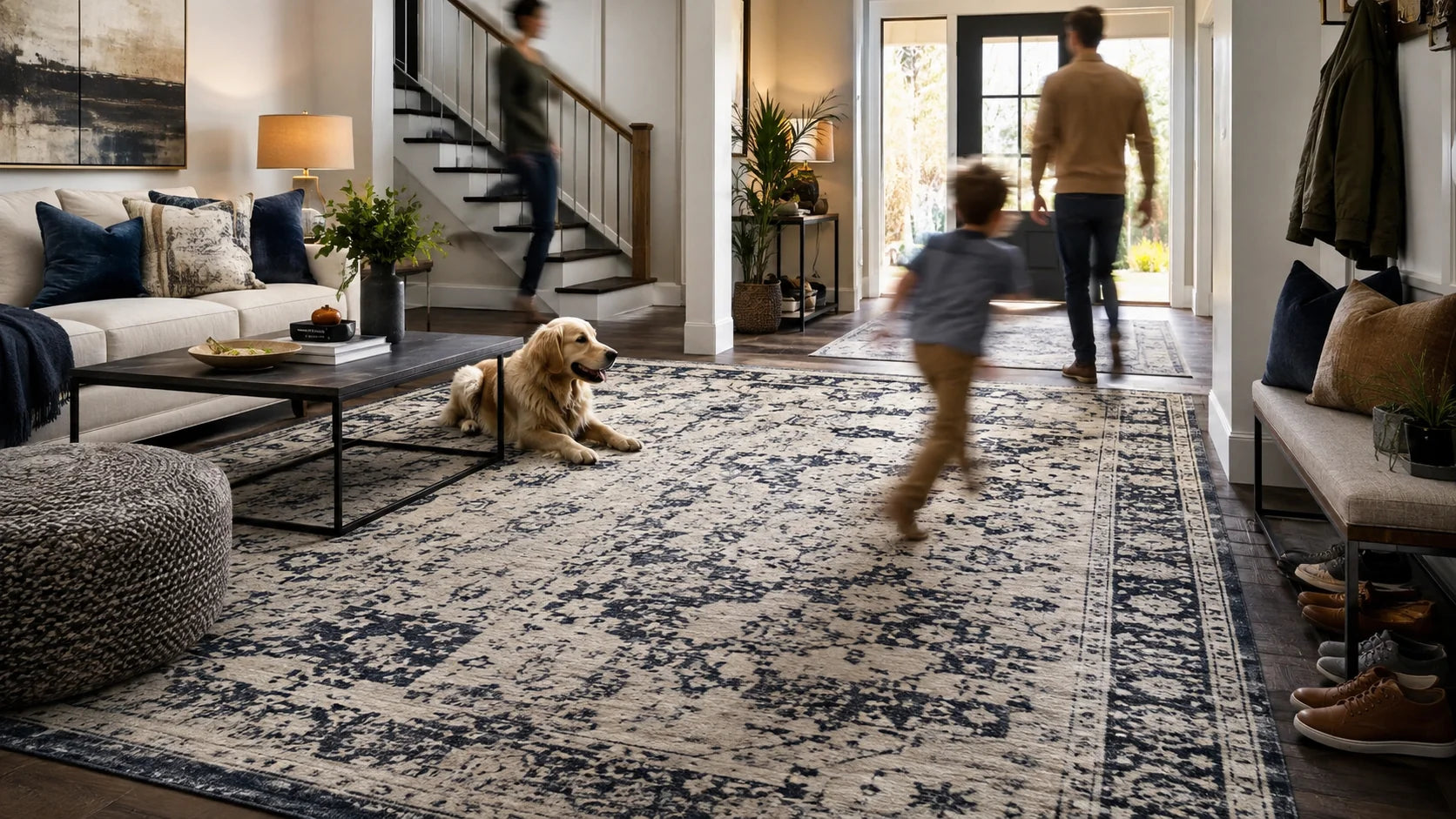
In active households, durability and grip often outrank plushness. You want the rug to stay put, clean up well, and hold its shape over time. Rug pads that reduce friction and movement can help support that performance, especially in rooms where paws, play, and daily wear are part of the story.
Sizing rug pads correctly
A rug pad should usually be slightly smaller than the rug itself, typically trimmed back enough so it does not peek out at the edges. That small adjustment helps the rug lie flatter and keeps the border looking crisp.
If the pad is too large, it can create visible edges or cause the rug to lift. If it is too small, it may not provide enough support where the rug needs it most. Getting the size right is one of those subtle details that makes the finished result feel tailored rather than improvised.
For custom layouts, unusual rug sizes, or layered looks, trimming may be necessary. The goal is a smooth fit that supports the rug without drawing attention to what is underneath.
When a rug pad matters even more
Some rugs practically insist on a pad. Flatwoven styles, lightweight constructions, and runners tend to move more than heavier rugs, so they benefit quickly from added grip. Vintage-inspired rugs with lower piles also often feel better with a little cushioning underneath.
If you are styling a room around comfort, such as a nursery, reading nook, or bedroom retreat, the pad can shape the experience more than people expect. A rug may look beautiful in product photos, but the feel underfoot is what turns it into part of daily life.
Pads also become more important when you want to protect an investment piece. Designer-led rugs and artfully crafted textures deserve a foundation that helps them wear well. It is a practical choice, but it also honors the character of the rug itself.
A design detail that improves the whole room
The most successful interiors balance beauty with ease. That is true whether your style leans timeless and traditional, clean and contemporary, or layered with global character. A rug should do more than look right in the room. It should feel grounded, comfortable, and ready for everyday living.
That is why rug pads deserve more attention than they usually get. They support the elegance of the room in a very real way. They help rugs stay smooth, feel softer, and last longer, all while protecting the surfaces beneath them.
When you are choosing a rug, it is natural to focus on color, pattern, and pile. Those details shape the visual story. But the layer underneath is what helps that story hold up beautifully over time. If you want your space to feel as polished in daily life as it does on day one, a well-chosen rug pad is one of the smartest finishing touches you can make.

Share:
Best Rugs for Bedrooms That Feel Just Right
How to Choose Modern Area Rugs