

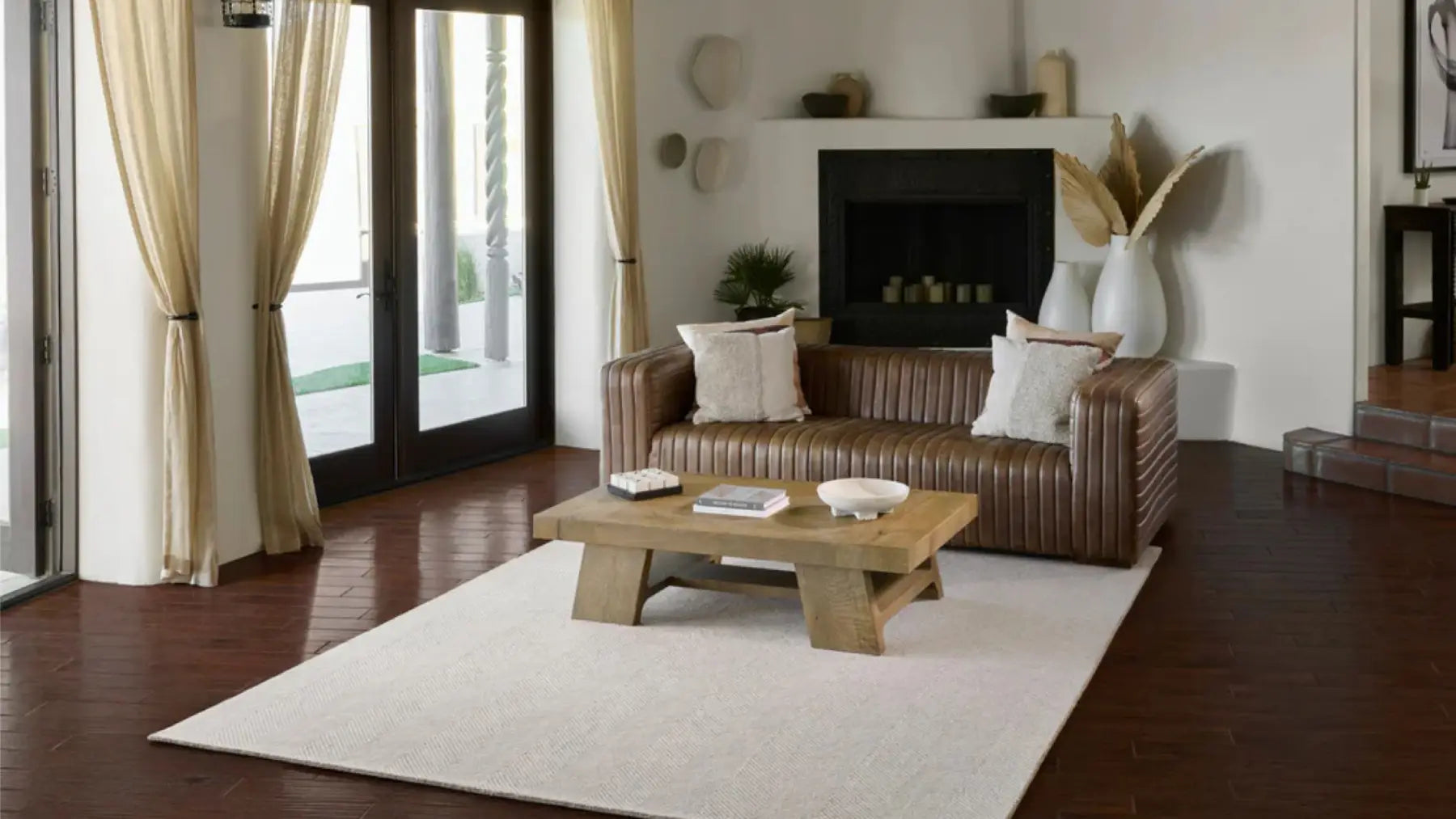
Choosing the best rugs for your home can feel like a puzzle, fun, inspiring, but also full of little details. The best rugs look pretty as they transform your room’s flow, comfort, and personality.
In this guide, you will learn how to pick the right rug size, style, and material with total confidence.
Identify the Purpose of the Rug

Before you browse living room area rugs or compare styles, think about what the rug needs to do. Does it anchor the space? Add warmth? Protect the floor? Soften acoustics? Each purpose affects rug size, rug placement, and material.
For example, in high-traffic areas, the best area rugs are durable and easy to clean. In quieter rooms, you can choose plush textures that invite bare feet. This helps your final rug layout feel intentional, not accidental.
Quick Purpose Examples
- Anchor the space: Large rug for a sectional or open floor plan.
- Noise softening: Thick pile in bedrooms or reading nooks.
- Style boost: Bold colors or patterns.
Consider the Room’s Function
A living room has different needs than an entryway or dining area. How the room functions tells you how to determine rug size and material.
In living room rug sizes, bigger is usually better. A too-small rug floats awkwardly, disrupting visual balance. Dining rooms require a rug that allows chairs to slide smoothly without catching. Bedrooms, on the other hand, benefit from soft textures underfoot.
If you are wondering how to measure a rug to fit these spaces, always map out placement with tape first, as this can save time and money.
Size and Placement
This is where most people slip up. Living room rug placement plays a huge role in how polished your space feels. Use an area rug size guide or rug size guide to compare standard dimensions. When you choose area layouts thoughtfully, your room feels cohesive.
A simple rule? Your rug should sit under at least the front legs of your sofa and chairs. The bigger the seating area, the larger the rug should be.
Common Rug Size Guidelines
|
Room Type |
Recommended Rug Size |
Notes |
|
Small Living Room |
5x8 or 6x9 |
Front legs of furniture on a rug |
|
Medium Living Room |
8x10 |
Great for most sofas |
|
Large Living Room |
9x12 or larger |
Fully anchors the sectional |
Following these area rug size guidelines helps ensure your layout looks designer-level.
You can also explore: Machine Washable Area Rugs
Material Matters
Wondering what’s in the rug that affects comfort, texture, and durability? A lot. Wool is luxurious and long-lasting. Cotton is casual and easy to clean. Polypropylene resists stains and is budget-friendly. Natural fibers like jute add an earthy texture but may not be comfy enough for every room.
Before deciding on the best rug for living room setups, think about kids, pets, spills, and allergies. Material affects everything from softness to upkeep.
Color and Pattern
Color sets the mood. Pattern shapes personality. This part gets fun fast.
If your room already has statement colors, choose neutral, best area rugs that blend in. If your furniture is simple, go bold with geometric or traditional prints. Consider the size too; large-scale patterns work best in big rooms; subtle patterns shine in small ones.
Think about the living room rug layout harmony. You want the rug to complement, not compete with, your décor.
Pile Height
Pile height matters more than most people think. Low-pile rugs are easy to clean and ideal for dining rooms and high-traffic zones. High-pile rugs (like shag) feel plush but require more maintenance.
This decision also influences rug placement in areas with doors, rolling chairs, or furniture that needs stability.
Budget Considerations
You don’t need to overspend to get a beautiful rug. Determine your budget first, then prioritize the elements most important to you—material, size, or pattern. Sometimes going up in rug size but down in material quality gives you the biggest visual impact for the least money.
Spoiler alert: a bigger rug almost always looks more luxurious.
Durability and Maintenance
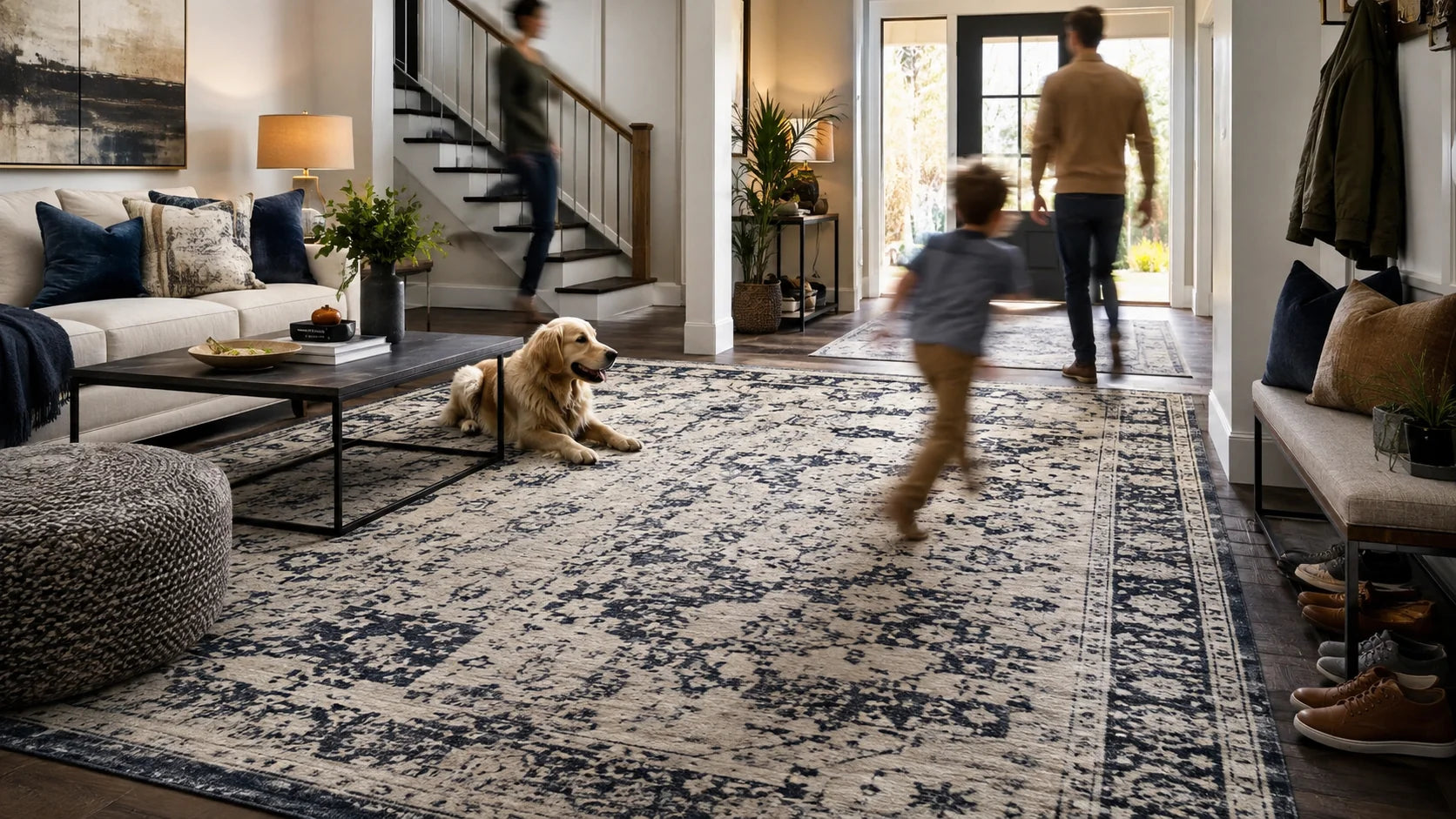
Durability matters for families, pets, busy homes, and anyone who just doesn’t want to vacuum constantly. Synthetic fibers often win here. Wool, though pricier, ages beautifully and hides dirt well.
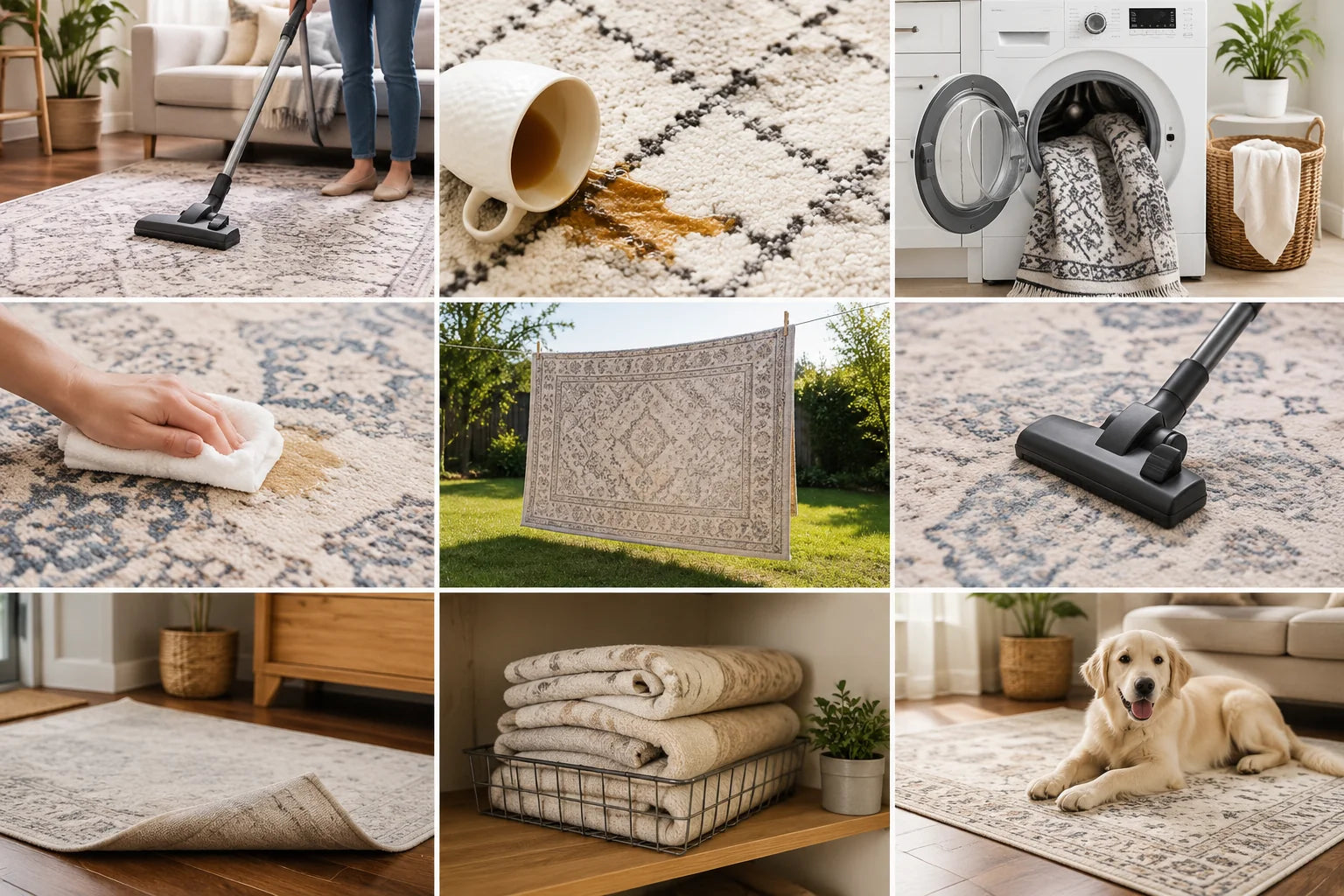
Maintenance needs vary widely depending on what's in the rug. So check cleaning instructions—some rugs require spot cleaning only, while others can handle professional washing.
You can also explore: Rug Care & Maintenance
Allergies or Sensitivities
If you deal with allergies, natural fibers like wool can be both helpful and tricky. They’re hypoallergenic but can shed. Synthetic rugs don’t shed but may hold onto dust more. Rooms with frequent cleaning should lean toward low-pile designs.
Rug Trends and Timeless Styles
Trends come and go, but timeless rugs stay stylish for decades. Vintage Persian, Moroccan patterns, and neutral textured weaves are reliably on-trend without aging quickly.
That said, don’t be afraid of a seasonal refresh. A budget-friendly accent rug layered over a neutral anchor rug can transform your living room area rugs without replacing everything.
DIY or Professional Help
DIY planning works fine for most people. But if you’re dealing with tricky living room rug placement or unusual layouts, getting a pro’s opinion helps. Professionals use area rug size guide tools and software that show scaled layouts.
Still, with painter’s tape and a measuring tape, you can absolutely map out your living room rug size accurately.
You might be interested in: Livabliss Rug Collection
Eco-Friendly Options
Eco-friendly rugs have come a long way. You’ll find beautiful options in recycled fibers, organic cotton, and sustainably sourced wool. These environmentally conscious rugs are durable, stylish, and safe for homes with kids or sensitive individuals.
You can also read: What Color Rug with a Grey Couch?
Common Mistakes to Avoid

- Choosing a rug that’s too small
- Ignoring the living room rug sizes in proportion to the furniture
- Skipping measurements
- Forgetting durability
- Clashing patterns unintentionally
- Overlooking maintenance needs
Additional Tips
- Tape out the exact rug dimensions before buying
- Consider layering rugs for style depth
- Use rug pads for comfort and longevity
- Match rug shape to room shape for balance
- Go one size larger if you’re between sizes
You might be interested in: Livabliss Rug Collection, Momeni Rug Collection, Couristan Rug Collection, Rug Pad, Indoor/Outdoor
Ready to pick the right rug?
Now that you know how to choose the best rugs for any room, size, placement, purpose, and style, it’s time to transform your home. For deeper guidance, explore our complete rug styling resource in the living room design library and discover curated options at Rug-resources to find the perfect piece for your space.
People also ask:
Should your rug be lighter or darker than your couch?
Lighter rug brightens & softens a dark couch; darker rug adds contrast under a light sofa. Choose for balance, opposite tones usually work best.
What color carpet looks the cleanest?
Medium tones like taupe, warm gray, oatmeal, or subtle patterns hide dirt, dust & footprints best, ideal for busy homes.
How to pick a rug size for a living room?
Choose 8×10 or 9×12 so the front legs of all seating sit on the rug. Use painter’s tape to test the layout first; bigger is almost always better.
What is the rug rule?
All front legs of furniture on the rug, 6–12 inches of rug around seating. Never let the rug “float”; it should anchor the whole arrangement.

Share:
What Color Rug with a Grey Couch?
What Color Rug Goes with a Dark Grey Couch?