

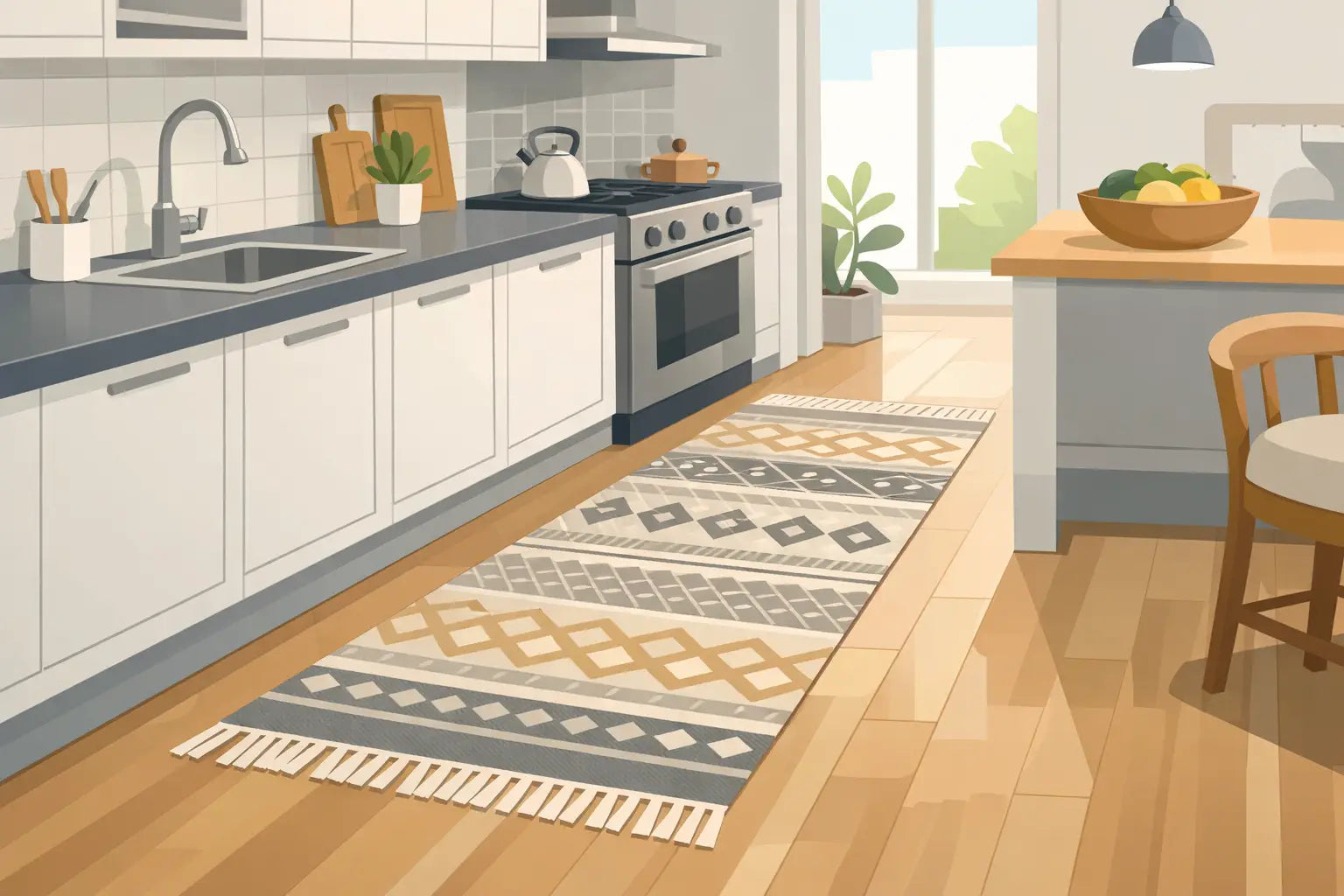
The kitchen usually tells on itself by noon. A few drips near the sink, steady foot traffic by the island, chairs scraping in and out, and that narrow walkway that somehow catches every crumb. That is exactly why the best runner rugs for kitchens are not just decorative finishing pieces. They soften hard flooring, bring visual warmth to a hardworking room, and help a kitchen feel styled rather than strictly utilitarian.
A good kitchen runner has to do two jobs at once. It needs enough design presence to anchor the space, but it also has to handle real life without becoming a nuisance. The sweet spot is a runner that feels intentional underfoot, fits the layout cleanly, and stands up to spills, pets, kids, and the constant rhythm of daily cooking.
What makes the best runner rugs for kitchens?
The short answer is balance. In a kitchen, beauty matters, but practicality decides whether a rug stays in place for the long haul.
Material is often the first thing to get right. Synthetic fibers like polypropylene and polyester tend to be strong choices for kitchens because they are typically easier to clean, resist staining better than many natural fibers, and hold color well in high-traffic zones. If your kitchen is especially busy, this is often the most forgiving route. Cotton can work in lighter-duty spaces or homes that prefer a softer, more casual look, but it may require more frequent washing and can show wear faster. Wool is luxurious and naturally resilient, though for kitchens it can be more of an investment and less carefree when spills are frequent.
Pile height matters just as much. Low-pile and flatweave runners are usually the best fit because they are easier to vacuum, less likely to catch chair legs or doors, and generally simpler to maintain. High-pile rugs may feel plush, but in a kitchen they can trap debris and make cleaning more frustrating than it needs to be.
Then there is backing and grip. A kitchen runner should feel secure, not slippery. Even a beautifully designed rug loses its appeal quickly if it shifts every time someone walks across it. A rug pad can make a dramatic difference here, adding stability, a touch of cushioning, and some protection for the floor beneath.
Size and placement matter more than most people expect
Even the most beautiful runner can feel off if the dimensions are wrong. In kitchens, proportion is what makes the rug look custom rather than accidental.
For galley kitchens, a runner usually works best when it runs parallel to the main cabinetry, leaving a visible border of flooring on each side. That border helps the space feel crisp and intentional. If the rug nearly touches the cabinets, it can look cramped. If it is too narrow, it may feel visually lost.
In larger kitchens, runners are often most effective in front of the sink, along an island, or across the primary prep path. If you have a long aisle between counters and an island, a runner can gently define that movement while adding softness where you stand the most. In an L-shaped kitchen, one runner may be enough, but sometimes two smaller coordinated runners perform better than one oversized piece that fights the room's geometry.
A practical rule is to leave enough clearance so doors can open easily and appliances are not obstructed. The rug should support the layout, not complicate it.
The best runner rugs for kitchens by style
Function may narrow the field, but style is what makes a kitchen feel personal. The right runner can echo cabinet tones, pull out a backsplash color, or add contrast that keeps the room from feeling flat.
Traditional runners bring warmth and pattern
Traditional kitchen runners are especially good at disguising everyday wear because their layered motifs and rich color variation tend to camouflage crumbs, minor stains, and dust between cleanings. They also add a sense of history and softness that can balance white cabinetry, polished hardware, and stone countertops.
If your kitchen leans classic, farmhouse, or transitional, a traditional runner in muted blue, brick, sand, sage, or charcoal can feel grounded and timeless. Slightly distressed designs are often especially useful here because they offer character without looking too formal for a lived-in room.
Modern and contemporary runners keep things crisp
For kitchens with sleek cabinetry, waterfall islands, matte black fixtures, or a more architectural look, modern runner rugs can sharpen the design story. Think subtle geometric patterns, tonal neutrals, graphic borders, or abstract motifs that add movement without overwhelming the room.
The trade-off is that very minimal designs, especially in pale solid colors, may show spills and traffic more quickly. If you love a clean modern look, consider a pattern with enough variation to hide daily wear while still reading polished.
Vintage-inspired and transitional designs offer the most flexibility
If you want something that can bridge styles, vintage-inspired and transitional runners tend to be the easiest choice. They feel curated, relaxed, and design-forward without boxing you into one aesthetic. This is particularly helpful in open-concept homes where the kitchen needs to connect visually to a dining area or family room.
A softly faded runner can bring tranquil harmony to a newer kitchen and stop it from feeling too stark. It also tends to age gracefully, which matters in a room that gets so much use.
Color choices that work in real kitchens
Kitchen rugs live close to coffee, olive oil, pasta sauce, and everything else that does not belong on textiles. So while color is a design decision, it is also a maintenance decision.
Mid-tone colors are often the easiest to live with. Deep navy, warm terracotta, olive, charcoal, rust, taupe, and layered multicolor palettes can hide the visual noise of everyday life much better than very pale ivory or very dark solid black. That does not mean light rugs are off the table. It simply means they work best when the pattern is active enough to disguise wear.
If your kitchen already has a lot going on - veined counters, bold backsplash tile, dramatic cabinet color - a quieter runner can create balance. If the room is more restrained, a patterned runner can provide the character that ties it together.
Washable or classic construction?
This is one of those it depends decisions. Washable kitchen runners are appealing for obvious reasons, especially in homes with children, pets, or heavy everyday cooking. The convenience is real, and for many shoppers it is the deciding factor.
That said, washable designs can vary in feel and structure. Some are wonderfully soft and practical, while others may have a lighter hand or less substantial presence than a more traditionally constructed rug. If your priority is absolute ease, washable is a smart path. If your priority is depth, texture, and a more elevated designer finish, a low-pile non-washable runner with a good rug pad may offer the look you want, as long as you are comfortable with spot cleaning and regular care.
Small details that make a big difference
Edge finish, thickness, and traffic performance are easy to overlook online, but they shape how the rug behaves in daily use. A lower profile generally means fewer issues with curling edges and easier navigation around appliances and stools. Strong durability ratings are worth paying attention to, especially if the kitchen is a central gathering place rather than a lightly used room.
This is also where shopping a curated assortment matters. When product descriptions clearly spell out pile height, material, traffic suitability, and family-friendly performance, it becomes much easier to choose with confidence instead of guessing from photos alone. Rug Resources approaches kitchen-ready runners with that practical clarity in mind, which is especially helpful when you are trying to match style ambition with the realities of a busy home.
How to know you found the right one
The right kitchen runner tends to feel obvious once it is in place. It fits the walkway with room to breathe. It supports the cabinet color, flooring, and hardware instead of competing with them. It feels comfortable underfoot where you stand the most. Most importantly, it makes the kitchen look more finished while asking very little from you day to day.
That is really the standard for the best runner rugs for kitchens. Not just pretty in a product photo, but durable, well-scaled, easy to live with, and stylish enough to give the room a stronger point of view. A kitchen is one of the hardest-working spaces in the home. Its rug should be every bit as thoughtful.
If you are choosing between two options, lean toward the one that suits your daily habits as much as your eye. The runner that works beautifully on a busy Tuesday morning is usually the one you will still love months from now.

Share:
How to Buy Rugs Online Without Regret
Jute vs Wool Rugs: Which One Fits Your Home?