

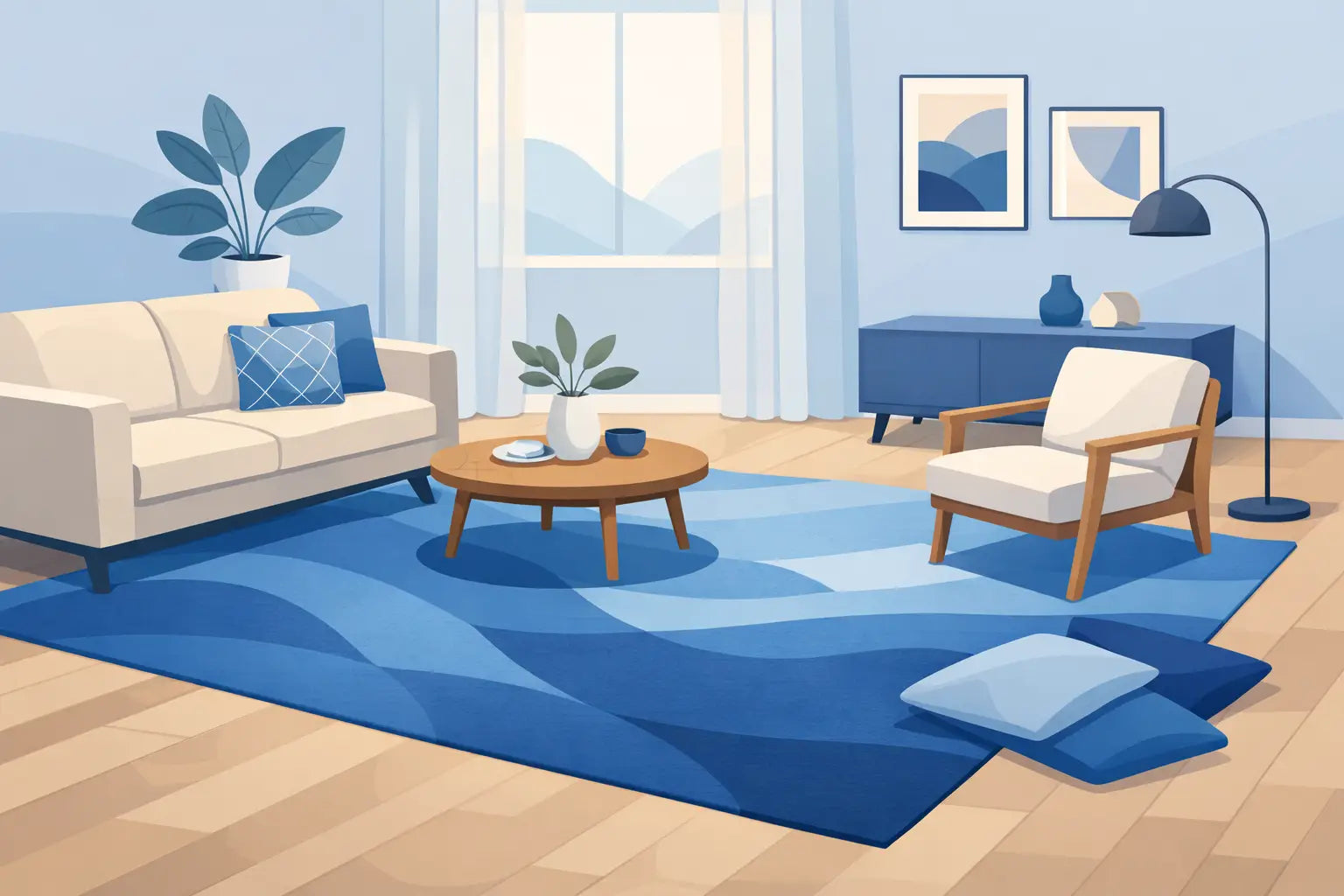
A blue rug can do far more than fill the open space beneath a coffee table. Blue area rugs establish a mood: coastal and breezy, quietly traditional, richly dramatic, or cleanly modern. They can cool down a sunlit room, give warm wood tones a polished counterpoint, and make a collection of furniture feel like it was always meant to live together.
The key is choosing blue with the same intention you bring to paint, upholstery, and lighting. Shade, scale, pattern, and construction all shape the final effect. A rug that feels serene in a bedroom may need a little more visual energy in a busy family room.
Choosing the Right Blue Area Rug
Blue is one of the most flexible colors in interiors, but not every blue reads the same way. Start by noticing the undertones already in your room. Navy and ink blue often have a stately, grounding presence. They pair beautifully with ivory upholstery, antique brass, dark wood, cognac leather, and tailored stripes. A deep blue rug can anchor an expansive living room without making it feel heavy, especially when the surrounding walls and larger furnishings are light.
Sky, powder, and pale blue bring a softer point of view. These shades feel at home in bedrooms, nurseries, coastal-inspired spaces, and rooms where you want the floor to contribute color without commanding attention. They are especially lovely alongside warm whites, linen, pale oak, and soft gray.
Teal, denim, and mineral blue live comfortably between classic and current. Denim blue has an easy familiarity that works with relaxed traditional, farmhouse, and casual contemporary rooms. Teal leans more expressive, often bringing out the warmth in terracotta, caramel, rattan, and aged brass. For a home with a collected look, consider a blue rug with several tonal variations rather than one flat, uniform shade. The subtle movement helps it connect with more pieces over time.
Let the Room’s Light Guide the Shade
Natural light changes blue considerably. In a bright south-facing room, a pale blue may look almost airy white by afternoon, while navy feels crisp and balanced. In a north-facing room with cooler light, blue can appear grayer or more shadowed. If your room already feels dim, look for a design with cream, sand, soft gold, or faded multicolor accents to lift the surface.
Evening lighting matters, too. A blue rug viewed mainly under lamps can feel more intimate and saturated than it does in a product photo. This is one reason a nuanced pattern is often a smart choice: it retains character in changing light while being more forgiving of everyday life.
Size First, Then Style
A beautiful rug in the wrong size has a way of making a room feel unfinished. Before falling in love with a pattern, map out the rug’s footprint with painter’s tape. You should be able to see how the seating arrangement, bed, or dining table will relate to its edges.
In a living room, an area rug should generally sit beneath at least the front legs of the sofa and chairs. An 8 x 10 rug suits many standard seating arrangements, while a 9 x 12 often gives a larger room the composed, generous feeling it deserves. A smaller rug can work in a compact apartment or studio, but it should still visually connect the main furniture rather than float alone in the center.
For bedrooms, a rug should extend beyond the sides and foot of the bed so your feet meet a soft landing each morning. An 8 x 10 is frequently a natural choice under a queen bed, while a 9 x 12 can give a king bed more breathing room. In a dining room, choose a size that keeps all chair legs on the rug even when chairs are pulled back.
Runners deserve just as much attention. A blue runner can bring rhythm to a hallway, soften a galley kitchen, or make an entry feel more welcoming. Leave a border of visible flooring at the sides when possible, and choose a low-pile construction for doors that need to swing freely.
Pattern Creates the Personality
A solid blue rug offers calm and flexibility. It is a particularly strong choice when your sofa, curtains, or artwork already carry pattern. Texture becomes the star here: a handwoven look, heathered finish, subtle ribbing, or tonal border adds dimension without competing with the rest of the room.
Patterned blue rugs tell a fuller story. Traditional medallions and faded Persian-inspired motifs create a sense of history in a newer home. They also bridge the gap between classic wood furniture and clean-lined upholstery. A blue-and-cream traditional rug is an enduring choice for living rooms and dining rooms because it feels polished without becoming precious.
For contemporary rooms, consider abstract washes, linear geometry, or organic motifs in blue, gray, ivory, and charcoal. These rugs add movement while maintaining a refined palette. Global-inspired patterns and indigo-based designs bring a more relaxed, collected character, especially with natural materials like oak, cane, linen, and leather.
If a room feels overly matched, a multicolor blue rug can be the missing layer. Look for hints of rust, sage, blush, or camel within the design, then echo one of those smaller colors in a pillow, throw, or piece of art. The room will feel coordinated rather than coordinated on purpose.
Choose Materials for the Way You Live
The most practical rug is not always the most luxurious one, and the most luxurious option is not necessarily wrong for a busy household. It depends on the room, the traffic, and how you want the rug to feel underfoot.
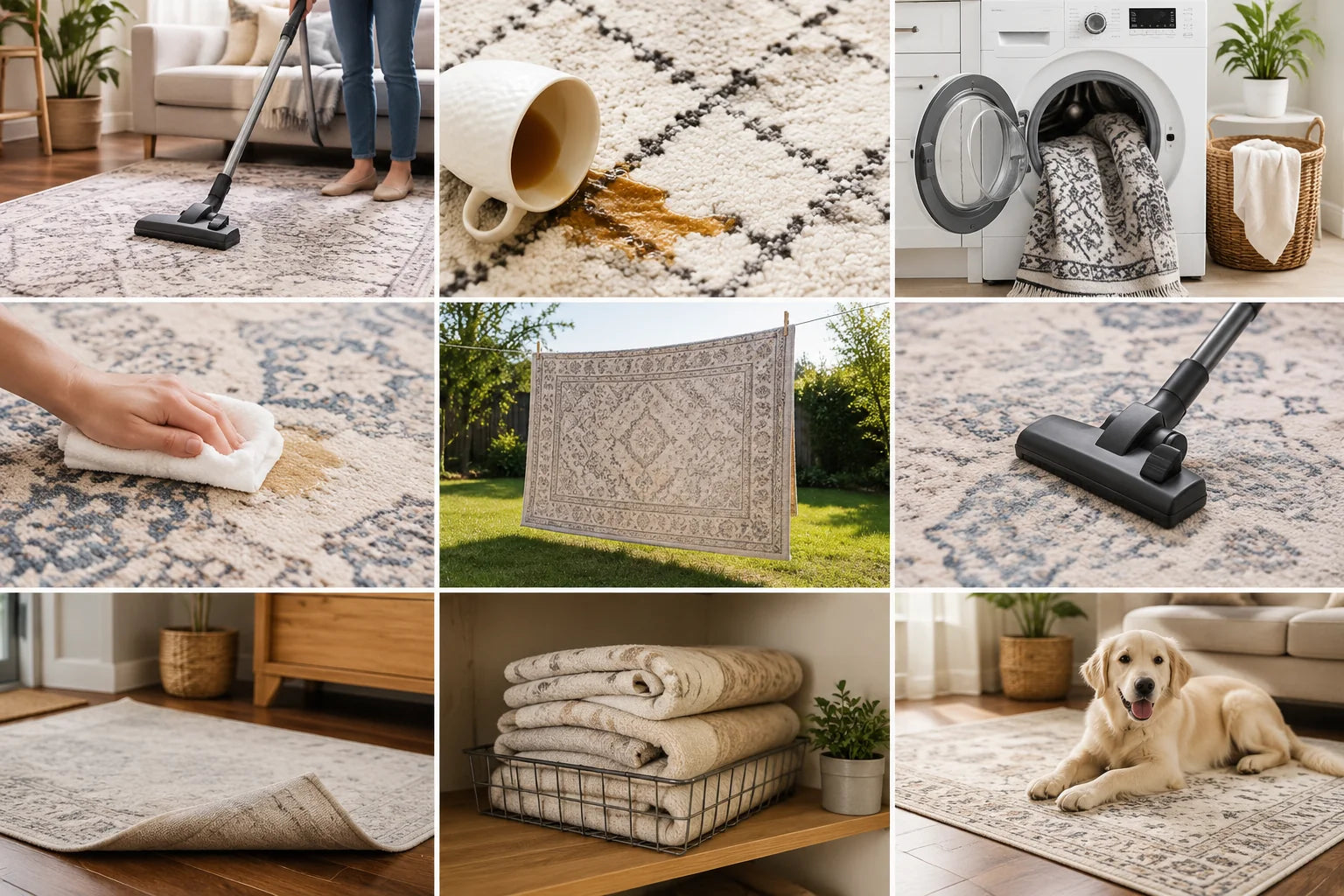
Wool remains a favorite for its natural softness, resilience, and beautifully textured appearance. It is well suited to living rooms, bedrooms, and dining rooms where you want lasting comfort and elevated character. Wool can shed at first, particularly with a new rug, so regular vacuuming without an aggressive beater bar is helpful.
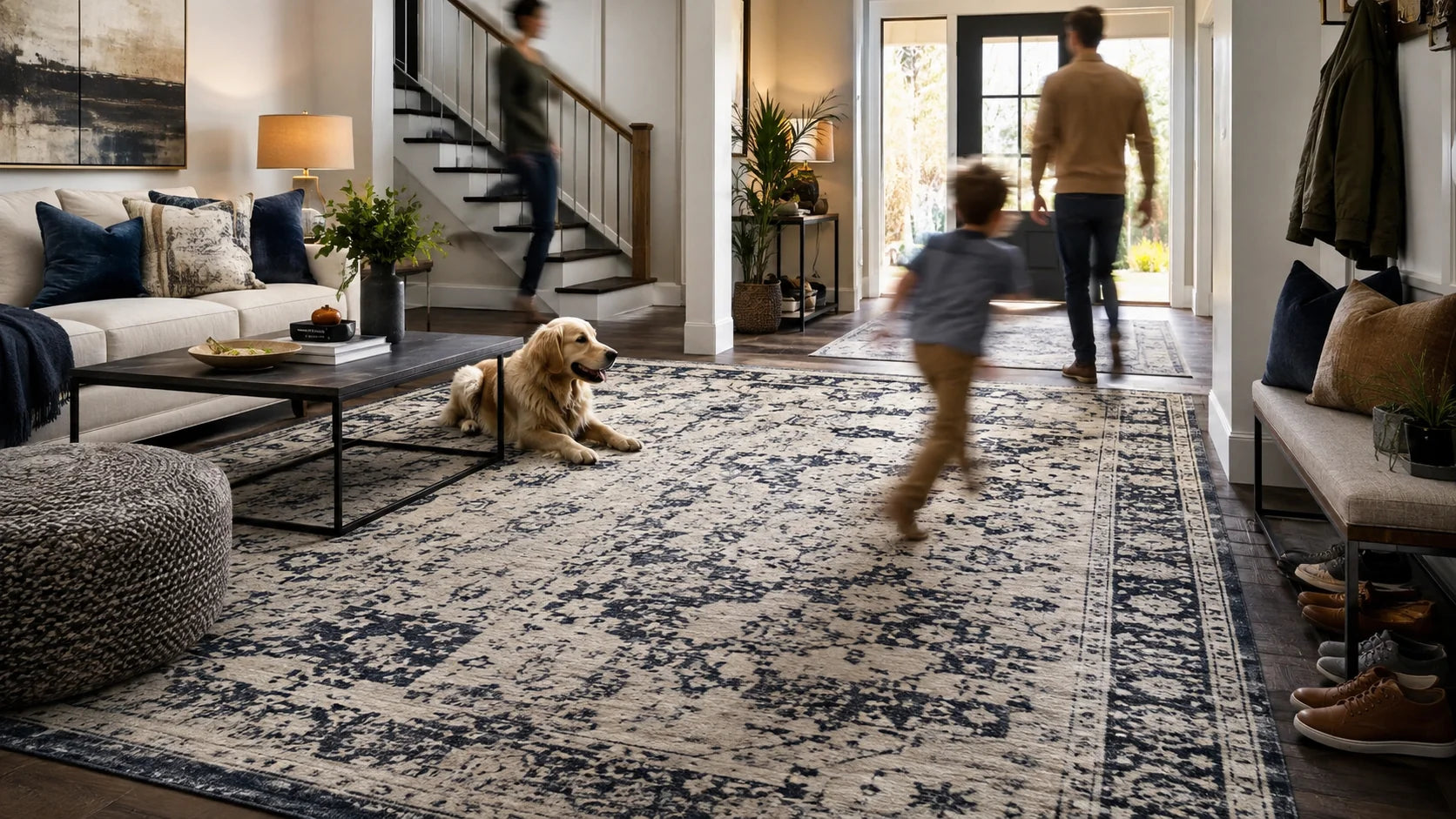
Synthetic fibers, including polypropylene and polyester, are often excellent for active homes. They tend to be easier to clean, colorfast, and budget-conscious, making them a practical fit for family rooms, entryways, and play spaces. A lower pile also handles high traffic well and makes crumbs, pet hair, and everyday upkeep less of a production.
Natural-fiber rugs such as jute or sisal bring earthy texture, but a predominantly blue room may benefit from their warmer contrast more than from another blue surface. If you love their look but need softness, layer a smaller blue patterned rug over a larger natural-fiber base. Just be mindful that textured fibers can feel rougher under bare feet and may not be ideal for every bedroom.
Make Blue Work With Your Existing Décor
Blue pairs naturally with more colors than many shoppers expect. With white, cream, and soft gray, it creates a tranquil, tailored foundation. With warm woods, tobacco leather, and brass, it becomes rich and traditional. With black accents and marble, navy reads crisp and architectural.
For a warmer, more lived-in palette, bring blue together with ochre, rust, faded red, olive, or camel. These combinations are especially effective in vintage-inspired and collected interiors. If your furnishings are primarily cool-toned, use blue alongside silver-gray, charcoal, or icy white for a more modern result, then add warmth through wood, woven shades, or soft lighting.
A rug pad is worth including in the plan. It helps keep the rug in place, adds cushioning, and can protect both the rug and the floor beneath it. In a high-traffic area, that extra stability makes a noticeable difference in how the room feels day to day.
At Rug Resources, the most successful rug choices tend to be the ones that honor both sides of the decision: the color that makes you pause, and the construction that fits your household. Take the time to picture the rug at the room’s busiest hour, not only in its most styled moment. The right blue will still feel beautiful when shoes are by the door, the chairs are pulled out, and home is being fully lived in.

Share:
Traditional vs Contemporary Rugs for Your Home
Best Rug Brands for a Beautiful, Livable Home