

A rug can make a room feel collected rather than merely furnished. When choosing between traditional vs contemporary rugs, the real question is not which style is better. It is which one tells the right story for your home, supports the way you live, and gives the room the visual balance it needs.
A richly patterned rug can ground a bright, open living room with history and warmth. A clean-lined contemporary design can bring a sense of calm to a layered bedroom or help a small apartment feel more open. Both have lasting appeal. The difference is in their point of view.
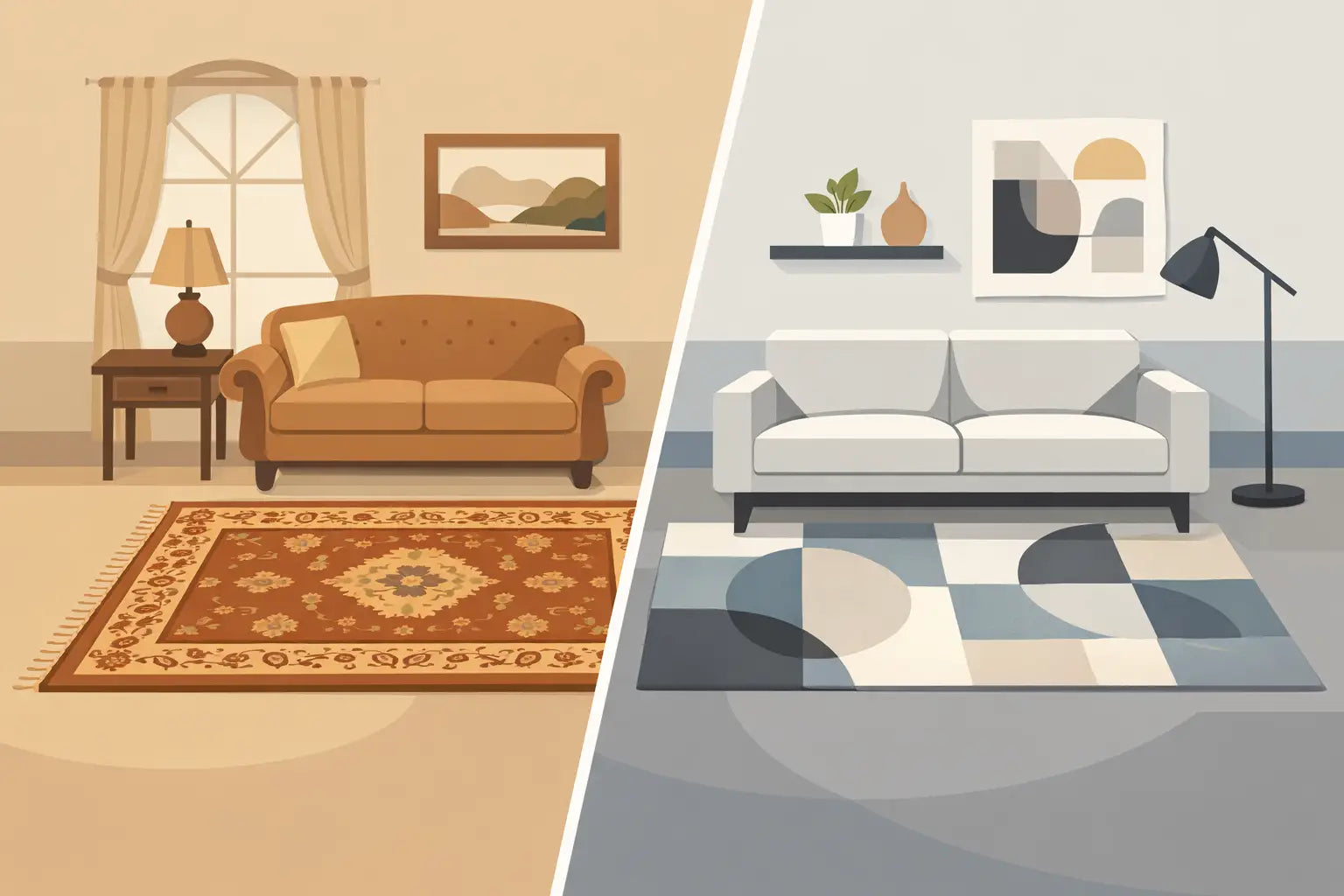
Traditional vs Contemporary Rugs: The Visual Difference
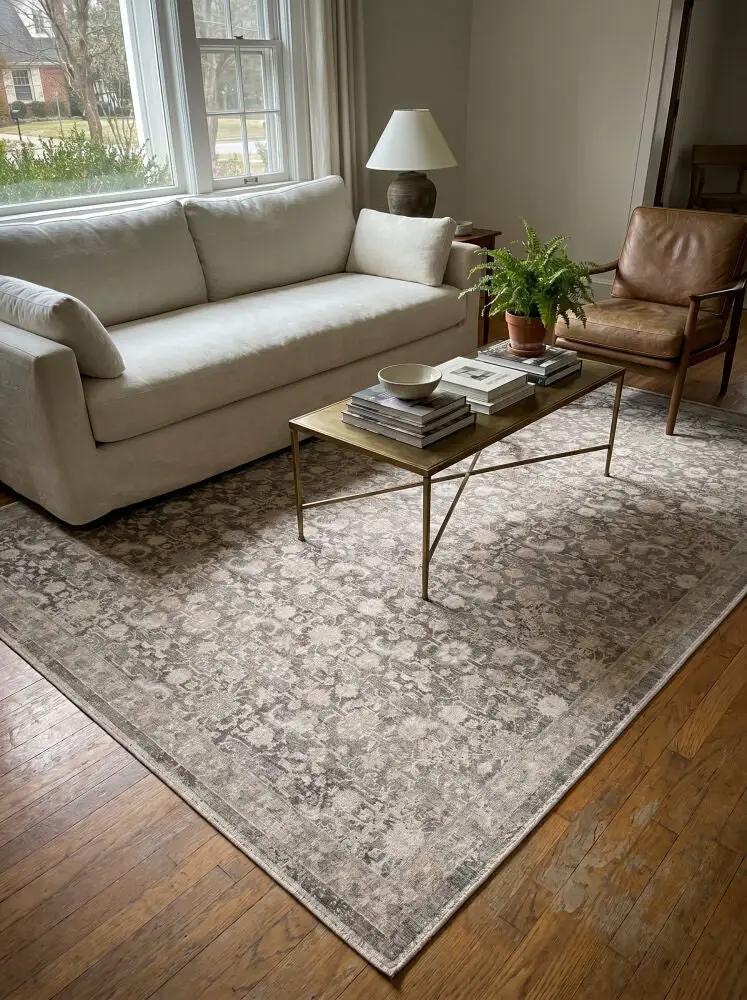
Traditional rugs draw from enduring design traditions, often with Persian-inspired medallions, ornate borders, florals, and repeating motifs. Their patterns may feel formal, but the best traditional designs are surprisingly versatile. A faded palette of ivory, terracotta, denim, and soft charcoal can look at home beneath a linen sofa just as easily as it can complement heirloom wood furniture.
Contemporary rugs take a more edited approach. They often feature abstract movement, geometric shapes, tonal fields of color, irregular lines, or a deliberately minimal pattern. Instead of referring to a historic motif, they create interest through scale, texture, and contrast. Think sculptural curves in a warm neutral palette, a broad stripe that elongates a room, or an abstract wash of blue and sand that feels like art beneath your feet.
Neither category has to be rigid. Many homes sit beautifully in the space between them. A traditional pattern rendered in soft, distressed color can feel relaxed and current, while a contemporary rug with a hand-drawn motif can add plenty of warmth. This is where transitional style becomes especially useful: it blends familiar pattern with a fresher palette or simplified construction.
Choose the Mood Before the Pattern
The fastest way to narrow your options is to decide how you want the room to feel when you walk in. Traditional rugs are often a natural fit when you want warmth, depth, and a sense of permanence. Their layered motifs can make a newer home feel established or give a simple room more character without adding extra furniture.
Contemporary rugs tend to suit spaces where you want visual breathing room. They can make a room feel lighter, more tailored, and more architectural. If your furniture has strong silhouettes, such as a low-profile sectional, a statement chair, or a streamlined dining table, a contemporary rug can reinforce that clean direction.
Color changes the equation. A bold traditional rug can become the room's focal point, especially against quiet upholstery and neutral walls. A neutral traditional rug offers a gentler effect, adding texture and dimension while allowing art or furnishings to lead. Similarly, a high-contrast contemporary design feels energetic and graphic, while a tonal contemporary rug may create a tranquil foundation for a bedroom, nursery, or reading nook.
How Each Style Works With Your Furniture
Traditional rugs shine when a room needs softness around more structured pieces. They can beautifully offset leather seating, black metal accents, tailored upholstery, or a modern dining set. The contrast makes the space feel intentionally layered rather than styled in one note.
They also pair naturally with classic elements: wood case goods, antique brass, upholstered headboards, framed art, and collected accessories. That said, matching every element to the rug's era can make a room feel overly themed. A more compelling approach is to let the rug carry the history while the furniture remains simple and livable.
Contemporary rugs are especially effective with modern, Scandinavian-inspired, coastal, and minimalist interiors, but they are not limited to those looks. A subtle abstract design can bring an updated edge to a room with vintage furniture. A geometric rug beneath a round dining table can add welcome structure without competing with the table's shape.
Pay attention to pattern scale. An expansive open-plan living room can support a larger, bolder motif. In a smaller room, a traditional rug with a finely detailed pattern may feel more forgiving than a large graphic shape, which can visually dominate the floor. On the other hand, a softly textured contemporary rug with low contrast can make a compact space feel serene rather than busy.
Materials and Texture Matter as Much as Style
A rug's material and construction influence both its appearance and its everyday performance. Wool brings natural softness, resilience, and a pleasing depth of color. It is a beautiful choice for living rooms and bedrooms where comfort matters, particularly when you want a traditional design to feel luxurious or a contemporary piece to show off dimensional texture.
Synthetic fibers, including polypropylene and polyester, can be practical choices for active homes. They often offer approachable pricing, easy-care performance, and strong color retention. For entryways, family rooms, dining areas, and homes with kids or pets, a low-pile or performance-oriented rug can provide the look you love with less day-to-day worry.
Texture also affects how a style reads. A low-pile traditional rug may feel refined and tailored, especially in a dining room where chairs need to move easily. A plush contemporary rug can add softness to a bedroom or create a cozy landing spot beside the bed. Handwoven styles, high-low patterns, and subtle ribbing introduce tactile interest even when the color palette is restrained.
Consider the Room's Daily Rhythm
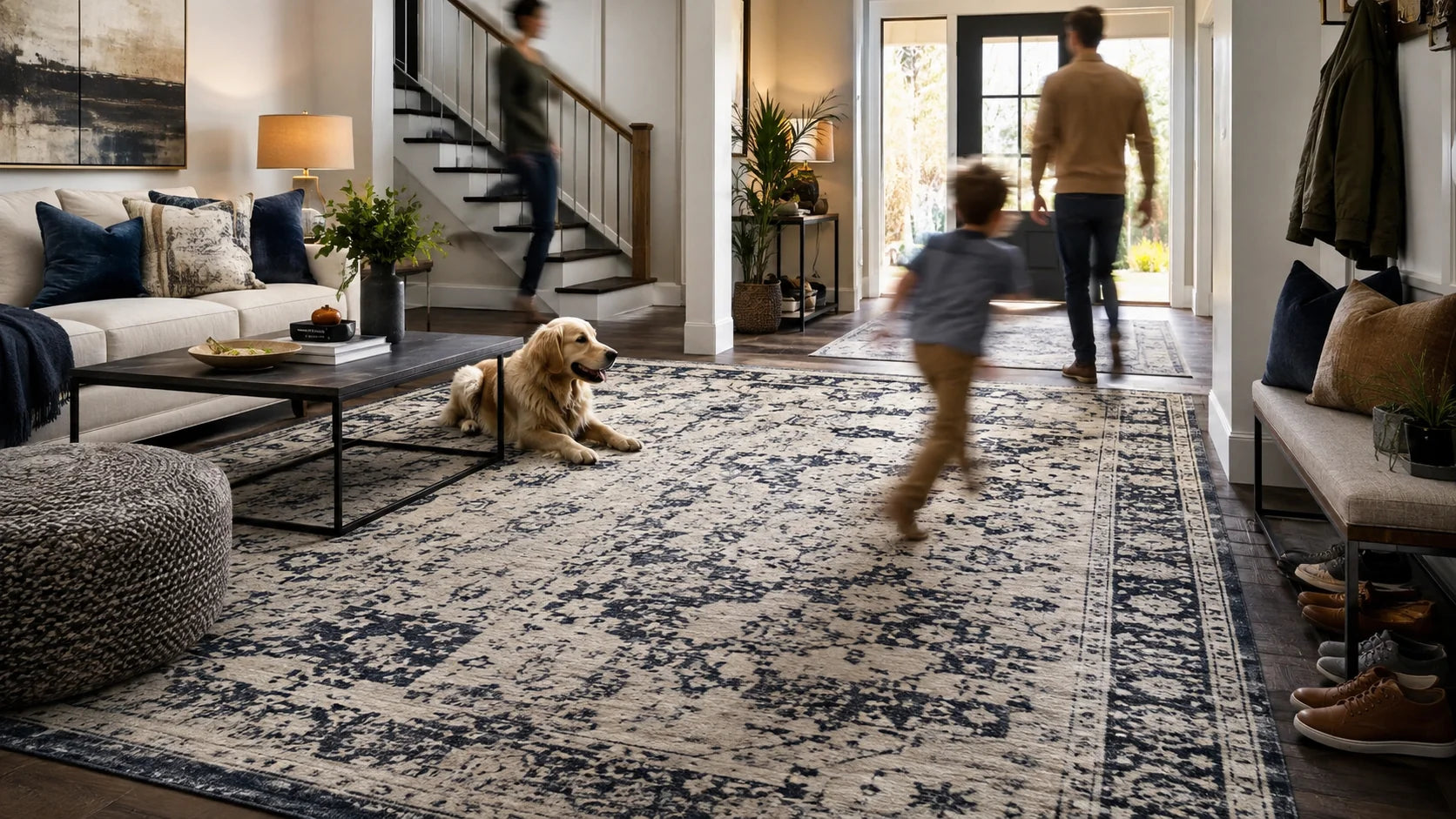
The right rug should look beautiful on delivery day and still make sense after a busy week at home. In high-traffic areas, a patterned traditional rug is often a practical favorite because its detail can help disguise everyday crumbs, footprints, and minor wear. A distressed finish can offer an especially relaxed, lived-in look from the start.
Contemporary rugs can be just as family-friendly, especially when they feature layered color, heathered texture, or an abstract pattern rather than a solid pale field. A cream rug can be stunning, but in a household with a muddy dog, a preschooler, or frequent dinner guests, it deserves a realistic conversation about maintenance.
For dining rooms, choose a size that allows chairs to stay on the rug when pulled back. A flatter pile is typically easier for chair legs to navigate. In hallways, runners should leave a visible border of flooring on each side and offer enough length to feel intentional. Bedrooms benefit from generous coverage around the bed, whether that means one large rug underneath or runners placed along the sides.
A rug pad is worth considering for nearly every room. It adds cushioning, helps prevent shifting, and can support the longevity of the rug. The right pad also helps a larger area rug feel more substantial underfoot, which is particularly appealing in living rooms and bedrooms.
When a Traditional Rug Is the Better Choice
Choose traditional when your room needs a layer of character, especially if much of the furniture is new, neutral, or clean-lined. It is also a strong option if you are drawn to interiors that feel welcoming, collected, and timeless rather than sharply trend-driven.
Traditional styles are often helpful when you need a hardworking pattern. A living room with children, pets, or frequent visitors can benefit from visual richness that remains gracious even as life happens around it. Look for designs with multiple tones rather than one dominant color for the most forgiving effect.
When a Contemporary Rug Is the Better Choice
Choose contemporary when you want the floor to feel like a purposeful part of a modern room, not simply a background layer. It is ideal for homes with an open layout, sculptural furniture, or an existing mix of materials such as oak, boucle, marble, and black metal.
Contemporary designs are also smart when you want to introduce a fresh color story without committing to painted walls or a new sofa. An abstract rug can bring in muted green, ochre, slate blue, or warm rust in a way that feels artful and easy to build around.
The Best Choice May Be a Blend of Both
A home does not need every room to follow one rug style. In fact, a mix can make the whole house feel more personal. A traditional runner can lend warmth to a quiet hallway, while a contemporary rug keeps the living room airy and current. A soft, vintage-inspired medallion rug may be perfect for the bedroom, while a simple geometric design gives the home office focus.
The unifying thread is not necessarily the pattern. It can be a shared palette, a repeated warm neutral, or a consistent level of visual softness. When the colors speak to one another, traditional and contemporary pieces can coexist with remarkable ease.
At Rug Resources, the most rewarding rug choice is the one that makes your room feel finished while still leaving space for real life. Start with the mood you want to create, measure generously, and choose a design you will be happy to see every morning. The right rug does more than cover the floor - it gives the entire room a place to begin.

Share:
Pet Friendly Rug Colors That Look Beautiful
Blue Area Rugs That Bring a Room Together