

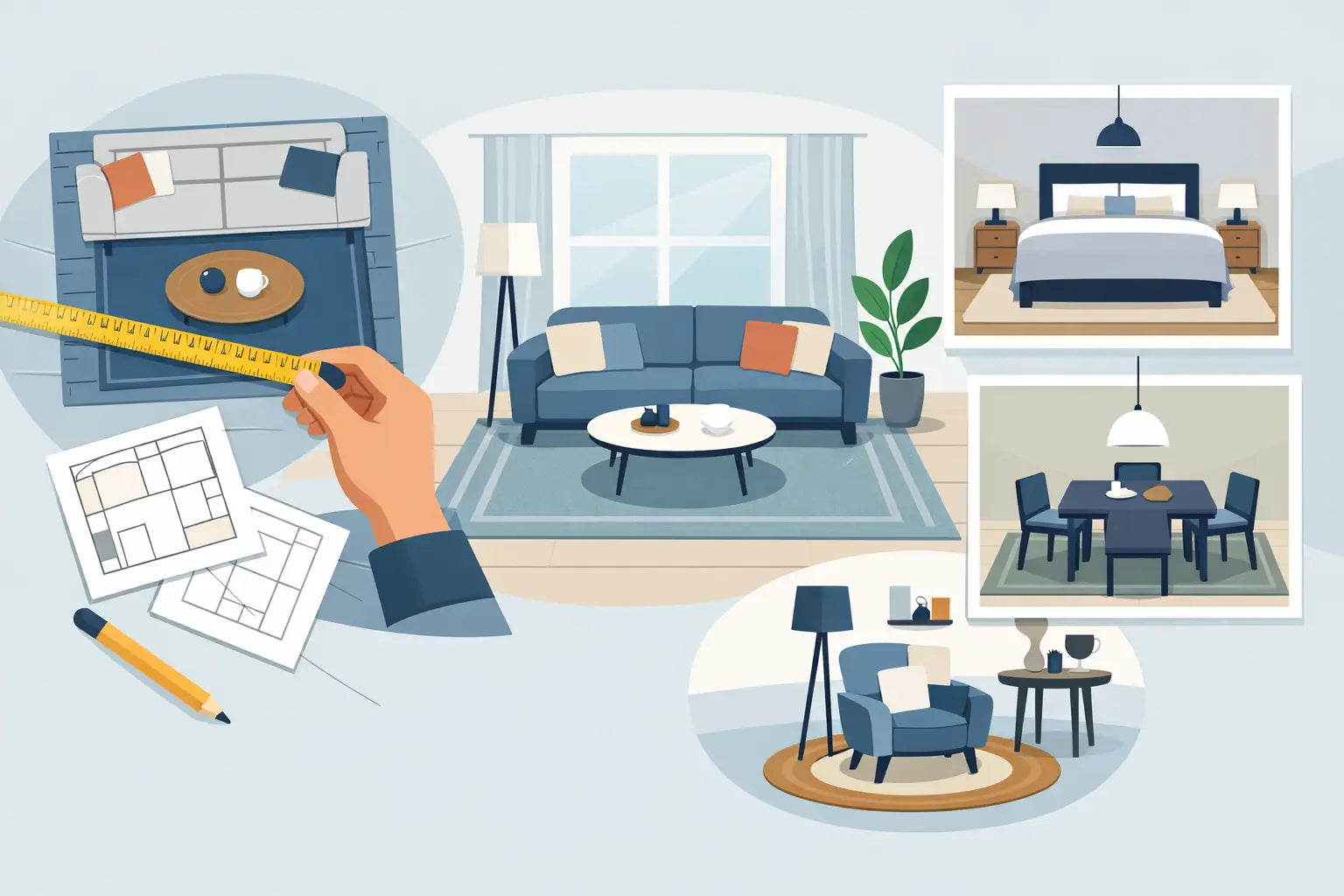
A rug can make a room feel finished in seconds - or make it feel slightly off every time you walk in. Most sizing mistakes are not about style at all. They happen when a rug is too small to anchor the furniture, too large for the floor plan, or shaped without enough breathing room around the edges. If you are wondering how to choose area rug size, the answer starts with your furniture layout, not just the room dimensions.
The right rug creates structure. It frames seating, softens hard flooring, and brings color, texture, and character into focus. The wrong size can leave a beautiful room feeling disconnected, even when every other piece is thoughtfully chosen.
How to choose area rug size without guessing
Before you fall for a pattern or palette, measure the room and the furniture arrangement. That order matters. Rugs should support how the room functions, whether that means grounding a conversation area, extending beneath a bed, or allowing dining chairs to move comfortably.
A good rule is to leave a border of visible flooring around the rug. In many spaces, 8 to 18 inches of floor showing creates a balanced look. Smaller rooms can lean tighter. Larger rooms often feel more composed with a wider border. If your room is open concept, the rug should define a zone clearly enough that it feels intentional rather than adrift.
Scale matters as much as dimensions. A large sectional with a 5x7 rug will usually feel undersized, even if the rug itself is beautiful. On the other hand, an oversized rug in a small room can crowd the perimeter and make the space feel compressed. The goal is visual harmony, not simply covering floor.
Living room rug sizing rules that work
The living room is where sizing gets the most attention because the rug does so much heavy lifting. It needs to connect seating pieces into a single, inviting composition. In most cases, that means at least the front legs of your sofa and chairs should sit on the rug.
For a smaller seating area, a 5x8 or 6x9 rug can work if it reaches under the front legs of the main furniture and still leaves enough rug visible around the coffee table. In a standard living room, 8x10 is often the sweet spot. It feels generous without overwhelming the room. For larger spaces, 9x12 or 10x14 creates a more luxurious, designer-finished look, especially when all major furniture sits fully on the rug.
There is some flexibility here. If your room is compact, floating all furniture completely off the rug can work, but only if the rug is large enough to sit meaningfully beneath the coffee table and visually relate to the seating. A tiny rug in the center of a full living room almost always feels disconnected.
If your furniture is arranged in an open floor plan, use the rug to mark the living zone. The outer edges of the rug should align with the seating arrangement rather than the full room perimeter. That keeps the space intimate and polished.
Bedroom rug placement depends on bed size
Bedrooms call for softness, but they also call for proportion. The rug should extend beyond the bed enough that your feet land on it when you get up. That simple detail changes how the whole room feels.
For a queen bed, an 8x10 rug is usually a strong choice. It gives you coverage on both sides and at the foot of the bed without swallowing the room. For a king bed, 9x12 often looks best because it provides a broader frame and keeps the scale elegant. Full beds can work well with a 6x9, depending on room size and whether nightstands sit on the rug.
Placement matters as much as size. Most area rugs in bedrooms sit under the lower two-thirds of the bed, extending out at the sides and foot. That keeps the bed anchored while avoiding unnecessary bulk at the headboard wall. If the room is smaller, runners on either side of the bed or a rug at the foot can be a smart alternative. It will not create the same expansive effect, but it can still add warmth and serenity.
If you have a bench at the foot of the bed, make sure the rug extends beyond it. Otherwise the room can feel visually clipped.
Dining room rugs need extra clearance
The dining room has one rule that matters more than all the others: chairs should stay on the rug even when pulled out. If the back legs catch the rug edge every time someone sits down, the size is too small.
A practical guideline is to allow at least 24 inches of rug beyond each side of the table. That gives chairs room to move and helps the whole setup feel generous. For many dining rooms, that means an 8x10 rug under a standard rectangular table and a 9x12 under a larger one. Round tables often pair beautifully with round rugs, as long as that same chair clearance is maintained.
This is one area where going slightly larger is usually better than going slightly smaller. A rug that fully supports the dining set feels composed and easy to live with. One that barely fits can become an everyday annoyance.
Low-pile rugs are often the most practical choice here. They allow chairs to slide more smoothly and tend to handle crumbs, traffic, and cleanup with less fuss.
Hallways, entryways, and smaller spaces
Runners bring rhythm to transitional spaces, but they need the right proportions. In a hallway, leave a few inches of flooring visible on each side so the runner feels tailored to the space. Too narrow and it can look skimpy. Too wide and it can feel cramped.
In an entryway, the rug should welcome the room rather than block the door swing or sit awkwardly against the walls. Measure with the door open and closed. This is especially helpful if you are choosing between a compact area rug and a runner.
For kitchens, laundry rooms, and narrow spaces, think about where you stand most often. A runner should cover the work zone comfortably while leaving enough floor visible around it to keep the room feeling clean and balanced.
Common sizing mistakes to avoid
The most common mistake is buying too small. It is tempting because smaller rugs can feel like an easy starting point, but undersized rugs tend to make furniture look like it is drifting apart. If you are between sizes, the larger option is often the better investment visually.
Another misstep is measuring only the room and ignoring furniture. A rug is rarely meant to match wall-to-wall dimensions. It should respond to the layout inside the room. The sofa, chairs, bed, or dining table tell you more about the right size than the empty floor does.
Shape can also change the outcome. Rectangular rugs are classic because they suit most furniture groupings, but round and square rugs can be striking in breakfast nooks, entryways, or rooms with curved architecture. The trade-off is that they require a bit more intention. If the shape does not echo the room or furniture arrangement, it can feel random rather than artfully layered.
A simple way to test the size first
If you want more confidence before ordering, outline the rug dimensions on your floor with painter's tape. It is one of the easiest ways to see how the rug will sit in the room and whether there is enough floor border around it. You will quickly notice if the size feels skimpy, crowded, or just right.
This is especially useful in rooms where every inch counts. Apartments, breakfast areas, and bedrooms with dressers often benefit from a visual test before you commit. It gives you the same kind of clarity a designer uses when planning a room from the ground up.
A well-sized rug does more than fill space. It creates calm, definition, and a sense that the room has been thoughtfully composed. When you choose with proportion in mind, the pattern, color, and texture have room to shine - and the whole space feels more inviting the moment you walk in.

Share:
Area Rug Buying Guide for Every Room
Erin Gates Orchard Area Rug Style Guide