

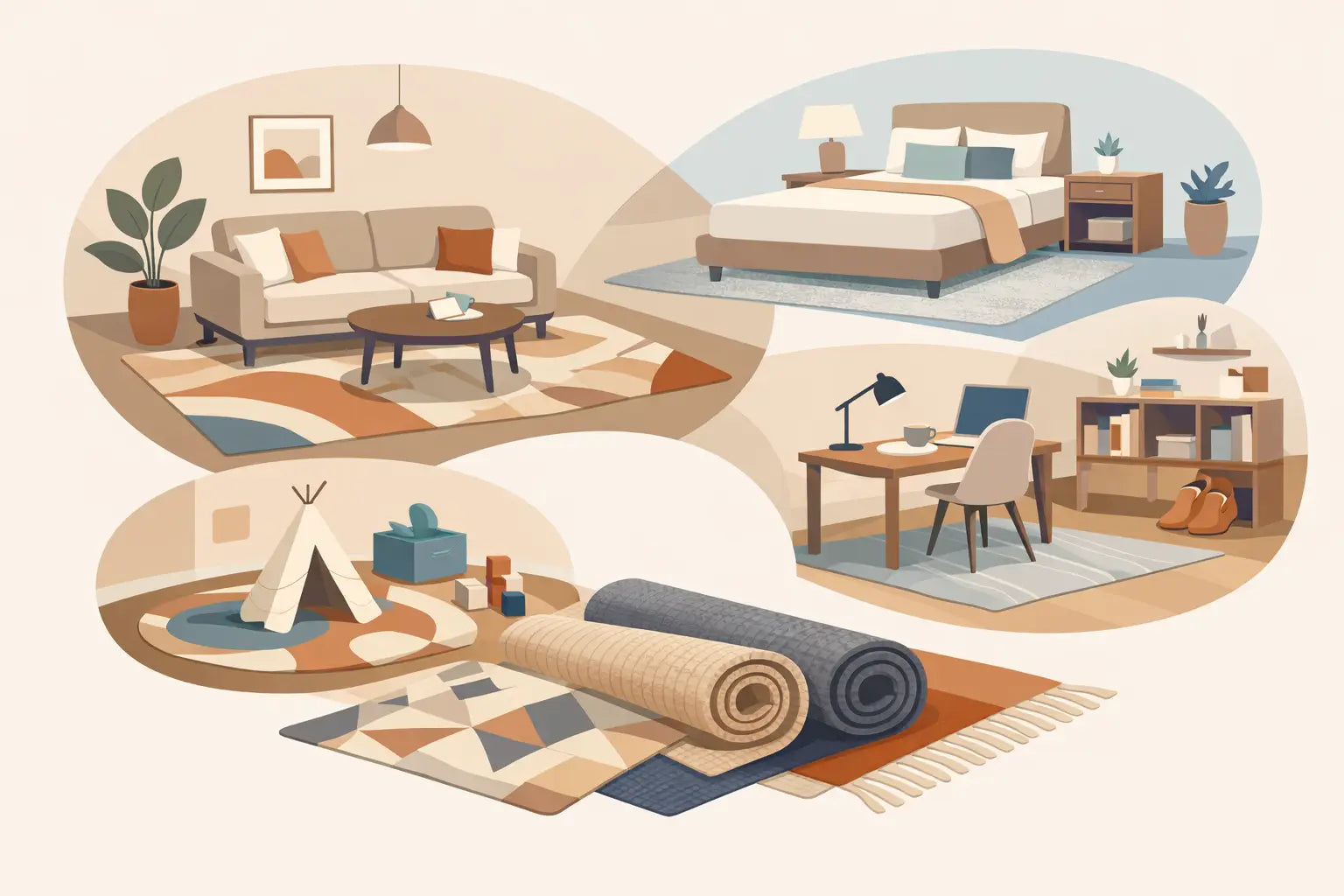
A rug can make a room feel finished in five seconds - or feel slightly off every time you walk past it. Usually, the difference comes down to proportion, texture, and how well the rug fits real life. This area rug buying guide is designed to help you choose with both confidence and clarity, whether you are styling a formal living room, softening a bedroom, or adding character to a busy hallway.
Start with size, not pattern
Most rug-shopping mistakes begin with choosing a design first and dimensions second. It is understandable - color and pattern create the emotional reaction. But size is what makes the room feel balanced.
In a living room, the strongest look is usually a rug large enough for at least the front legs of the seating to rest on it. If all furniture floats outside the rug, the space can feel disconnected. If the rug extends generously beyond the sofa and chairs, the room reads as more intentional and more relaxed.
In a bedroom, the rug should frame the bed rather than disappear beneath it. You want enough visible rug around the sides and foot of the bed to create softness underfoot when you get up. For dining rooms, the rug needs to extend beyond the table so chairs remain on the rug even when pulled out. In hallways, runners should follow the architecture of the space while leaving a clean border of flooring around the edges.
When you are between sizes, larger is often the safer choice. A slightly oversized rug tends to feel polished. A too-small rug tends to feel accidental.
An area rug buying guide to materials
Material shapes how a rug looks, feels, and performs over time. It also affects maintenance, shedding, softness, and price. This is where style and practicality need to meet.
Wool is a favorite for good reason. It has a rich hand, natural resilience, and a timeless look that works beautifully in traditional, transitional, and modern interiors alike. A wool rug often feels elevated and comfortable, but it can shed at first and may require a bit more care than a synthetic option.
Polypropylene and other synthetic fibers are often ideal for busy homes. They tend to be durable, easier to clean, and well-suited for high-traffic areas, kids, and everyday living. If your priority is performance with a polished appearance, synthetics can be a smart, design-friendly choice.
Viscose and similar fibers offer beautiful sheen and a softer, luminous finish. They can bring a refined, artful quality to a room, especially in lower-traffic spaces like bedrooms or sitting rooms. The trade-off is that they are generally less forgiving around moisture, spills, and heavy wear.
Natural fibers such as jute and sisal add warmth, texture, and an organic sense of calm. They work especially well in coastal, casual, and layered interiors. They are not always the softest underfoot, and some can be more prone to staining, so they are best chosen with lifestyle in mind.
Match the rug to the way the room lives
A beautiful rug is only successful if it fits the rhythm of the room. A formal space and a family room do not ask for the same thing.
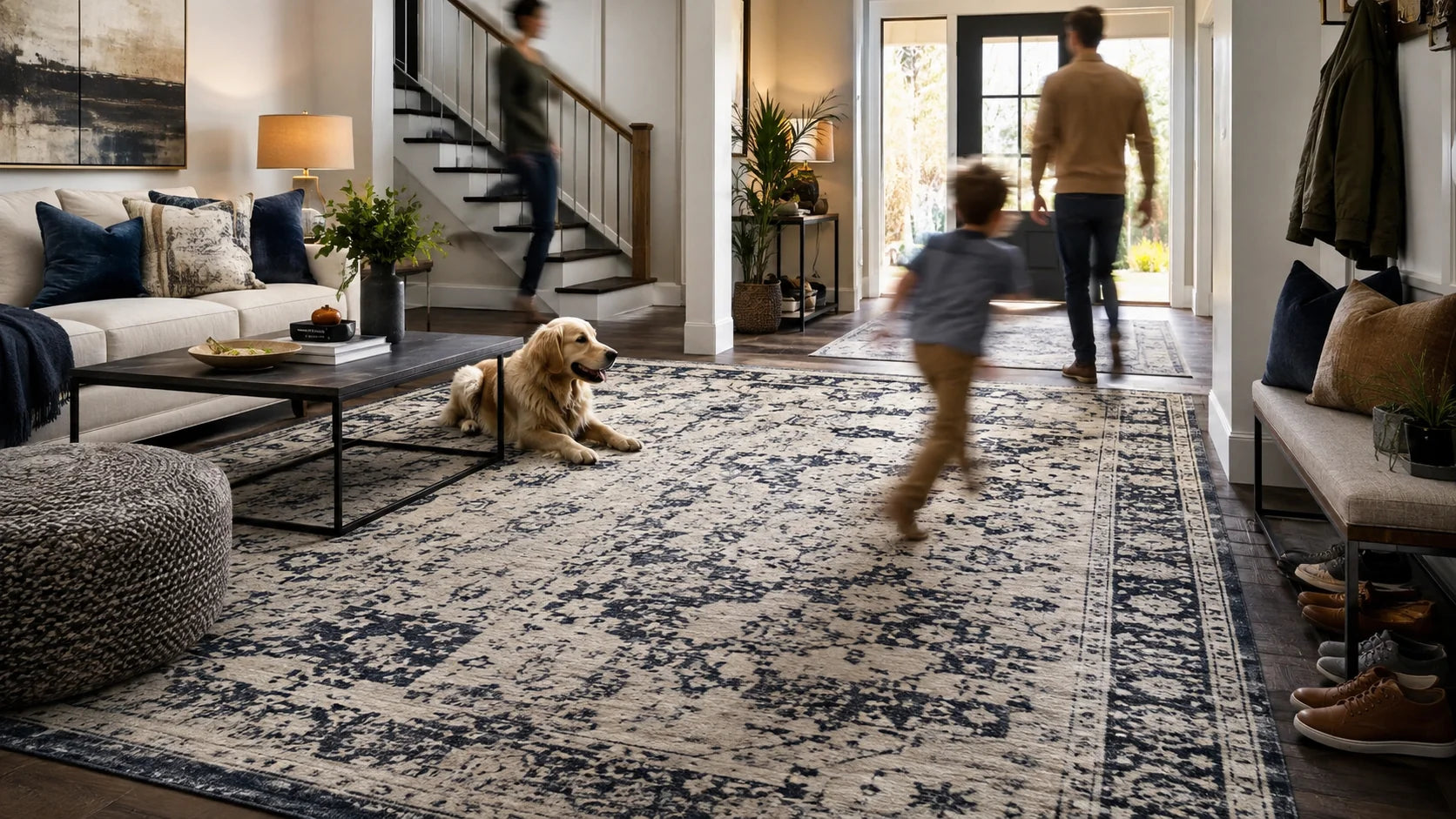
For high-traffic areas such as entryways, hallways, and main living spaces, look for low to medium pile and durable fibers. These rugs handle foot traffic better, are easier to vacuum, and tend to keep their shape with daily use. In homes with children or pets, a forgiving pattern can also go a long way. It adds visual depth while helping everyday crumbs, paw prints, and minor wear blend in more gracefully.
For bedrooms, softness often matters more. A plusher pile can make the room feel quieter and more restful. If the bedroom is your retreat, this is a place where touch matters just as much as appearance.
For dining rooms, flatter weaves are usually the practical answer. Chairs move more easily, crumbs are simpler to manage, and the overall look stays neat. In kitchens and utility spaces, runners and low-profile rugs can bring comfort and color without getting in the way.
Choose a style that supports the room
The best rug does not need to match everything exactly. It needs to belong.
Traditional rugs bring structure, history, and timeless elegance. They are especially effective in spaces that need depth or a sense of collected character. Even in a more modern room, a traditional pattern can create a compelling contrast and make the space feel more layered.
Transitional rugs are often the easiest to live with because they blend classic motifs with softer, updated palettes. If you want something versatile, polished, and less trend-dependent, this category is often the sweet spot.
Modern and contemporary rugs tend to lean into cleaner lines, abstract pattern, and tonal variation. They can anchor minimalist interiors or add an artful edge to simpler furnishings. Global and bohemian styles bring movement, personality, and a more relaxed narrative, especially when paired with natural textures and warm woods.
Solid and border rugs deserve more attention than they usually get. A solid rug can calm a busy room and let furniture or artwork shine. A border rug can create tailored definition, which is especially useful in dining rooms, bedrooms, and formal seating areas.
Color matters more than you think
Color does more than coordinate. It changes the mood of the room, affects how large the space feels, and influences how often the rug appears fresh between cleanings.
Lighter rugs can make a room feel open, airy, and serene. They are beautiful in bedrooms, sunrooms, and spaces where you want a tranquil palette. Darker rugs create contrast and drama and can feel grounding in larger rooms. Mid-tone rugs often strike the easiest balance between style and everyday livability.
If your furniture is mostly neutral, a rug is a natural place to introduce color and pattern. If the room already has strong visual moments, a more tonal rug may create better harmony. This is one of those it-depends decisions. Some rooms need a statement. Others need a stabilizer.
When shopping online, pay close attention to undertones. A beige can lean warm or cool. A gray can read soft and airy or deep and moody. The more thoughtfully the rug works with your flooring, upholstery, and natural light, the more cohesive the room will feel.
Do not overlook pile height and texture
Pile height affects both comfort and function. A plush rug can feel luxurious and inviting, but it may be less practical under dining chairs or in a front hallway. A flatwoven or low-pile rug offers a cleaner profile and often works better in active spaces.
Texture also influences the room’s mood. A hand-tufted wool rug can add substance and softness. A braided or natural fiber rug can create a more casual, grounded look. Subtle high-low texture can bring depth to a monochromatic palette without relying on bold pattern.
This is where online shopping becomes less about guesswork and more about reading product details carefully. Pile height, construction, and material descriptions tell you a great deal about how the rug will live in your home.
The finishing layer: pads, placement, and practical details
An area rug buying guide would not be complete without the layer underneath. A rug pad adds cushioning, helps prevent slipping, protects flooring, and can extend the life of the rug. In many rooms, it is the detail that makes the rug feel better and perform better from day one.
Placement matters too. In open-concept spaces, rugs can define seating, dining, or reading zones with beautiful clarity. In smaller rooms, the right rug can make the footprint feel larger by creating a stronger sense of structure. In long hallways, runners add warmth and movement while softening sound.
Then there are the practical considerations that make online rug shopping feel easier. In-stock visibility, clear dimensions, honest product specs, customer reviews, and straightforward return policies all matter. They reduce hesitation and help you shop with the same confidence you would want in a showroom. At Rug Resources, that balance of inspiration and practicality is part of what makes the process feel more considered and more comfortable.
When to trust your instinct
Once the basics are right - size, material, performance, and palette - there is still an emotional piece to the decision. The best rug often has a certain pull. It gives the room a point of view. It makes the furniture feel more intentional. It brings warmth, serenity, or character in a way that feels personal.
If you find yourself choosing between the perfectly sensible option and the one that makes the room feel complete, pause and consider how the space is meant to feel every day. A rug is not just a surface. It is the backdrop for morning routines, movie nights, dinner parties, and quiet moments at home. Choose the one that makes those moments look and feel better.

Share:
What Size Rug for Living Room Spaces?
How to Choose Area Rug Size by Room