

A rug can be the element that gives a room its finished, collected feeling - until flattened fibers, visible paths, and stubborn stains begin telling a different story. Knowing how to choose durable rugs means looking beyond a beautiful pattern or the first touch of softness. The right rug should complement your home’s character while standing up gracefully to the life lived around it: hurried mornings, family dinners, pets racing through the hall, and quiet evenings with your feet tucked in.
Durability is not one feature. It is the thoughtful combination of fiber, construction, pile, placement, and care. Once those pieces come together, you can choose a rug with confidence and enjoy its color, texture, and comfort for years to come.
Start With the Room, Not the Rug
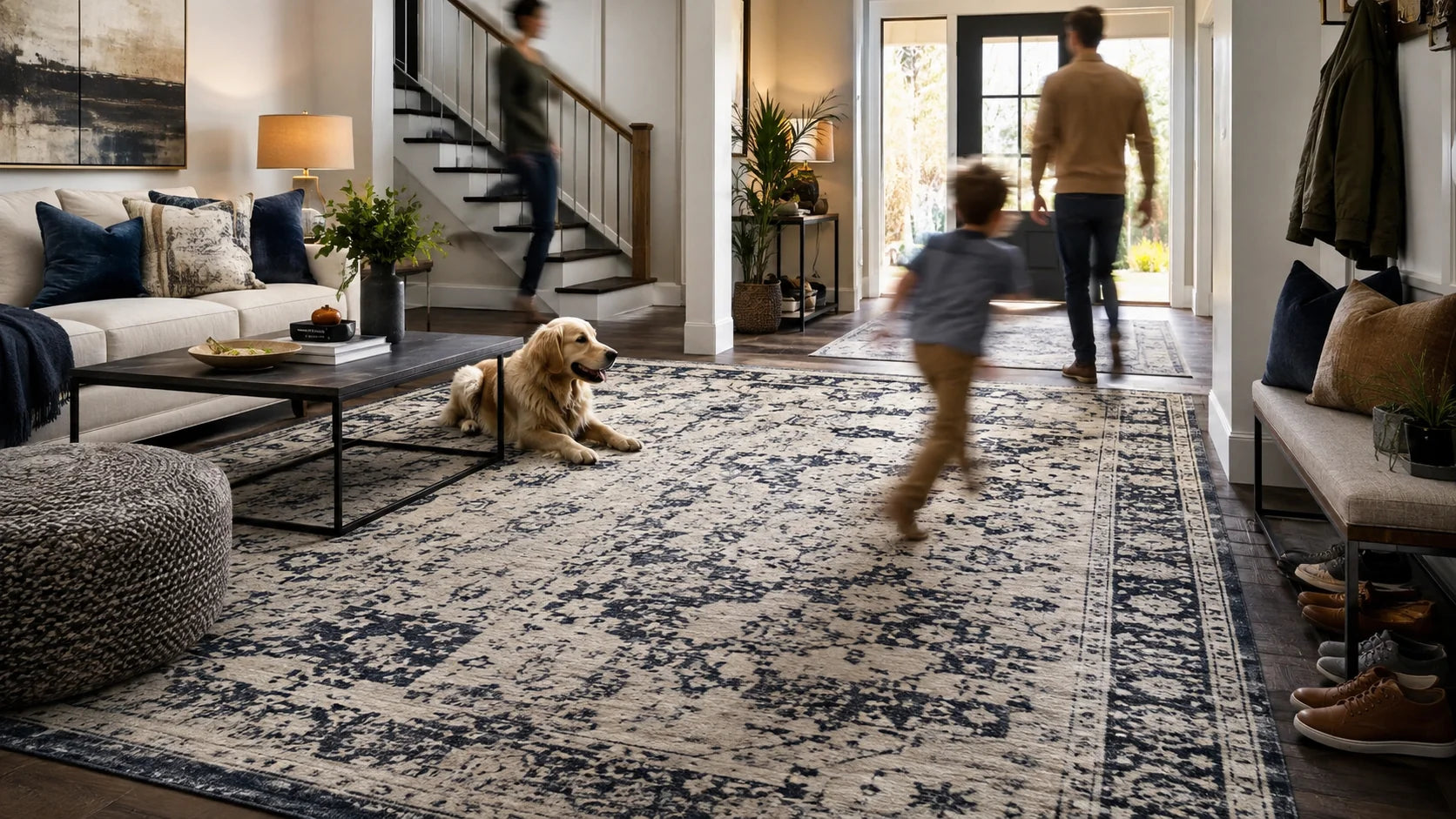
The most enduring choice begins with an honest look at the room. A rug in a formal sitting room has a very different job from one beneath a kitchen table or along a busy entryway. Consider how often people walk through the space, whether shoes are typically worn indoors, and what kinds of spills, pets, or play may happen there.
High-traffic areas such as hallways, entryways, kitchens, and family rooms need fibers and constructions that resist crushing and clean up with ease. A low-profile runner can keep a narrow hallway looking polished without creating a tripping concern, while a tightly woven area rug grounds a lively living room without showing every footprint.
Bedrooms and low-traffic lounges allow more room for softness and texture. A plush pile can feel wonderfully inviting beside the bed, but it may not be the best match for a breakfast nook where chairs slide in and out several times a day. Let the room’s rhythm guide the decision. A durable rug is one that is well suited to where it lives.
Choose Fibers Made for Everyday Living
Material is often the clearest indicator of how a rug will perform. Each fiber brings its own balance of softness, resilience, maintenance, and visual character.
Wool offers natural resilience
Wool has earned its reputation as a lasting rug fiber for good reason. Its naturally springy fibers recover well from furniture weight and foot traffic, helping a rug maintain a fuller appearance over time. Wool also has a slightly textured, dimensional look that adds warmth to traditional, transitional, and contemporary interiors alike.
It is naturally soil-resistant, though prompt attention to spills is still wise. Wool may shed initially, especially in hand-tufted styles, and it can be a more considered investment than synthetic options. For a living room, bedroom, or dining room where timeless elegance matters as much as performance, wool is often a beautiful choice.
Synthetic fibers make care simpler
Polypropylene, polyester, and nylon rugs are popular for active households because they are generally easy to clean, colorfast, and budget-friendly. Polypropylene is especially useful in areas prone to spills or outdoor-adjacent messes because it resists moisture and staining well. It is often found in low-pile, patterned, and indoor-outdoor designs that bring a practical layer of polish to busy spaces.
Polyester can offer a soft hand and rich color, making it appealing for bedrooms and lower-to-moderate traffic rooms. Nylon is known for strength and resilience, particularly where frequent foot traffic is expected. The trade-off is that some synthetic rugs can flatten sooner than wool, depending on their construction and pile height. A dense weave and a supportive rug pad help them perform at their best.
Natural fibers bring texture, with a few caveats
Jute, sisal, seagrass, and other plant-based fibers lend relaxed, organic character to a room. Their neutral tones and tactile weaves pair naturally with coastal, global, and modern interiors. They are particularly lovely in living rooms and bedrooms where you want a grounded, layered look.
However, natural fiber rugs can be less forgiving around moisture and stains. Their texture may feel rougher under bare feet, and prolonged exposure to humidity can affect the fibers. Consider them for spaces where their artful texture can be appreciated without asking them to manage frequent spills.
Look Closely at Construction
A rug’s construction affects how it wears, feels, and holds its shape. Product details can tell you far more than a photograph alone, so give this information the same attention you would give color or size.
Hand-knotted rugs are created knot by knot and are often exceptionally durable. Their craftsmanship, detail, and longevity make them heirloom-worthy pieces, though they typically come with a higher price point. Hand-tufted rugs have yarn pushed through a fabric backing and are usually softer and more accessible, but their lifespan can be shorter than a hand-knotted or flatwoven design.
Flatweave rugs, including many kilim-inspired and indoor-outdoor styles, have no raised pile. That makes them naturally suited to high-traffic areas, dining spaces, and homes that need easy upkeep. They are also practical under doors and furniture because of their slim profile. The trade-off is comfort: if you love the cushioned feel of a plush rug, add a quality rug pad beneath a flatweave.
Machine-made rugs offer tremendous variety in pattern, color, and price, and many are designed specifically for family-friendly performance. Look for a dense, tightly woven surface rather than a loose, airy pile. A well-made machine-woven rug can be a smart, stylish choice for a home where life is full and floors need to work hard.
Pick a Pile Height That Fits the Space
Pile height is easy to overlook, yet it has a major influence on long-term appearance. High-pile and shag rugs create softness and visual depth, but their longer fibers can trap crumbs, pet hair, and dust. They also tend to show compression in frequently traveled spots.
For entryways, hallways, dining rooms, and active living rooms, a low or medium pile is usually the more durable choice. It is easier to vacuum, less likely to catch under dining chairs, and better able to keep its tailored appearance. A subtle pattern or heathered finish can also disguise everyday dust and minor marks more effectively than a solid, pale surface.
That does not mean you need to avoid plushness altogether. Reserve a higher pile for a bedroom, reading corner, or low-traffic retreat, where its cozy texture can create a sense of tranquil harmony without taking on constant wear.
Match Color and Pattern to Real Life
A durable rug should look good between cleanings, not only on the day it arrives. Light solid rugs can make a room feel airy and serene, but they are more likely to reveal muddy paw prints, coffee drips, and the subtle gray cast of daily foot traffic. Dark solids can hide soil well, though lint and pet hair may be more noticeable.
Pattern is one of the most practical design tools available. Traditional motifs, modern geometrics, tonal abstract designs, and layered color variations can soften the appearance of everyday wear while giving a room more personality. A medium-toned rug with several complementary shades is often especially forgiving in a busy household.
Think, too, about the room’s existing finishes. A rug should connect your furniture, walls, and accents rather than compete with them. The most lasting choice is not necessarily the safest neutral or the boldest statement. It is the one that makes the room feel intentional and still suits the way you use it.
Do Not Skip the Rug Pad
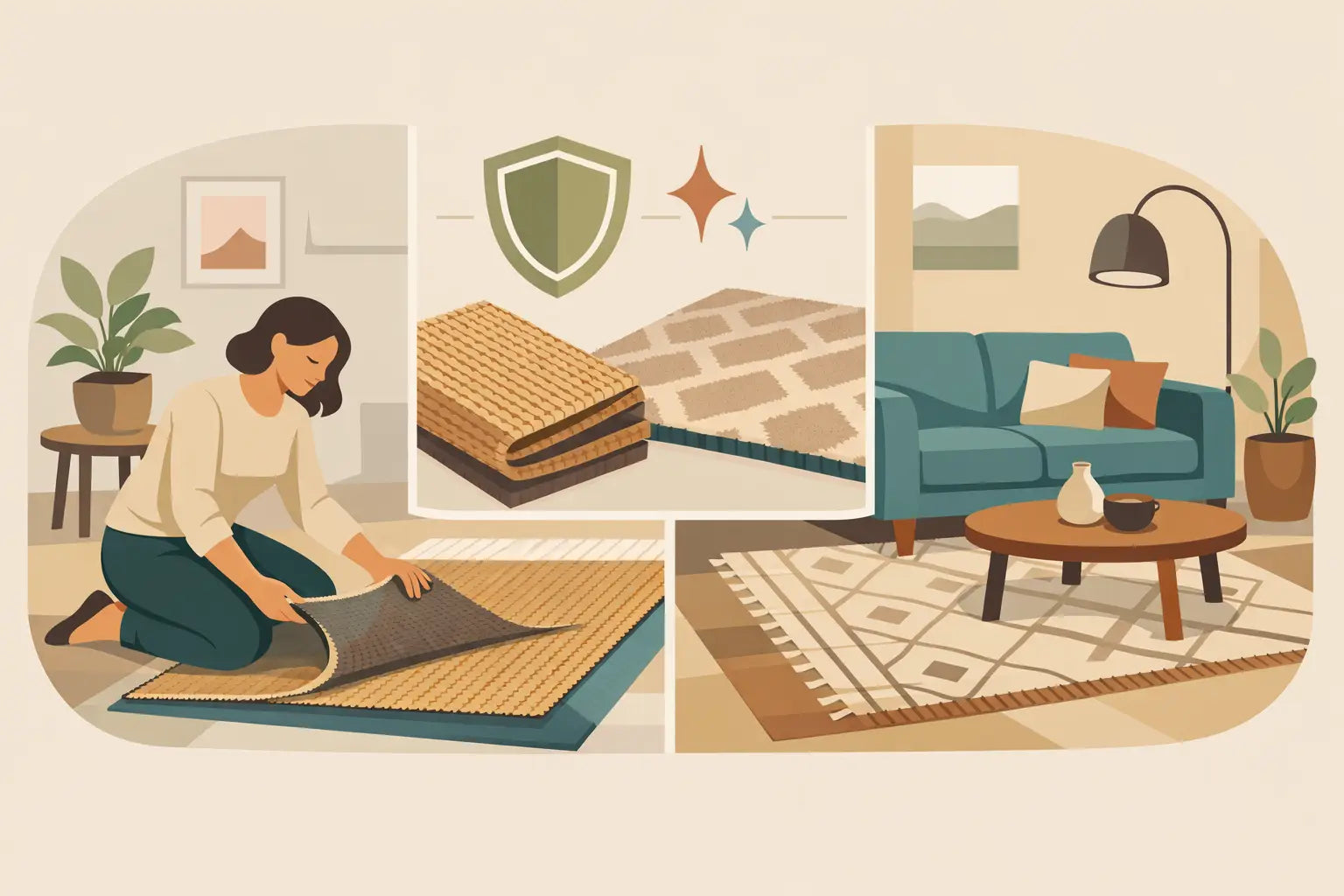
A rug pad is a quiet but essential part of a durable setup. It helps prevent shifting, reduces friction between the rug and the floor, adds comfort, and absorbs some of the impact of foot traffic. Over time, that support can help reduce premature wear.
Choose a pad designed for your floor type, especially over hardwood, luxury vinyl, or other surfaces that may react to certain materials. The pad should sit slightly inside the edges of the rug so it remains unseen. For slim flatweaves, a cushioned pad brings welcome softness; for thicker rugs, a firmer, low-profile pad provides stability without adding excess height.
Protect the Rug You Love
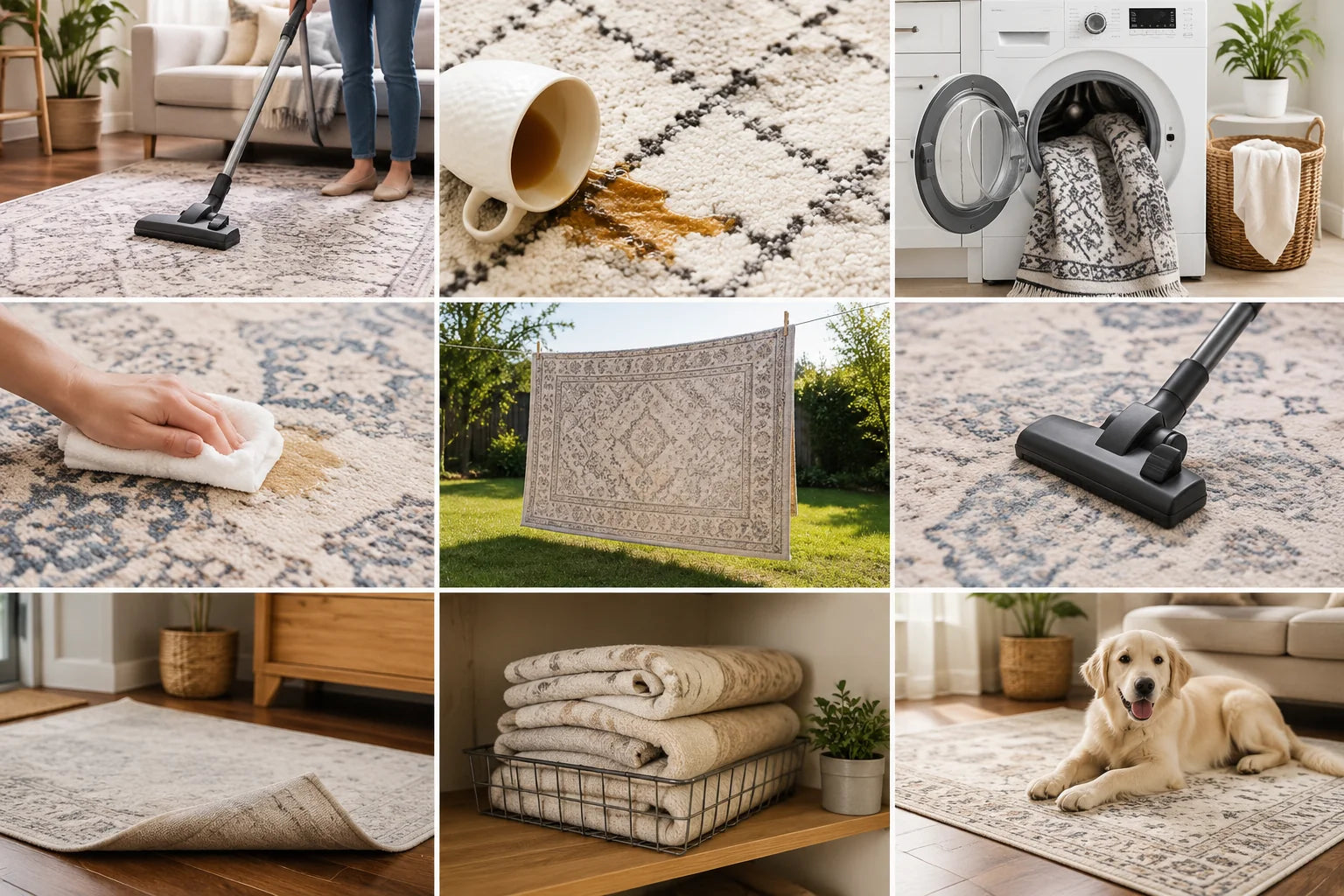
Even the most durable materials benefit from a few simple habits. Vacuum regularly using the appropriate setting for the rug’s pile, and avoid aggressive beater bars on delicate fibers or fringed edges. Rotate the rug every few months so sunlight, foot traffic, and furniture pressure are distributed more evenly.
Treat spills promptly by blotting rather than rubbing, working from the outer edge inward. For wool, natural fibers, and specialty constructions, follow the maker’s care guidance and consider professional cleaning when needed. If a rug is placed in direct sunlight, window treatments or occasional rotation can help preserve its color.
When selecting a piece for a hardworking home, beauty and practicality do not need to compete. At Rug Resources, the most memorable rooms are often built around rugs that feel personal, look polished, and quietly keep pace with everyday life. Choose the one that welcomes the moments ahead, then let it become part of your home’s story.

Share:
Best Rugs Under Dining Tables for Every Home
Fast Shipping Area Rugs for a Finished Room