

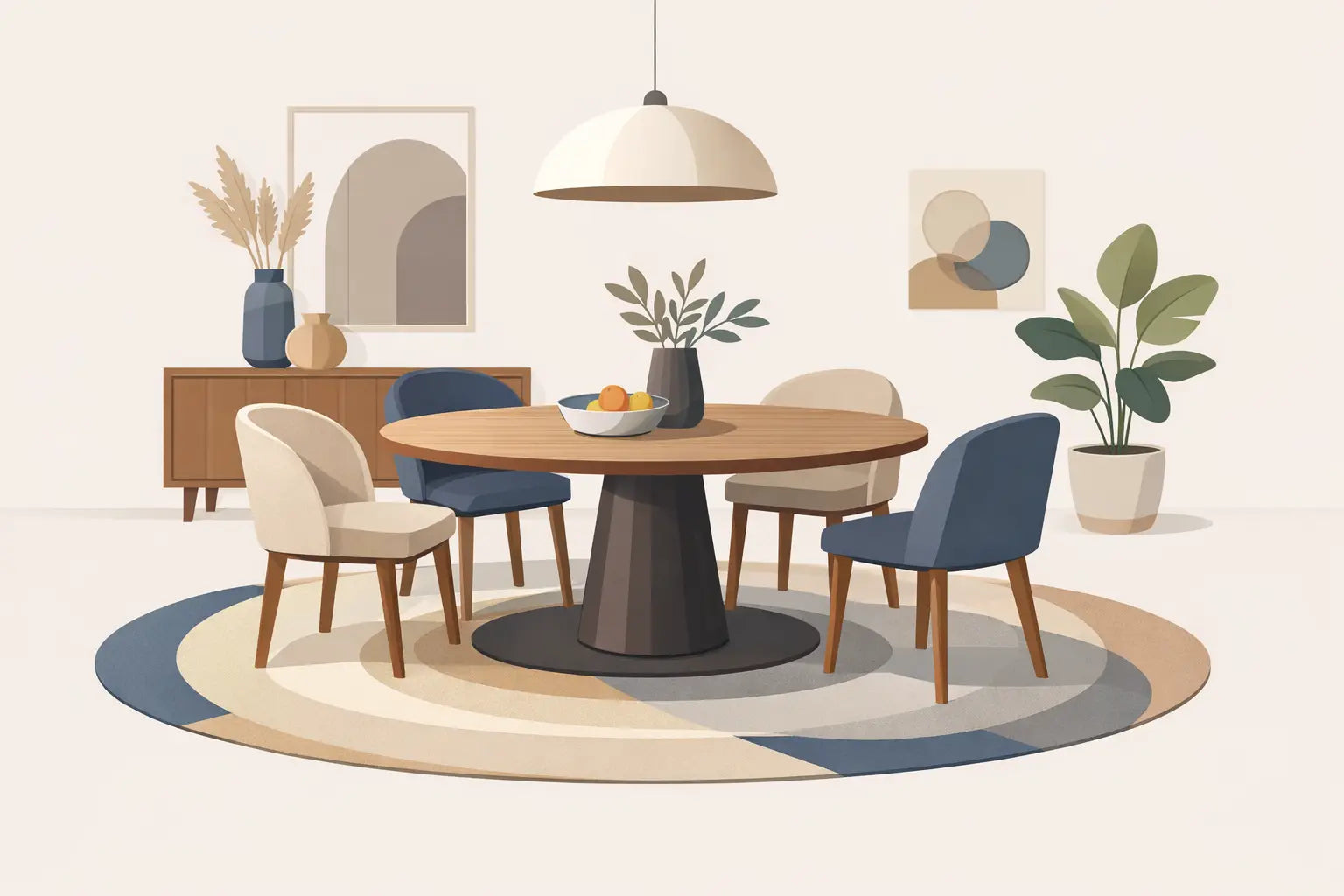
A dining rug has one very practical job: it needs to stay beautiful when chairs slide back, crumbs fall, and a weeknight meal turns into a long conversation. The best rugs under dining tables do more than frame furniture. They give the room warmth, define an open-plan layout, soften acoustics, and bring a collected sense of character to every gathering.
The right choice is rarely about choosing the most delicate pattern or the softest pile. It is about proportion, fiber, and the way your household actually uses the table. A formal dining room can welcome a more textural rug than the breakfast nook used by children, pets, and hurried mornings. Start with how you live, then choose the piece that makes the room feel intentional.
What Makes the Best Rugs Under Dining Tables?
A successful dining room rug is large enough to support both the table and chairs, low enough for chairs to move comfortably, and durable enough for the occasional spill. Those three details matter more than a trend-forward color in isolation.
Look for a low-pile or flatwoven construction whenever possible. A dense, shorter pile keeps dining chairs from catching at the rug edge and makes it easier to vacuum away crumbs. Flatweaves offer an especially relaxed, tailored look and work beautifully beneath modern, farmhouse, global, and casually elegant tables. A low-profile wool rug can also be a lovely choice for a more formal setting, bringing natural softness without feeling overly plush.
Pattern deserves a practical role here. A tonal rug creates calm beneath a sculptural table, while a gently distressed traditional design can disguise the small marks of everyday life. High-contrast ivory rugs are striking, but they ask more of a busy household. If your dining area sees frequent use, consider heathered color, layered neutrals, botanical motifs, or a nuanced vintage-inspired pattern that offers visual depth without making the space feel busy.
Get the Dining Rug Size Right First
The most common dining room rug mistake is choosing a size that looks right beneath the table when no one is seated. Once chairs are pulled out, a too-small rug leaves rear chair legs hovering on the floor, which feels awkward and can make the entire room appear undersized.
As a general rule, allow 24 to 30 inches of rug beyond every side of the table. This gives chairs room to remain fully on the rug when pulled back. Measure the table at its widest point, including leaves if you use them often, then add 48 to 60 inches to both length and width. For a 42-by-72-inch rectangular table, an 8-by-10 or 9-by-12 rug is often the most comfortable fit, depending on the chair depth and room dimensions.
A few common pairings make the decision easier:
- A 4-seat round table usually needs a 6-foot or 8-foot round rug.
- A 6-seat rectangular table often suits an 8-by-10 rug.
- An extended 8-seat table typically calls for a 9-by-12 rug.
- A compact apartment dining zone may need a 5-by-8 rug, provided chairs stay on it when moved back.
Match the Rug Shape to the Table
Echoing the table shape is the easiest route to visual harmony. A rectangular rug grounds a rectangular or oval table, while a round rug gives a circular pedestal table a graceful, centered presence. Square rugs work well beneath square tables and can be especially effective in compact dining rooms with balanced proportions.
That said, contrast can be artful. A round dining table on a rectangular rug can feel fresh in a long room, as long as the rug remains generously sized. What matters most is not strict shape matching but ensuring every chair has a stable, comfortable landing place.
Choose Materials That Welcome Real Life
The best material depends on the level of traffic, your cleaning habits, and the mood you want to create. There is no single perfect fiber for every home.
Wool remains a favorite for its warmth, resilience, and naturally forgiving texture. It has a refined hand and can hold color beautifully, making it a strong choice for dining rooms that lean classic, transitional, or quietly luxurious. Wool does shed somewhat at first, and it is best treated quickly if a spill happens, so it may be better suited to homes where the dining room is used thoughtfully rather than constantly.
Synthetic fibers such as polypropylene and polyester are practical standouts for active families. They are often stain-resistant, colorfast, and easier to maintain, with many designs offering the inviting appearance of wool or timeworn textiles. A well-made synthetic rug can be an excellent choice beneath a table used daily for homework, craft projects, and family dinners.
Natural-fiber rugs, including jute and sisal, bring tactile beauty and a relaxed organic layer to dining spaces. Their texture pairs especially well with wood tables, linen upholstery, and sunlit interiors. The trade-off is that natural fibers can be less forgiving around spills and may feel uneven beneath sliding chairs. Consider them for lower-risk dining rooms or layer a smaller patterned rug over a large natural-fiber foundation for added softness and personality.
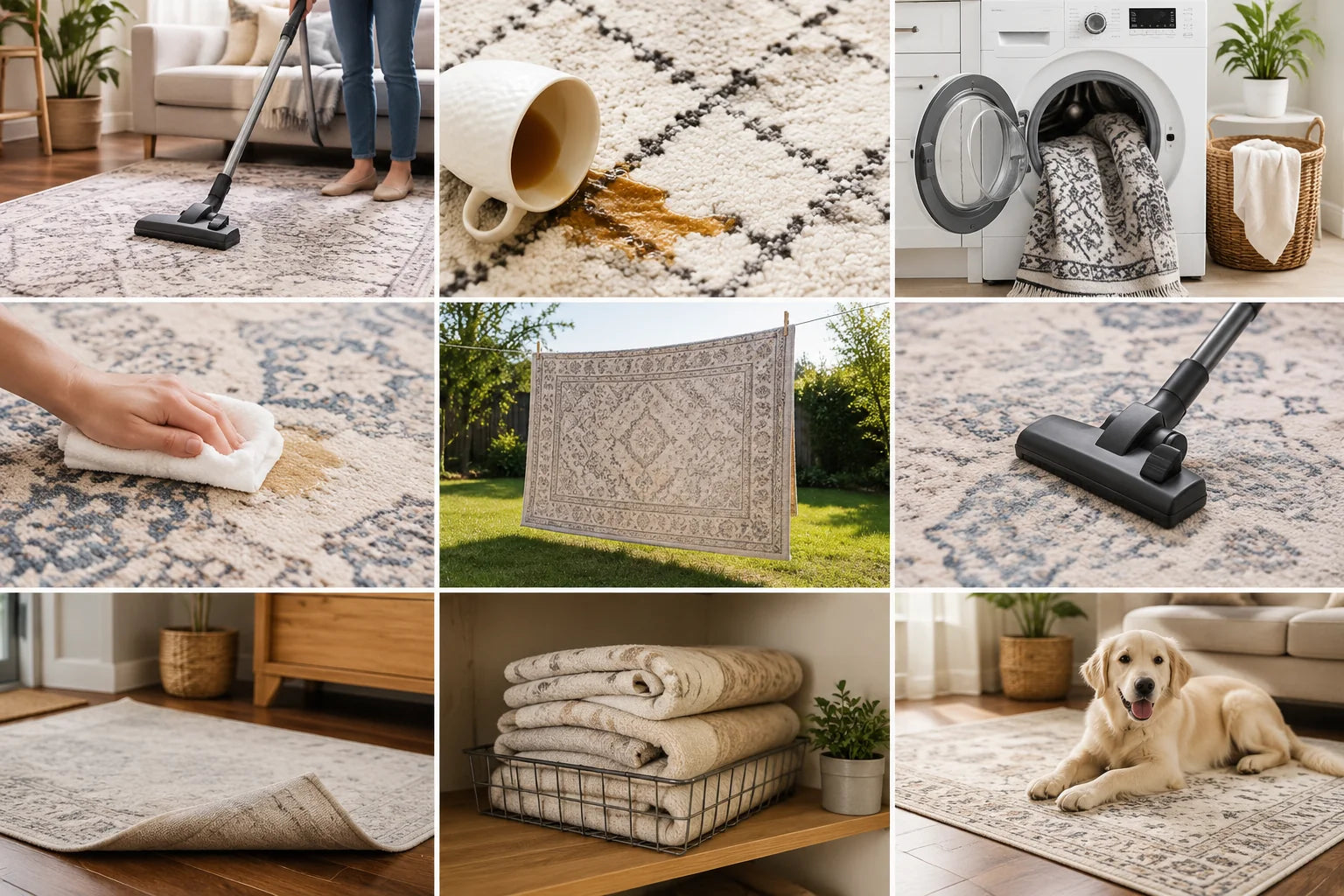
Washable rugs are another sensible option for casual dining spaces, especially where young children or pets are part of the picture. They can simplify cleanup, though some thinner constructions may shift without a quality rug pad. Always check the care instructions and confirm that the rug's size and construction work with your laundry setup before relying on washability as the deciding factor.
Build a Color Story Around the Table
A dining rug should support the room's narrative rather than compete with every finish. Start with the table, since it is usually the largest and most permanent piece. Dark walnut, espresso, and black tables gain lightness from warm ivory, muted blue, faded terracotta, or softly patterned neutral rugs. Blonde oak and lighter wood tones pair beautifully with earthy greens, denim blues, clay tones, and subtle charcoal accents.
If your chairs are upholstered, use the rug to connect their fabric to the rest of the room. Repeating even a small note of the chair color can make a space feel thoughtfully composed. With wood or woven chairs, a patterned rug can take a more expressive role and add the visual softness those materials naturally invite.
For a dining room with statement wallpaper, bold art, or a dramatic light fixture, consider a rug with a quieter palette and textural movement. Conversely, a simple room can handle an artfully crafted traditional motif, a graphic border, or a contemporary abstract design. The goal is not to make every piece speak at once. It is to let each element contribute to a tranquil harmony.
Do Not Skip the Rug Pad
A rug pad is the unseen detail that makes a dining rug feel better underfoot and perform better over time. On hard flooring, it helps prevent shifting as chairs move, reduces wear, and adds a little cushion without creating an unstable surface. Choose a thin, non-slip pad for low-pile and flatwoven rugs so chair legs glide more easily.
Avoid a pad that is visible beyond the rug edge. It should sit about one inch inside the perimeter on all sides. If your rug is placed over carpet, a firm pad can help keep it from bunching and give the dining area a more anchored appearance.
Make the Rug Work for Your Routine
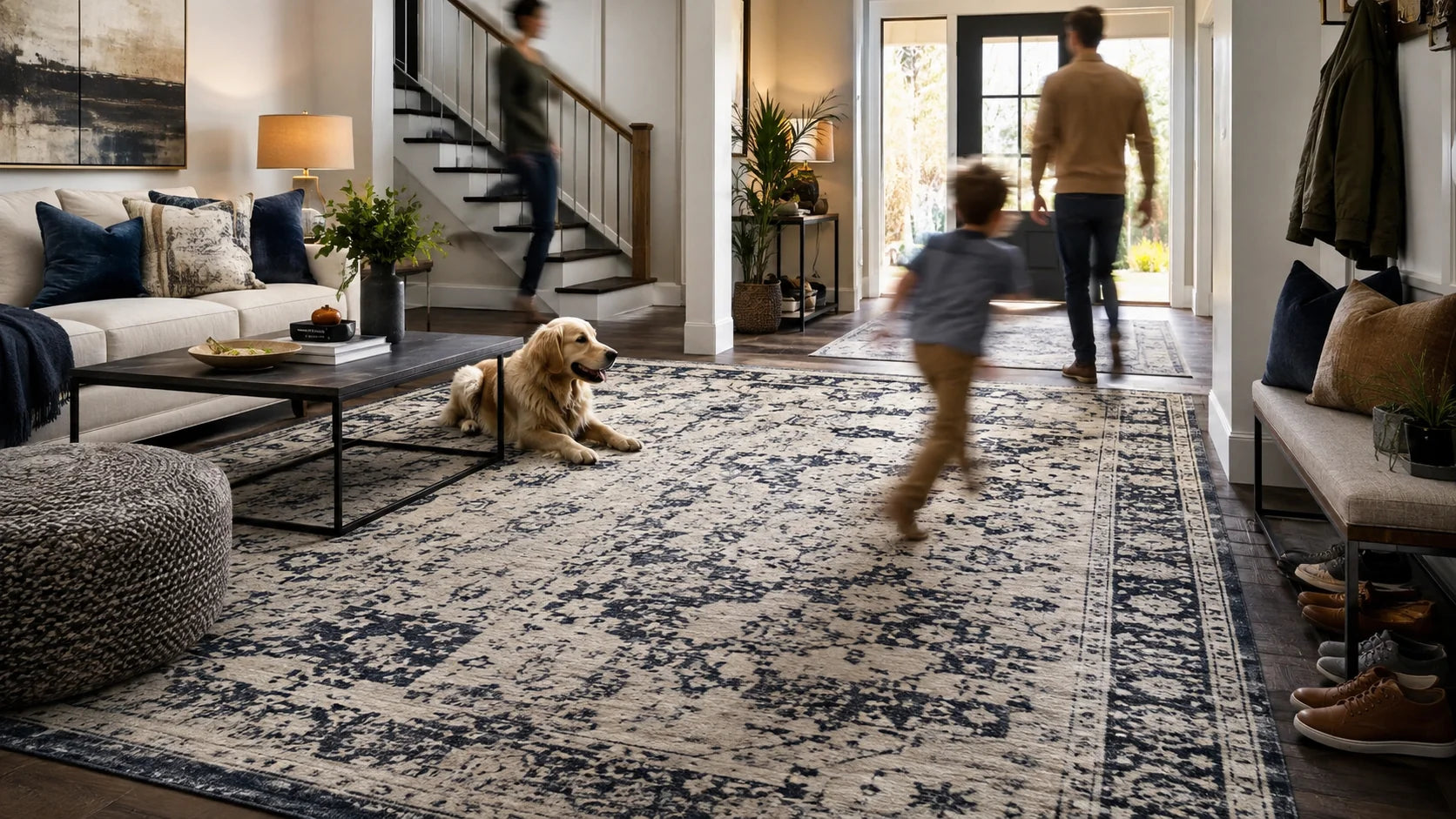
Before choosing, picture the least polished moment your dining room sees: red sauce, a toppled glass, a muddy paw, or a chair being pushed back one-handed while someone carries plates. A rug that fits that reality will remain a source of pleasure instead of becoming something you worry over.
For most homes, a generously sized low-pile rug in a nuanced pattern offers the sweet spot between style and ease. It lets the table feel grounded, gives guests a comfortable place to settle in, and brings a finished layer to the room even on ordinary Tuesday nights. Choose the rug that welcomes life at the table, then let the meals, celebrations, and quiet moments give it its own story.

Share:
Patterned vs Solid Rugs: Which Fits Your Room?
How to Choose Durable Rugs That Last Beautifully