

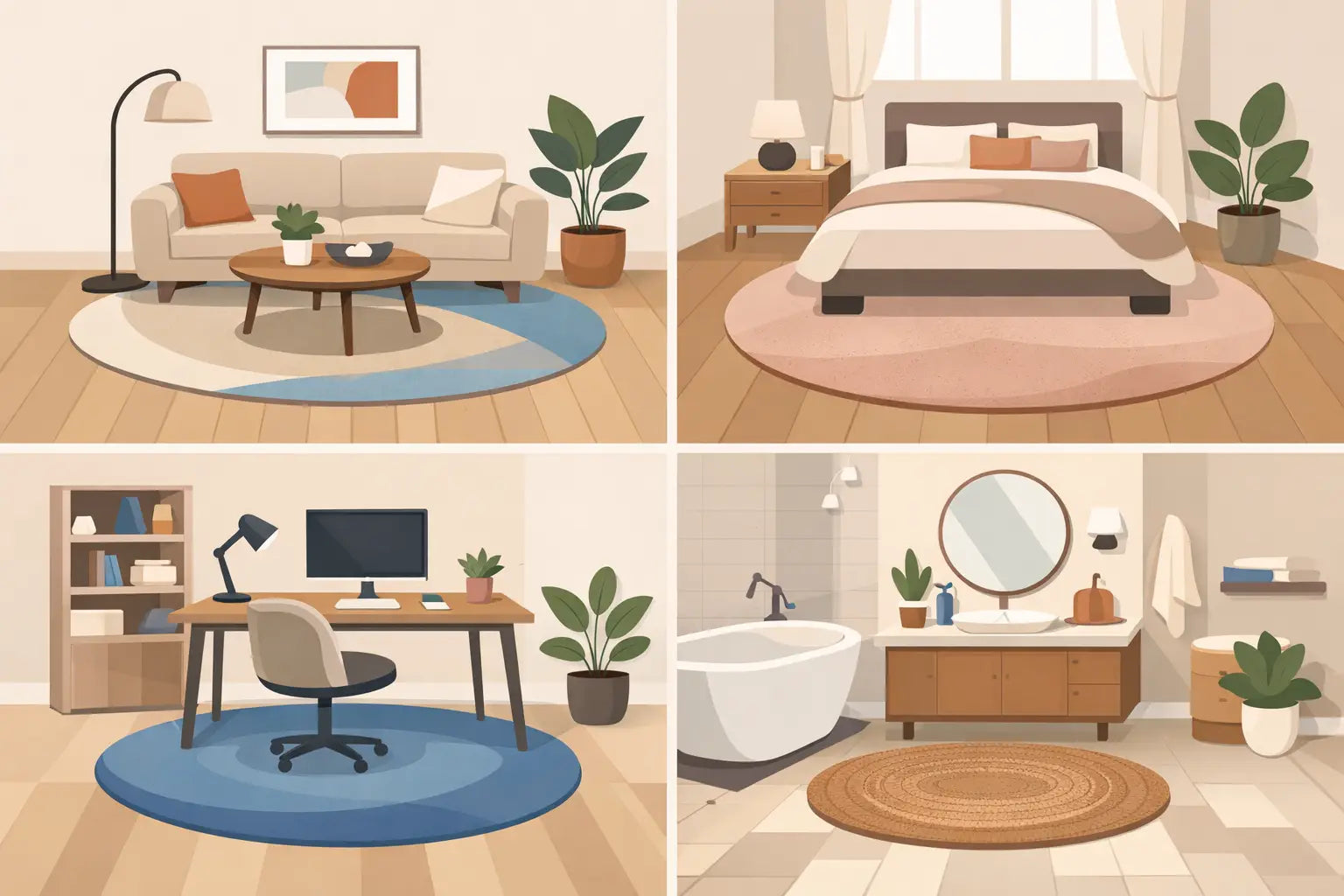
A room full of straight lines can feel polished, but it can also feel a little rigid. The rectangle of the sofa, the square edges of a coffee table, the long run of kitchen cabinets - these are exactly the moments when a circular rug brings welcome softness. Learning how to decorate with round rugs is less about following a formula and more about using shape with intention: to create a focal point, make a small space feel more generous, or give an everyday room a more collected point of view.
Round rugs have a quiet versatility that makes them especially rewarding to decorate with. They can echo an architectural curve, frame a favorite furnishing, or add movement to a layout that feels overly linear. The best choice balances that visual charm with practical details such as room scale, traffic level, pile height, and the way furniture will sit on the surface.
Start With the Shape of the Room
A round rug does not require a round room. In fact, the contrast between a circular rug and a rectangular room is often what makes the placement feel so artful. A round rug can soften the corners of a compact living room, break up a long open-plan area, or create a gentle pause in an entryway filled with hard surfaces.
Before choosing a design, look at the lines already present. Curved dining chairs, an oval table, an arched doorway, or a rounded chandelier create a natural conversation with a circular rug. If your room is defined by crisp, modern furnishings, a round rug can bring balance without changing the larger design direction.
The trade-off is proportion. In a very narrow room, a round rug that is too large may feel squeezed rather than intentional. In that setting, a runner or rectangular rug may serve the space better. Reserve round rugs for areas where there is enough open floor around the perimeter to appreciate their silhouette.
How to Decorate With Round Rugs by Room
Create a welcoming entry
An entry is one of the most natural places to use a round rug. It establishes a warm first impression and gives a compact landing space a more finished appearance. Place a round rug beneath a pendant light, in front of a curved console, or at the center of a square foyer.
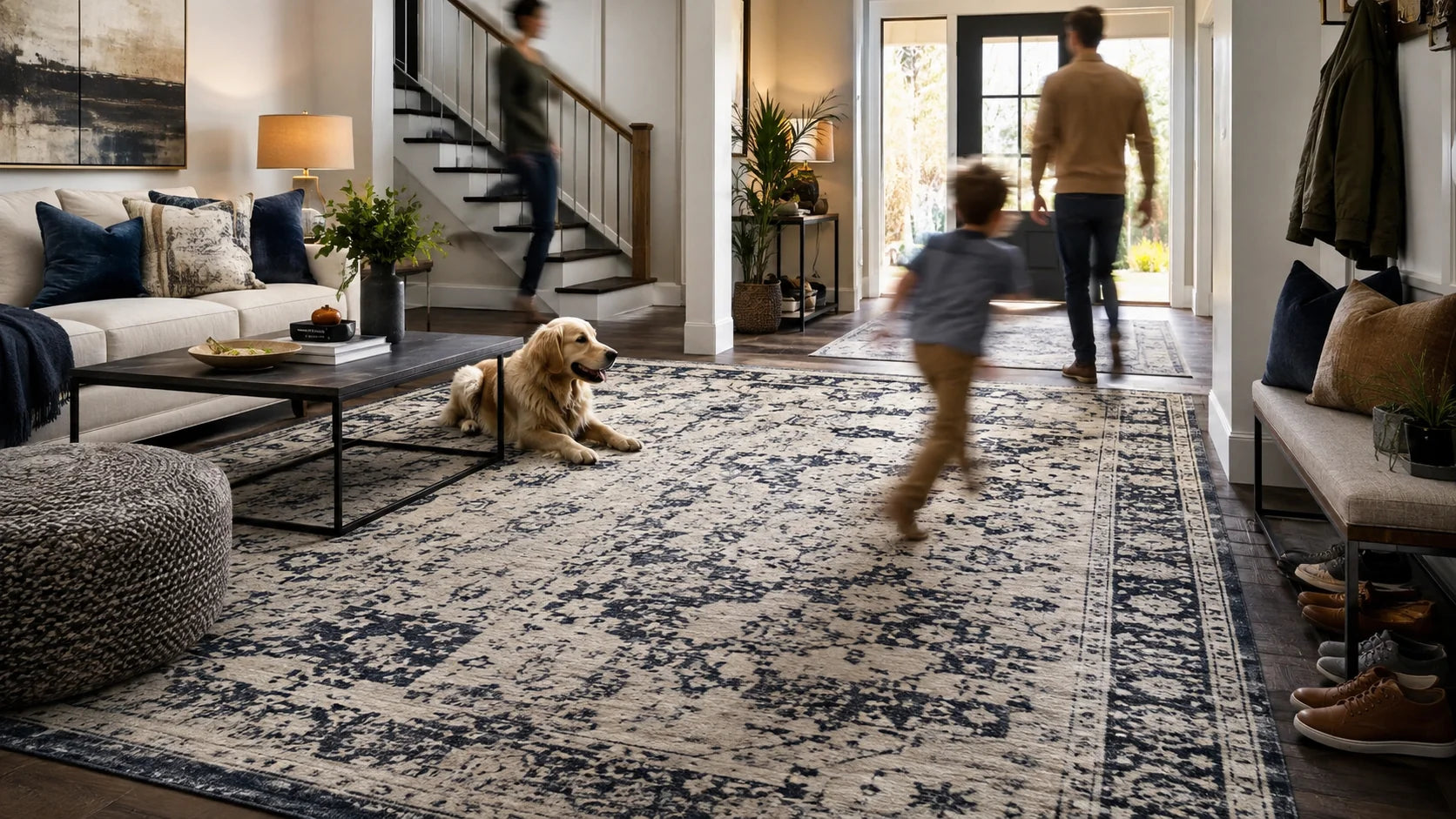
For a hardworking entry, prioritize a low-profile construction that is easy to maintain and does not interfere with door clearance. A patterned rug can be especially forgiving with everyday foot traffic, while a more tonal design offers a serene, tailored look. Leave a visible border of flooring around the rug so the entry still feels open.
Soften a living room conversation area
In a living room, a round rug works best when it supports a clear furniture grouping. It may sit beneath a circular coffee table, a pair of swivel chairs, or a small seating arrangement designed for conversation. The rug should feel connected to the furnishings, not like a small island floating in the center of the room.
A simple guideline is to let the front legs of nearby chairs or a loveseat rest on the rug when space allows. If you are working with a compact apartment living room, a round rug can define the seating zone without introducing another strong rectangular layer. Choose a size that extends beyond the coffee table by a comfortable margin, giving the arrangement visual breathing room.
Larger living rooms can also benefit from a round rug, but placement matters. A generously sized rug can anchor a reading nook or an intimate secondary seating area within the larger room. For the main seating zone, a round rug is most convincing when the furniture arrangement has some curve or symmetry to it.
Make a dining area feel more inviting
A round dining table and round rug are a classic pairing for good reason. The matching forms feel composed, and the rug creates a beautifully defined setting for meals, conversation, and celebrations. The key is choosing a rug large enough for chairs to remain on it when pulled back.
Measure from the edge of the table and allow roughly 24 to 30 inches of rug beyond it on all sides. This extra room keeps chair legs from catching on the rug edge and makes the dining area feel more generous. For example, a 48-inch round table generally needs at least an 8-foot round rug, though the ideal size depends on the chairs and room dimensions.
Dining spaces call for practicality as much as beauty. Low-pile wool, performance fibers, and easy-care constructions are smart choices under a table where crumbs and spills are inevitable. A subtle pattern or variegated color can add character while making everyday marks less noticeable.
Give bedrooms a softer point of view
Round rugs can be especially charming in bedrooms because they soften the room's more functional pieces. Try one at the foot of the bed, beneath a reading chair, or beside the bed where bare feet first meet the floor in the morning. A plush pile brings a sense of comfort, while a flatwoven piece lends relaxed texture without overwhelming the room.
For a large bed, a single round rug placed directly underneath can be difficult to size correctly unless the bedroom is quite spacious. Often, it is more effective to use the round rug as an accent rather than forcing it to anchor the entire bed. A pair of coordinating rounds on either side of the bed can also create a thoughtful, unexpected alternative to standard bedside runners.
Define a nursery, office, or reading nook
Small zones are where round rugs truly shine. In a nursery, they can frame a rocking chair and side table, creating a cozy corner for late-night feeds and story time. In a home office, they soften the area beneath a desk or highlight an accent chair without making the room feel crowded.
A round rug also gives a reading nook its own identity. Place one beneath a comfortable chair, small table, and floor lamp to make that corner feel like a destination rather than leftover space. Here, texture can do much of the decorative work: braided fibers, soft wool, or a vintage-inspired pattern can add depth to an otherwise simple setting.
Choose the Right Diameter Before Falling for a Pattern
The most beautiful rug can still look out of place if the scale is wrong. Round rug sizes are measured by diameter, so visualize the full width from one edge through the center to the other. Painter's tape is a useful way to map the circle on the floor before ordering, particularly when buying online.
A 4-foot round rug is lovely for a petite entry, beside a bed, or under a small bistro table. A 6-foot option suits many reading nooks, nurseries, and modest dining areas. An 8-foot round rug has enough presence for a larger dining table or compact living room, while 10-foot and larger sizes can make a strong statement in a spacious foyer or open-concept home.
Avoid choosing a size simply because it fits inside the room. A rug should relate to the furniture it serves. If the dining chairs sit halfway on and halfway off the rug, or if the coffee table nearly fills the entire circle, go larger. When sizing feels uncertain, a little more floor coverage usually looks more intentional than too little.
Use Color and Pattern to Shape the Mood
A round rug naturally draws the eye, so its color and pattern can shift the mood of a room quickly. A neutral woven rug in ivory, sand, or soft gray delivers tranquil harmony and lets surrounding art, upholstery, and wood tones lead. It is a graceful option when shape is the main decorative statement.
For more personality, consider a rug with a border, medallion, botanical motif, or global-inspired pattern. Circular borders are particularly effective because they emphasize the silhouette rather than fighting it. In a room with solid upholstery, a patterned round rug can provide the layer of character that makes the space feel curated.
If the room already has active wallpaper, colorful drapery, or bold furniture, a quieter rug may be the better choice. Decoration works best when there is a clear hierarchy. Let one element be expressive, then give the rest of the room room to breathe.
Finish the Look With Practical Layers
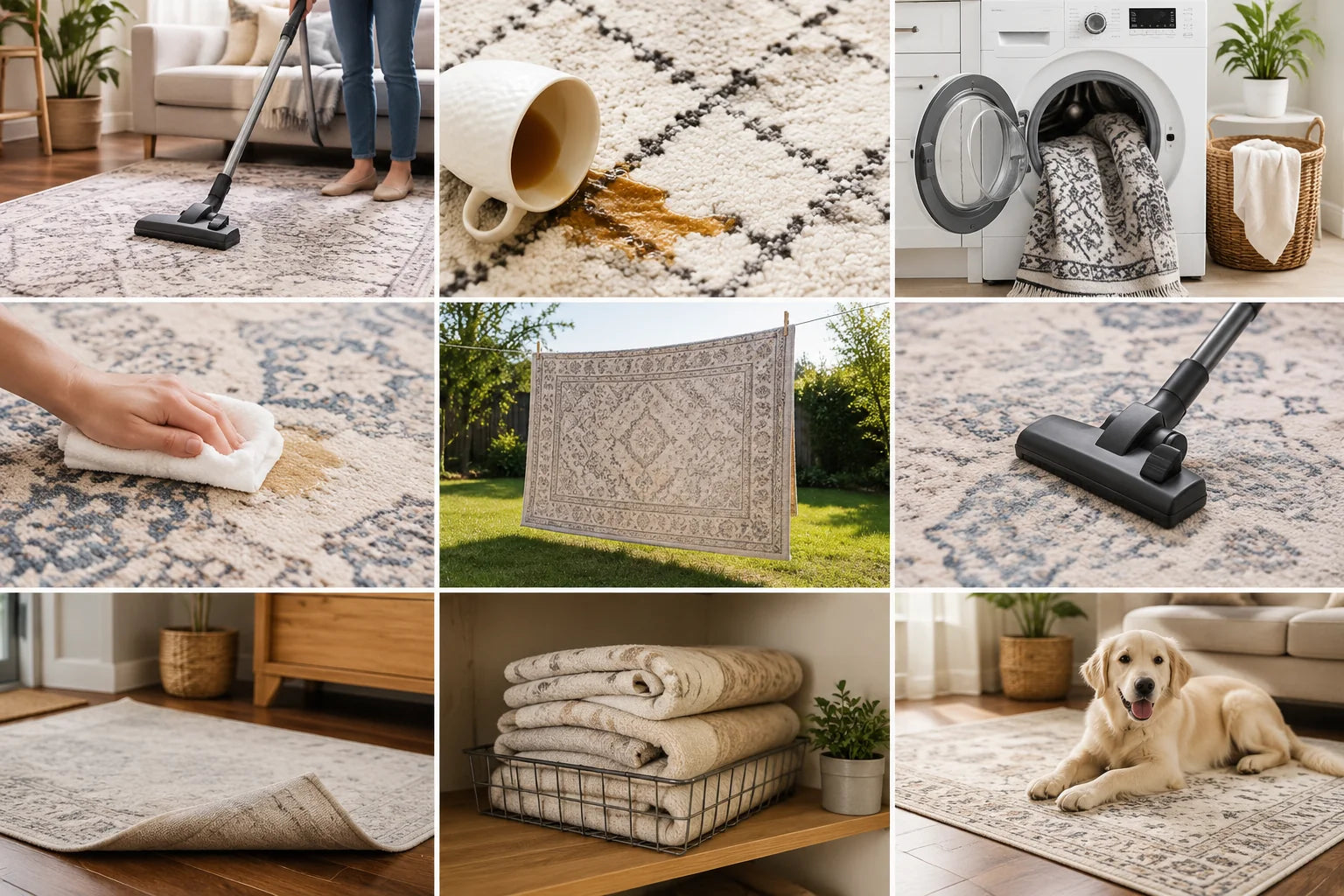
A rug pad is worth considering beneath almost every round rug, especially on hardwood, tile, or laminate floors. It helps minimize slipping, adds a touch of cushioning, and can support the rug's longevity. Choose a pad that sits slightly inside the rug edge so it remains invisible.
Material should reflect the way the room is used. Wool offers natural softness and lasting appeal, making it a beautiful choice for bedrooms and lower-traffic living spaces. Performance-oriented synthetic fibers often make more sense for busy entries, dining rooms, homes with children, or pet-friendly spaces where easy maintenance is part of the decision. Flatweaves are ideal where you need a lower profile, while a higher pile adds comfort in rooms meant for lingering.
At Rug Resources, thoughtful filters for size, material, color, pile height, and room use can make narrowing the options feel far less overwhelming. Once you have the right dimensions, choose the rug that gives the room a feeling you want to return to - relaxed, gathered, playful, or quietly refined. A round rug does more than cover the floor; it gives a space a softer place to begin.

Share:
Hallway Runner Buying Guide for a Beautiful Entry
Bohemian Rugs That Bring a Room Together