

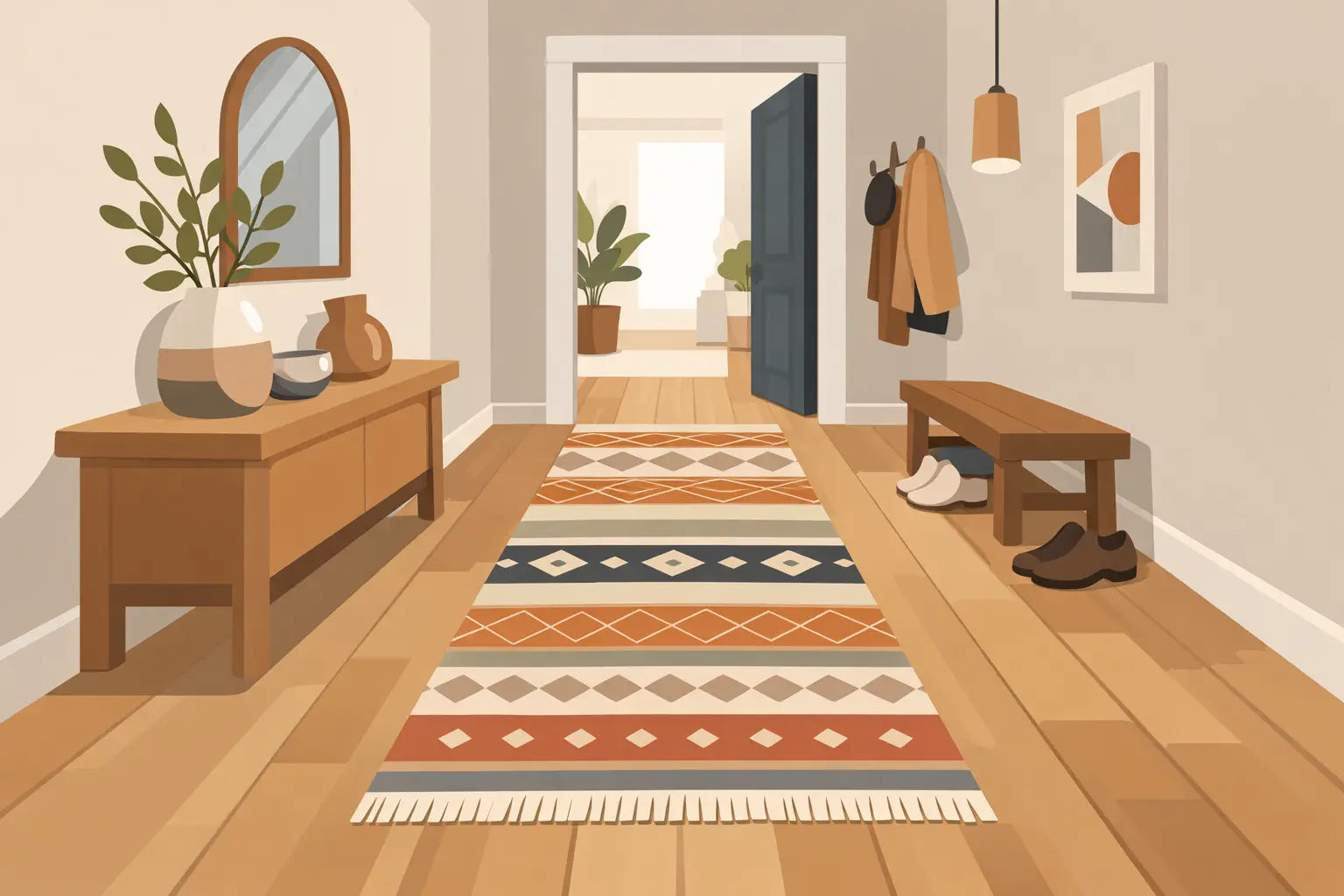
A hallway does more work than most rooms. It absorbs hurried mornings, muddy shoes, pets racing toward the door, and the constant movement between the spaces you love. The right runner gives that narrow passage a sense of intention. This hallway runner buying guide will help you choose one that feels artfully considered while standing up to everyday life.
Start With the Hallway, Not the Rug
A runner should frame the path through your home, not fill every inch of it. Before falling for a pattern or palette, measure the open floor area of your hallway, accounting for door swings, heating vents, and furniture that may sit along the wall. A tape measure and a few minutes of planning can prevent the most common runner mistake: choosing a rug that feels either stranded in a wide hall or squeezed into a narrow one.
As a general rule, leave 3 to 6 inches of visible flooring on each side of the runner. In a more generous entry hall, 6 to 8 inches can create a particularly balanced border. The exposed floor becomes part of the composition, highlighting the shape of the runner and allowing wood, tile, or stone to lend character to the overall look.
Length matters just as much. Standard hallway runner sizes often begin around 2' x 6' and extend through 2' x 10', 2' x 12', and longer. A 6-foot runner can suit a compact entry or short connector hall, while 8- and 10-foot sizes are natural choices for many residential hallways. For an extra-long corridor, consider two coordinated runners with a measured gap between them rather than one undersized piece. The result can feel purposeful, especially in a home with distinct zones or doorways along the route.
Make Room for Doors
Check every door before deciding on pile height. A thick, plush runner may be inviting underfoot, but it can catch beneath a closet, bedroom, or front door. If clearance is limited, look for a low-profile flatweave or low-pile construction. These designs are also easier to navigate with a stroller, walker, or rolling suitcase.
If your hallway opens directly to the exterior, be especially mindful of the front door. Measure the clearance from the floor to the bottom edge of the door, then allow space for both the runner and a thin rug pad. A beautiful rug should never turn a daily entrance into an awkward shuffle.
Choose a Material for Real Life
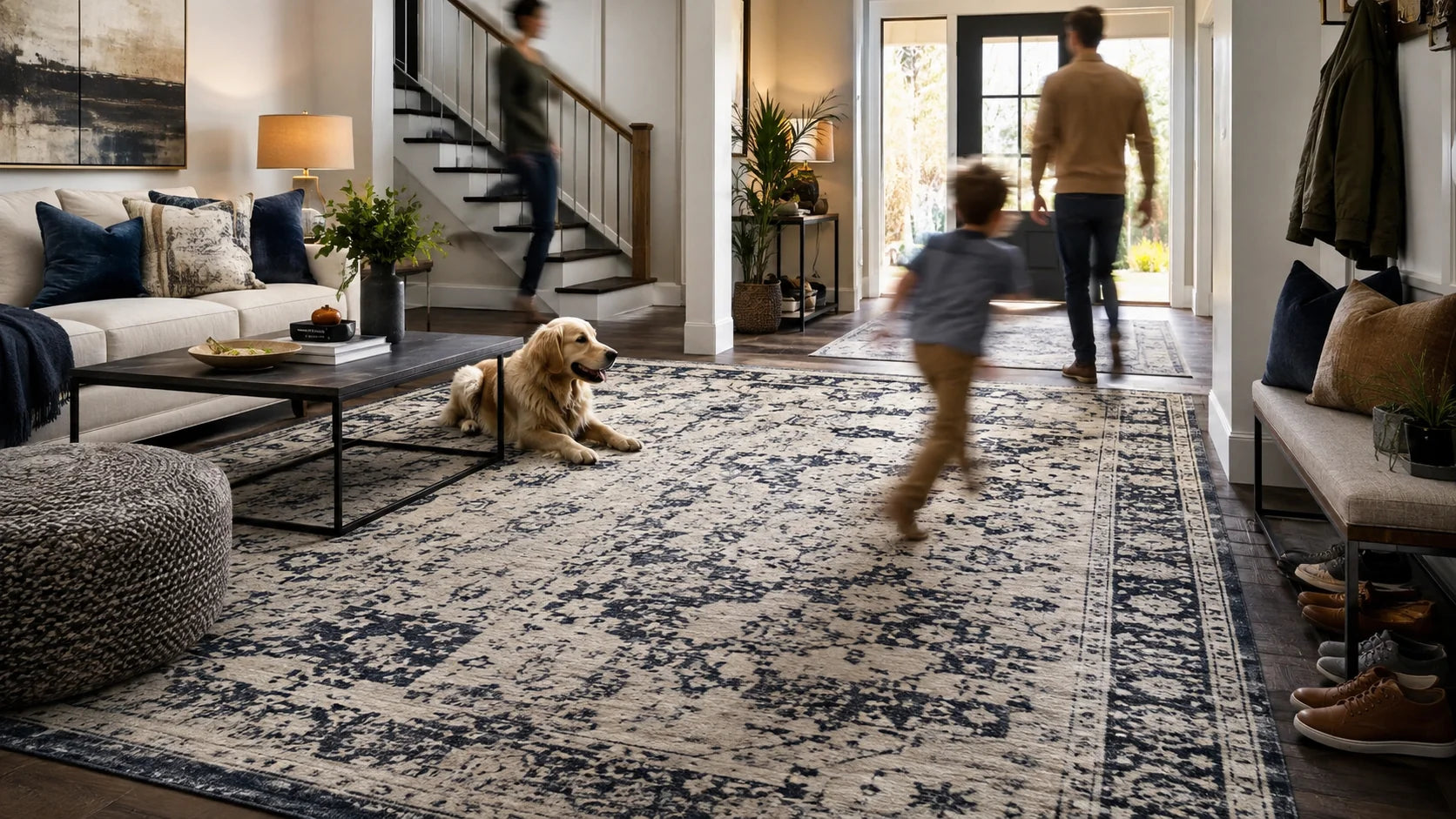
The most successful hallway runners bring together beauty and resilience. Hallways are high-traffic spaces, so the material should reflect who uses the home and how the space functions. A quiet upstairs hall used mostly by adults has different needs than a busy family entry where shoes, backpacks, and paws arrive several times a day.
Wool remains a beloved choice for its softness, natural resilience, and enduring visual depth. Its fibers tend to bounce back after foot traffic, making wool an elegant option for halls where you want a more elevated, collected feel. It does require thoughtful care, particularly in a high-soil entryway, but a patterned wool runner can make occasional marks far less noticeable.
Synthetic fibers such as polypropylene and polyester are often practical favorites for hardworking halls. They offer approachable durability, easy-care appeal, and a broad range of designs, from timeworn medallions to clean-lined contemporary patterns. For homes with children, pets, or frequent guests, a performance-minded synthetic runner offers welcome peace of mind without asking you to sacrifice color or personality.
Natural fibers like jute and sisal bring tactile warmth and relaxed texture. They are especially lovely in a sunlit hall, coastal-inspired entry, or layered, organic interior. The trade-off is that these materials can be less forgiving around moisture and may feel rougher under bare feet. They are often best for lower-traffic interior hallways rather than the main path in from outdoors.
Let Color and Pattern Set the Tone
A hallway is an ideal place to make a design choice that feels a little more expressive than you might make in a larger room. Because the footprint is narrow, a runner can introduce a rich botanical motif, an antique-inspired medallion, or a playful geometric without overwhelming the home. Think of it as a visual thread that leads guests from one room to the next.
For a serene, tailored look, choose colors that echo nearby rooms. A soft ivory and slate runner can connect a cool-toned living room to a calm bedroom wing, while warm terracotta, sand, and muted blue can bring tranquil harmony to natural wood floors. Repeating one or two shades found in artwork, upholstery, or painted cabinetry makes the transition feel deliberate.
Pattern is not only decorative. It is practical camouflage. A softly distressed traditional design, a layered global motif, or a heathered tonal pattern can disguise the small traces of daily traffic better than a pale solid rug. Solid runners can be striking in a minimal home, but they are best chosen with the realities of maintenance in mind. A deep charcoal, earthy olive, or nuanced taupe is often easier to live with than bright cream in a busy passage.
Scale deserves attention, too. Small-scale patterns tend to work beautifully in narrow halls because they retain their detail when viewed close up. Large motifs can be dramatic in a wider foyer but may be visually cut off in a very slim corridor. If you love a bold pattern, use painter's tape to mark the rug dimensions on the floor first. It is a simple way to imagine how much visual energy the piece will bring.
Consider Pile Height and Texture
Pile height influences both appearance and daily performance. Low-pile and flatwoven runners are typically the easiest choice for high-traffic hallways. They sit close to the floor, work well beneath doors, and are simpler to vacuum. Their refined profile also lends itself to a clean, tailored entry.
A medium-pile runner adds softness and dimension, making an interior hallway feel warmer and quieter. It can be an excellent middle ground when door clearance is not a concern. High-pile or shag runners are generally better reserved for bedrooms and low-traffic spaces. In a hallway, their plush texture can flatten quickly and may make movement less stable.
Texture can add the same visual richness as pattern. A handwoven look, subtle ribbing, or tonal variation gives a neutral runner depth without competing with wallpaper, gallery walls, or patterned tile. In a layered home, this quiet texture can be the element that keeps the hall from feeling overly busy.
Never Skip the Rug Pad
A runner without a pad can shift, curl, and wear unevenly. More importantly, it can become a tripping hazard in one of the home's most frequently traveled areas. A quality rug pad anchors the runner, provides gentle cushioning, and helps protect the flooring beneath it.
Choose a pad suited to both your rug and floor type. Thin, non-slip pads are often best for low-profile runners and doors with limited clearance. A slightly cushioned pad can bring welcome comfort beneath a wool or medium-pile runner in an upstairs hall. If you have hardwood, luxury vinyl, or other finished flooring, confirm that the pad is designed for that surface and will not leave residue or affect the finish.
Shop With a Confident Final Check
When shopping online, let the product details do some of the decision-making. Review dimensions carefully, then compare pile height, fiber content, traffic recommendations, and care guidance against your household routine. Customer reviews can offer useful perspective on color variation, softness, and how a runner performs in a real home.
It also helps to view a rug at different times of day. Colors can shift noticeably between bright morning light and warm evening lamps, particularly with neutrals, blues, and greens. If your hall is windowless, consider the light spilling in from adjacent rooms and the undertones of your flooring. A runner that looks perfect against white walls may read differently beside golden oak or cool gray tile.
At Rug Resources, thoughtfully curated runner styles make it easier to move from a design idea to a practical choice, whether your home calls for timeless elegance, relaxed texture, or modern graphic contrast. Look for in-stock details and return policies before placing an order so the final decision feels as comfortable as the runner will underfoot.
A hallway runner does not need to shout to transform a home. When its proportions are right, its materials suit the pace of your household, and its color carries the eye forward, it turns an overlooked stretch of floor into a graceful part of your home's story.

Share:
Vintage vs Modern Rugs: Which Style Fits?
How to Decorate With Round Rugs in Every Room