

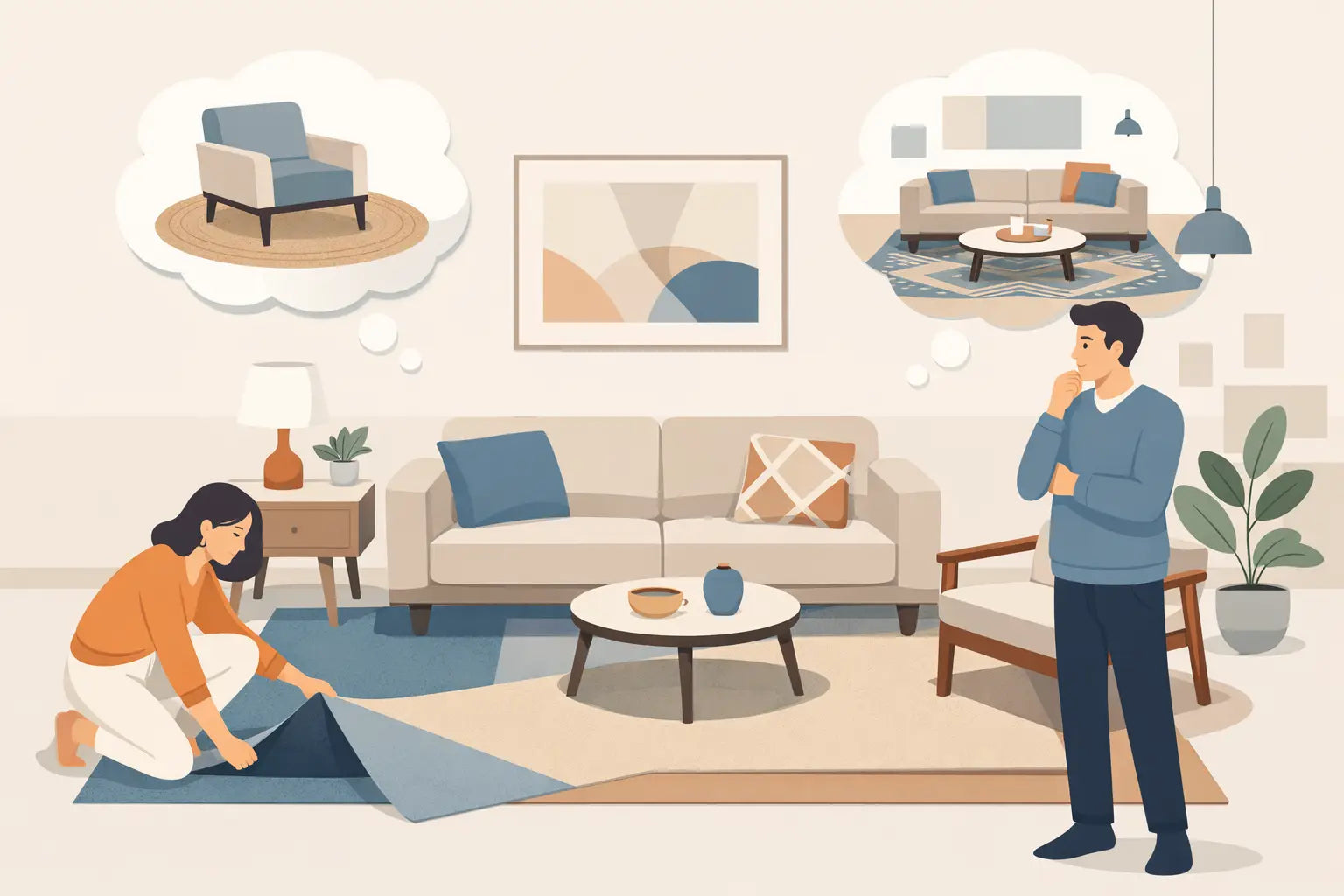
A rug can make a beautiful room feel finished - or make a well-chosen sofa suddenly look adrift. That is why so many shoppers ask how to match rugs furniture without making the space feel too coordinated, too busy, or simply off. The good news is that the right pairing is less about rigid rules and more about balance: scale, color, texture, and the way the room is actually used every day.
The best rooms rarely look like everything was bought as a set. They feel layered, collected, and comfortable. Your rug should support that feeling. It can ground a seating area, soften stronger furniture lines, introduce color, or bring a quiet sense of order to a room that already has plenty happening.
How to Match Rugs Furniture Starts With Scale
Before color or pattern, start with size. Even the most artfully crafted rug will feel wrong if it is too small for the furniture around it. In living rooms, a rug should usually sit under at least the front legs of the sofa and chairs. That creates a visual anchor and makes the conversation area feel intentional rather than scattered.
If your rug floats in the middle of the room with furniture completely off of it, the space often feels disconnected. There are exceptions, especially in small apartments or layered layouts, but in most homes, going a bit larger creates a calmer, more luxurious result. Bedrooms follow the same principle. A rug should extend beyond the bed enough to be seen and felt, not disappear underneath it.
Dining rooms need even more breathing room. The rug should extend far enough past the table for chairs to stay on the rug when pulled out. If that sounds practical rather than glamorous, it is - and it matters. A room that functions well always looks better.
Let the Rug Echo the Furniture Footprint
Shape matters too. A rectangular rug suits most standard seating groups, while a round rug can soften a room filled with straight-edged furniture. If your space has a rectangular sofa, square coffee table, and linear media console, a round or subtly curved rug profile can bring relief. If the room already has soft silhouettes, a classic rectangle may provide the structure it needs.
Match Color by Relationship, Not Exact Sameness
One of the biggest misconceptions in decorating is that the rug has to match the sofa exactly. Usually, it should not. A rug in the same color family as your upholstery can be beautiful, but too much sameness can flatten a room. Instead, look for relationship.
If your sofa is ivory, oatmeal, gray, camel, or navy, your rug can repeat that tone in a lighter, darker, or more varied way. A warm beige sofa pairs naturally with rugs that include sand, taupe, rust, olive, or faded blue. A charcoal sectional often looks stronger on a rug with cream, slate, and hints of brown than on a solid charcoal rug that makes everything blend together.
Think of the rug as a bridge between the largest furniture pieces and the smaller accents in the room. It should connect the sofa, chairs, pillows, art, and wood tones so nothing feels isolated. That is why multi-tone rugs are often easier to live with than a single flat shade. They hide wear more gracefully and give you more flexibility if your décor shifts over time.
Use Contrast to Create Depth
If your furniture is light, a medium or deeper rug can ground the room. If your furniture is dark, a lighter rug can open it up. Contrast helps each element stand out. That said, high contrast is not always the goal. In a serene bedroom or soft neutral living room, close tonal layering can feel especially elegant.
It depends on the mood you want. Crisp contrast feels graphic and modern. Tonal harmony feels quiet and refined. Both work, as long as the rug does not disappear completely or fight every other finish in the space.
Pattern Should Balance the Furniture You Already Have
When deciding how to match rugs furniture, pattern is where personality really enters. If your furniture is mostly solid, a patterned rug can bring movement and character. Traditional motifs add timeless elegance, modern geometrics sharpen a room, and softly distressed designs offer depth without visual noise.
If your sofa, accent chairs, or drapery already carry strong prints, a quieter rug usually makes more sense. That does not mean plain. Subtle borders, tonal textures, or low-contrast patterns can still add richness while giving the eye a place to rest.
There is also a scale question here. Large furniture often pairs well with medium-to-large rug patterns that can hold their own. Tiny busy motifs under bulky sectionals sometimes get lost. On the other hand, in smaller rooms with lighter furniture, an oversized pattern can feel abrupt. The goal is proportion, not perfection.
Traditional, Modern, and Transitional Pairings
Traditional furniture looks natural with Persian-inspired rugs, bordered designs, and refined motifs, but it can also be elevated by a cleaner transitional rug that keeps the room from feeling overly formal. Modern furniture tends to pair beautifully with abstract designs, solids, or geometric patterns. Transitional rooms have the most freedom - they can blend classic shapes with contemporary rugs or the reverse, which often creates the most inviting interiors.
This is where many shoppers overthink things. Your rug does not need to mirror your furniture style exactly. In fact, a little tension is often what makes a room memorable.
Texture Is the Quiet Detail That Changes Everything
A room can be color-coordinated and still feel flat if every surface has the same visual weight. Texture is what gives a space dimension. If your furniture is sleek leather, polished wood, or crisp upholstery, a rug with visible pile or a more tactile finish can add warmth. If your furniture is already plush and heavily upholstered, a flatter weave can keep the room from feeling too heavy.
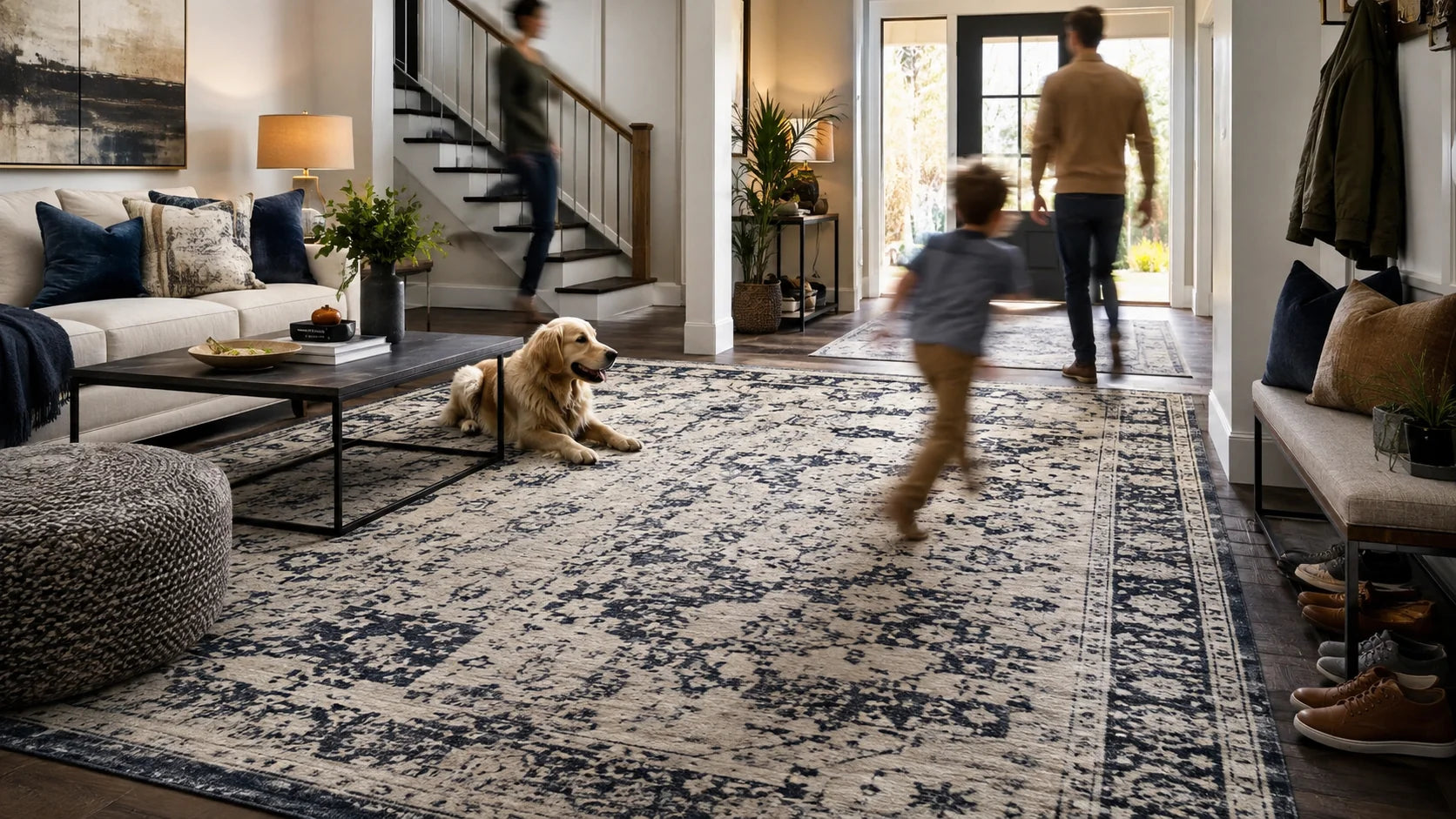
This is also where lifestyle matters. A high-pile rug feels luxurious in a bedroom or lower-traffic sitting area, but in a busy family room, many households prefer something easier to maintain. Low-pile and performance-minded options are often a smart choice near entry points, under dining tables, or in homes with kids and pets.
Beautiful design should still be livable. The smartest rug choice is one that supports the room you actually have, not just the photo you admired.
How to Match Rugs Furniture in Real Rooms
In living rooms, start with the sofa because it is usually the largest visual element. If the sofa is neutral, your rug can carry more pattern or color. If the sofa is a statement - velvet green, warm cognac, deep blue - choose a rug that either echoes one undertone or softens it with grounding neutrals.
In bedrooms, think about mood first. The rug should make the room feel softer when you step out of bed and visually calmer when you walk in. Subtle pattern, tonal color, and a comfortable hand tend to work beautifully here. Bold rugs can succeed in bedrooms too, but they usually work best when bedding and surrounding furniture stay edited.
In dining rooms, function leads. Look for a rug that complements the wood tone or finish of the table without competing with it. Pattern is often helpful here because it disguises crumbs and everyday wear better than a very pale solid rug. Flatweaves and lower piles are often easier under chairs.
Hallways and runners deserve the same attention. They connect rooms, so their color story should feel related to nearby furniture and flooring. A runner can quietly tie the home together, especially in spaces that otherwise feel transitional.
Don’t Forget the Floor and the Wood Tones
Furniture is only part of the equation. Your rug also sits against flooring, and that backdrop changes everything. Warm wood floors generally pair well with rugs that carry warm neutrals, terracotta, gold, or muted blues. Cooler gray-toned floors often benefit from rugs with cream, greige, charcoal, soft blue, or balanced mixed palettes that keep the room from feeling cold.
If your room has several different wood tones, the rug can act as the unifier. This is one reason thoughtfully layered color is so effective. It helps bridge walnut, oak, painted finishes, and metal accents without forcing an exact match.
Shop With the Finish Line in Mind
When you are buying online, it helps to think beyond the rug alone. Picture the room at full scale. Measure carefully, note the sofa color in daylight, and pay attention to practical details like pile height, durability, and whether the room sees heavy traffic. A rug that looks stunning in a styled image but is too delicate for your busiest space may not feel like a good decision a month later.
This is where a curated retailer can make the process easier. Clear dimensions, material cues, in-stock visibility, and customer reviews all help remove guesswork, especially when you are balancing beauty with daily life. Rug Resources approaches this with the same design confidence shoppers want and the practical reassurance they need.
The right rug does more than match your furniture. It gives the room a sense of belonging, as if every piece was always meant to be there.

Share:
Are Washable Rugs Worth It? Honest Pros and Cons
Are Wool Rugs Durable for Everyday Homes?