

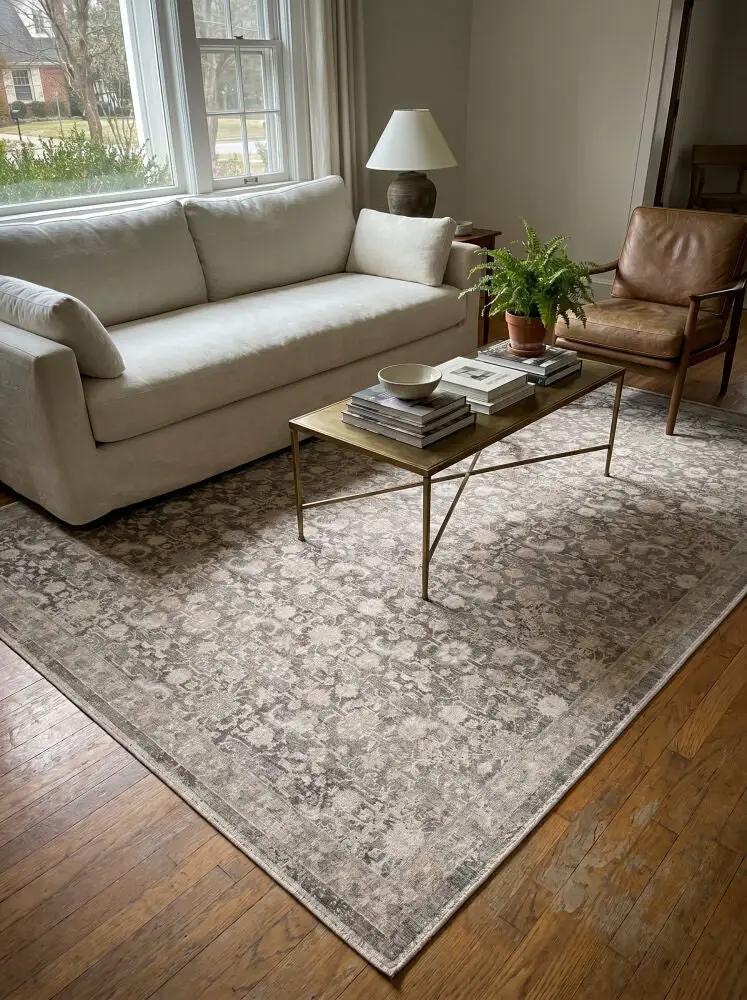

A rug can make a room feel thoughtfully finished, but the wrong size can make even beautiful furniture look disconnected. Shopping for rugs by room starts with one simple shift: treat the rug as part of the room's layout, not a decorative afterthought. The best choice balances proportion, texture, color, and the way life actually happens in that space.
A plush bedroom rug and a hardworking hallway runner may both suit your style, but they need to perform very differently. Start with the room's purpose, measure before you fall for a pattern, and let the rug create a foundation for everything around it.
How to Shop Rugs by Room: Start With Scale
Before comparing colors or collections, decide how much of the floor the rug should cover. A rug that is too small can feel like a floating island. An oversized rug can crowd architectural details, door swings, or furniture placement. Painter's tape is a useful planning tool: outline your intended rug dimensions on the floor, then walk around the room to see how the footprint feels.
As a general rule, leave a visible border of flooring around the rug. In larger rooms, 8 to 18 inches is often comfortable, depending on the space and furniture dimensions. No single answer exists, especially in older homes and apartments with unexpected layouts. The goal is visual balance and clear circulation.
Living rooms need a connected furniture plan
In a living room, the rug should visually gather the seating area. For a classic, anchored look, choose a size large enough for the front legs of the sofa and chairs to rest on it. In a generous room, placing all furniture legs on the rug can create a polished, designer-led arrangement.
An 8' x 10' rug often suits a standard living room, while a 9' x 12' rug can give a larger seating plan more presence. A 5' x 8' rug can work in a compact apartment or beneath a small coffee table, but it should still relate to the sofa rather than sit far away from it.
Consider the room's pace, too. A low-pile wool blend, durable synthetic construction, or easy-care flatweave makes sense where friends gather, kids play, and pets claim their favorite spot. If the room is more formal, a refined traditional motif or a softly textured neutral can add depth without demanding constant attention.
Dining rooms call for room around the chairs
Measure dining room rugs with chairs pulled out, not tucked under the table. Ideally, every chair remains fully on the rug when someone sits down or stands up. This usually means adding at least 24 inches to each side of the table's dimensions.
For example, a 6-seat rectangular table often needs an 8' x 10' rug, while a round table may look especially balanced over a round rug. Match shapes when it feels natural, but do not force the pairing. A round rug under a round pedestal table is elegant, while a rectangular rug can help define a dining zone within an open-concept home.
This is a room where low pile matters. Chairs move more easily across a flatweave or low-profile rug, and a tighter construction is generally easier to maintain after the occasional spill. Pattern is practical here as well: a nuanced border, subtle tonal variation, or layered global-inspired design can be more forgiving than a solid ivory field.
Bedrooms benefit from softness and symmetry
A bedroom rug should offer a warm first step in the morning and add calm beneath the bed. For a queen bed, an 8' x 10' rug placed horizontally under the lower two-thirds of the bed often creates a gracious, balanced look. For a king bed, a 9' x 12' rug is frequently the better fit, particularly if you want the rug to extend beyond nightstands.
If a full-area rug is not practical, runners on both sides of the bed are a smart alternative. They are especially useful in narrow rooms, rental homes, or spaces where a large rug would cover too much beautiful flooring. A small rug at the foot of the bed can also add character, though it will not provide the same underfoot comfort.
Bedrooms invite softer choices. A plush pile, hand-tufted texture, or quietly patterned wool rug can make the room feel more restorative. Still, consider shedding, allergies, and your preferred maintenance routine. A lower-pile rug with a gentle, heathered finish can deliver the same tranquil harmony with easier day-to-day care.
Choose Rugs by Room Function, Not Style Alone
A single home can hold traditional, modern, and globally inspired rugs without feeling mismatched. Cohesion comes from a shared color story, similar warmth in the wood tones, or a recurring texture. Let function lead the decision, then use style to bring the room's narrative into focus.
Hallways and entryways need resilience
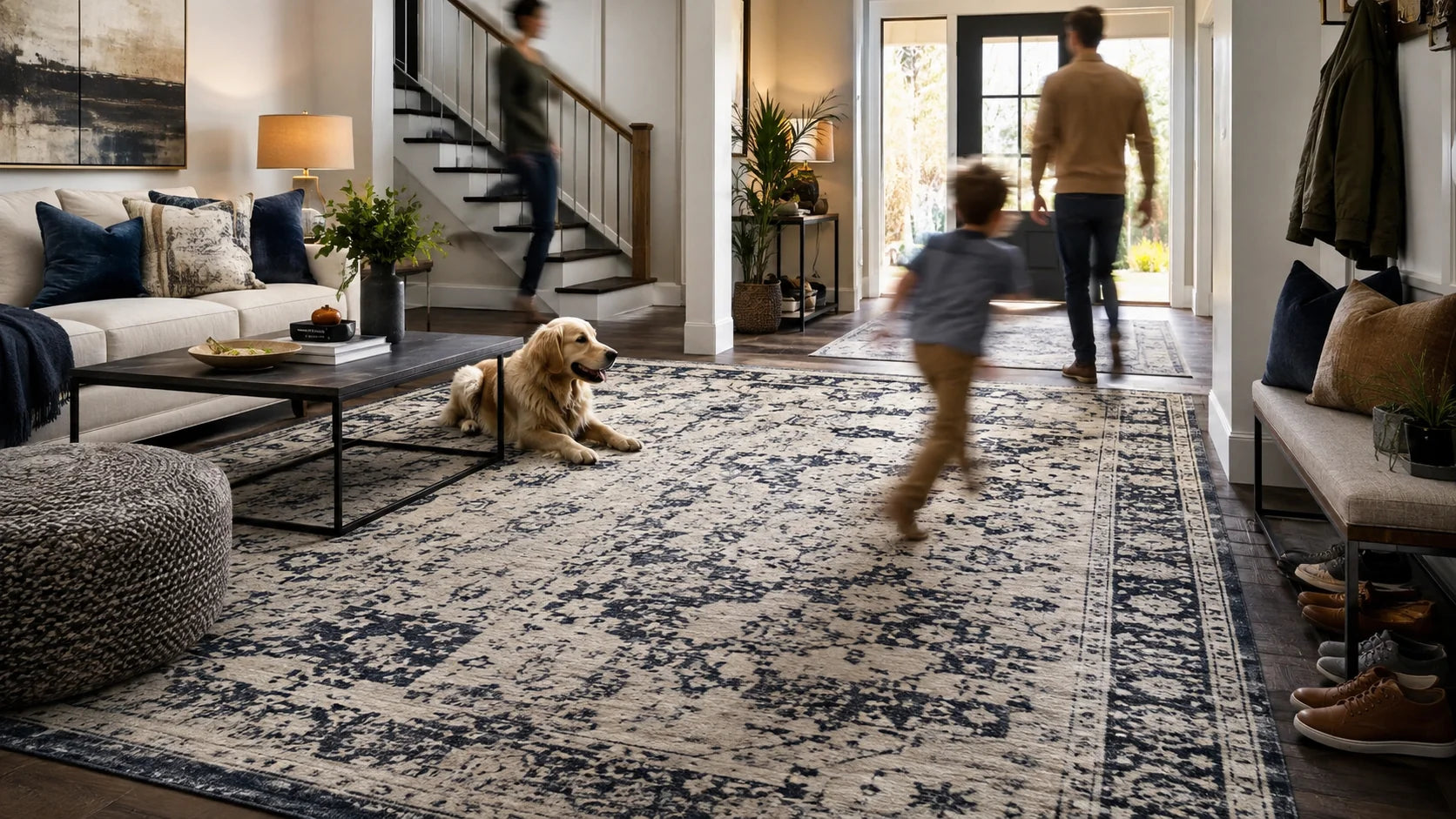
Entries and hallways see the most traffic and often the most debris. A runner should leave a few inches of visible floor on either side, rather than stretching wall to wall. Measure the clear path carefully, including door clearance at both ends.
Look for a low-profile runner that will not bunch or obstruct a door. Indoor-outdoor constructions, washable options, and tightly woven synthetic or wool blends are especially sensible in hardworking zones. A rug pad keeps the runner secure and adds a welcome layer of cushioning, particularly on hardwood or tile.
In an entry, color can be both expressive and strategic. Deep blue, earthy terracotta, layered neutrals, and intricate motifs often disguise the evidence of busy mornings better than a pale solid. The rug is your home's first visual welcome, so choose something that feels personal and practical.
Kitchens, laundry rooms, and utility spaces favor easy care
A kitchen runner can soften hard flooring and make long stretches of meal prep more comfortable. Choose a durable, low-pile construction and place it where you stand most often, such as between the island and counters or in front of the sink. Avoid thick, lofty piles in spaces where crumbs, moisture, and frequent cleaning are part of the routine.
The same thinking applies in laundry rooms, mudrooms, and home offices. A smaller rug or runner can add warmth and color while keeping movement easy. In a home office, make sure a desk chair can roll properly, or position the rug to frame the desk rather than sit beneath the chair's main path.
Nurseries and family rooms require a realistic approach
Softness is appealing in a nursery or play space, but a family-friendly rug does not have to be delicate. Low-to-medium pile rugs with subtle patterning are comfortable enough for floor play and more prepared for everyday messes. A rug pad can add softness and help prevent shifting during energetic afternoons.
For a sunroom or covered porch, consider the exposure. Direct sunlight can affect color over time, while damp conditions call for materials designed to handle moisture better. A performance-focused rug may be the right trade-off, letting you enjoy a beautiful space without worrying about every wet swimsuit or muddy paw.
Let Color and Pattern Set the Mood
Once you've settled on size and performance, use the rug to guide the room's emotional tone. A rug can be the starting point for a whole scheme or the quiet layer that lets art, upholstery, and collected objects shine. Neither approach is more correct.
If your sofa is neutral, a rug with a detailed pattern, vintage-inspired color, or graphic geometry can introduce character. If the room already has patterned drapery or bold artwork, a solid or softly textured rug may bring the necessary pause. Pull one or two colors from the rug into pillows, throws, or accent pieces rather than trying to match every shade exactly.
Pay attention to undertones. Cream can lean warm or cool; gray can carry blue, green, or taupe beneath the surface. Ordering based on a screen alone can be difficult, so read product details carefully and consider how the rug will sit beside your existing floors, walls, and upholstery. The most inviting rooms usually have variation, not perfect coordination.
Finish the Purchase With Practical Details
Material, pile height, and construction affect both feel and upkeep. Natural fibers often bring rich texture and timeless elegance, while synthetics can offer impressive durability, value, and easier stain resistance. Hand-knotted and hand-tufted rugs have distinct character, but construction alone should not decide the purchase. Match the rug to the room, your budget, and the amount of care you want to give it.
Do not skip the rug pad. The right pad helps prevent slipping, protects flooring, improves comfort, and can help a rug lie flatter. Choose a pad slightly smaller than the rug so it remains invisible from the edges.
Finally, confirm that the rug is in stock, review the dimensions one more time, and understand the return window before ordering. Buying online can feel wonderfully straightforward when the details are clear. At Rug Resources, curated styles, visible product attributes, and a 30-day return policy make it easier to choose with assurance.
The right rug does more than fill an empty patch of floor. It gives a room a center of gravity, softens the daily rhythm of home, and makes the space feel ready for the life you want to live in it.

Share:
Entryway Rugs for Homes That Welcome Well
Entryway Rugs for Homes That Welcome Well