

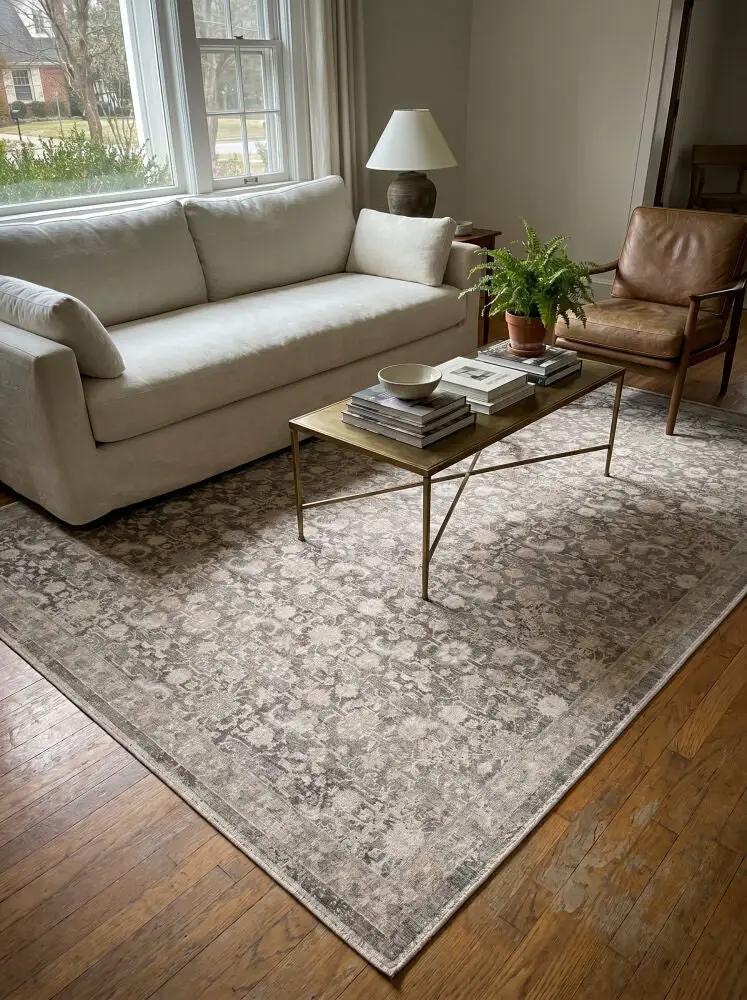
A rug can change the mood of a room before you ever notice its pattern. It softens footsteps, grounds a furniture arrangement, and brings color and character underfoot. But in the low pile vs high pile decision, texture is more than a finishing touch. It affects how a rug feels, cleans, wears, and works with the pace of daily life.
The right choice is not simply about whether you prefer a plush or tailored look. A softly cushioned rug may make a bedroom feel like a retreat, while a flatter weave can bring polished ease to a busy entryway. Understanding the difference helps you choose a piece that looks beautiful now and stays suited to your home over time.
What Does Rug Pile Mean?
Pile refers to the surface fibers of a rug and, most often, their height. It is usually measured from the rug's backing to the top of its fibers. While materials and construction matter too, pile height gives you an immediate clue about a rug's texture, cushion, and practical performance.
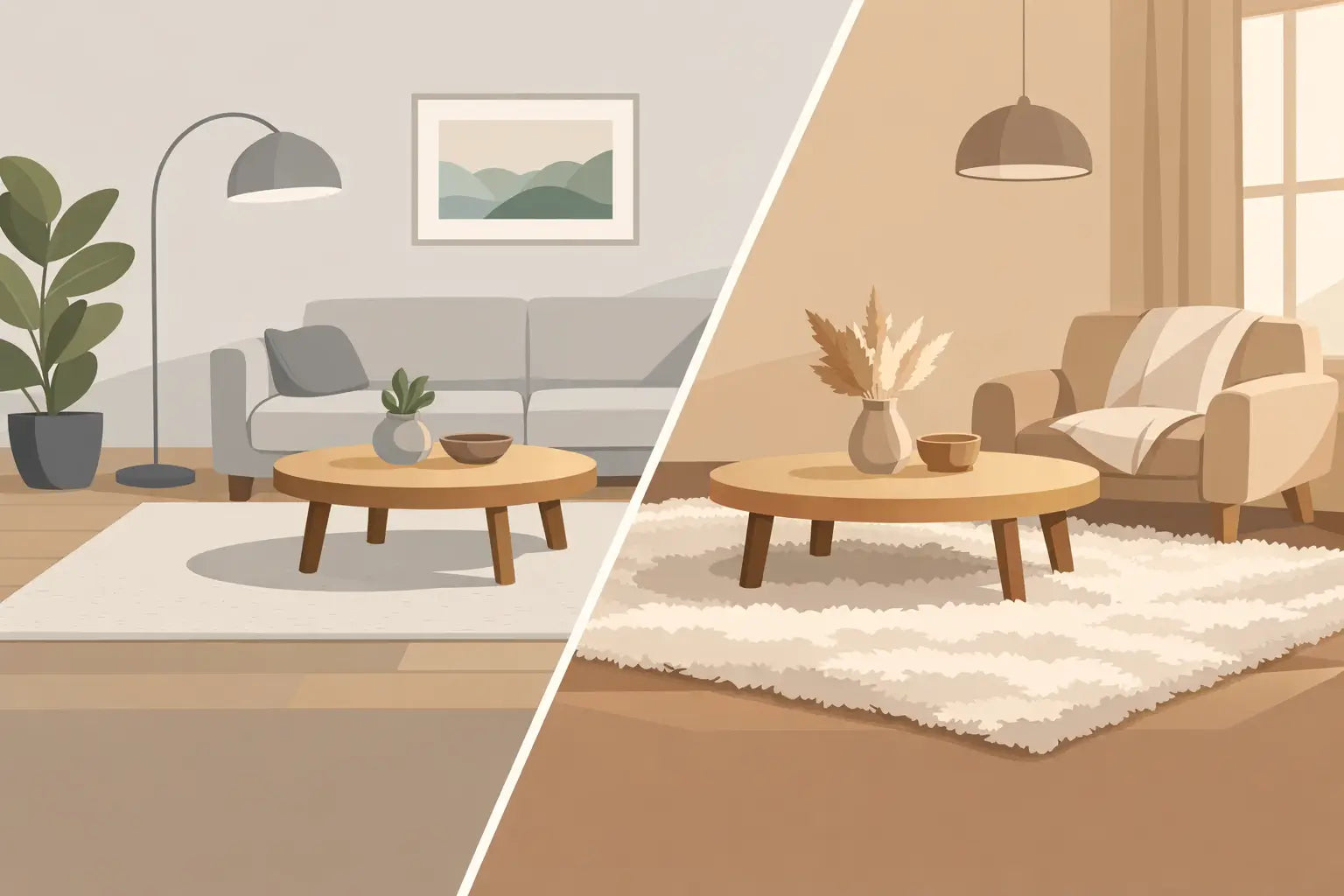
Low-pile rugs generally have fibers under 1/4 inch high. Their surfaces are relatively flat and close to the backing, creating a refined, streamlined profile. Flatweaves have no raised pile at all, but they are often considered alongside low-pile rugs because they offer a similarly easygoing, low-profile experience.
High-pile rugs usually measure 1/2 inch or more, with longer fibers that create a fuller, more tactile surface. Shag and certain plush styles fall into this category. Between the two sits medium pile, a versatile range that offers noticeable softness without the depth of a true high-pile rug.
Low Pile vs High Pile: The Everyday Difference
The most noticeable distinction is underfoot. A low-pile rug feels crisp, supportive, and often more structured. It brings visual definition to a room, especially when paired with a detailed traditional motif, a graphic modern pattern, or a subtle border. Chairs move more easily across its surface, and doors are less likely to catch on the edge.
High pile feels inviting in a different way. Longer fibers create a softer landing place for bare feet and encourage an unhurried, cozy atmosphere. In a bedroom, nursery, or relaxed family room, that touchable texture can make a space feel warmer and more layered even when the color palette is minimal.
Neither is inherently better. The best pile height depends on where the rug will live, how the room is used, and the kind of visual story you want the room to tell.
Why low pile suits active spaces
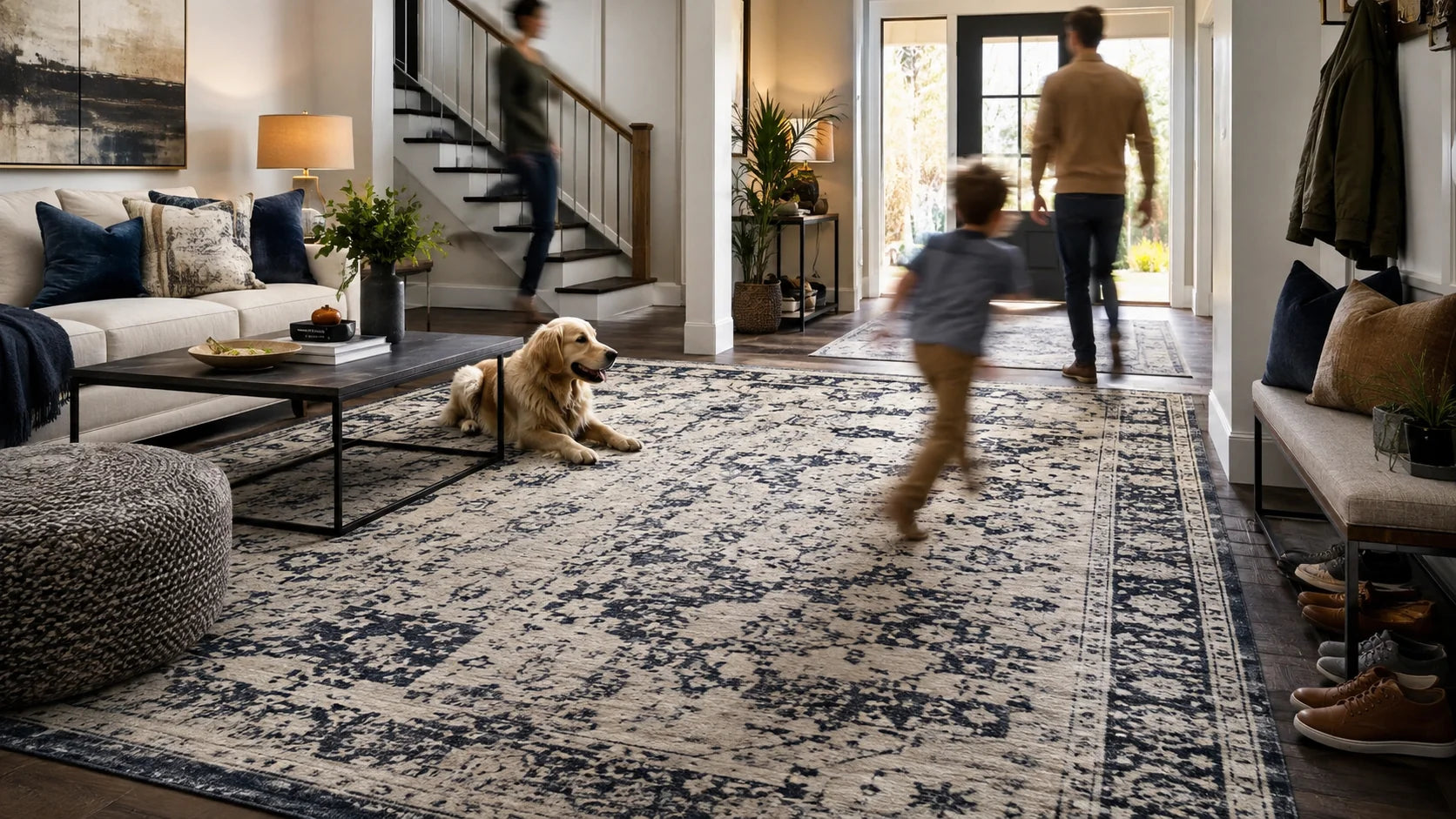
Low pile is often the practical favorite for high-traffic areas. Because dirt, crumbs, and pet hair tend to stay closer to the surface, routine vacuuming is simpler. The shorter fibers also make it easier to slide dining chairs in and out, roll a desk chair, or open a nearby door without friction.
An entryway runner, kitchen rug, hallway rug, or dining room rug benefits from this kind of easy performance. Low pile also works beautifully in layered interiors, where its cleaner profile lets furnishings, artwork, and architectural details take their place without adding too much visual weight.
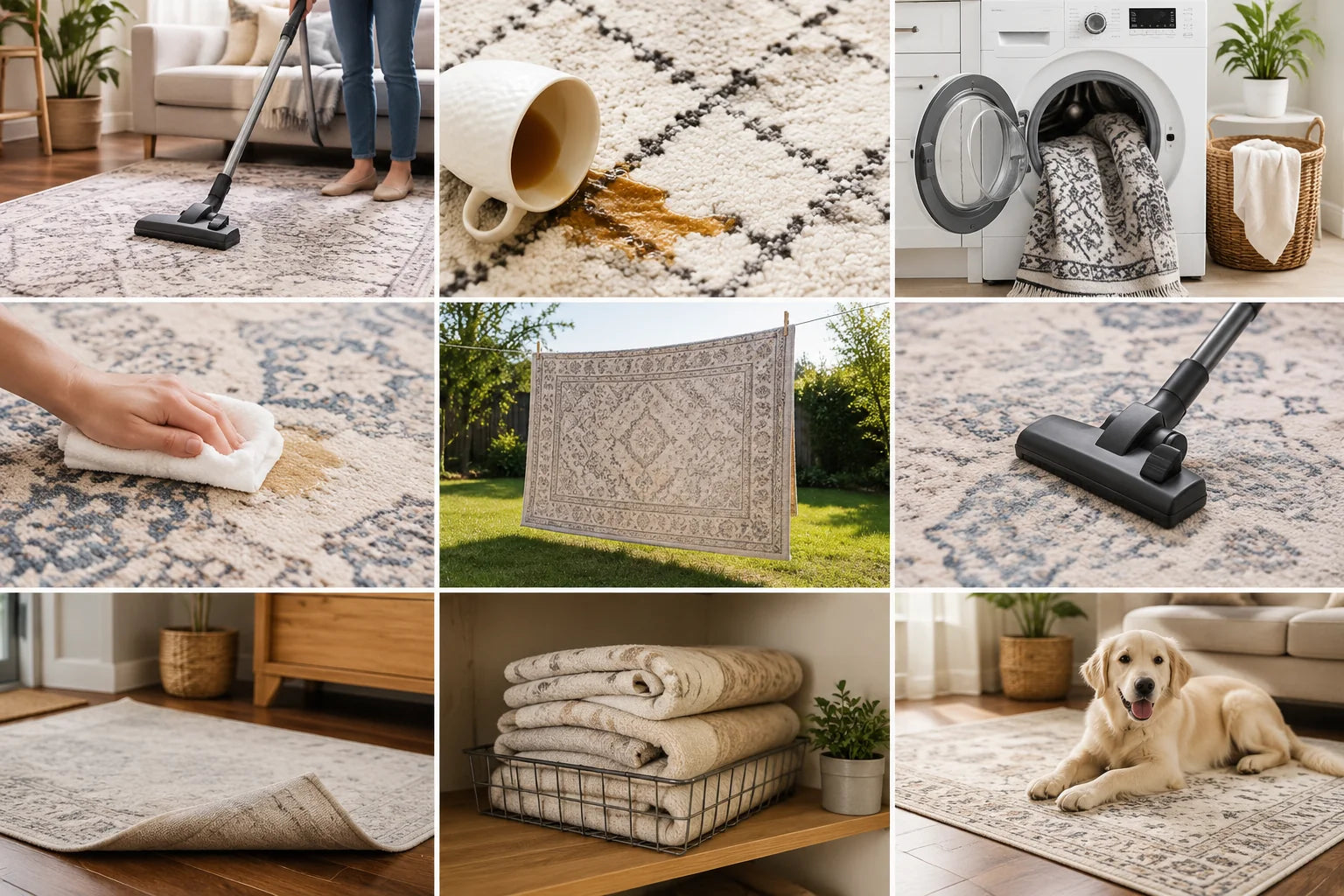
For homes with young children or pets, low pile can offer welcome peace of mind. It is not stain-proof, and spills should always be treated promptly, but a short, dense surface is typically easier to maintain than a deep, lofty one. A quality rug pad beneath it adds extra comfort and helps keep the rug secure where traffic is frequent.
Why high pile creates a softer retreat
High-pile rugs are made for the rooms where comfort leads the conversation. A plush area rug beside the bed makes early mornings feel gentler. In a living room, it can soften a clean-lined sofa and balance the tailored silhouette of wood, metal, or leather furniture.
This is also a lovely choice for spaces that need warmth in a literal and visual sense. Apartments with hard flooring, airy bedrooms, and serene reading corners can all benefit from the added softness. A cream, ivory, or muted neutral high-pile rug is especially effective when you want a tranquil foundation without relying on a busy pattern.
The trade-off is care. Longer fibers can hold onto debris and may show impressions from furniture or footsteps. High pile generally needs more patient vacuuming, occasional grooming with a rug rake or soft brush, and a bit more attention after a spill. It may not be the easiest fit directly under a dining table or in a crowded mudroom, but it can be exactly right for a room designed around comfort.
Consider the Room Before the Look
A rug should support the rhythm of the room, not compete with it. In living rooms, both pile heights can work well. Choose low pile if you host often, have an active household, or want a tailored foundation for a detailed design. Choose high pile if the room is primarily for lounging and you want the space to feel more intimate and relaxed.
Bedrooms are naturally welcoming to high pile, particularly around the bed where softness matters most. Still, a low-pile vintage-inspired rug can be equally appealing when you want a more collected, layered aesthetic. It is also easier to place partly beneath a heavy bed frame without creating deep pressure marks.
For dining rooms, low pile is usually the more comfortable choice. The rug should extend generously beyond the table so chairs remain on it when pulled back, and a low profile allows those chairs to move with less resistance. Look for a durable construction and a pattern or tonal variation that feels forgiving around everyday meals.
Hallways, entryways, kitchens, and home offices also tend to favor low pile. These areas ask a rug to work hard, whether it is welcoming guests, catching the activity between rooms, or supporting a rolling chair. A low-pile runner can still bring plenty of personality through color, pattern, and artfully crafted detail.
Material and Construction Matter Too
Pile height tells only part of the story. A dense wool low-pile rug can feel substantial and cushioned, while a loosely constructed high-pile synthetic rug may feel light despite its loft. Wool offers natural resilience and a luxurious hand, while many performance-focused fibers are chosen for their approachable care and dependable color.
Pay attention to density as well as height. Dense fibers tend to hold their shape better and can make a rug feel more supportive underfoot. A high-pile rug with a substantial construction may be wonderfully durable in a lower-traffic room, while a thin low-pile rug may benefit greatly from a rug pad for added body and comfort.
The rug's edges and backing deserve a quick look, too. A well-finished piece lays more gracefully, and the right pad helps protect flooring, reduces shifting, and can make a low-profile rug feel noticeably more luxurious. It is one of the simplest ways to tailor the experience of a rug to your home.
How Pile Height Shapes Your Design
Low pile often reads as polished and intentional. It is a natural match for traditional florals, Persian-inspired motifs, geometric patterns, and contemporary abstract designs because the pattern remains clear and easy to appreciate. In a room with dramatic wallpaper, sculptural lighting, or richly upholstered furniture, a low-pile rug can offer balance without asking for too much attention.
High pile introduces dimension. Its texture catches light differently throughout the day and can make solid colors feel more nuanced. It pairs especially well with soft, tonal interiors, bouclé upholstery, linen drapery, and organic shapes. If a room feels a little stark, a high-pile rug can bring the softness that makes it feel finished.
There is also a scale consideration. In a compact room, a very deep shag can feel visually substantial, which may be appealing if you want a cocooning effect. If you want the room to feel open and airy, a low-pile rug with a lighter palette or restrained pattern is often the better path.
Make the Choice With Your Real Life in Mind
Before choosing, picture an ordinary week rather than a perfectly styled photograph. Will a dog nap here? Will children build forts on the floor? Will dining chairs move across the rug every day? Will you be happiest seeing a deeply plush texture beneath your feet, even if it asks a little more of your cleaning routine?
For a home that values effortless upkeep, a low-pile rug is often the confident choice. For a room where comfort and atmosphere are the priority, high pile can create an unmistakably welcoming finish. And when you want a thoughtful middle ground, medium pile offers softness with easier day-to-day care.
The most memorable rooms feel considered because every layer has a purpose. Choose the pile that supports the way you gather, rest, and move through your home, then let the rug bring its own quiet warmth and character to the story.

Share:
Do Rug Pads Protect Hardwood Floors?
What Rugs Work With Sectionals? Find Your Best Fit