

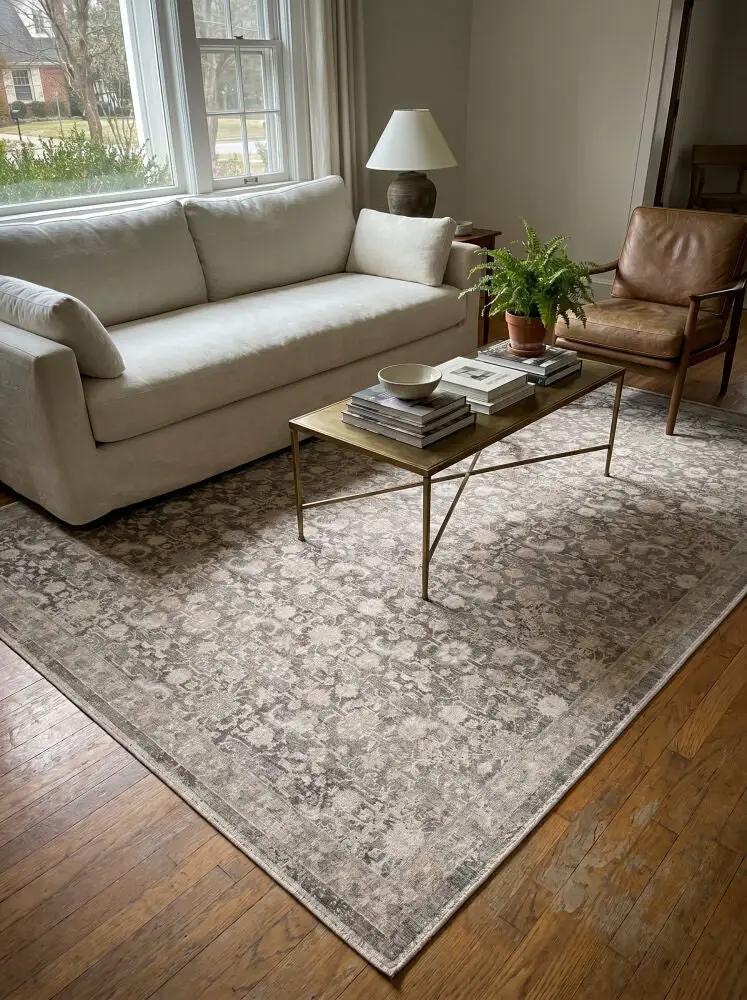
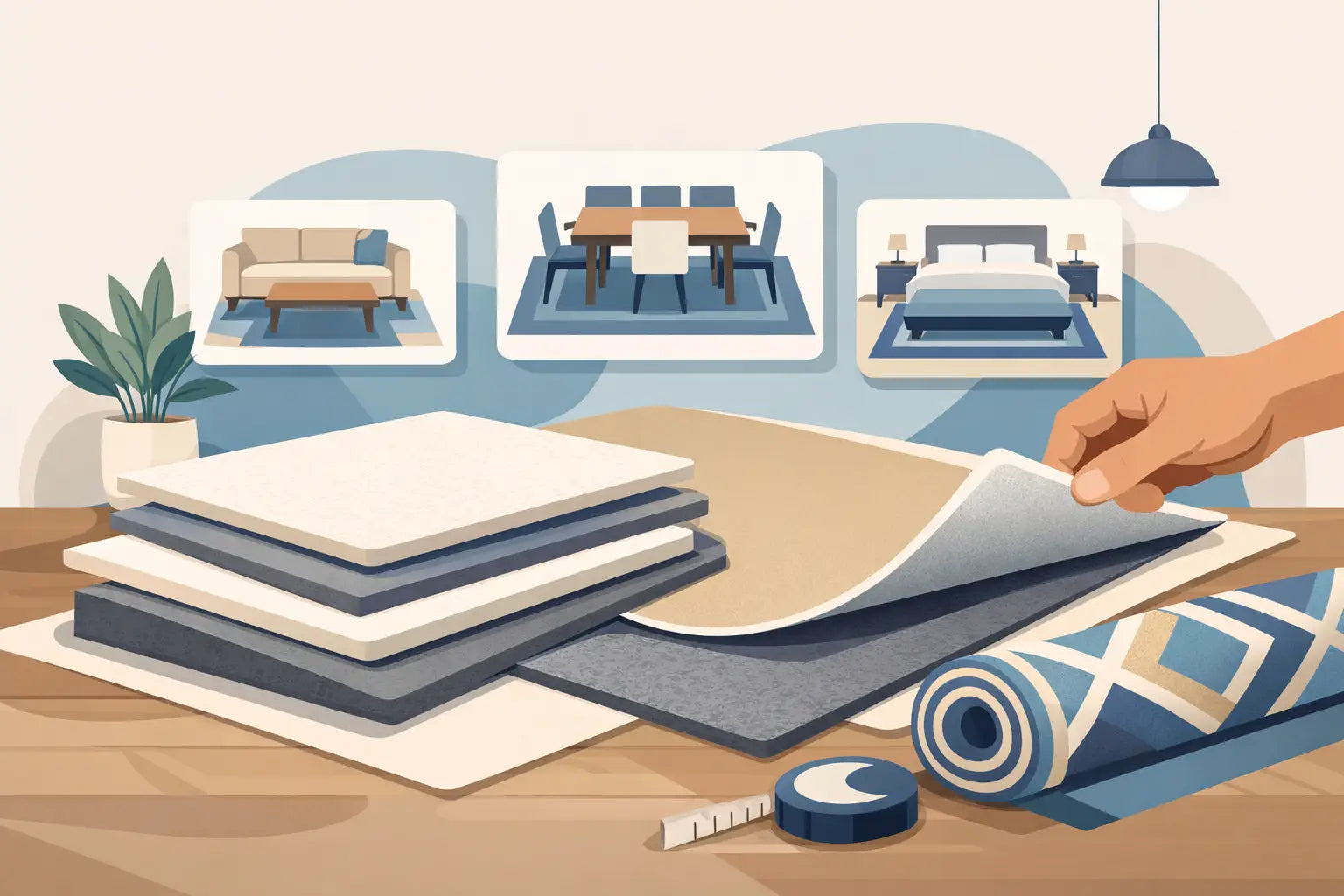
A beautiful rug can set the entire mood of a room, but the layer beneath it determines how confidently it lives there. This rug pad size guide makes the decision simple: your pad should be slightly smaller than your rug, so it supports the surface without appearing at the edges or changing the rug’s intended shape.
The right fit helps a rug lie flatter, feel more cushioned, and stay where it belongs through busy mornings, family movie nights, and every pass through the hallway. It also creates a discreet layer of protection between the rug and your flooring - an especially thoughtful detail for hardwood, tile, and other finished surfaces.
The Best Rug Pad Size Rule
For most area rugs, choose a rug pad that is 1 to 2 inches shorter than the rug on every side. That means the pad is typically 2 to 4 inches smaller in both length and width.
A 8' x 10' rug, for example, generally pairs best with a 7'8" x 9'8" or 7'10" x 9'10" pad. The small reveal of rug around the perimeter keeps the pad hidden while giving the rug a clean, tailored finish. If a pad reaches the edge, it can become visible, collect dust, or create an awkward raised border underfoot.
There is one practical exception: if you have an unusually thin, lightweight rug that tends to curl or shift, a pad cut just 1 inch smaller on each side may offer a little more edge support. Even then, the pad should never extend beyond the rug.
Rug Pad Size Guide by Rug Dimension
Rug and pad dimensions are not always listed in identical measurements, particularly with handwoven styles that may vary slightly. Use the rug’s actual listed size as your starting point, then select the closest pad size that remains safely inside its edges.
Small accent rugs and doormats
For a 2' x 3' or 3' x 5' accent rug, look for a pad around 2' x 2'8" or 2'10" x 4'10". Small rugs are more likely to slide, especially near entryways, kitchen sinks, and bedsides, so a non-slip grip matters as much as the dimensions.
Hallway and kitchen runners
A runner pad should be about 1 inch shorter on each side. For a 2'6" x 8' runner, a 2'4" x 7'10" pad is a polished fit. This keeps the pad concealed along narrow edges while adding welcome comfort in hardworking spaces.
Measure runners carefully before ordering. Many are sold in nominal sizes, and a 2'6" x 10' runner may measure a little differently depending on construction. When in doubt, choose the slightly smaller option rather than allowing the pad to peek out.
Standard area rugs
For common living room, dining room, and bedroom sizes, these pairings provide an easy starting point:
- A 4' x 6' rug pairs well with a 3'10" x 5'10" pad.
- A 5' x 8' rug pairs well with a 4'10" x 7'10" pad.
- A 6' x 9' rug pairs well with a 5'10" x 8'10" pad.
- A 8' x 10' rug pairs well with a 7'10" x 9'10" pad.
- A 9' x 12' rug pairs well with an 8'10" x 11'10" pad.
- A 10' x 14' rug pairs well with a 9'10" x 13'10" pad.
How to Measure for a Rug Pad
Start by measuring the rug itself, not the area it covers. Lay it flat and measure its width and length from edge to edge. This is particularly useful for vintage-inspired, hand-knotted, braided, and natural-fiber rugs, where dimensions may differ from the nominal size on the label.
Subtract 2 to 4 inches from both measurements, depending on the rug’s thickness and how much edge support it needs. A plush, substantial wool rug can comfortably sit over a pad that is 2 inches smaller on every side. A slim flatweave or washable rug may benefit from a pad closer to the edge, as long as it remains invisible.
For a custom-cut pad, mark the measurements on the underside and trim slowly. Keep the cut square and check the fit before returning the rug to the room. A cleanly sized pad should disappear completely once the rug is positioned.
Choose Thickness for the Room, Too
Size is only part of the decision. The pad’s thickness changes how a rug feels and performs, so let the room’s use guide your choice.
A thinner non-slip pad is often ideal for low-profile rugs, entryways, dining rooms, and spaces where door clearance is limited. It adds grip without creating an overly cushioned surface beneath dining chairs or swinging doors.
A thicker felt-and-rubber pad brings a more substantial, sink-in feel to bedrooms and living rooms. It can make a refined low-pile rug feel softer and more luxurious underfoot while helping to absorb sound in open-concept homes. For high-traffic family rooms, this added density may also help the rug wear more evenly over time.
Avoid adding too much loft beneath a thick, high-pile rug. The combination can feel unstable, especially under furniture. In those cases, a slimmer pad delivers the support and floor protection you want without making the rug feel overly raised.
Special Sizing Situations
Round and square rugs
Round pads should follow the same rule as rectangular ones: leave about 1 to 2 inches of rug visible around the full circumference. A 6' round rug usually calls for a pad just under 6' round. Do not use a square or rectangular pad under a round rug unless it can be trimmed to match the curve. Corners hidden beneath the rug can still create uneven pressure and a less graceful drape.
Square rugs need square pads. For a 6' x 6' rug, select a 5'10" x 5'10" pad when available, or trim a slightly larger compatible pad to fit. Matching the shape preserves the rug’s balanced geometry, which is often the reason a square rug was chosen in the first place.
Layered rugs
When layering a smaller statement rug over a larger natural-fiber base, place a separate pad beneath the bottom rug. The top rug may also need a thin non-slip layer if it shifts against the base. Do not assume the lower pad will stabilize both layers, particularly if the top piece is lightweight or flatwoven.
Rugs under furniture
A pad can extend beneath furniture as long as the rug does. In a living room, the rug pad should support the full rug footprint, including the areas beneath sofa legs and chairs. Cutting the pad short to avoid furniture can create inconsistent cushioning and visible wear patterns over time.
For dining rooms, consider the chair path as well as the table. A properly scaled rug should keep chairs on the rug when pulled back, and the pad should remain just inside that full rug boundary. A thin, dense option is often the most practical choice here, allowing chairs to glide with less resistance.
Protect the Floor Beneath Your Rug
The best rug pad is compatible with your flooring. For hardwood, engineered wood, laminate, vinyl, and stone, choose a pad designed not to discolor or adhere to the finish. Natural rubber and felt combinations are popular for their balance of grip, cushioning, and breathable support, but always check the pad’s stated floor compatibility before placing it.
If your rug is going over carpet, a firmer pad may help prevent wrinkling and bunching. The goal is less about non-slip grip and more about creating a stable foundation that keeps the area rug looking intentional rather than temporary.
A rug pad is a quiet finishing touch, but it changes the experience of a room in a very real way. Choose the size with care, then let the rug’s color, texture, and character take center stage - exactly where they belong.

Share:
What Rug Size Under a Queen Bed Works Best?
High Traffic Rug Materials That Work Hard