

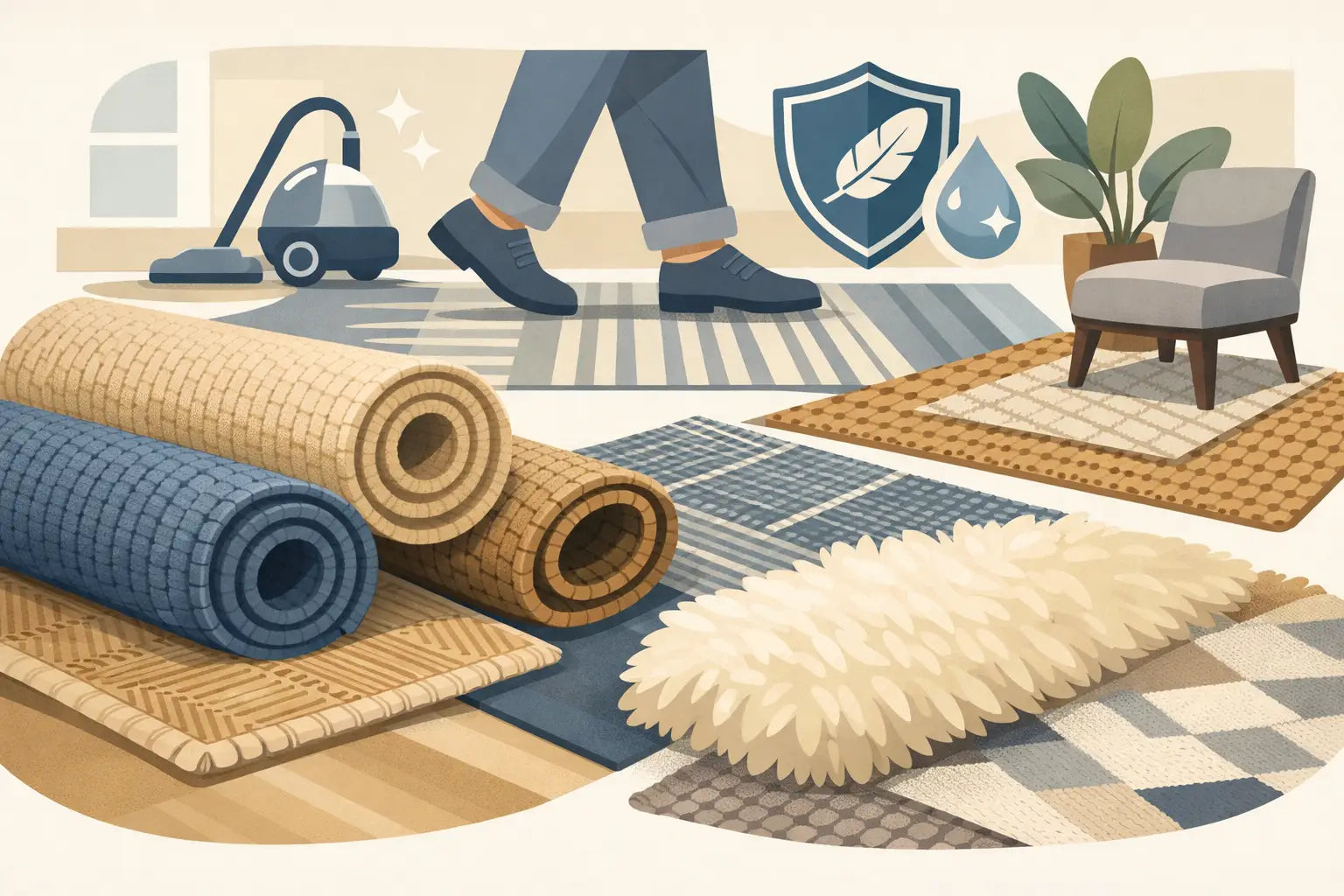
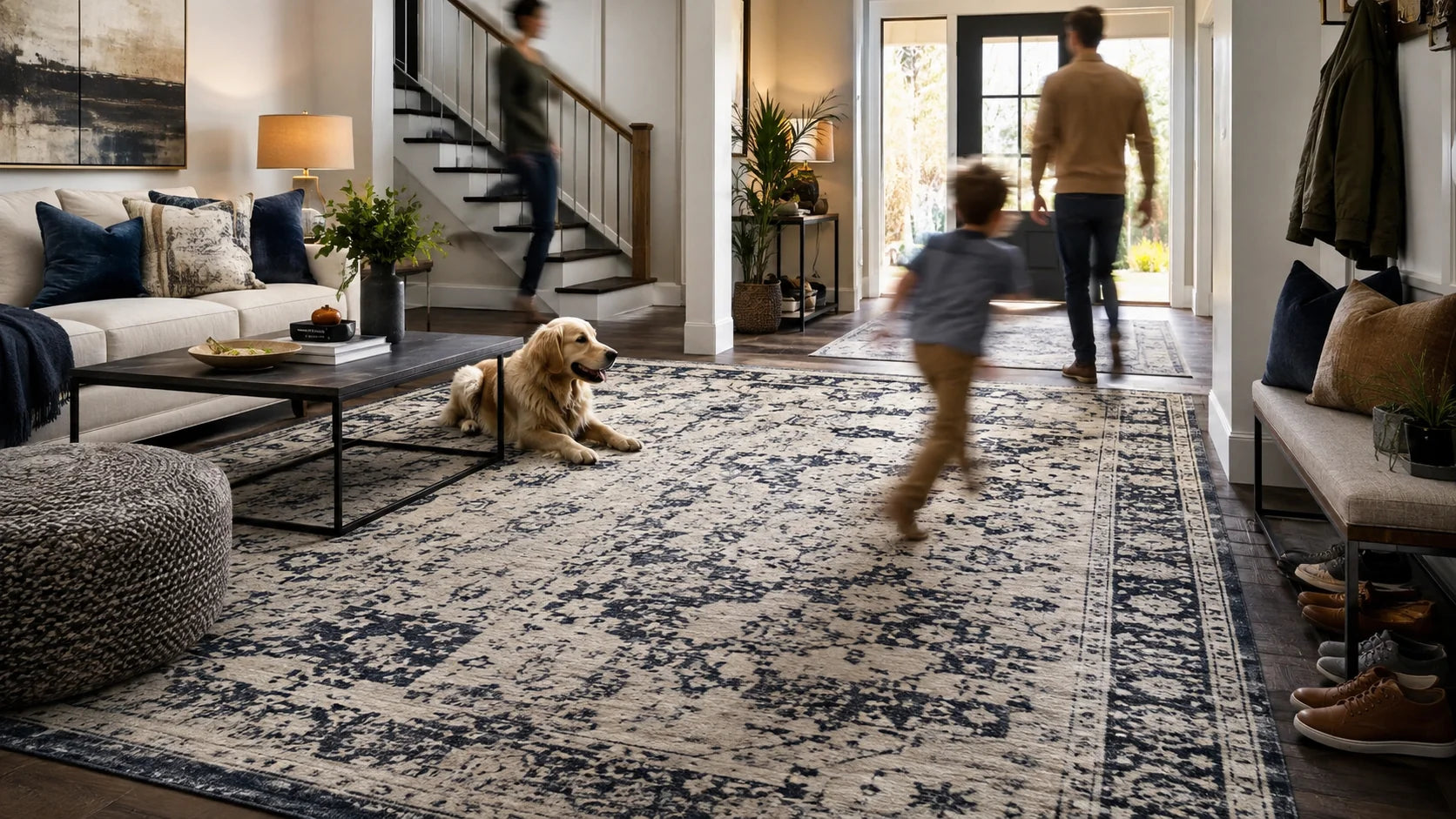
A hallway rug has a different job than the one beneath a rarely used guest-room bed. It welcomes muddy shoes, cushions hurried mornings, softens the sound of a busy household, and still needs to look considered from the front door. The best high traffic rug materials bring beauty and staying power into the same frame, so the rooms you use most can feel finished without becoming precious.
The right choice is not always the toughest fiber on paper. A rug’s construction, pile height, color variation, and the way your household lives all affect how it wears. For a sunlit kitchen with a dog, easy cleanup may matter most. For a formal entry, a dense wool weave may offer the polished character you want with the resilience to match.
What Makes a Rug Ready for Daily Life?
Traffic is about more than the number of footsteps. Consider what comes through the space: outdoor grit in an entryway, rolling chairs in a home office, snack crumbs in a family room, or wet paws along a back-door runner. Abrasion is the primary concern, but stains, moisture, shedding, and flattened pile also shape how a rug performs over time.
For hardworking rooms, look for a low pile or flatweave construction. These surfaces are less likely to trap debris and easier to vacuum than a lofty, plush rug. A tightly woven rug generally holds its shape better than a loose, open weave, while a patterned or heathered design can make the small marks of real life far less visible.
A well-chosen rug pad matters, too. It keeps the rug from shifting, adds a touch of cushioning, and can reduce wear caused by movement against the floor. In especially active areas, choose a pad designed for your floor type and make sure it stays fully beneath the rug’s edges.
The Best High Traffic Rug Materials
Wool: Timeless resilience with natural character
Wool has earned its place in hardworking homes for good reason. Its fibers have a natural spring that helps them recover after furniture legs and frequent foot traffic, and wool’s texture brings a depth that works beautifully in traditional, transitional, modern, and global-inspired spaces. It also has natural resistance to soil and can feel wonderfully substantial underfoot.
A low-pile, hand-knotted, hand-tufted, or tightly woven wool rug can be an excellent choice for living rooms, dining rooms, hallways, and entryways. Choose a design with tonal variation, a detailed pattern, or a medium-to-deep color palette if you expect everyday messes. Those visual layers help the rug age gracefully.
The trade-off is care. Wool is not the material to saturate with water or treat casually with harsh cleaners. It may shed when new, particularly in a thicker construction, and prompt attention to spills is wise. Still, for shoppers who value natural fiber, rich texture, and lasting visual appeal, wool remains one of the most rewarding investments in a home.
Polypropylene: The practical favorite for active homes
Polypropylene, often labeled olefin, is a synthetic fiber known for impressive stain resistance and easy maintenance. It does not absorb moisture the way natural fibers do, which makes it especially useful in entryways, kitchens, mudrooms, casual dining areas, and family spaces shared with children or pets.
This material can be woven into remarkably convincing patterns, from faded vintage florals to crisp geometric designs and relaxed indoor-outdoor looks. It is also often a smart value choice when you need a larger rug to ground a busy room without stretching the decorating budget.
Its primary limitation is texture and recovery. Polypropylene can feel less luxurious than wool, and a very plush version may flatten under sustained pressure. For the strongest performance, favor a low-profile weave, a subtle pattern, and a quality pad. In direct sun, it is generally colorfast, but no rug should be expected to remain entirely unchanged after years of intense exposure.
Polyester: Soft feel and color-rich performance
Polyester offers a softer hand than many shoppers expect from a performance-minded fiber. It holds color beautifully, making it a lovely fit for richly saturated designs, washed vintage palettes, and high-low patterns that add movement to a room. It also resists water-based stains well, which is helpful in bedrooms, family rooms, and lower-traffic dining spaces.
For high-use rooms, construction is the deciding factor. A dense, low polyester pile can work well where softness is part of the brief, but a very thick shag or loosely woven polyester rug may show compression more quickly than wool or polypropylene. Consider polyester when your space needs a comfortable, expressive layer and the traffic is steady rather than relentlessly heavy.
Nylon: Durable performance for the busiest zones
Nylon is known for excellent resilience. Its fibers bounce back well from compression, making it a strong candidate for hallways, stairs, playrooms, and homes where the same routes are traveled all day. It can also be treated for stain resistance and is available in an array of textures and designs.
Though nylon is more often associated with broadloom carpeting, it appears in area rugs and blends where durability is the priority. It may not carry the naturally artisanal feel of wool, but it offers serious everyday performance. If your first question is, “Will this stand up to our household?” nylon deserves a close look.
Jute, sisal, and seagrass: Beautiful, but choose the room carefully
Natural plant fibers bring organic warmth that is difficult to replicate. Jute feels relaxed and textural, while sisal and seagrass offer a more structured, tailored surface. They can be especially striking beneath a dining table, in a layered living room, or as a grounding neutral in a design-forward space.
Yet these are not the most forgiving high-traffic choices for every home. Jute is soft but can shed and may not handle moisture well. Sisal and seagrass are tougher underfoot, but their coarse texture can be less comfortable for bare feet and difficult to spot-clean after a spill. A natural-fiber rug works best in a dry area where its character can be appreciated without asking it to manage muddy shoes, pet accidents, or frequent food messes.
Match the Material to the Room
The room should guide the decision as much as the material itself. In an entryway, polypropylene, low-pile wool, and nylon offer the clearest balance of durability and cleanup. A darker or patterned runner will preserve a composed look between vacuuming days.
In a family room, wool and polyester are appealing when you want softness and visual richness, while polypropylene is the calm choice for homes with pets, young children, or frequent gatherings. A low pile makes it easier to retrieve toys, vacuum crumbs, and keep furniture stable.
Dining rooms call for a rug that allows chairs to slide without catching. Flatweaves and low-pile wool or polypropylene styles are particularly practical. Make sure the rug extends beyond the table far enough that chairs remain on the rug when pulled back.
For kitchens and laundry areas, favor performance fibers and a lower profile. A washable rug may also make sense, especially at the sink or near a door. In a bedroom, traffic is typically gentler, which gives you more freedom to prioritize softness, pile, and the tranquil harmony of the design.
Design Details That Hide Wear Gracefully
Material is only part of the equation. A solid ivory rug may be beautiful, but it asks more of a high-traffic hallway than a softly distressed design with shades of taupe, blue, charcoal, or warm terracotta. Pattern does not have to mean busy. Fine borders, tonal motifs, and subtle irregularity can disguise everyday wear while keeping the room serene.
Pile height deserves equal attention. Low-pile rugs and flatweaves tend to show less crushing, accommodate doors more easily, and simplify cleaning. A higher pile can feel inviting in a living room, but choose a dense construction and reserve it for areas without constant shoe traffic.
When selecting a size, avoid treating the rug as a small accent in a large active room. A generously scaled rug anchors furniture and prevents the edges from becoming a narrow, heavily worn pathway. In hallways, choose a runner that leaves a border of visible flooring on each side while covering the route people actually use.
Care That Preserves the Finish
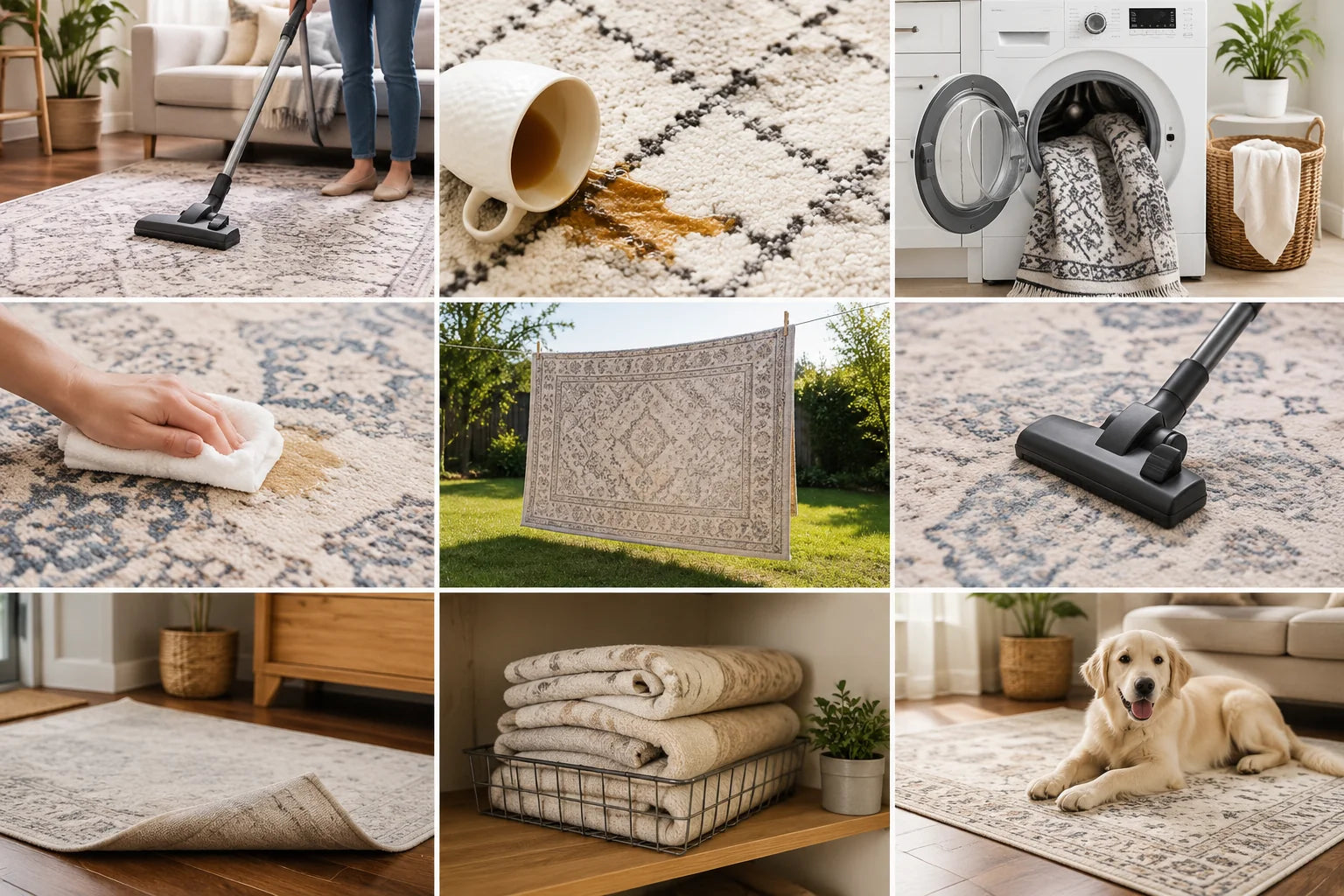
Regular care is simple but meaningful. Vacuum according to the maker’s guidance, usually without an aggressive beater bar on delicate loops or natural fibers. Rotate the rug periodically so traffic and sunlight are distributed more evenly. Blot spills immediately with a clean, dry cloth, working from the outside toward the center rather than rubbing the stain deeper into the fibers.
For significant spills or a full refresh, follow the care label and consider professional cleaning for wool, silk-blend, or specialty constructions. A little preventive attention protects both the rug’s color and the composed feeling it brings to the room.
Choose the material that supports the way your home is actually lived in, then let its pattern, texture, and scale tell the story you want guests to see. The most successful rug is not one you hesitate to walk on. It is one that makes every busy passage through your home feel a little more beautiful.

Share:
Rug Pad Size Guide for a Better-Fitting Rug
Pet Friendly Rug Colors That Look Beautiful