

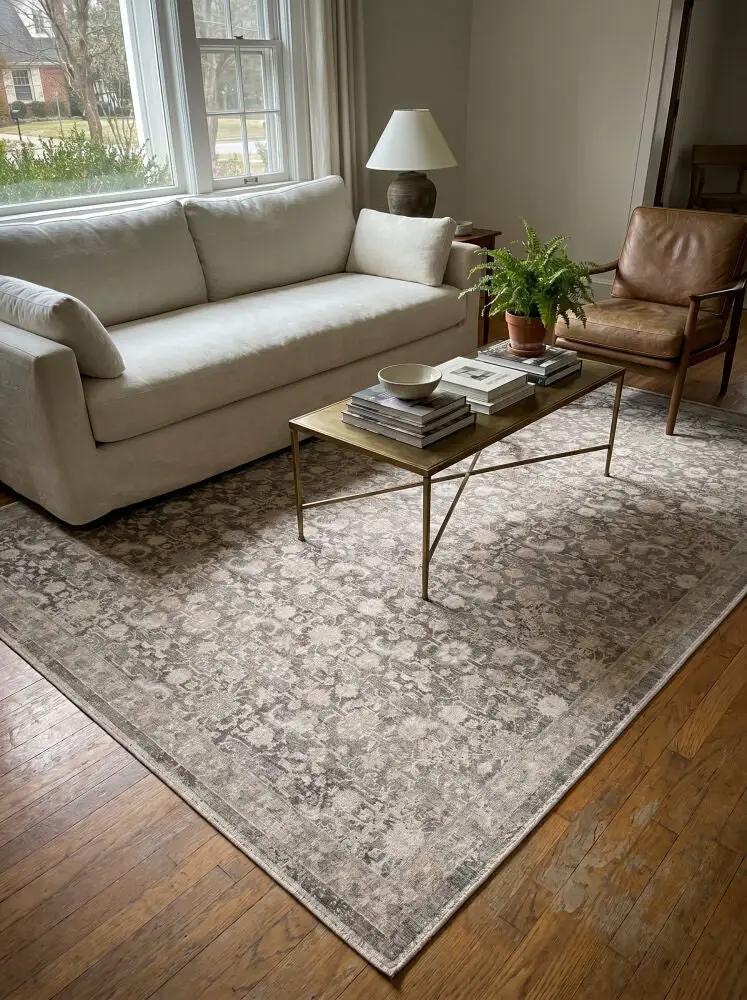
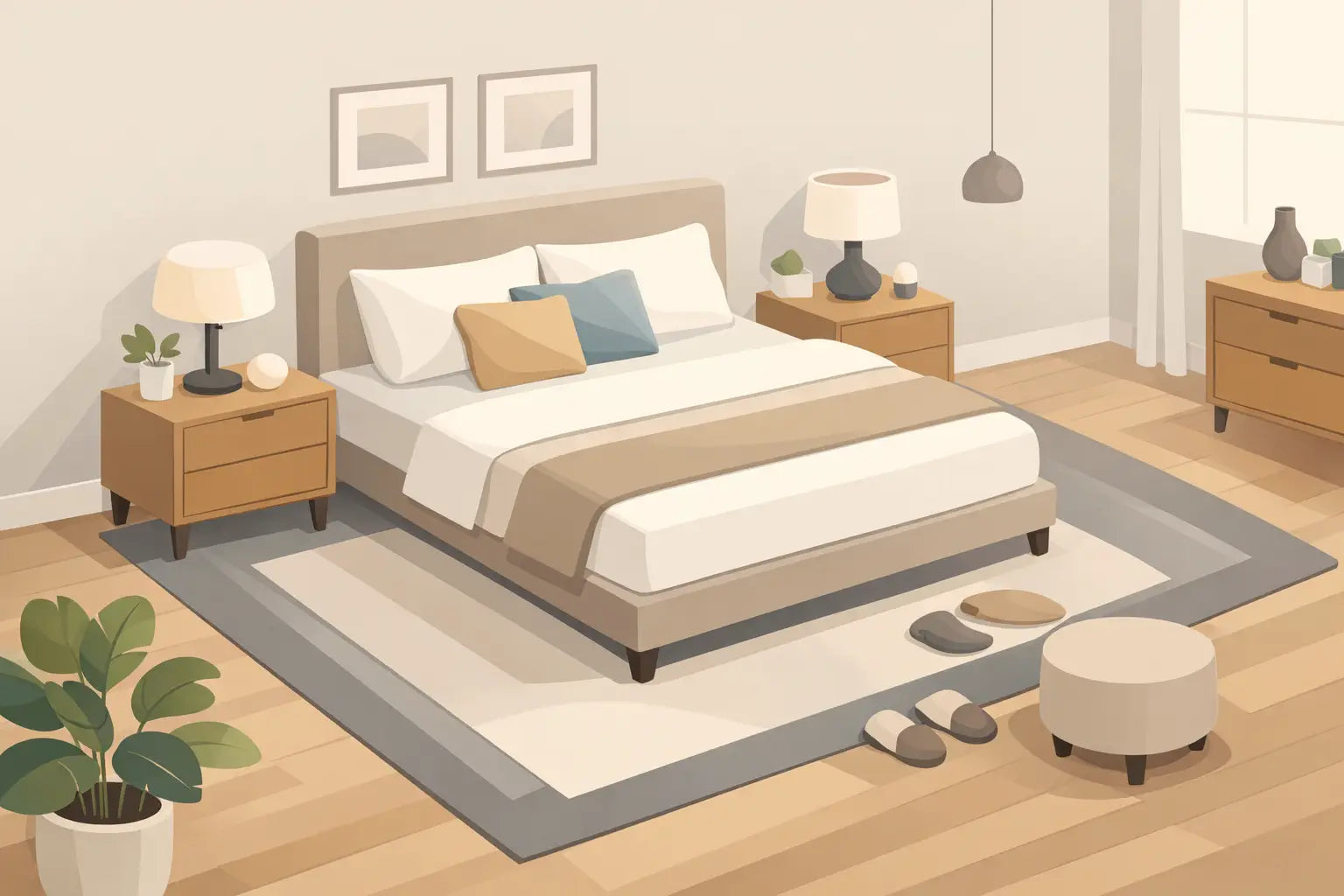
A bedroom rug does more than soften the first step out of bed. It gives the room a visual foundation, makes a furniture layout feel intentional, and adds the color, texture, or quiet pattern that turns a sleeping space into a true retreat. If you are wondering what rug size for a bedroom will look most balanced, start with the bed - then leave enough rug showing around it to feel generous rather than incidental.
The most common mistake is choosing a rug that is too small. A petite rug placed only at the foot of a large bed can make an otherwise lovely room feel disconnected. A properly scaled area rug, on the other hand, creates tranquil harmony from nightstand to footboard.
What Rug Size for a Bedroom Depends on Your Bed
Your bed is the room's largest visual element, so it should guide the rug size. In most layouts, the rug sits under the lower two-thirds of the bed, extending beyond both sides and the foot. This placement keeps the rug visible where it matters most: beside the bed, where bare feet meet the floor each morning.
Aim for roughly 18 to 24 inches of rug beyond each side of a full, queen, or king bed. In a larger primary bedroom, 24 to 36 inches can look especially polished. The right amount depends on the room's proportions, the size of your nightstands, and whether you want the rug to hold a bench or accent chair at the foot of the bed.
Keep a border of exposed flooring around the rug, too. In many bedrooms, 8 to 18 inches between the rug edge and the walls feels composed. Narrow rooms may call for less, while spacious rooms can accommodate more breathing room.
Twin and full beds
A 5' x 8' rug is often the sweet spot for a twin bed, especially in a child's room, guest room, or compact apartment bedroom. Position it lengthwise under the lower portion of the bed so it extends on both sides and past the foot. A 6' x 9' can create a more substantial look when the room has the floor space.
For a full bed, a 6' x 9' rug usually provides comfortable coverage. Choose an 8' x 10' rug if the bedroom is larger or if you want a bench at the foot to sit on the rug as well. The bigger choice often feels more intentional, particularly when the bed is centered on a wall.
Queen beds
An 8' x 10' rug is the classic choice beneath a queen bed. It gives you a soft landing on both sides without overwhelming an average-size bedroom. Arrange the rug horizontally, with its longer dimension running across the width of the bed.
A 6' x 9' rug can work under a queen in a smaller space, but it is a considered compromise. It will generally start in front of the nightstands and extend beneath the bed's lower half. This layout can look beautiful when the rug has a strong design presence, though the exposed rug at each side will be more limited.
King and California king beds
For a standard king bed, an 8' x 10' rug is the minimum most designers recommend. It works well in a room that is at least moderately sized, especially when the rug begins just in front of the nightstands.
A 9' x 12' rug is often the more luxurious choice for a king or California king. Its scale gives the bed room to breathe, frames a bench gracefully, and keeps the rug from looking like a narrow strip beneath a wide mattress. If your primary bedroom has an open footprint, the 9' x 12' size can bring a sense of timeless elegance that a smaller rug simply cannot achieve.
Choose the Rug Placement Before You Choose the Pattern
A beautiful rug still needs a clear job in the room. Before falling for a color palette or artfully crafted motif, decide how you want the rug to relate to the bed and surrounding furniture.
The most versatile placement is under the lower two-thirds of the bed. The nightstands remain on the hard floor, while the rug reaches beyond the footboard and sides. This conserves rug size without sacrificing comfort, and it is especially practical if your nightstands are heavy or difficult to move.
For a more expansive, hotel-inspired arrangement, place the entire bed and both nightstands on the rug. This works best with a 9' x 12' or larger rug and a room with enough open floor around the perimeter. The result feels cohesive and calm, but a rug that is only barely large enough for this layout can look cramped. When in doubt, size up or use the lower-two-thirds placement instead.
A third option is to place a rug at the foot of the bed. This is ideal when a bed is positioned in a corner, when the room is too narrow for a full area rug, or when you want to spotlight a statement bench. Choose a rug wide enough to exceed the bed width visually. For a queen or king, a 5' x 8' or 6' x 9' rug at the foot usually feels more balanced than a small 3' x 5'.
When Two Runners Make More Sense
Not every bedroom calls for one large rug. In narrow bedrooms, rooms with an awkward doorway, or layouts where the bed sits tight to one wall, two runners can be a smart and stylish solution. Place one runner along each accessible side of the bed, or use a single runner where you step out of bed most often.
Runners offer softness without covering the entire floor, and they make it easier to show off beautiful wood, tile, or wall-to-wall carpet beneath. A pair of matching 2'6" x 8' runners feels tailored beside a king bed, while shorter runners can suit a twin or full bed. This approach is also a lovely way to introduce texture, such as a low-profile flatweave or a subtly patterned performance rug.
Measure for Door Swings, Benches, and Everyday Movement
A rug's listed size is approximate, and room plans are rarely as simple as the bed dimensions suggest. Painter's tape is one of the most useful tools in the rug-shopping process. Mark the rug's proposed outline on the floor, then walk around the bed, open closet and bedroom doors, and pull out drawers.
Pay special attention to a bench at the foot of the bed. If you want all four bench legs on the rug, account for its depth plus a few inches of visible rug beyond it. If the bench will sit entirely off the rug, make sure there is still enough rug extending past the bed to look purposeful.
Also consider the relationship between the rug and nearby furniture. A reading chair, dressing table, or storage chest does not always need to sit on the main rug. Trying to capture every item can lead to an oversized rug that crowds the walls. Let the rug anchor the bed zone first, then use a small accent rug only where it adds genuine comfort or character.
Material and Pile Height Affect the Final Look
Size establishes proportion, but material shapes how the bedroom feels. A plush wool or soft synthetic rug brings welcome warmth to a bedroom with hardwood or tile floors. A low-pile design is easier to place under doors and more stable beneath a bench, while a higher pile creates a cozy, sink-in feeling beside the bed.
For busy family homes, a durable, easy-care rug can offer both beauty and peace of mind. Muted patterns are especially forgiving around pets, kids, and everyday dust, while a solid rug or quiet border design can let layered bedding and artwork take the lead. In a serene primary suite, a tonal rug can create depth without interrupting the room's restful mood.
Whatever material you choose, add a rug pad suited to your floor type. It helps prevent shifting, adds a touch of cushioning, and supports the rug's shape over time. That small layer can make a bedroom rug feel noticeably more substantial underfoot.
A Simple Bedroom Rug Sizing Checklist
Before ordering, confirm four details: your bed size, the width and length of the open floor area, the placement you prefer, and whether a bench or nightstands need to sit on the rug. Then compare those measurements to the rug's actual listed dimensions rather than relying on a label alone.
If you are between two sizes and the room can accommodate it, the larger rug is typically the more forgiving choice. It creates a stronger visual anchor and leaves more room for the bed to feel settled within the design. A thoughtfully sized rug from Rug Resources can be the finishing layer that makes your bedroom feel softer, more personal, and ready to welcome you at the end of the day.
When you picture the room after the bedding is made and the lamps are glowing, look for the rug that leaves enough softness at your feet and enough open floor around the edges. That balance is where a bedroom begins to feel beautifully complete.

Share:
What Rugs Work With Sectionals? Find Your Best Fit
Patterned vs Solid Rugs: Which Fits Your Room?