

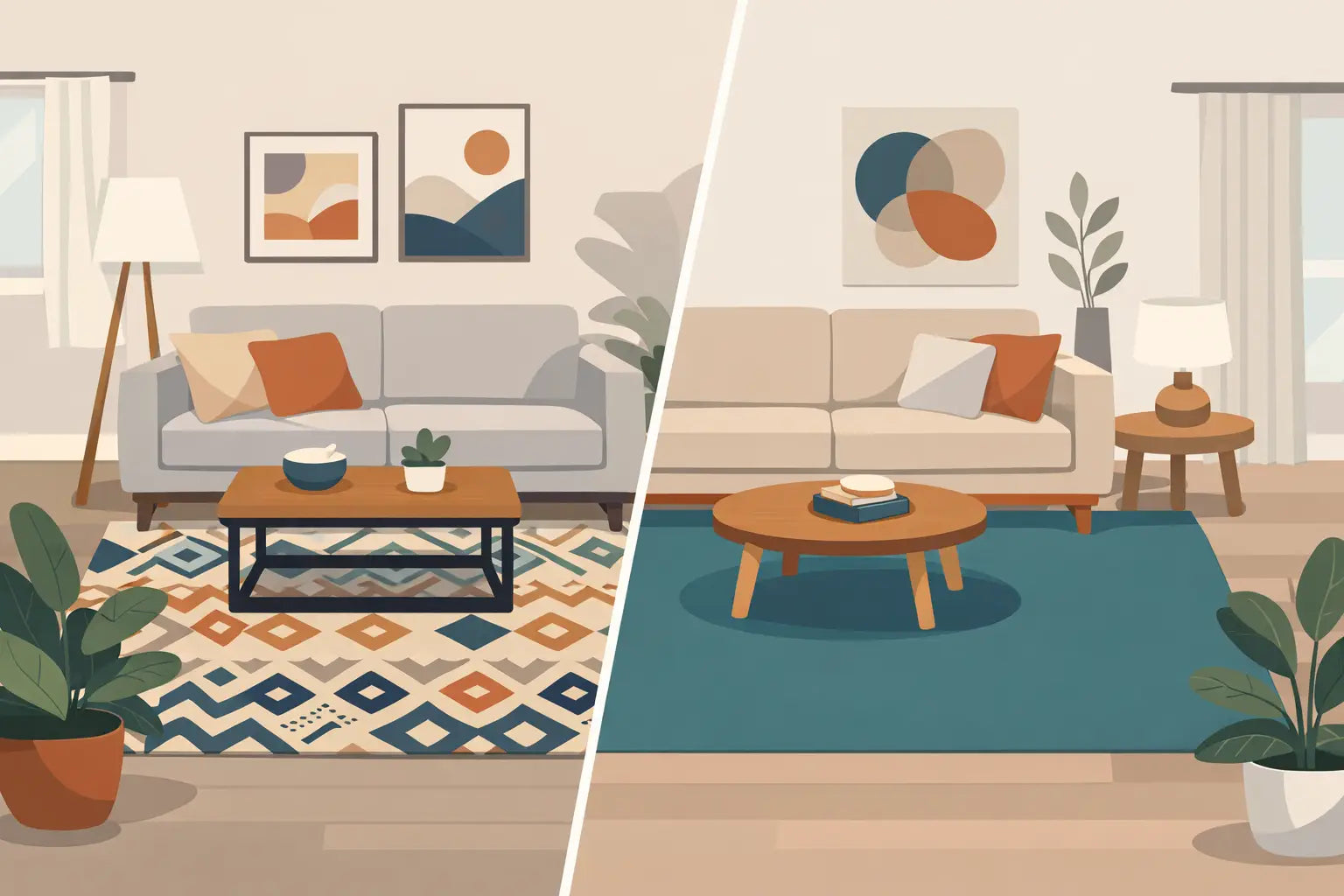
A rug can quietly settle a room or become the detail everyone notices first. When choosing patterned vs solid rugs, the better option is rarely about following one decorating rule. It is about reading the room: the architecture, the upholstery, the daily traffic, and the feeling you want to create when you walk through the door.
A bold patterned rug can bring a plain seating area to life. A beautifully textured solid can give a layered room the calm it needs. Both can be a lasting foundation when proportion, color, and material work together.
Patterned vs Solid Rugs: Start With the Room's Visual Energy
Look around before looking down. Every room already has a level of visual activity created by its furniture, art, window treatments, wood tones, and accessories. Your rug should either balance that energy or intentionally build on it.
A patterned rug is often the natural choice in a room with simple upholstery and restrained finishes. Think of a cream sofa, linen drapery, warm oak floors, and a few sculptural accent pieces. A vintage-inspired Persian design, contemporary abstract motif, or softly woven global pattern can give that palette character without requiring more decorative layers.
A solid rug is especially effective when the room already has plenty to say. If you have floral curtains, a patterned sectional, vibrant artwork, or a dramatic wallpaper moment, a solid or subtly heathered rug gives the eye a place to rest. It does not have to be flat or plain. A tonal wool rug, a looped texture, or a gentle border design adds dimension while preserving tranquil harmony.
The goal is not to make every surface match. It is to create a room where the layers feel considered rather than competitive.
When a Patterned Rug Makes the Most Sense
Patterned rugs bring movement, narrative, and personality. They are a particularly smart choice for rooms that need definition, color connection, or a more forgiving surface for everyday life.
You want to anchor a neutral room
Neutral interiors can be wonderfully serene, but they can also feel unfinished when every element sits within the same narrow color range. A patterned rug introduces contrast and depth while keeping the overall room soft. A faded blue-and-ivory motif can cool down warm beige upholstery; muted terracotta and sand can add warmth to gray seating.
For a more collected look, choose a pattern with several colors already present in small doses around the room. The rug becomes the artful thread that ties those accents together.
You are working with high traffic or family life
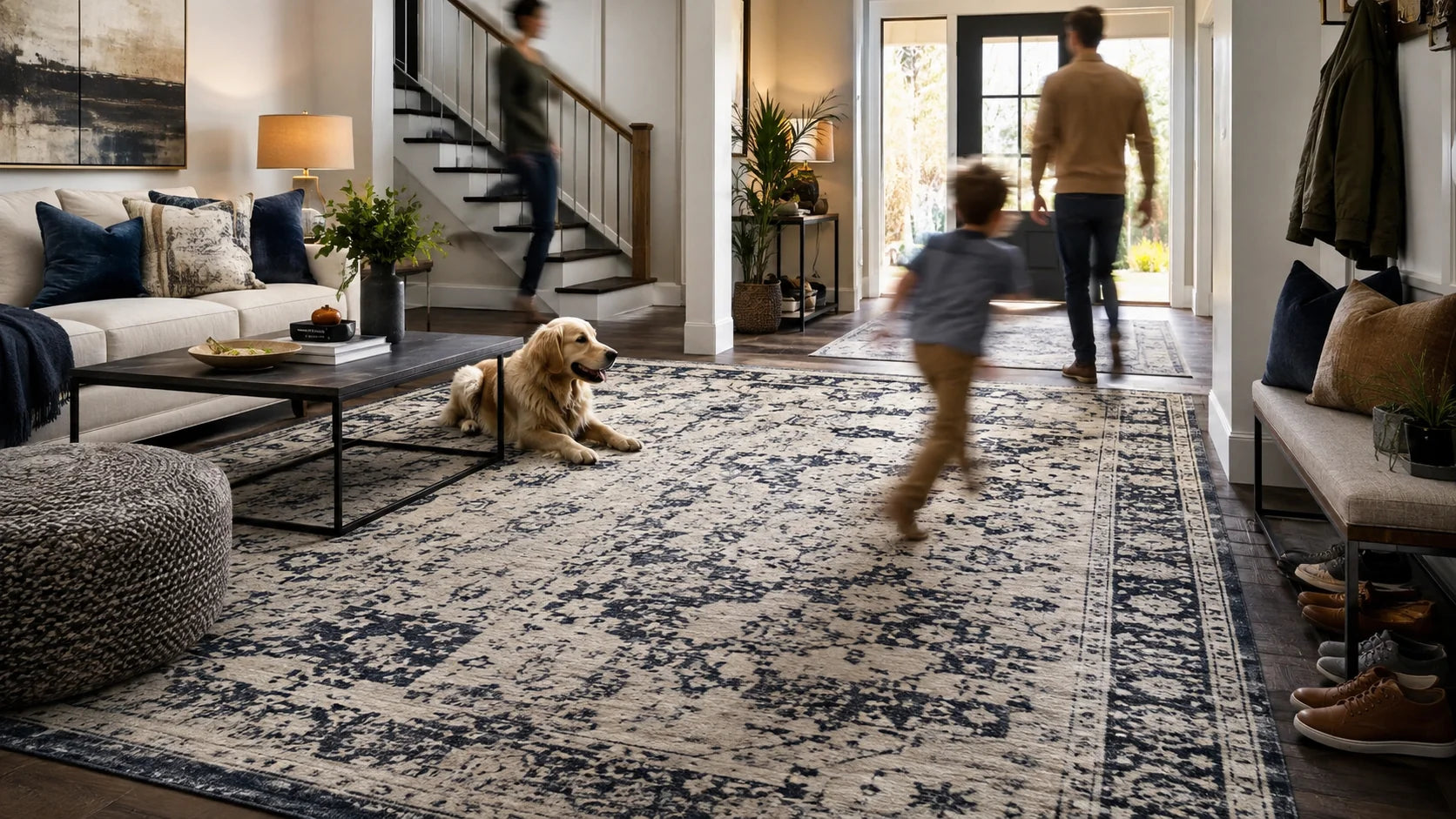
Patterns are practical as well as beautiful. Their variation can disguise the small realities of a well-lived home: pet hair, snack crumbs, shoe marks, and the occasional spill that is cleaned quickly but leaves a faint trace. This is why patterned low-pile rugs are popular in living rooms, dining spaces, hallways, and busy entry zones.
That does not mean every high-traffic rug needs a dark, busy print. A low-contrast design in taupe, ivory, denim, or soft charcoal can still hide wear more gracefully than a single, uniform pale surface.
You need a focal point
In an open-concept home, a rug can establish a living zone without walls. A striking geometric, traditional medallion, or modern abstract pattern makes the seating arrangement feel intentional. It can also guide your accent color choices for pillows, throws, and art.
Keep scale in mind. A large room can carry a larger, more open motif. In a compact apartment living room, an oversized pattern may feel more spacious than a small, tightly repeated one, which can read as visually busy from every angle.
When a Solid Rug Is the Better Design Move
Solid rugs have a quiet confidence. They can make a room feel expansive, polished, and effortlessly layered, especially when material and texture do the decorative work.
Your furniture or walls are already expressive
A solid rug supports a room with statement elements. A velvet sofa in jewel green, a striped chair, gallery-style art, or richly veined tile all benefit from a calmer foundation. Choose a color that relates to the room rather than disappearing entirely. A deep olive rug under a patterned floral chair, for example, can feel more intentional than a generic neutral.
For a sophisticated tonal scheme, select a rug one or two shades deeper than the walls. This creates gentle contrast and helps ground the furniture without interrupting the palette.
You want texture without visual clutter
“Solid” does not mean smooth, flat, or one-dimensional. Handwoven wool, ribbed flatweaves, high-low pile, bouclé-inspired loops, and soft striations all add tactile interest. These styles work beautifully in bedrooms, serene living rooms, and spaces with natural materials such as leather, linen, rattan, and light wood.
A textured solid rug is also an elegant answer for a room that feels almost finished. If the color palette is right but the space lacks warmth, changing the surface underfoot can create the missing depth.
You are designing for flexibility
If you enjoy refreshing pillows, art, and accent chairs seasonally, a solid rug gives you more freedom to evolve the room. It serves as a timeless base instead of locking the space into a particular color story. This can be especially useful for renters or homeowners furnishing one room at a time.
How Color Changes the Decision
Color often matters more than pattern alone. A multicolor rug with soft, faded tones may feel quieter than a saturated solid rug in navy or black. Conversely, a cream rug with pronounced black striping can command more attention than a richly textured camel wool rug.
When comparing options, view the rug as a field of color from a few feet away. Ask what color you notice first and whether it supports the room’s overall temperature. Blue, green, and gray foundations tend to bring calm. Rust, gold, red, and warm brown can make a room feel grounded and inviting. Black or charcoal adds definition but may feel heavy in a small or low-light space unless balanced with lighter furnishings.
If you are shopping online, order your decision around the largest fixed elements first: flooring, sofa upholstery, cabinetry, or bedding. Decorative pillows are much easier to replace than a rug, so the rug should not be chosen solely to match a temporary accent.
Size Can Make Either Choice Look Better
The most beautiful rug will feel underwhelming if it is too small. Before deciding between patterned and solid, confirm the dimensions that will properly frame your furniture.
In a living room, aim to place at least the front legs of sofas and chairs on the rug. In a dining room, allow enough room for chairs to stay on the rug when pulled back. In a bedroom, choose a size that extends beyond the sides and foot of the bed, creating a soft landing each morning.
A larger patterned rug can feel surprisingly calm because the motif has room to breathe. A small patterned rug may look more decorative than grounding. With solids, generous sizing creates a luxurious, hotel-like effect and makes texture more visible across the room.
Material and Maintenance Matter, Too
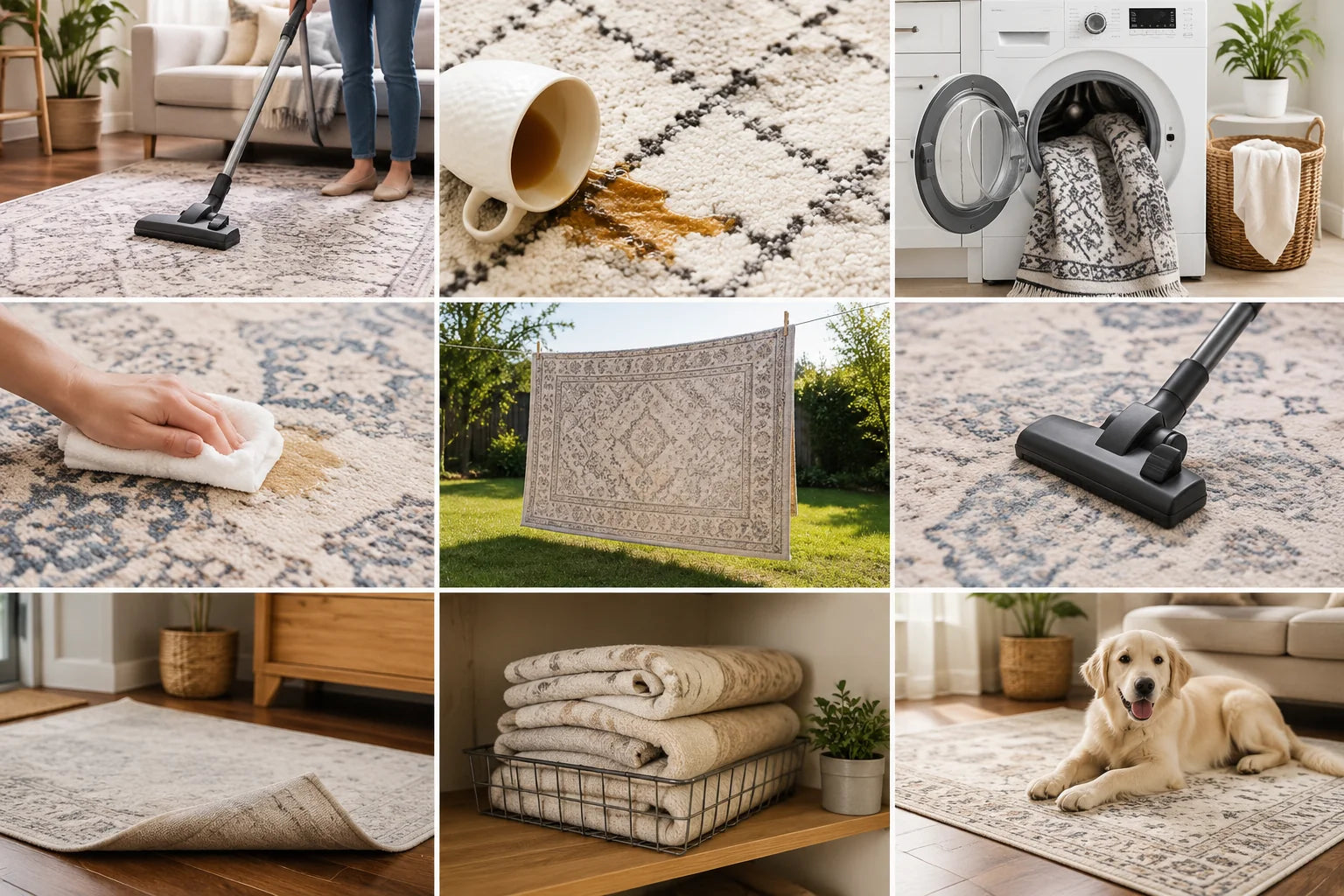
Your lifestyle should influence the final choice. Wool offers natural resilience, warmth, and a refined look, making it a favorite for living rooms and bedrooms. Synthetic performance fibers can be a practical fit for homes with children, pets, frequent entertaining, or spaces where easy care is a priority. Flatweaves suit dining areas and hallways because their lower profile is easier to navigate and often simpler to maintain.
Pattern can be helpful for hiding daily wear, but material still matters. A delicate high-pile rug in a busy family room may require more care than a durable low-pile solid. Likewise, a pale solid can work in an active home when it has a forgiving texture and the right performance construction.
A quality rug pad is worth considering for either style. It adds cushioning, helps reduce shifting, and can support the rug’s long-term appearance in high-use areas.
A Simple Way to Choose With Confidence
If your room feels plain, disconnected, or overly neutral, begin with patterned rugs. If it feels crowded, colorful, or full of competing finishes, start with solids and textured designs. Then compare samples or product images alongside your flooring and upholstery in natural light whenever possible.
The right rug does more than fill an empty area. It sets the room’s rhythm, softens everyday routines, and gives your furnishings a sense of belonging. Choose the one that makes your space feel more like yours, whether that means a quiet layer underfoot or a pattern with a story to tell.

Share:
What Rug Size for a Bedroom Looks Right?
Best Rugs Under Dining Tables for Every Home