

A living room can have beautiful seating, layered lighting, and the right color palette, yet still feel slightly off. Often, the missing piece is scale. If you are asking what size rug for living room layouts actually need, the answer is less about a strict formula and more about how your furniture sits, how the room flows, and the mood you want the space to hold.
A rug does more than soften the floor. It frames conversation, adds visual balance, and gives the room a sense of intention. Choose too small a size and the space can feel disconnected, with furniture appearing to float around the perimeter. Choose the right size and the room feels calmer, more polished, and far more expensive.
What size rug for living room layouts works best?
In most living rooms, the best rug is larger than people first expect. A rug should anchor the seating area, not just fill the open patch of floor between furniture pieces. That is why tiny rugs often make even generous rooms feel smaller.
For many standard layouts, an 8x10 or 9x12 rug is the sweet spot. An 8x10 works well in modest living rooms or apartments where the front legs of the sofa and chairs can sit on the rug comfortably. A 9x12 is often the better choice for medium to large rooms, especially if you want all major furniture pieces to feel connected.
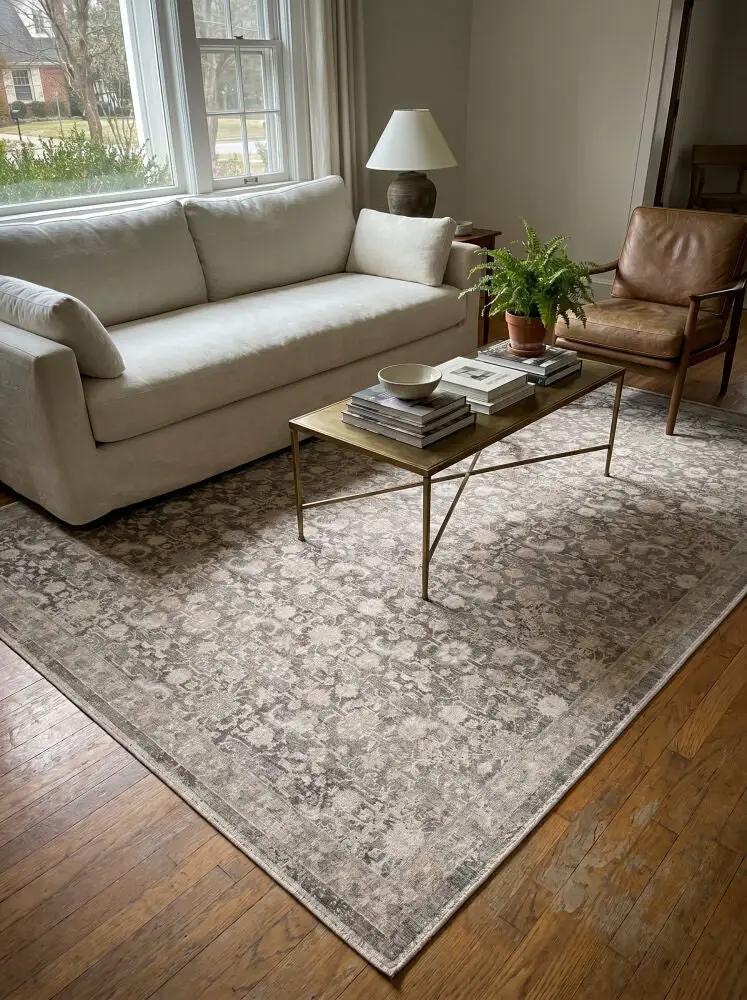
The practical rule is simple. In a well-proportioned living room, the rug should usually extend under at least the front legs of the sofa and accent chairs. If your room is spacious, placing all furniture legs on the rug creates an especially tailored, tranquil look.
Start with the furniture, not the room
A common mistake is measuring the room and choosing a rug based on empty floor dimensions alone. In reality, your seating arrangement matters more. The rug should relate to the furniture grouping first, then leave a comfortable border of flooring around the edges.
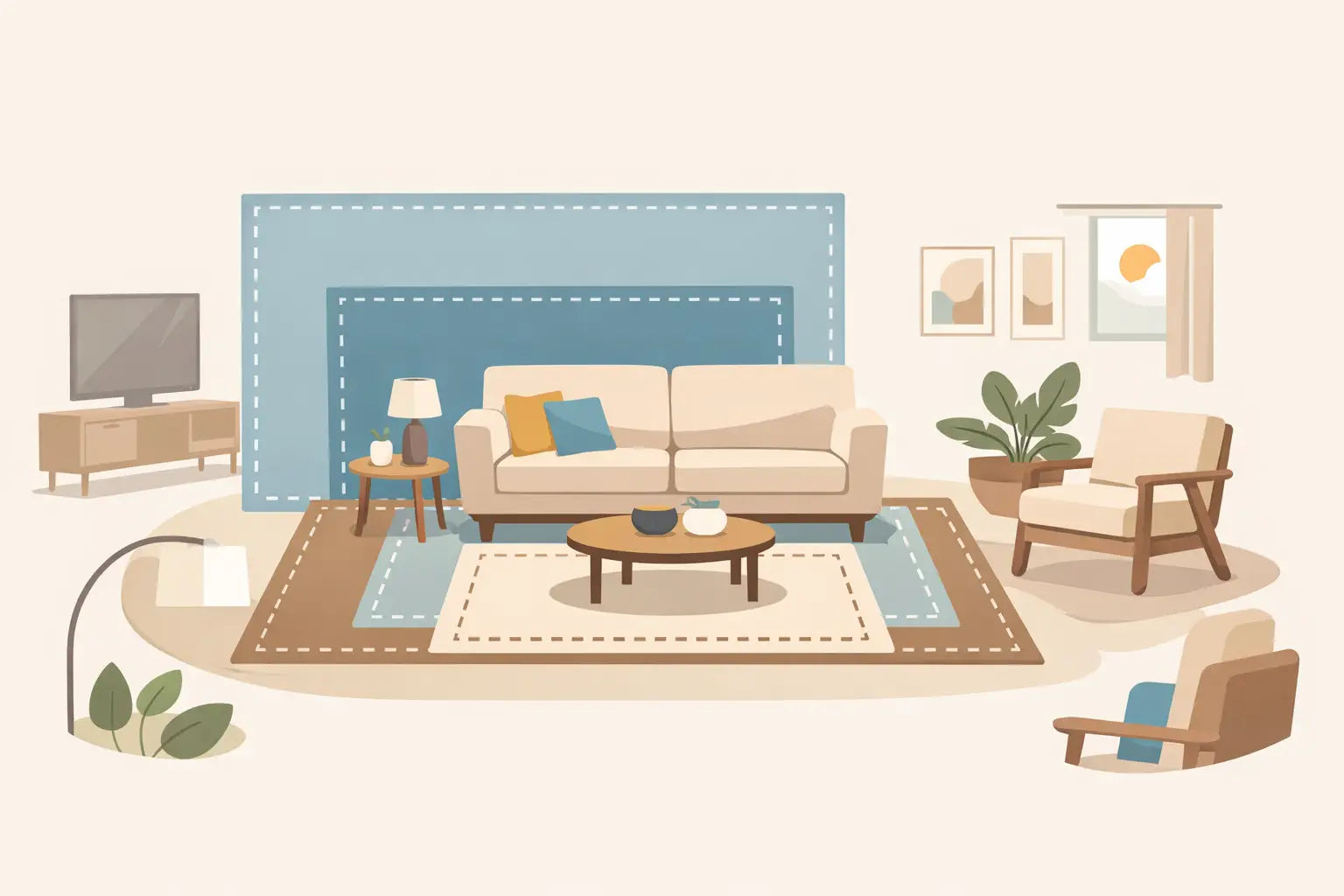
As a starting point, aim to leave roughly 12 to 18 inches of visible floor between the rug edge and the walls in a larger room. In smaller spaces, 8 to 12 inches can still look balanced. This border helps the rug feel intentional instead of wall-to-wall by accident.
If your sofa is against the wall, that does not mean the rug should stop at the coffee table. The rug still needs enough reach to connect the sofa to nearby chairs or side seating. Think of it as creating one complete zone rather than decorating the center of the room in isolation.
The three living room rug layouts that work
Most living rooms fall into one of three rug placements.
The most elevated look is all legs on the rug. This works beautifully in larger rooms, open-concept homes, and formal seating areas where you want a generous, artfully crafted foundation. It makes the room feel unified and serene, but it does require a larger size and a bigger budget.
The most common option is front legs on the rug. In this layout, the front legs of the sofa and chairs rest on the rug while the back legs remain off. It is practical, visually balanced, and ideal for everyday homes where comfort and proportion matter equally.
The least forgiving option is coffee table only. Here, the rug sits in the middle with no furniture touching it. This can work in very compact rooms, but it often reads as too small. If you choose this route, it should feel like a deliberate space constraint, not a sizing mistake.
A room-by-room look at common rug sizes
A 5x7 rug is usually too small for a full living room unless you are styling a very petite apartment, a studio seating nook, or a compact secondary sitting area. It can fit under a coffee table, but it rarely gives enough coverage to anchor a sofa and chairs well.
An 8x10 rug is one of the most versatile choices. It suits many apartment living rooms, smaller suburban family rooms, and rectangular spaces where the furniture grouping is modest but still deserves a grounded look. If you have a standard sofa, a coffee table, and one or two chairs, this size often feels just right.
A 9x12 rug gives a room more presence. It is especially helpful when a living room is open to a dining area or kitchen and you want the seating zone to feel clearly defined. This size also creates a more luxurious effect because there is enough surface area to support the main furniture pieces with ease.
A 10x14 rug is often right for expansive rooms, long living rooms, or homes with oversized sectionals. It prevents the layout from looking underscaled and keeps the room from feeling fragmented. In larger interiors, going too small is far more noticeable than going generously.
What size rug for living room sectionals?
Sectionals change the equation because they already create a strong footprint. The rug needs to be large enough to extend beyond the sectional edges and still hold the coffee table comfortably in the center.
For many sectionals, 9x12 is the minimum starting point. In larger family rooms, 10x14 may be the better fit. If the rug disappears under the sectional without enough visible border, it loses its visual impact. If it is too small, the sectional can overwhelm it immediately.
Shape matters as much as size
Rectangular rugs are the standard choice because most living rooms follow a rectangular footprint. They align naturally with sofas, media consoles, and long sightlines.
That said, round rugs can be surprisingly effective in smaller seating areas, under circular coffee tables, or in rooms that need softness against lots of straight architectural lines. A round rug will not suit every layout, but in the right room it adds character and a sense of movement.
Square rugs can work in square living rooms or with symmetrical furniture plans, especially when four chairs gather around a centered table. The key is making sure the shape echoes the room and furniture rather than fighting them.
Don’t forget the coffee table clearance
Once the rug is large enough to anchor the furniture, there is another proportion to watch: the coffee table. Ideally, the table should sit fully on the rug with enough rug visible around it to feel balanced. If the table nearly touches the rug edges, the whole composition looks cramped.
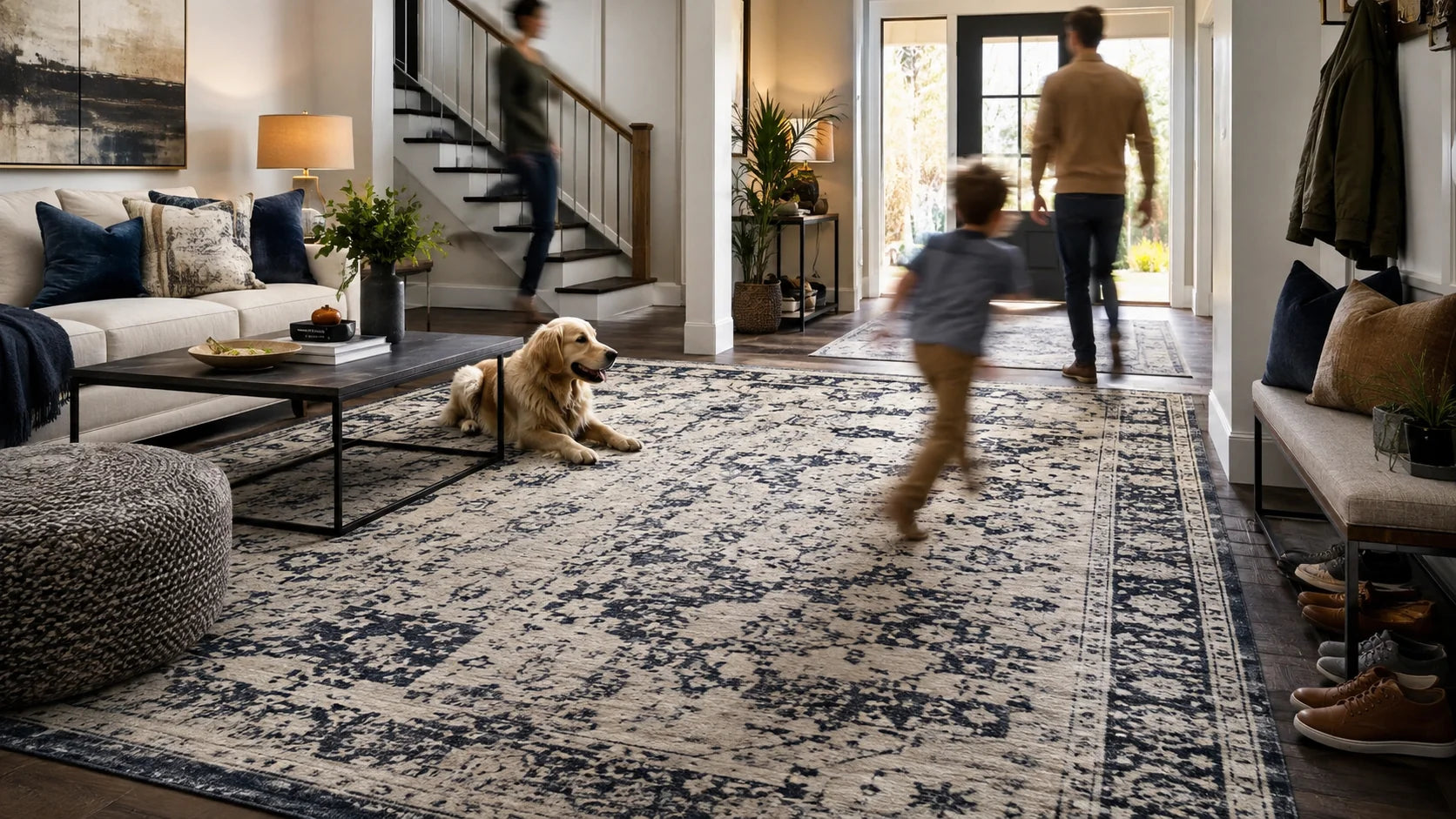
You also want comfortable walking flow around the seating area. A rug should enhance movement through the room, not create awkward edges where feet constantly catch the corners. This is especially important in busy family spaces, homes with kids, or layouts with multiple entry points.
How style and lifestyle affect rug size decisions
A more minimal room often benefits from a larger rug because the extra scale adds quiet luxury and keeps the design from feeling sparse. In layered, collected interiors, a slightly smaller rug can still work if the room has enough visual richness elsewhere.
Lifestyle matters too. In high-traffic living rooms, a larger rug can be the more forgiving choice since it protects more flooring and creates a comfortable landing underfoot. If pets, children, or frequent entertaining are part of daily life, the right size should feel easy to live with, not precious.
Material and pile can also influence perception. A low-profile rug in a generous size often looks tailored and versatile, while a plush or heavily textured rug makes a stronger statement and may feel best when the room has enough space to support it.
The easiest way to choose with confidence
Before ordering, map the rug size on your floor with painter’s tape. This simple step shows exactly how much room the rug will occupy and whether the furniture legs will land where you expect. It is one of the clearest ways to avoid choosing a rug that is almost right.
If you are between two sizes, the larger one is usually the better call for a living room. Bigger rugs tend to create more harmony, more comfort, and a more finished look. That is especially true when shopping online, where dimensions can feel abstract until they are placed in context.
A beautiful living room rarely comes down to one dramatic gesture. More often, it is the result of thoughtful proportions that make every piece feel like it belongs. When the rug is scaled well, the whole room settles into place - and that sense of ease is what people notice the moment they walk in.

Share:
Loloi Area Rugs Sale: How to Shop Smarter
Area Rug Buying Guide for Every Room