

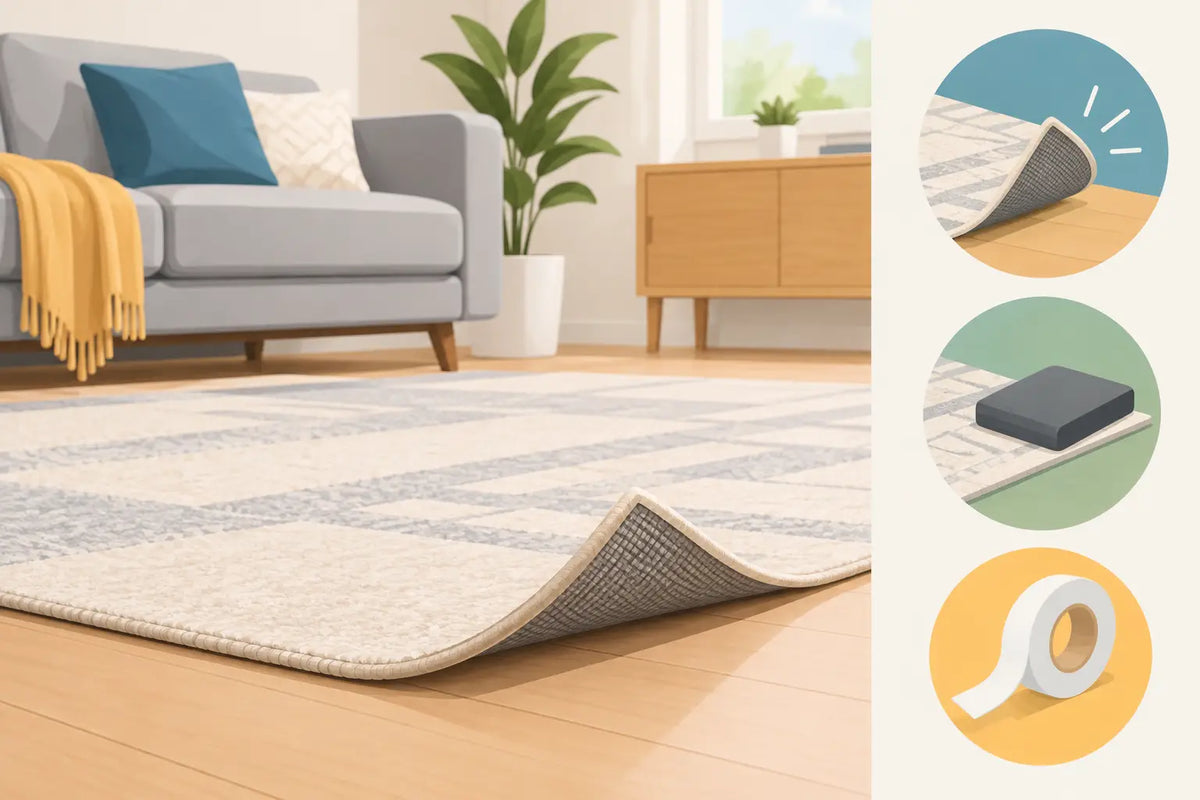
A beautiful area rug should ground a room, not become the one detail everyone steps around. If are rug corners curling is the question you are asking, the good news is that it is usually a fixable issue, not a sign that you chose the wrong rug. From a newly unrolled living room rug to a well-loved hallway runner, curled edges often come down to memory, moisture, movement, or the surface underneath.
A flat, secure rug helps a space feel considered and comfortable. It also matters for everyday safety, especially in busy rooms with children, pets, or frequent foot traffic. Here is how to identify what is causing those lifted corners and restore the tailored finish your room deserves.
Why Are Rug Corners Curling?
Rugs are made from flexible materials, and they retain a certain amount of memory from manufacturing, shipping, storage, and use. A rug that arrives tightly rolled may curl at the corners simply because its fibers and backing have spent time under pressure. This is particularly common with new rugs and usually settles as the rug relaxes in your home.
The direction of the curl offers a useful clue. Corners that lift upward often point to roll memory or a rug that is shifting over a slick floor. Corners that turn under may result from repeated foot traffic, vacuuming in one direction, or furniture pressing into the rug’s edge. In humid rooms, natural fibers can also expand and contract slightly, making an existing curl more noticeable.
Construction and material play a role, too. A lightweight flatweave or low-pile rug has a graceful, easygoing look, but it may be more likely to move than a substantial hand-tufted style. Natural fibers such as wool, jute, and cotton respond differently to temperature and humidity than synthetic fibers. None of this means one material is better than another. It simply means the best solution depends on the rug, the room, and how the space is used.
Start With the Simplest Fix: Let the Rug Relax
For a recently delivered rug, time is often the most effective first step. Unroll it completely and let it lie flat in the room where it will live for a few days. Keep the space at a comfortable, consistent temperature and avoid placing heavy furniture directly on the corners while the rug settles.
If a corner still lifts, gently reverse-roll that portion of the rug. Roll the curled corner in the opposite direction of the curl, keeping the roll loose rather than tight. Leave it this way for several hours, then unroll it and check the edge. This encourages the fibers and backing to release their stored shape without stressing the rug.
For a firmer result, place a clean, evenly distributed weight over the lifted corner overnight. A few stacked books with a folded towel beneath them can work well. The towel protects the rug surface while the weight helps the corner rest flat. Avoid anything with sharp edges, dark dyes, or an uneven base that could leave an impression.
Use Gentle Warmth With Care
A little warmth can help a stubborn new rug relax, but it should be applied thoughtfully. Place a slightly warm, damp white towel over the curled area, then set a heavy book on top for a short period. The goal is gentle moisture and pressure, not heat treatment.
Do not use a clothing iron directly on a rug. High heat can damage fibers, alter a backing, or set stains more deeply into the pile. Steamers should also be approached carefully, especially with wool, silk-blend, viscose, jute, or rugs with latex backing. When in doubt, use the low-risk combination of time, reverse rolling, and a rug pad.
Check the Surface Underneath
A curling corner can be less about the rug itself and more about what is beneath it. Smooth hardwood, tile, laminate, and polished concrete can allow a rug to slide slightly each time someone walks across it. Over time, that repeated movement encourages corners to lift.
A properly sized rug pad is one of the most useful finishing layers in a room. It helps keep the rug in place, cushions the surface underfoot, and reduces friction that can cause shifting and curled edges. For a living room or bedroom, a felt-and-rubber pad offers a comfortable, substantial feel while providing grip. In a hallway, kitchen, or entry, a thinner non-slip option may be a better fit because it keeps transitions lower and doors moving freely.
Choose a pad that is slightly smaller than the rug on all sides so it remains hidden. The rug should rest fully on the pad, with the outer edge lying flat against the floor. A pad that is too small may not support the corners, while one that is too large can create a visible ridge.
Secure Persistent Corners Without Damaging the Rug
If the rug has had time to settle and a good pad is already in place, corner grippers or rug-safe tape can offer added support. These are especially helpful for runners, smaller accent rugs, and lightweight styles in high-traffic zones. Look for products designed for the type of floor beneath your rug, since some adhesives are not suitable for finished hardwood or delicate surfaces.
Before applying anything, clean and dry both the floor and the underside of the rug. Dust and moisture can weaken the hold. Apply the gripper smoothly, making sure it lies flat and does not pull on the rug’s backing. Test one corner first if you are working with an heirloom piece, a delicate natural-fiber rug, or a rug with a specialty backing.
Avoid using standard double-sided household tape, glue, or staples. These quick fixes can leave residue, damage the floor, or make future cleaning and repositioning more difficult. A rug should feel effortless in a room, and the solution should be just as considerate.
Prevent Rug Corners From Curling Again
Once a rug lies flat, a few small habits can help it stay that way. Vacuum with care, especially around the perimeter. For rugs with fringe or a more delicate construction, turn off a beater bar or use an upholstery attachment near the edge. Aggressive vacuuming can catch corners and gradually train them upward.
Rotate the rug every six to 12 months, particularly in sunlit rooms or areas where people consistently walk the same path. Rotation distributes wear, helps color age more evenly, and prevents one edge from receiving all the pressure of daily life. If furniture anchors part of the rug, make sure the exposed corners are not being tugged by chair legs or doors.
For seasonal storage, roll the rug rather than folding it. Roll with the pile facing inward when possible, then wrap it in a breathable material and store it in a dry, climate-controlled location. Folding can create sharp creases that are harder to release later, while damp basements and hot attics can affect fibers and backing.
When Curling Signals a Bigger Issue
Most curled corners are cosmetic and easy to correct. However, a rug that suddenly buckles, ripples across the center, or develops a stiff, cracked backing may need more attention. Excess moisture, water damage, aging latex, or a severe change in room conditions can affect how a rug sits on the floor.
If a rug has been exposed to a leak or flood, allow it to dry completely and consider professional cleaning before attempting to flatten it. For valuable handmade rugs or pieces with silk, viscose, or antique fibers, professional guidance is worth considering before using moisture, adhesive products, or prolonged weight.
A rug is often the quiet foundation of a room’s story: soft under bare feet, rich with color, and capable of bringing furniture into tranquil harmony. Give its corners a little patience, the right support, and room to settle. The result is a safer floor, a more polished view, and a space that feels as thoughtfully finished as you intended.


Share:
Synthetic Versus Natural Rug Fibers Compared
Rug Color Trends 2026 for a Warm, Layered Home