

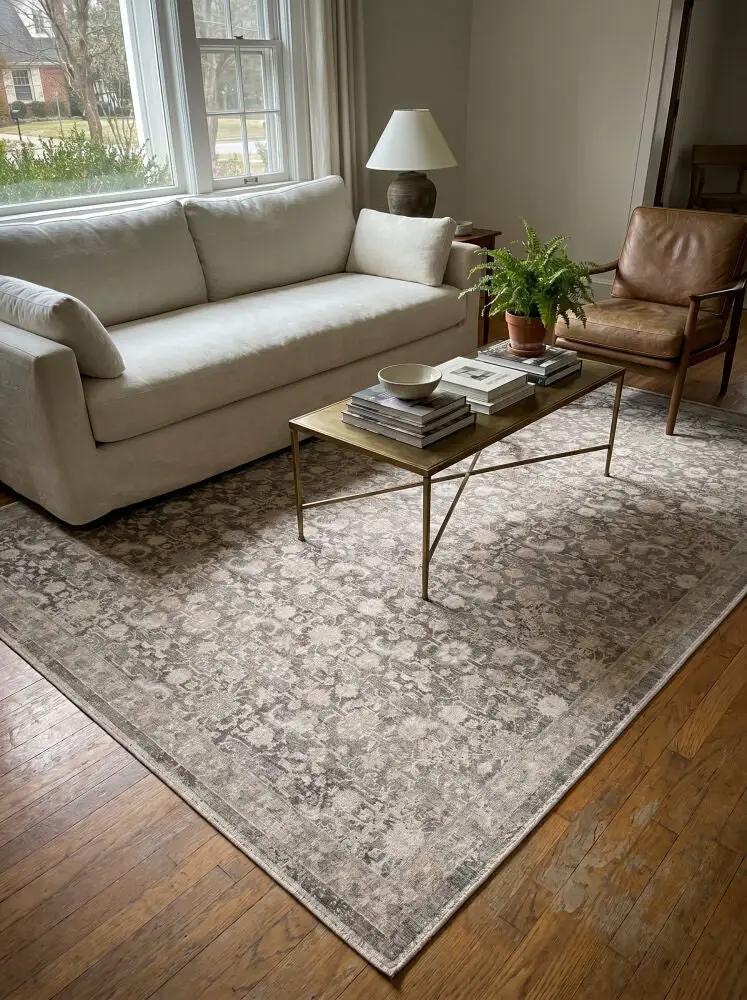

A living room can have beautiful furniture, good light, and all the right accents, yet still feel unfinished. Usually, the missing piece is underfoot. The best rug for living room spaces does more than fill empty floor area - it creates structure, softens the room, and gives the entire space a sense of intention.
That choice is not only about pattern or color. A rug has to work with your layout, your lifestyle, and the way the room actually gets used on a Tuesday night, not just how it looks in a styled photo. If you have kids, pets, frequent guests, or an open-concept floor plan, the right rug needs to bring beauty and performance in equal measure.
What makes the best rug for living room spaces?
The answer depends on three things: scale, material, and visual balance. When one of those is off, the whole room can feel slightly unsettled. A rug that is too small makes furniture look like it is floating. A rug that is too delicate for everyday traffic can quickly lose its appeal. And a rug with the wrong color temperature or pattern density can compete with the rest of the room instead of tying it together.
The most successful living room rugs ground the seating area first. They create a clear zone for conversation and comfort, even in rooms that also serve as play spaces, media rooms, or pass-through areas. That is why size tends to matter even more than style in the early stages of shopping.
Start with size before style
One of the most common mistakes in rug shopping is choosing a size based on price rather than proportion. It is understandable, but it often leads to a room that feels pieced together rather than polished.
In most living rooms, a rug should be large enough for at least the front legs of your sofa and chairs to sit on it. In a more generous layout, all furniture legs can rest on the rug for a tailored, designer-finished look. If your room is compact, you still want the rug to extend beyond the coffee table enough to feel substantial.
An 8x10 rug is often a strong fit for standard living rooms, while a 9x12 can make a larger space feel far more cohesive. Smaller rugs can work, but only when the furniture arrangement is equally compact and intentional. If you are between sizes, sizing up is usually the better move.
Choosing the right material for real life
Material shapes how a rug feels, how it wears, and how easy it is to maintain. That is where a lot of smart buying decisions happen.
Wool remains a favorite for good reason. It has a rich, cushioned feel underfoot, natural durability, and a timeless quality that works across traditional, transitional, and contemporary interiors. It tends to perform beautifully in living rooms where comfort matters, though it can be a larger upfront investment.
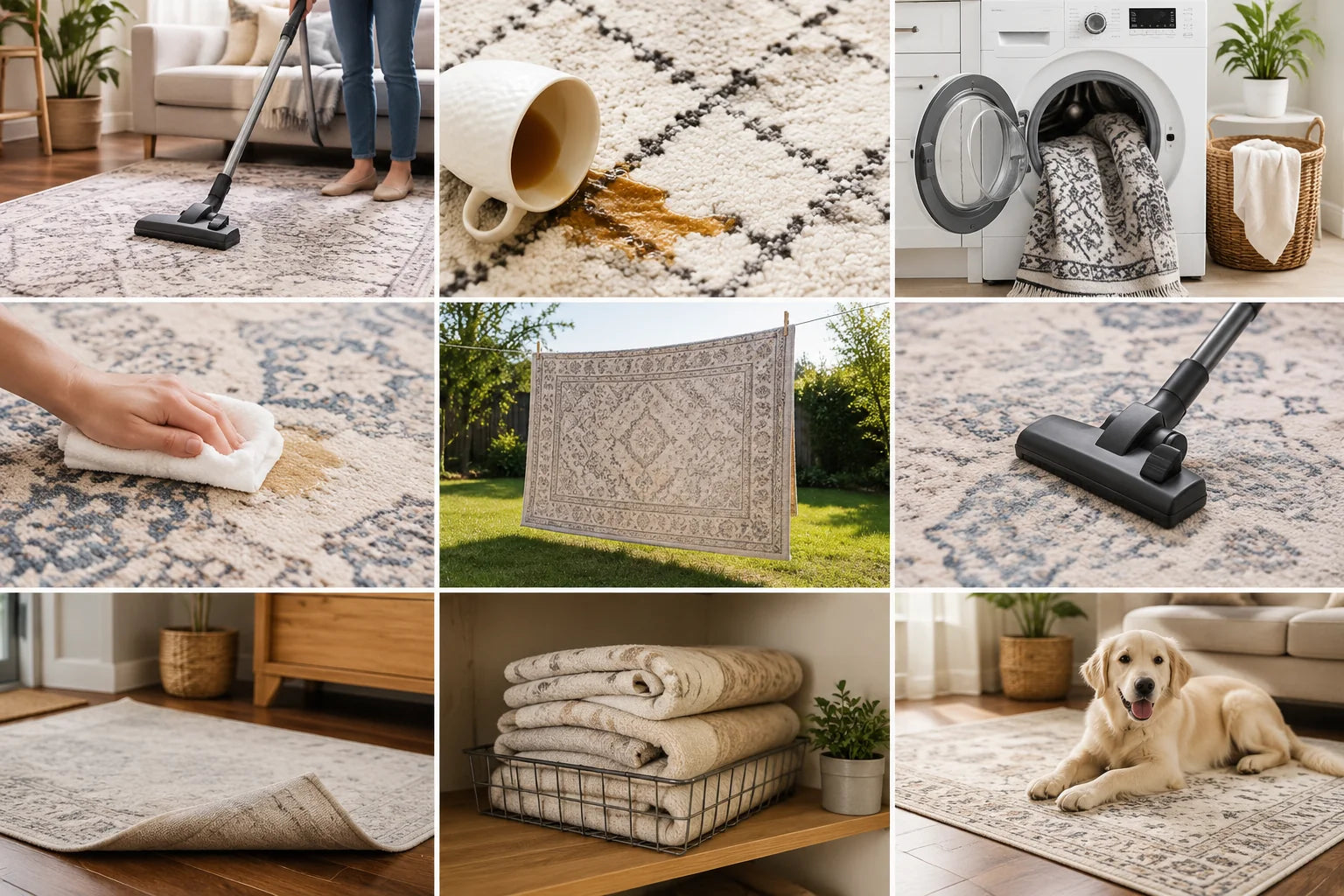
Polypropylene and other synthetic fibers are often ideal for busy households. They are known for being easy to clean, resilient in high-traffic areas, and well suited to homes with kids or pets. If your living room sees constant activity, this kind of practicality can be just as valuable as softness.
Viscose and similar fibers can offer a lovely sheen and elevated look, especially in more formal rooms. The trade-off is maintenance. These rugs are often better for lower-traffic living spaces where appearance takes priority over heavy daily wear.
Natural fibers like jute and sisal bring texture and an easy, organic warmth. They pair beautifully with coastal, modern organic, and relaxed transitional interiors. Still, they are not always the softest choice for lounging on the floor, and some can be less forgiving when spills happen.
The best rug for living room style depends on the mood you want
A rug does a quiet but powerful kind of storytelling. It can make a room feel serene, layered, dramatic, airy, or grounded. The best choice is usually the one that supports the mood you want to live in every day.
If your furniture is fairly neutral, a patterned rug can introduce movement and character without overwhelming the room. Traditional and vintage-inspired rugs are especially effective here because they add visual depth and a sense of history. They also tend to hide everyday wear better than solid light-colored rugs.
If your room already has statement upholstery, bold art, or architectural details, a more understated rug may be the better anchor. Solid rugs, tonal patterns, and subtle borders can bring calm and balance while still feeling refined.
For modern interiors, look for clean geometry, abstract motifs, or softly textured neutrals. For transitional rooms, consider rugs that blend classic influence with a fresher palette. For homes that lean eclectic or globally inspired, layered pattern and earthy color can create a collected, personal atmosphere.
Color should connect, not compete
The right rug color often comes from what is already in the room. Pull from your sofa, drapery, wall color, wood tone, or accent pillows and look for a rug that makes those elements feel more connected.
A light rug can open up a room and feel tranquil, especially in spaces with limited natural light. But lighter tones also show more of everyday life. If your living room is a high-use family zone, medium tones and softly varied patterns are often easier to live with.
Darker rugs add contrast and sophistication, particularly in rooms with lighter upholstery. They can feel rich and grounding, though they may show lint, dust, or pet hair more readily depending on the fiber.
Multicolor rugs are often the most flexible option for shoppers who want both design impact and practical camouflage. They bring dimension, help bridge multiple finishes in a room, and can make styling easier over time.
Pile height changes the feel of the room
Pile height affects comfort, maintenance, and even how formal a room feels. A plush, higher-pile rug adds softness and warmth, which can make a living room feel inviting and relaxed. It is especially appealing in spaces designed for lounging.
Low-pile rugs are often the more versatile choice. They are easier to vacuum, simpler to place under furniture, and generally better for high-traffic layouts. If your coffee table, accent chairs, or media console create a lot of movement in the room, a lower pile may be the smarter option.
Flatweaves can be excellent in casual living rooms or layered interiors. They have a clean profile and often bring a tailored, textural look. Just keep in mind that they offer less cushioning, so a quality rug pad can make a meaningful difference.
Think about traffic patterns before you buy
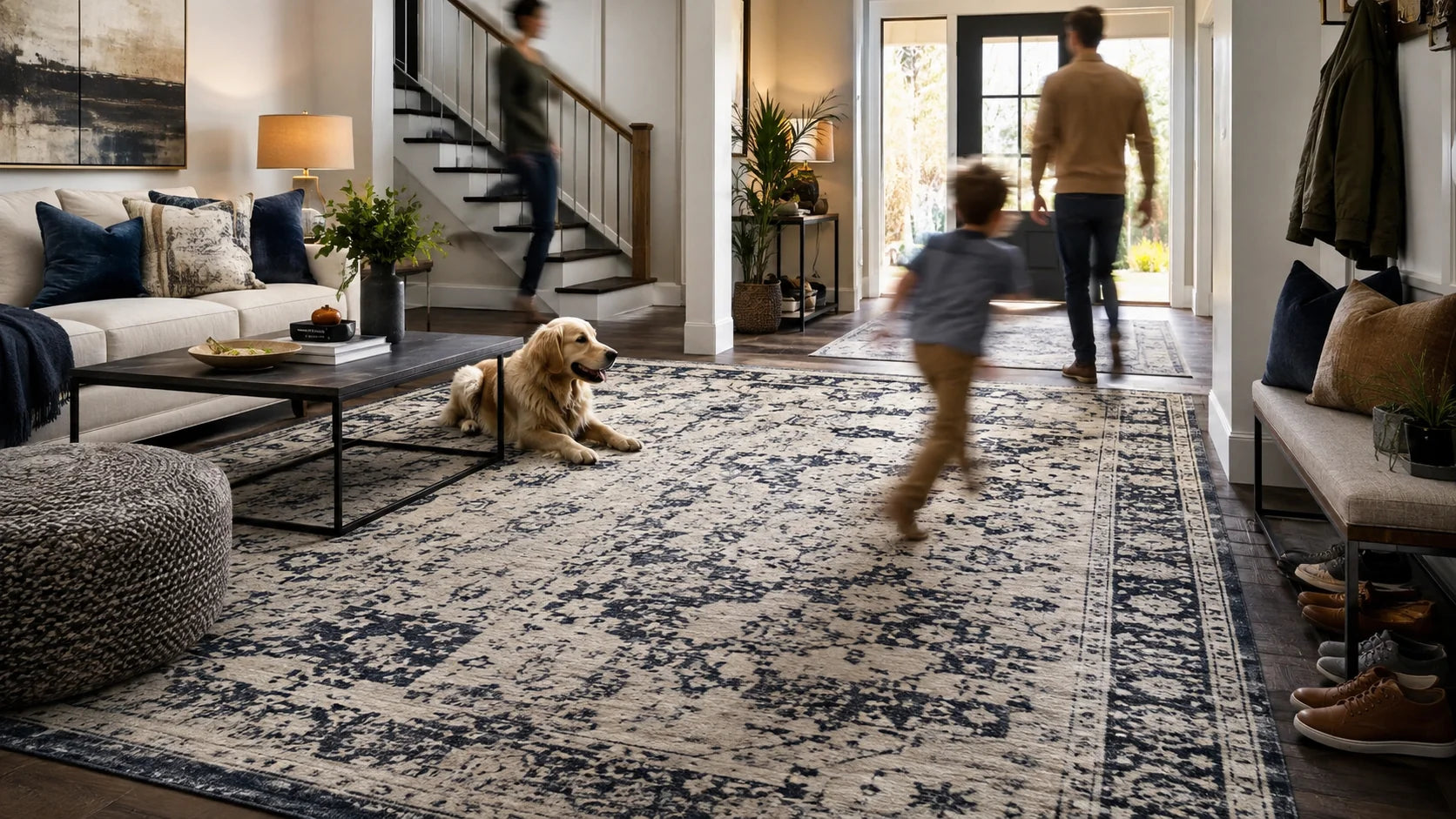
A living room is rarely just a showpiece. It is where people cross through with coffee, where pets claim a corner, where guests gather, and where everyday routines unfold. That is why traffic performance matters.
If your rug will sit in the center of a heavily used room, choose something with proven durability and a pattern or texture that can handle visual wear gracefully. Intricate motifs, heathered tones, and vintage washes tend to be practical as well as beautiful.
If the room is more formal and used occasionally, you have more freedom to prioritize delicate textures, lighter palettes, or luxe finishes. There is no single right answer here. It depends on whether your living room is your home’s main gathering place or a quieter space with less daily impact.
Don’t overlook the finishing details
Even a beautiful rug can underperform without the right support. A rug pad helps with comfort, reduces slipping, protects floors, and can extend the life of the rug itself. It also helps the rug sit more confidently in the space, which subtly improves the overall look.
It is also worth paying attention to details like in-stock availability, shipping speed, and return flexibility when buying online. Those practical considerations are part of a good design decision because they reduce hesitation and make it easier to choose with confidence. Curated retailers like Rug Resources make that process feel more approachable by pairing style-led collections with the kinds of details shoppers actually need, from pile height to family-friendly performance.
The best living room rug is the one that makes your space feel finished when you walk in and easy to live with after the excitement of delivery fades. Choose the piece that brings beauty to the room, but also supports the life that happens there every day.

Share:
How To Place a Rug in a Living Room?
How to Choose Rug Size for Every Room