

A rug can make a room feel finished in an instant, but the wrong size has a way of throwing everything off. Too small, and the furniture looks like it is floating. Too large, and the layout can lose its shape. If you have been wondering how to choose rug size without second-guessing every measurement, the good news is that a few clear proportions can bring the whole room into focus.
The best rug size is not just about what fits on the floor. It is about how the rug frames furniture, supports traffic flow, and creates visual calm. A well-scaled rug adds softness, defines the seating area, and gives the room a sense of intention. That is true whether you are styling a formal living room, a relaxed bedroom, or a narrow hallway that needs a little character.
How to choose rug size without guesswork
Start with the room, not the rug. Measure the full floor area first, then map out where the key furniture pieces sit. In most spaces, the rug should relate to the furniture grouping rather than simply filling open floor. That distinction matters because a rug is usually there to anchor a layout, not act as wall-to-wall coverage.
A good design rule is to leave a border of visible flooring around the rug. In many rooms, 8 to 18 inches of exposed floor creates a balanced frame. In larger rooms, you can leave a bit more. In smaller spaces, the border may be tighter. The point is consistency. When the rug feels centered and evenly placed, the room reads as composed.
It also helps to think about all four edges. Shoppers often measure the width they need and forget the depth, only to end up with a rug that sits awkwardly beneath the front legs of a sofa or stops short of a bed bench. Before you buy, use painter's tape to outline the rug dimensions on the floor. It is one of the simplest ways to see whether the size feels generous, skimpy, or just right.
Living room rug sizing that looks intentional
The living room is where rug scale matters most because it usually connects multiple furniture pieces. Here, a rug should ground the seating area rather than float in the middle like an afterthought.
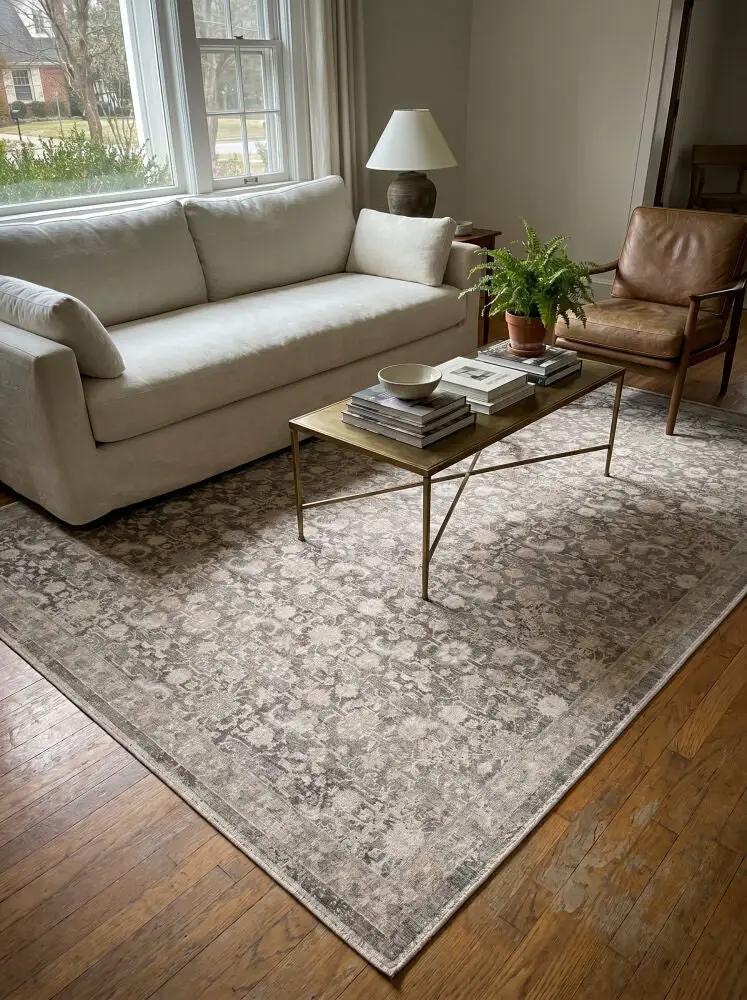
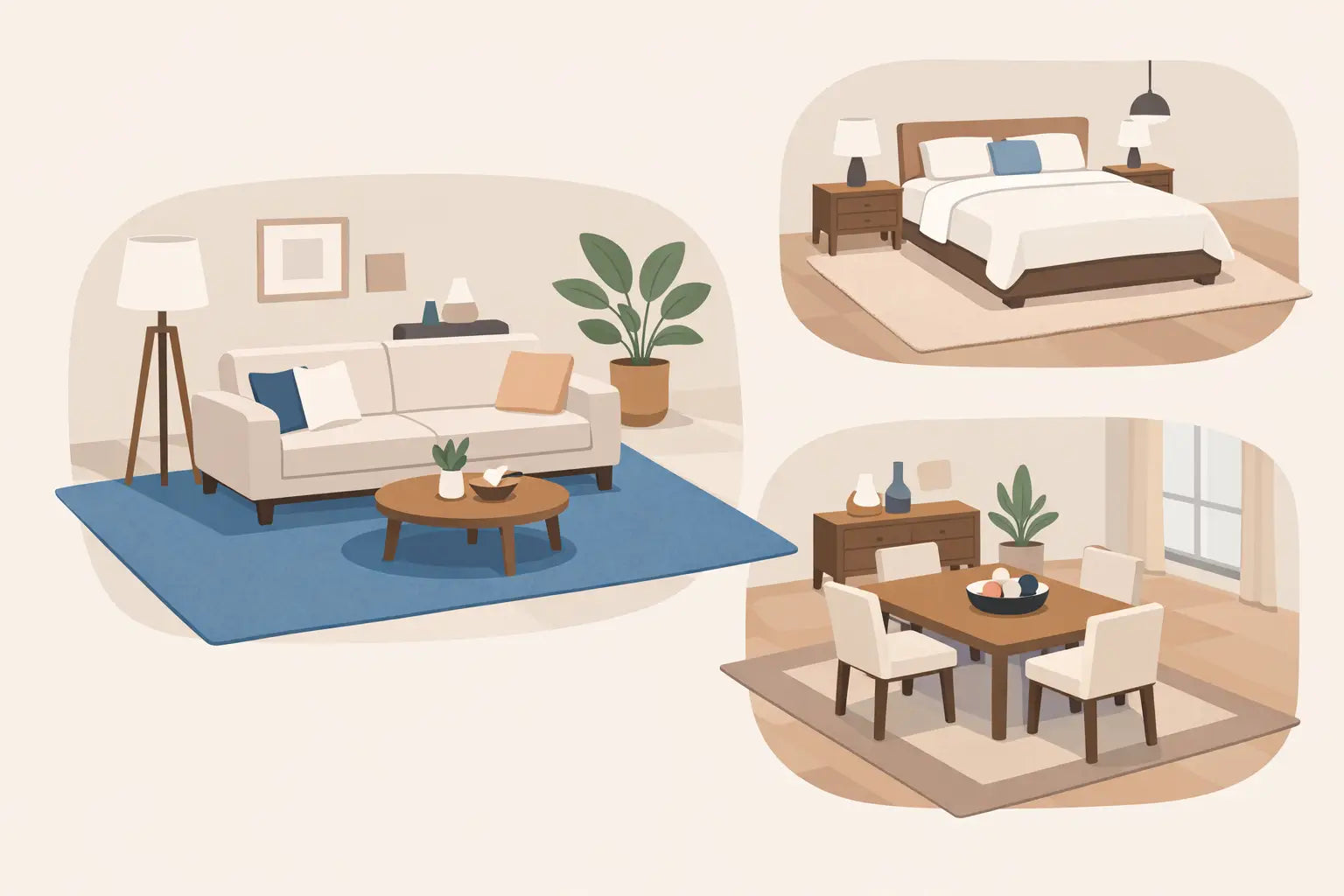
In a classic layout, the most versatile choice is often large enough for at least the front legs of the sofa and chairs to sit on the rug. This creates continuity and helps the room feel pulled together. For larger spaces, placing all furniture legs on the rug can look especially polished and generous. In tighter rooms, a smaller rug can still work, but it should extend under the front legs consistently across the main seating pieces.
A common mistake is choosing a rug that only fits under the coffee table. That usually makes the room feel disconnected. If your sofa is standard size, an 8x10 often works well. For larger sectionals or more open layouts, a 9x12 may feel more proportional. If your furniture is compact or your apartment living room is narrow, a 6x9 can work, but only if it still connects the seating arrangement.
Shape matters too. Rectangular rugs are the natural fit for most seating plans, but round rugs can soften a space filled with straight lines. They are especially appealing under a small conversation area or in rooms where you want a lighter, more collected look.
Dining room proportions matter more than you think
In dining rooms, the rug needs to work for the table and the chairs when they are in use. That means measuring beyond the tabletop. Ideally, the rug should extend at least 24 inches past the table on every side so chairs remain on the rug when pulled out.
This is where people often size down for budget reasons, and it usually shows. A rug that catches chair legs at the edge can feel frustrating every day, not just visually but functionally. If you want the room to feel gracious and easy to use, give the chairs enough room to move.
For a rectangular dining table, choose a rectangular rug that mirrors the table shape. For round dining tables, a round rug often feels beautifully balanced, though a square rug can also work in the right room. Just make sure the rug is large enough to preserve that extra clearance around the perimeter.
Low pile or flatwoven styles are often the easiest choice here because chairs glide more smoothly and crumbs are less likely to settle deep into the surface. If the room gets regular use from kids or frequent guests, practicality deserves equal weight with style.
Bedroom rug size should add softness and symmetry
Bedrooms benefit from rugs that make the space feel quieter and more layered. The rug should extend beyond the bed enough to create softness underfoot when you get up in the morning, while also helping the bed feel anchored within the room.
For a queen bed, an 8x10 is a popular choice because it gives you visible rug on both sides and at the foot of the bed. For a king bed, a 9x12 often creates the right sense of scale. Smaller rugs can work under the lower two-thirds of the bed if the room is compact, but they need to feel deliberate, not undersized.
If you do not want one large rug, runners on each side of the bed can be a smart alternative. They bring comfort exactly where you need it and can be especially helpful in smaller bedrooms, guest rooms, or spaces with a lot of furniture competing for floor area.
Placement is just as important as dimensions. In most cases, you do not need the rug under the nightstands unless you are using a large room-size rug. A layout that begins slightly in front of the nightstands and extends toward the foot of the bed often feels balanced and clean.
Hallways, entryways, and small spaces
These areas may be smaller, but the right rug size still changes how the home feels. In hallways, runners should leave a margin of visible floor on each side, usually around 4 to 6 inches depending on the width of the hall. A runner that is too wide can make the space feel cramped, while one that is too narrow may look lost.
In an entryway, the rug should echo the architecture and allow the door to clear comfortably. That practical detail matters more than people expect. If the front door catches on the rug, it does not matter how beautiful the pattern is.
For kitchens, laundry rooms, and other hardworking zones, runners and smaller accent rugs should be scaled to the cabinetry or work area rather than centered randomly in the room. The most successful choices feel integrated with the built environment.
It depends on your furniture, lifestyle, and aesthetic
There is no single perfect formula for how to choose rug size because the right answer shifts with the room's function and your style goals. Some interiors look best with a generous rug that quiets the floor plan and adds a sense of luxury. Others benefit from a slightly smaller footprint that lets more hardwood show and keeps the room feeling airy.
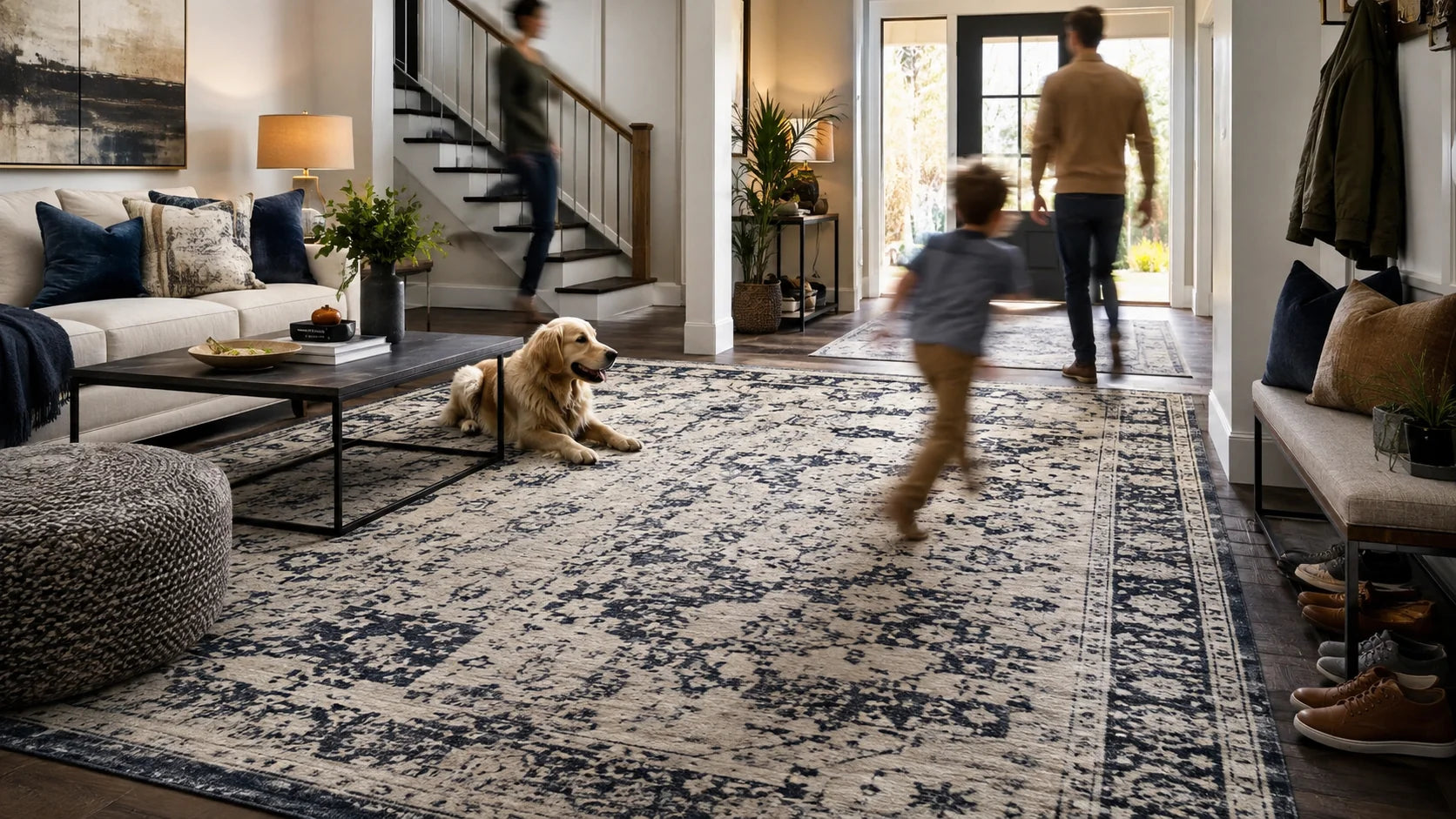
Lifestyle should guide the decision too. If you have kids, pets, or a high-traffic household, a larger rug may help protect more of the floor and create a softer landing zone. On the other hand, if you are furnishing a small apartment or layering a statement rug over existing flooring you love, a more edited size may feel right.
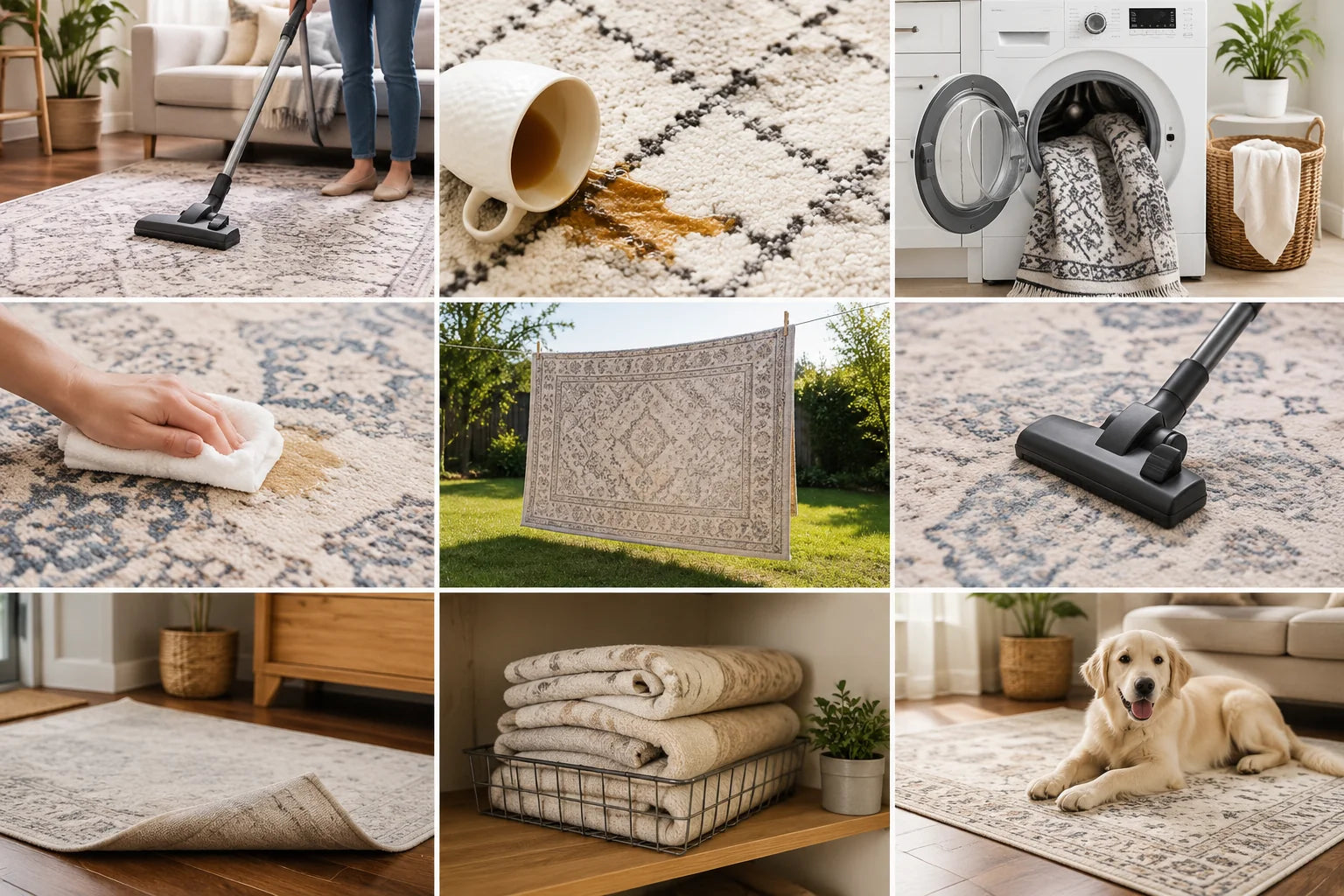
This is also where rug pile, material, and maintenance come into play. Plush textures can feel inviting in bedrooms and low-traffic lounges, while low-pile constructions are often easier for dining rooms, hallways, and busy family spaces. The most beautiful room is usually the one that works well every day.
A few size mistakes worth avoiding
Most rug sizing errors come down to hesitation. People buy the smaller option because it feels safer, and then the room never quite settles. When you are between sizes, going larger is often the more polished choice.
Another issue is ignoring furniture placement. A rug should connect the key pieces in the room, not sit in isolation. And finally, do not forget to account for the rug pad. It adds comfort, helps the rug stay in place, and can extend the life of the rug, especially in active homes.
If you want the process to feel easier, focus on proportion before pattern. Once the size is right, color and style become much more enjoyable to choose. That is when a rug starts doing what it does best - bringing warmth, character, and tranquil harmony to the room in a way that feels effortless.
The right rug size does more than fit your space. It helps your home feel composed, welcoming, and lived in with intention, which is exactly the kind of detail that makes a room memorable.

Share:
How to Pick the Best Rug for Living Room
11 Hallway Runner Rug Ideas That Work