

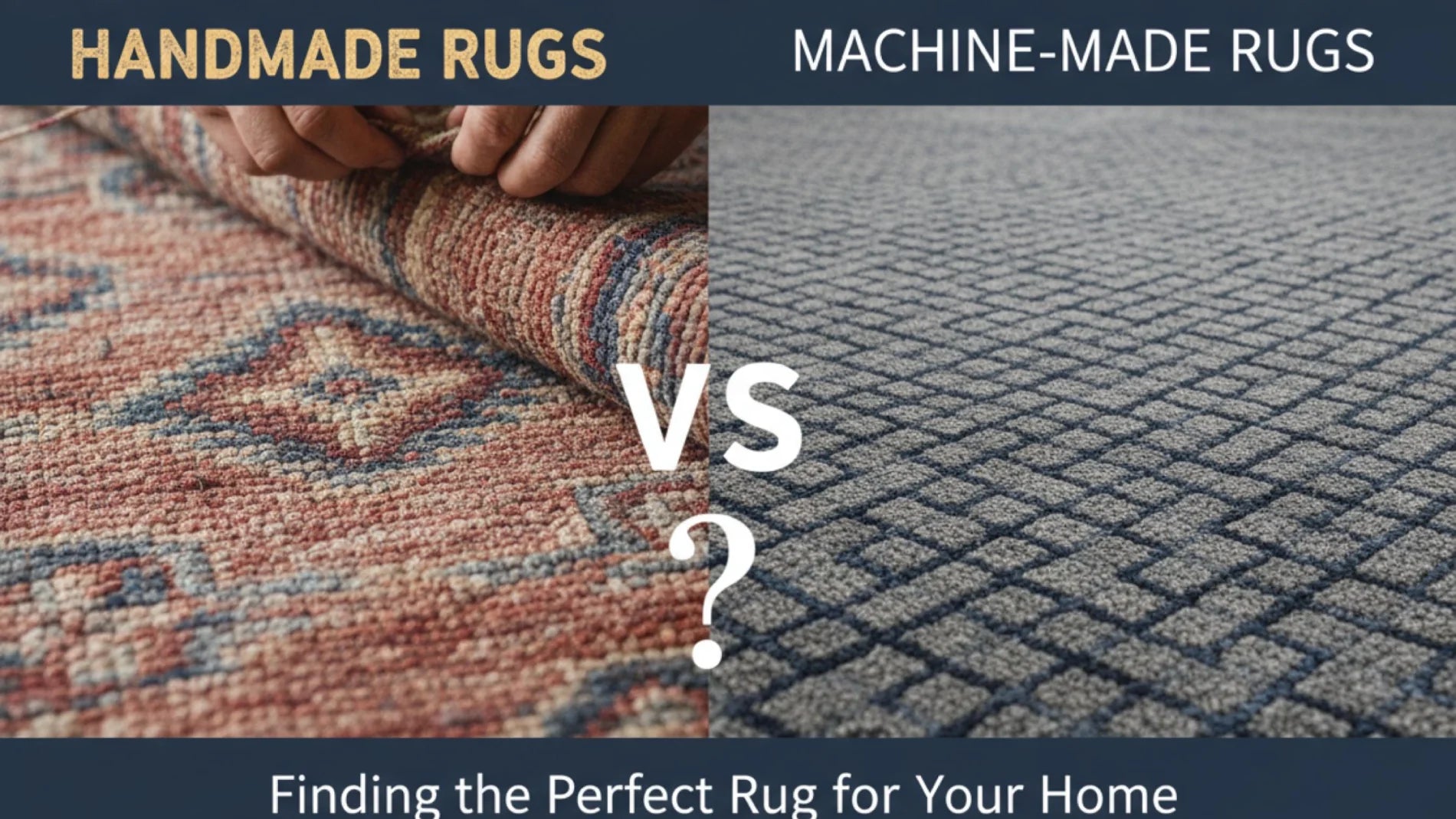
Handmade vs machine made rugs is one of those comparisons that sounds straightforward, until you’re actually shopping. Both options look good online. Both come in endless colors and sizes. And both are often described as “high quality.” So what’s the real difference, and does it actually matter for your home?
Explore our different Indoor/Outdoor Rugs Collection, Momeni Area Rugs Collection
Let’s break it down without the sales pitch.
How Handmade and Machine-Made Rugs Are Created?

The biggest difference starts with how the rug is made. A handmade rug is crafted by skilled artisans, often on looms, using traditional techniques that can take months or even years to complete. Each knot or weave is placed by hand, which means no two rugs are ever the same.
On the other hand, machine-made rugs are produced using automated looms. These machines can create rugs quickly and with extreme consistency. That’s why patterns look perfectly aligned, and pricing is generally much lower.
Neither method is automatically “better.” They’re simply built for different purposes. Handmade rugs focus on craftsmanship and individuality. Machine-made rugs prioritize efficiency and accessibility.
You can read: Things to Know About Area Rugs
At-a-Glance Comparison
|
Feature |
Handmade Rugs |
Machine-Made Rugs |
|
Production time |
Weeks to months |
Minutes to hours |
|
Design variation |
Slight imperfections |
Perfectly uniform |
|
Price range |
Higher |
More affordable |
|
Availability |
Limited |
Widely available |
Spoiler alert: those small imperfections in handmade-rugs are often what collectors love most.
How Do I Tell the Difference Between the Two?
People often ask, how do I tell the difference without being an expert? Thankfully, there are a few simple clues.
Start by flipping the rug over. In handmade rugs, the design on the back usually mirrors the front, though it may look slightly less crisp. You’ll often see individual knots or uneven stitching. With machine-made rugs, the back may have a mesh or latex backing, and the pattern often looks printed rather than woven.
Next, look at the fringe. On handmaderugs, fringe is part of the rug itself—it comes from the warp threads. On machine-made rugs, fringe is usually sewn on afterward.
Finally, check consistency. Handmade-rugs vary slightly in color and knot size. Machine-made rugs are almost perfectly uniform from edge to edge.
Quick Visual Clues to Watch For
- Fringe attached separately → likely machine-made
- Pattern visible on both sides → likely handmade
- Perfect symmetry → usually machine-made
- Slight variation in knots → handmade
Once you’ve seen a few examples, the differences become much easier to spot.
You might be interested in: Best Seller Rugs Collection
Materials and Texture: What You’re Really Paying For
Most handmade rugs are made from natural fibers like wool, silk, or cotton. Hand-woven rugs in particular tend to feel denser and more substantial underfoot. Wool ages well, hides wear, and often becomes softer over time.
Machine-made rugs often use synthetic fibers such as polypropylene or nylon. These materials are durable, stain-resistant, and easier to clean, great for busy households. But they don’t always develop the same character as natural fibers.
Texture is another giveaway. Handmade rugs usually have slight irregularities in pile height and weave, which gives them depth. Machine-made rugs feel more uniform and flat.
Neither option is wrong. It comes down to how you plan to use the rug and how much wear it needs to handle.
You can also read: What Rug Material Best Suits Your Needs?
Design, Style, and Character
Handmade rugs tend to carry a sense of story. Patterns may reflect regional traditions, cultural symbolism, or artisan techniques passed down through generations. This gives them depth that goes beyond surface design.
Machine-made rugs shine when it comes to trend-forward styles. They’re quick to adapt to new colors, modern patterns, and seasonal looks. If you like updating your space often, this flexibility is a big advantage.
In design terms, handmade rugs feel soulful. Machine-made rugs feel adaptable. Both have a place depending on your style and how often you change things up.
This contrast is often described as artisan-crafted rugs vs factory-made rugs, and it’s more about feeling than function.
Price Differences and What’s Worth It
There’s no avoiding it: handmade rugs cost more upfront. You’re paying for labor, skill, and time. Prices reflect months of work rather than minutes of production.
Machine-made rugs are far more budget-friendly. That accessibility allows more people to enjoy well-designed rugs without a major investment.
The real question isn’t which is economical, it’s which fits your needs. Spending less on a rug you plan to replace in five years can be smart. Spending more on a rug you’ll keep for decades can be even smarter.
Budget isn’t about numbers. It’s about intention.
Which One Should You Choose?
Choosing between handmade and machine-made rugs doesn’t have to be complicated.
Ask yourself a few honest questions:
- Is this rug for a high-traffic area?
- Do I want something long-term or temporary?
- Am I drawn to character or consistency?
- How much maintenance am I comfortable with?
There’s no universal right answer. Many homes use both types successfully in different rooms. A handmade rug in the living room. A machine-made rug in the hallway. Balance beats purity every time.
Ready to Decide What Works for You?
Now that you understand the real differences, you can shop with confidence instead of guesswork.
People Also Ask:
Is handmade better than machine-made?
Handmade rugs offer unique craftsmanship and natural materials, while machine-made rugs are affordable, uniform, and ideal for high-traffic areas.
How long do handmade rugs last?
With proper care, handmade rugs can last decades or longer. Regular cleaning and maintenance help preserve their quality and extend their lifespan.

Share:
Things to Know About Area Rugs
How To Place a Rug in a Living Room?