

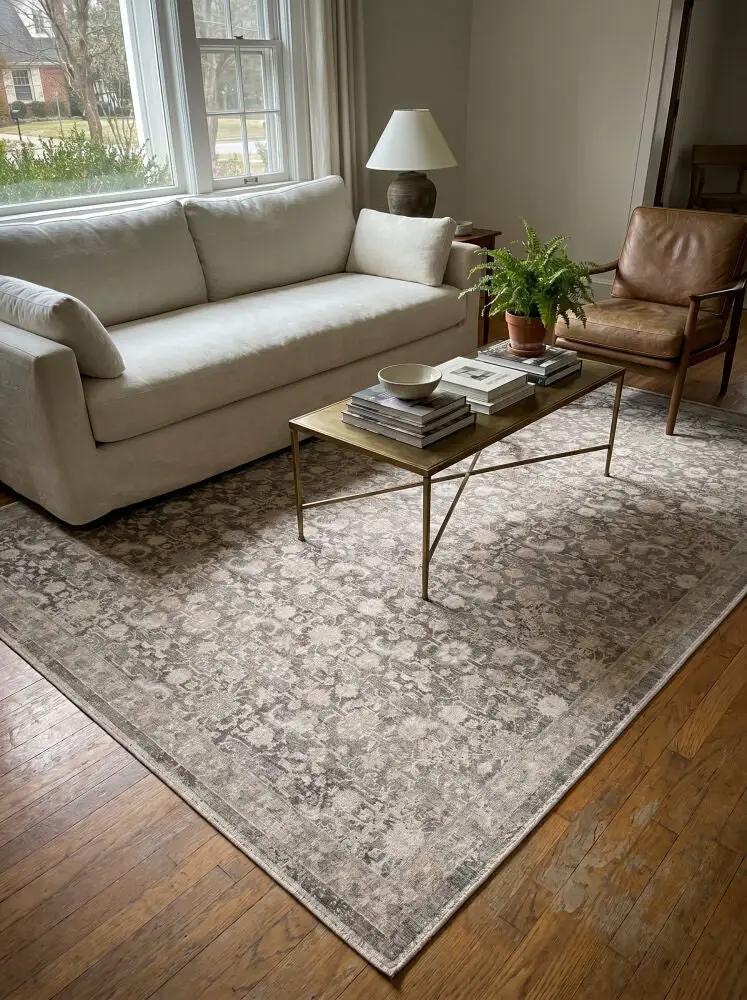

Rug materials can make or break your rug experience. Two rugs can look nearly identical online, but feel completely different underfoot, wear differently, and even react differently to spills, pets, and sunlight. If you’ve ever bought a rug that shed like crazy or flattened within weeks, the material choice was likely the culprit.
In this guide, we’ll explore the most common rug fibers, their pros and cons, and how to pick the best one for your space (and your sanity).
Why Rug Materials Matter More Than Color or Pattern?
Let’s be honest, most of us shop for rugs by looks first. But rug materials determine everything: softness, durability, stain resistance, shedding, and even how easy the rug is to vacuum.
For example:
- A wool rug can last for years, but may shed early on.
- A jute rug looks beautiful and natural, but hates moisture.
- A polypropylene rug is super easy to clean, but won’t feel as luxe as wool.
So when people ask, What is the best material for a rug?, the real answer is: the one that matches how you live.
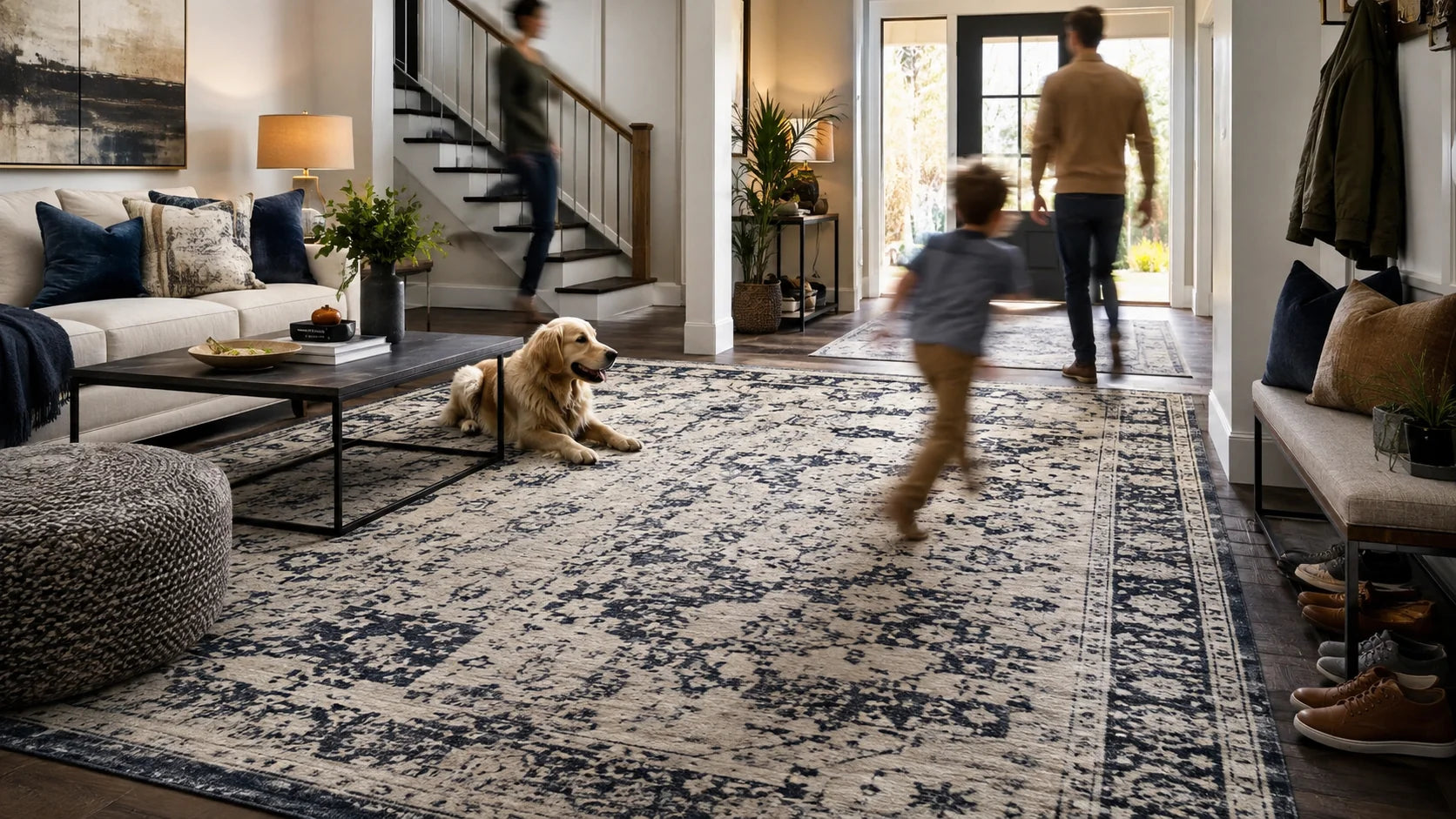
If you have kids, pets, or frequent guests, you’ll want different materials for rugs than someone decorating a formal sitting room.
Types of Rugs Materials: Natural vs Synthetic Fibers
When browsing types of rug materials, everything falls into two main categories:
Natural Rug Materials
- Made from plant or animal fibers.
- Wool
- Cotton
- Jute
- Sisal
- Silk
Synthetic Rug Materials
Man-made fibers are designed for durability and stain resistance.
- Polypropylene (Olefin)
- Polyester
- Nylon
- Viscose (semi-synthetic)
- Acrylic
Also read more blog: How to Place a Rug Under a Bed?
Wool Rugs: The Classic Choice for Comfort & Longevity
If you’re searching for the best material for rugs in general, wool is usually the top contender.
- Wool rugs are:
- naturally soft and warm
- durable and springy (bounce back after foot traffic)
- naturally stain-resistant (thanks to natural oils)
- excellent for insulation and sound absorption
But there’s one thing people should know: wool rugs often shed at first. It’s normal and usually improves after a few weeks of regular vacuuming.
Wool is a smart pick for:
- living rooms
- bedrooms
- dining rooms (if spills aren’t constant)
If someone asks, the best material for a rug for everyday use with a “premium feel,” wool is a strong answer. Best for those who are looking for comfort with durability
You can explore: resources.com collections abstract
Cotton Rugs: Light, Affordable, and Easy to Style

Cotton is one of the most common rug materials, especially for casual spaces.
Cotton rugs are:
- lightweight
- often washable or easier to clean
- budget-friendly
- great for layering
They are perfect for relaxed vibes, but cotton isn’t as durable as wool. It can flatten faster in high-traffic areas and may stain more easily unless treated.
Cotton is ideal for:
- bedrooms
- kids’ rooms
- small spaces like entryways (if washable)
- layered rug setups
If you’re building a cozy space without spending big, cotton is one of the most practical materials for rugs. Best for those who are looking for affordability with a casual style.
Jute, Sisal & Natural Fiber Rugs: Texture That Looks Expensive
Natural fiber rugs (jute and sisal, especially) are trending hard, and for good reason.
- These rug materials offer:
- earthy texture
- neutral tones that match anything
- a clean, modern-natural vibe
- great durability for daily traffic
But here’s the catch: they don’t love water. A spill can stain easily, and moisture can cause warping or mold. So if your home has frequent spills or humidity, you’ll want to be cautious.
Jute and sisal work best in:
- living rooms
- dining rooms (careful!)
- offices
- layered under softer rugs
Guess what? These rugs also hide dirt well, which is why they are surprisingly good in busy homes.
Best for: texture with modern neutral décor
Synthetic Rug Materials: Easy-Care Winners for Busy Homes
Now for the practical heroes. Synthetic rug materials are often the best choice for families, pet owners, and anyone who wants easy cleaning without stressing over every spill.
Polypropylene (Olefin)
One of the most popular synthetic fibers, and it’s not just hype.
Polypropylene rugs are:
- stain-resistant
- budget-friendly
- very durable
- easy to clean
This is also the #1 outdoor rug material because it handles rain, sun, and heavy traffic better than most natural fibers.
Polyester
Polyester rugs are known for:
- softness
- vibrant colors
- stain resistance
But they can flatten faster than wool and aren’t as resilient in high-traffic zones.
Nylon
Nylon is strong and long-lasting. It’s often used in carpet and high-performance rugs because it resists wear really well.
If you’re asking What is the best material for a rug? for kids, pets, and daily chaos, synthetic rugs (especially polypropylene or nylon) often win.
Best for: durability + easy cleaning
Watch out for: less “luxury feel” compared to wool
Outdoor Rug Material: What Works Outside (and Why)

Outdoor spaces need rugs that can handle the elements. An outdoor rug material should resist:
- moisture
- mildew
- fading from UV rays
- dirt and heavy foot traffic
The top choice is almost always polypropylene. It’s widely considered the best material for rugs outdoors because it doesn’t absorb water easily and cleans up fast.
Best Outdoor Rug Materials
- Polypropylene: best overall performance outdoors
- Recycled plastic blends: eco-friendly, durable
- Indoor/outdoor polyester: softer, but less tough
Outdoor rugs are also great for:
- patios
- balconies
- pool areas
- mudrooms
And yes, outdoor rugs can even work indoors if you want a super low-maintenance option.
Silk, Viscose & Luxe Rugs: Beautiful but High Maintenance
If your main goal is elegance, silk and silk-like fibers are breathtaking.
- Silk rugs offer:
- incredible shine
- ultra-soft feel
- luxury aesthetics
But silk is delicate and expensive, and it’s not ideal for high-traffic areas.
Viscose is often used as a more affordable alternative. It has a similar sheen, but it’s also fragile and can stain easily. Many people buy viscose rugs for looks and regret it when real life happens.
Silk/viscose works best for:
- low-traffic rooms
- decorative spaces
- formal sitting rooms
If you want beauty without stress, choose wool instead—it still looks classy, but performs better.
Best for: luxury décor
Watch out for: staining, water damage, high upkeep
Rug Material Matching Guide
If you have made it this far, you’re probably thinking: Okay… but what should I actually buy?
Here’s a simplified guide to help you pick the best rug materials without overthinking it.
Room-by-Room Rug Material Table
|
Room |
Best Rug Material |
Why |
|
Living Room |
Wool / Polypropylene |
Comfort + durability |
|
Bedroom |
Wool / Cotton |
Soft and cozy |
|
Dining Room |
Polypropylene / Wool |
Easier cleanup |
|
Kids Room |
Polypropylene / Polyester |
Stain-resistant |
|
Entryway |
Polypropylene / Nylon |
Handles dirt + traffic |
|
Outdoor |
Polypropylene |
Weatherproof |
The key takeaway: the best material for a rug depends on where the rug is placed and how messy life gets in that space.
How to Choose Rug Materials Like a Professional?
Before buying, ask yourself these questions:
- Is this rug in a high-traffic space?
- Do I have pets or kids?
- Do I want softness or durability more?
- Will this rug get direct sunlight?
- Do I need stain resistance?
- Am I okay with some shedding?
Once you answer these honestly, choosing between types of rug materials becomes much easier.
Also, don’t ignore feelings. A rug can look incredible online but feel scratchy in real life. If comfort matters, wool or soft synthetics are your best bet.
And remember: rug materials are the foundation of long-term satisfaction. A gorgeous rug that’s hard to maintain won’t stay gorgeous for long.
Find the Right Rug Material for Your Space
Now you know which rug materials work best for different rooms, lifestyles, and budgets. The next step is picking a rug that fits your home perfectly, one that looks great and holds up beautifully.
Explore options and compare fibers in our collection using this guide, discover rugs by material and room needs.
People Also Ask:
Q. Should your rug be lighter or darker than your furniture?
Both work; choose based on contrast. Dark furniture looks great with a lighter rug (brightens the room), while light furniture pairs well with a darker rug (adds depth). Aim for 1–2 shades difference so nothing blends in.
Q. What rug materials to avoid for the living room?
Avoid viscose (stains/water marks easily), delicate silk, and some rough natural fibers like jute if you have pets or spills. They’re pretty, but not practical for heavy daily use.
Q. Is wool a good rug material?
Yes, wool is one of the best. It’s soft, durable, naturally stain-resistant, and holds up well in high-traffic areas (minor shedding at first is normal).
Q. How to maintain the appearance of my rug over time?
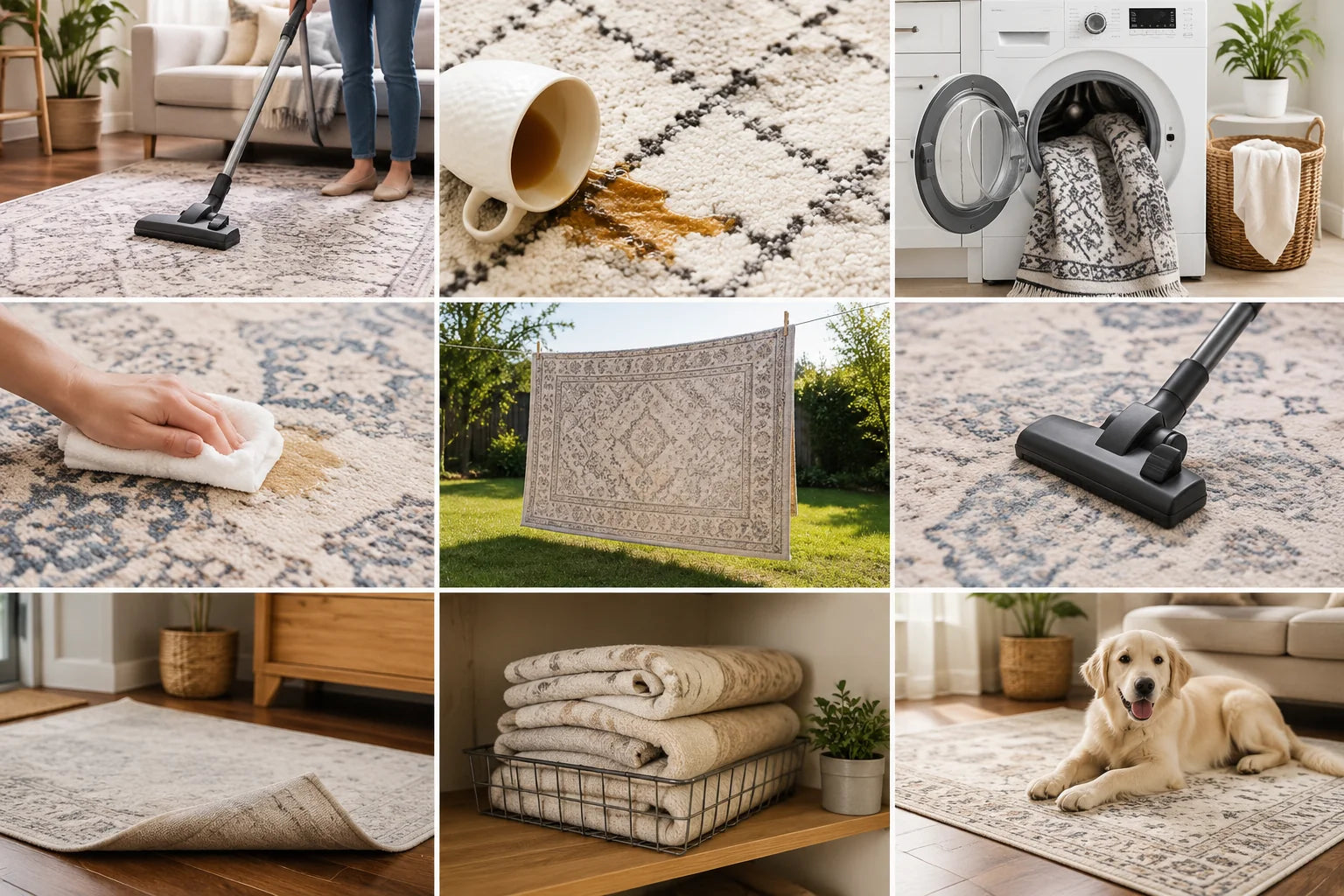
Vacuum regularly, rotate every few months, blot spills fast, use a rug pad, and deep-clean occasionally (especially for wool) to keep it looking new.

Share:
How to Place a Rug Under a Bed?
Things to Know About Area Rugs