

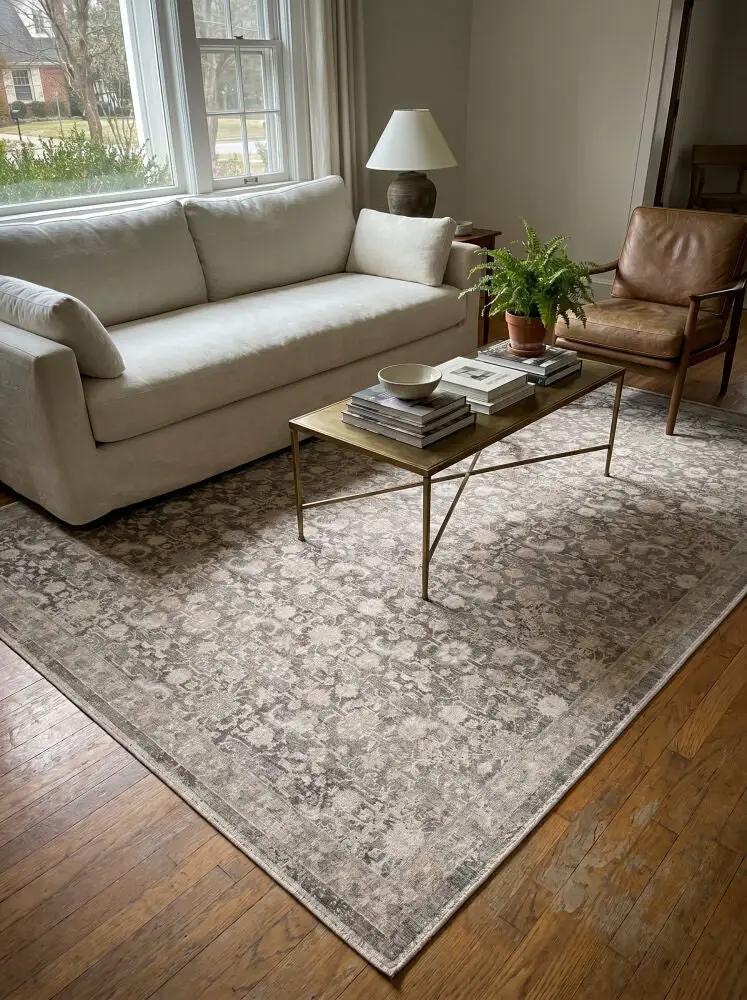

Area rugs seem simple until you actually start shopping for one. Suddenly, there are sizes, materials, piles, prices, and opinions, lots of opinions. Still, area rugs are one of those home items that quietly affect everything around them. When they work, a room feels finished. When they don’t, the space never quite settles.
Explore our different Indoor/Outdoor Rugs Collection, Livabliss Area Rugs
This isn’t a rulebook. Think of it more as what people usually learn after buying the wrong rug once or twice.
Size mistakes happen more than you think
If there’s one thing people get wrong with rugs, it’s size. Not color. Not a pattern. Size. A rug that’s too small can make even a nice room feel awkward and unfinished. It’s especially noticeable with area rugs for living room layouts, where furniture needs to feel connected.
A general guideline is to let at least the front legs of your sofa and chairs sit on the rug. That alone makes a big difference. Dining rooms need extra space so chairs don’t slide off the rug every time someone stands up. Bedrooms usually look better when the rug extends past the bed instead of stopping right at the edge.
Common size choices people actually use
- 8x10 area rugs for standard living rooms
- 5x7 rugs for smaller spaces or bedrooms
- 9x12 rugs for open-plan rooms
- Runners for hallways and kitchens
Here’s a surprisingly helpful trick: tape the rug size on the floor before buying. It looks odd, but it works.
You might be interested in Couristan Rug Collection
Making a rug work in your living room
The rug doesn’t need to be the star of the room. In fact, living room area rugs usually work best when they quietly tie things together. If your furniture is neutral, a patterned rug can add life. If the room already has bold colors or artwork, a simpler rug keeps things balanced.
Modern rooms often suit low-pile rugs with clean designs. Traditional spaces lean toward richer colors and classic patterns. If you’re unsure, step back and look at the room as a whole. The right rug doesn’t shout, it settles in.
Simple pairing ideas that rarely fail
- Neutral furniture → patterned or textured rug
- Bold décor → solid or muted rug
- Small room → lighter colors
- Large room → deeper tones
Sometimes the best compliment a rug gets is that no one notices it separately; they just notice the room feels right.
You can read: What Rug Material Best Suits Your Needs?
Indoor vs. outdoor rugs aren’t interchangeable
This surprises a lot of people. Indoor and outdoor area rugs are built differently. They’re made to handle moisture, sun, and heavy use, which makes them great for patios, entryways, or kitchens.
They’re also easier to clean. Shake them out, hose them down, let them dry. That’s it. Some people even use them indoors full-time because they’re low-maintenance and tough.
Indoor rugs focus more on comfort and detail. Outdoor rugs focus on durability. Knowing where your rug will live helps narrow your choices quickly.
Care matters, but it doesn’t need to be complicated
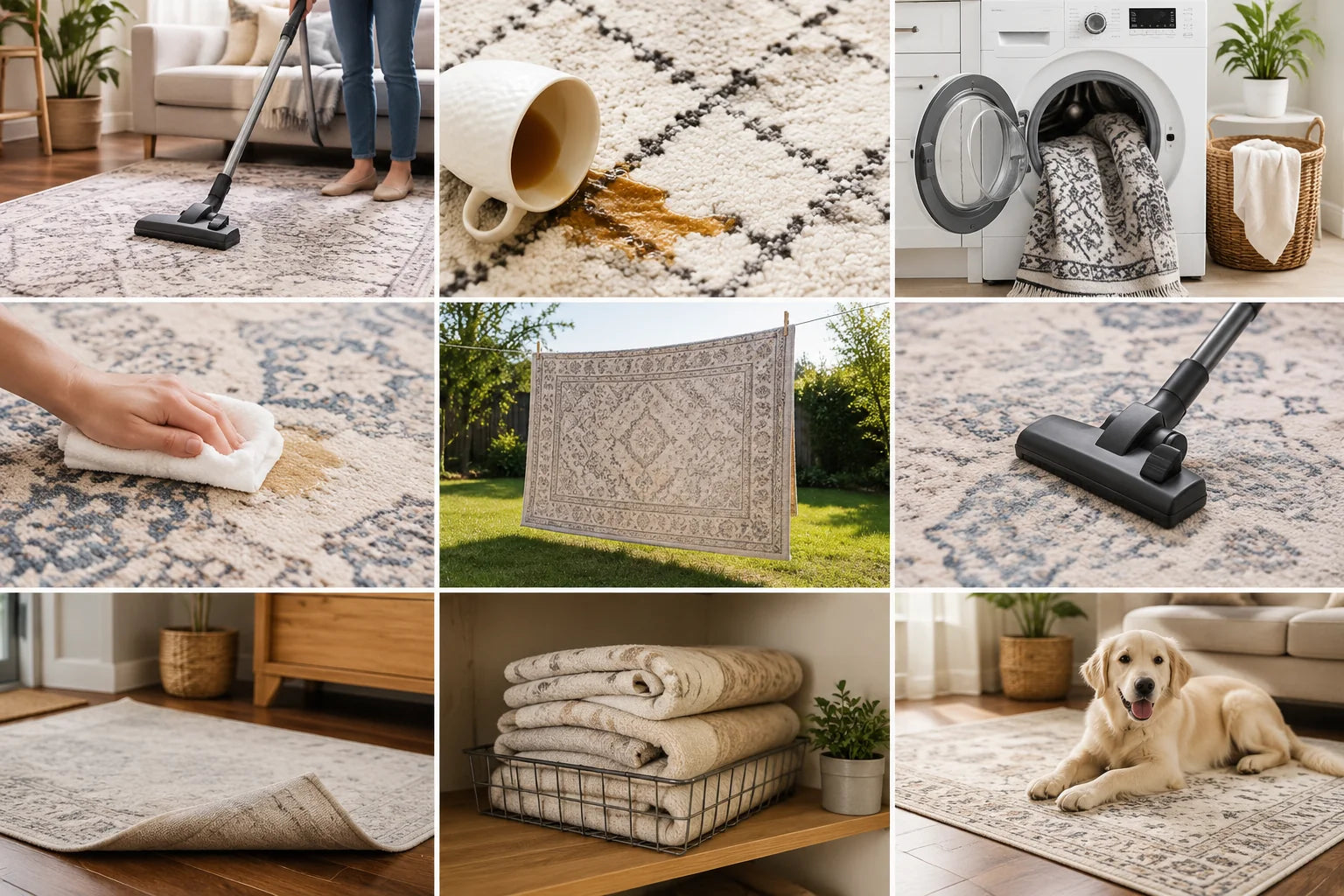
Rugs don’t need constant attention, but ignoring them completely shortens their life. Regular vacuuming keeps dirt from settling into the fibers. Rotating the rug every few months helps it wear evenly.
Spills happen. Blot first, don’t scrub. Wool likes gentle cleaners; synthetics are more forgiving. A rug pad underneath helps with slipping and extends the rug’s life.
With basic care, quality area rugs last longer than most people expect, and often look better once they’ve been lived with.
Also explore How to Place a Rug Under a Bed?
You don’t have to overspend to get it right
Expensive doesn’t always mean better. Many economical area rugs work perfectly well when used in the right rooms. Save higher-end materials for high-traffic areas and choose budget options for guest rooms or spaces that don’t get much use.
Sales and seasonal collections are worth watching. Focus on size and material first. Style tends to fall into place once those are right.
A good rug doesn’t demand attention. It just makes everything else feel more comfortable.
Thinking about your next rug?
Now that you know what actually matters, shopping gets easier. Take your time and browse area rugs that suit your space and lifestyle, paying attention to size and material before anything else.
People Also Ask:
What should you know before buying an area rug?
Measure your space, choose the right material, and consider foot traffic. Pick a rug that fits your lifestyle and complements the room’s purpose.
What are the key features of a good area rug?
A good rug is durable, comfortable, and well-made. Material, stitching, and pile height affect longevity, feel, and ease of cleaning.
Should a rug be darker or lighter than the floor?
Contrast works best. Choose a rug lighter or darker than your floor to define the space and avoid it blending in too much.

Share:
What Rug Material Best Suits Your Needs?
Handmade Rugs vs. Machine-Made Rugs