

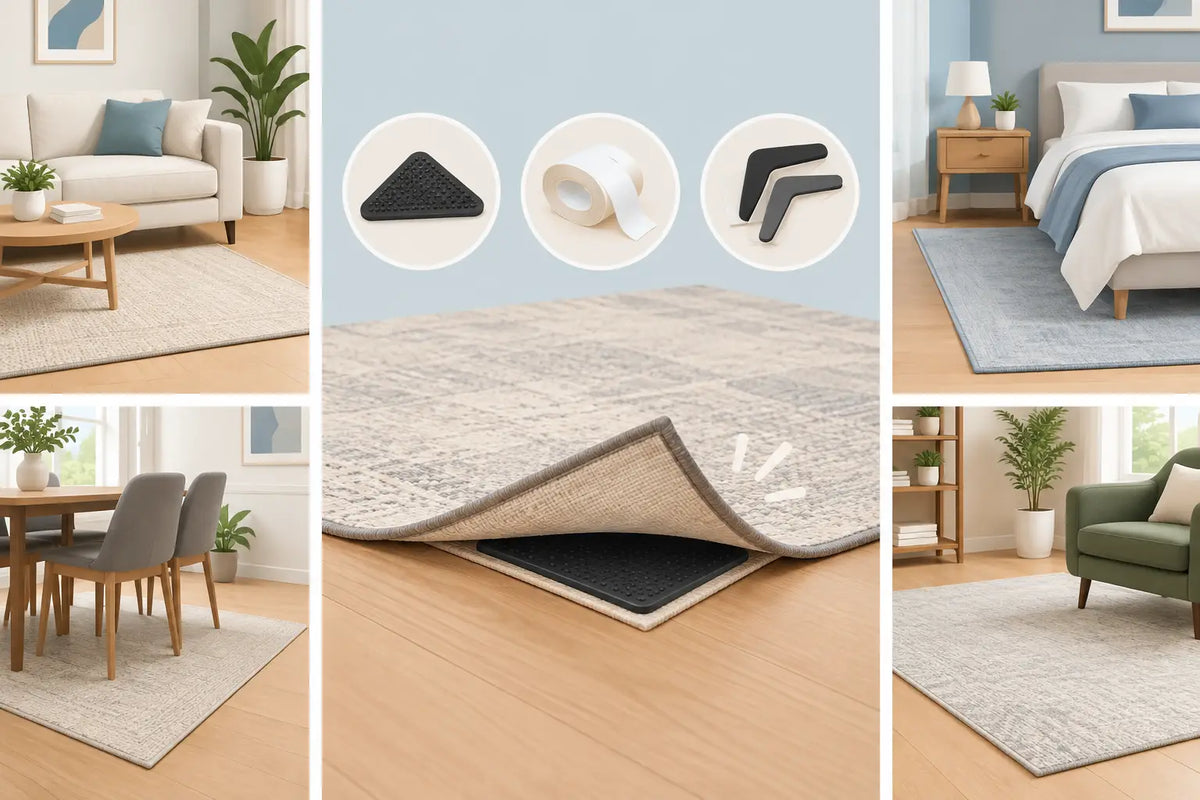
A beautifully chosen rug should ground the room, not lift away from it. Rug corner curling can make an otherwise polished living room, bedroom, or hallway feel unfinished, and those raised edges can become a genuine tripping concern for children, pets, and anyone moving quickly through the house.
The good news is that most curled corners are fixable without replacing the rug. The right solution depends on why the corner lifted in the first place: the rug’s construction, how it was stored and shipped, the flooring beneath it, and even the direction of foot traffic all play a part.
Why Rug Corner Curling Happens
A new rug often arrives tightly rolled for transit. That roll is practical for shipping, but it can leave fibers and backing with a temporary memory, especially along the corners. A handwoven wool rug, a machine-made synthetic style, and a low-profile indoor-outdoor rug may all respond differently after unrolling.
Humidity and temperature can also affect natural fibers. Wool, cotton, jute, and viscose may expand or contract slightly as conditions in your home change. In a sunny room, repeated heat exposure can encourage one edge to lift, while a damp basement or entryway may affect the rug backing over time.
Then there is the floor itself. Smooth hardwood, tile, luxury vinyl, and polished concrete offer little grip. A rug placed directly on one of these surfaces is more likely to shift or turn upward at the corners than a rug resting on wall-to-wall carpet or a properly fitted pad. Frequent vacuuming, furniture movement, and daily traffic can gradually pull an unsecured corner out of place.
Start With the Simplest Fix: Reverse the Curl
For a newly unrolled rug, patience and a small adjustment are often enough. If a corner is curling upward, gently roll that section in the opposite direction of the curl. Keep the roll loose rather than sharply folded, and leave it that way for several hours or overnight.
Once you lay the rug flat again, place a clean, evenly weighted object over the corner for a day or two. A stack of books, a decorative tray with a few substantial objects, or a flat storage bin can work well. Avoid anything with narrow legs or rough edges that might create an imprint in the pile.
This approach is especially effective for low-pile rugs and freshly delivered pieces. It may take longer with heavier constructions, hand-knotted rugs, or rugs that have been rolled and stored for an extended period. Resist the urge to bend the corner sharply downward. A hard crease can damage fibers and make the problem more noticeable.
Let the Rug Relax Naturally
Before adding adhesives or making more permanent adjustments, give the rug time to acclimate to its new room. Unroll it fully and let it rest in a climate-controlled space for 24 to 72 hours. Natural materials, in particular, often settle once they adjust to your home’s temperature and humidity.
If the rug was delivered during a particularly cold spell, allow it to warm gradually indoors before judging its shape. Trying to force a stiff, cold rug flat can stress its backing or edge binding.
Use a Rug Pad for a Flatter, Safer Foundation
A quality rug pad is one of the most reliable answers to rug corner curling. It adds gentle grip between the rug and the floor, helps the rug lie more evenly, and creates a cushioned foundation that makes the room feel more comfortable underfoot.
For hardwood, tile, laminate, or vinyl flooring, choose a pad designed to be safe for that surface. The pad should sit slightly inside the rug perimeter, typically about one inch on all sides, so it stays hidden and does not create a visible ridge. A pad that extends beyond the rug can actually encourage edges to rise.
The best pad thickness depends on the room and rug style. A thinner, dense pad suits dining rooms and hallways, where chair movement and door clearance matter. In bedrooms and lounges, a plusher pad can bring welcome softness beneath a lower-pile rug. For high-traffic family spaces, prioritize grip and stability over extra cushioning.
A rug pad also protects floors from abrasion and helps reduce shifting, both of which can prevent future curling. It is a small detail with a significant effect on how a rug looks, feels, and performs over time.
When to Use Rug Grippers or Corner Tape
If one stubborn corner still lifts after the rug has relaxed and a pad is in place, discreet rug grippers can help. These are typically small, double-sided pieces designed to hold the underside of the rug to the floor without showing from above.
Use only products labeled for your specific flooring type. Some adhesives are not suitable for certain finishes, particularly delicate hardwood, newly refinished floors, or porous stone. Before applying anything, test it in an inconspicuous spot and follow the manufacturer’s removal instructions closely.
Corner tape is most useful for lightweight rugs in low- to moderate-traffic areas, such as a guest room or home office. It may be less effective on thick, textured, or heavily woven rugs because the backing does not always make complete contact. In a busy entryway, a well-sized nonslip pad usually offers a more dependable long-term solution.
Try Gentle Heat Only With Care
Warmth can relax certain rug backings, but this is a method to approach carefully. High heat can damage synthetic fibers, weaken adhesives, discolor delicate materials, or cause shrinkage in natural fibers. Never use a clothing iron directly on the face or backing of a rug.
If the care label permits, a little indirect warmth can help a new rug settle. Letting the rug rest in a comfortably warm room, out of harsh direct sunlight, is the safest route. For a more persistent curl, consider consulting a professional rug cleaner or the manufacturer before using steam or any heat-based method, particularly with wool, silk, viscose, jute, or handwoven construction.
Check the Rug’s Placement and Proportions
Sometimes a corner curls because the rug is being asked to work against the room. A narrow runner that shifts every time someone rounds a corner, or a living room rug with only one edge anchored by furniture, may need a better layout rather than a stronger adhesive.
In a living room, placing the front legs of the sofa and chairs on the rug helps distribute weight and keeps the composition grounded. In a bedroom, a rug should extend far enough beyond the sides of the bed that there is meaningful surface area to hold it in place. Runners benefit from a close-fitting nonslip pad and enough clearance from swinging doors.
Furniture can help, but do not rely on a single heavy piece to flatten one corner while the rest of the rug remains loose. This can distort the shape over time. The goal is balanced support across the rug, not pressure concentrated in one spot.
Prevent Curled Corners Before They Start
Thoughtful care makes future curling less likely. Vacuum according to the rug’s material and construction, avoiding aggressive brush rolls on delicate pile or fringe. Rotate the rug periodically so traffic and sunlight are distributed more evenly. When moving furniture, lift rather than drag it across the rug.
If you need to store a rug, roll it with the pile facing inward and avoid folding it. Wrap it in breathable material and keep it in a dry, climate-controlled space. Folding is one of the quickest ways to create stubborn creases and misshapen corners.
For homes with energetic pets, active children, or busy hallways, choose a rug construction that suits the pace of the space. Low-pile, durable options paired with a supportive pad are often easier to keep smooth and secure than very lightweight rugs used on their own.
When a Curled Corner Signals a Bigger Issue
A corner that repeatedly lifts despite proper flattening and a suitable pad may point to a damaged backing, uneven floor, or a rug that has warped from moisture exposure. Look underneath for cracking, peeling, rippling, or discoloration. If the rug has an odor, visible mildew, or a wavy surface across more than one area, stop using adhesives that could trap moisture and consider professional advice.
A thoughtfully selected rug should bring warmth, texture, and a sense of tranquil harmony to everyday rooms. With a little time, the right foundation, and care that suits its material, it can settle beautifully into the life happening around it.


Share:
Why Do Rugs Shed? What’s Normal and What Isn’t
Anchoring Furniture With Rugs That Fit the Room