

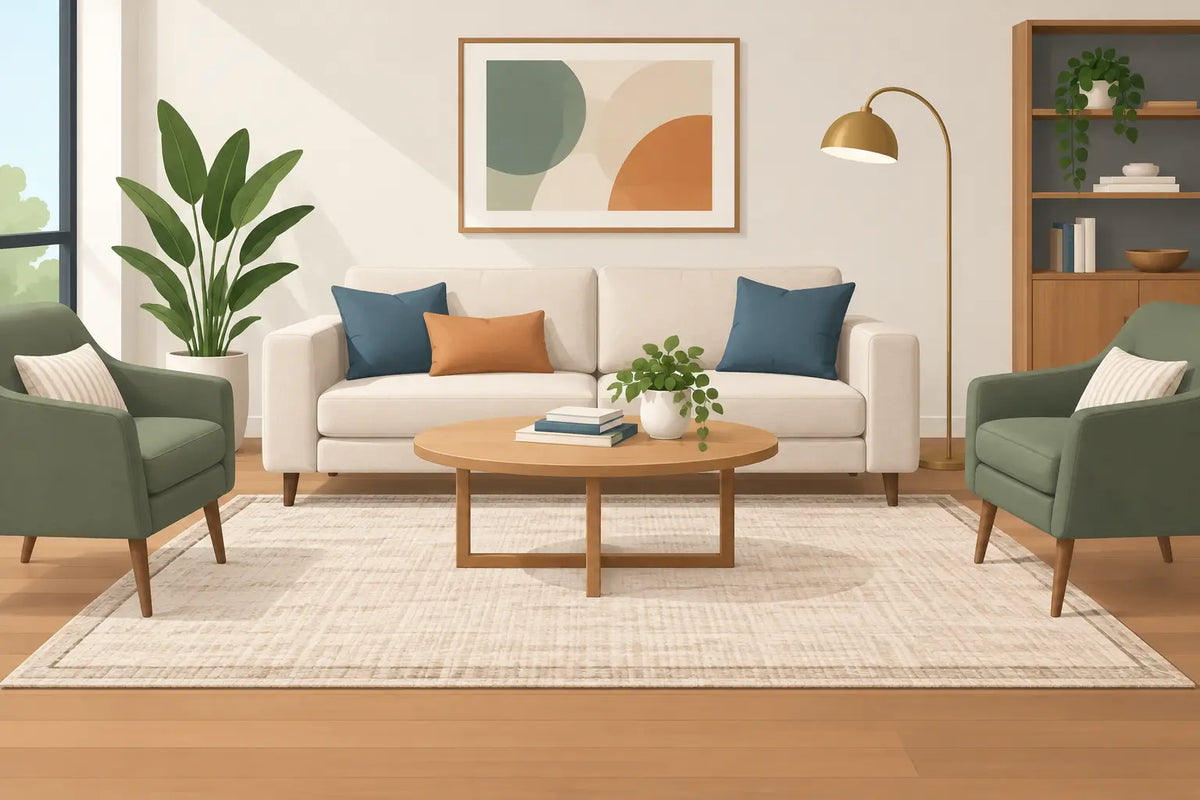
A living room can have beautiful seating, thoughtful lighting, and a color palette you love, yet still feel slightly adrift. Often, the missing element is beneath your feet. Anchoring furniture with rugs gives a room visual gravity, turning separate pieces into a composed, welcoming setting rather than a collection of items placed along the walls.
The right area rug does more than soften a floor. It establishes the boundaries of a conversation area, introduces texture and color, and gives your furniture a shared point of connection. The result can feel quietly transformative: more intentional, more comfortable, and much easier to live in.
Why Anchoring Furniture With Rugs Changes a Room
Furniture needs a frame. Without one, a sofa, chairs, coffee table, and accent pieces can appear to float independently, particularly in open-concept homes or rooms with generous floor space. A properly scaled rug draws those elements inward and creates an inviting center.
This is especially helpful when one room serves several purposes. In an open living and dining area, for example, separate rugs can distinguish each zone without interrupting the natural flow of the space. A rug beneath the dining table signals where meals happen; another beneath the sofa establishes a place to gather, read, or settle in for a movie. The room still feels open, but its function is clear.
There is an emotional benefit, too. Rugs bring softness underfoot and absorb some of the starkness that hard flooring can create. A textured wool look, a vintage-inspired pattern, or a low-profile neutral weave can make a room feel layered rather than overly arranged. It is a practical design decision with a distinctly personal effect.
Start With the Furniture Layout, Not the Rug Alone
The most common rug-sizing mistake is shopping for a design before considering the footprint of the furniture. A pattern may be lovely, but if the rug is too small to connect the major pieces, it can make the entire room feel smaller.
Before choosing a size, arrange the furniture as you want to use it. Then measure the overall grouping from side to side and front to back. Your rug should support that composition, not simply fill an empty patch of floor. Painter's tape is a helpful way to visualize dimensions before ordering. Mark the proposed edges on the floor and walk around them. You will quickly see whether the placement feels generous or skimpy.
In a typical living room, an 8' x 10' or 9' x 12' rug often gives a seating arrangement the presence it needs. The ideal size depends on the room, of course, but choosing slightly larger is frequently the more polished choice. A rug that extends beyond the sofa and accommodates chair legs creates a sense of ease that a small, centered rug cannot replicate.
The all-legs-on arrangement
For a spacious room, place all major seating furniture fully on the rug. The sofa, chairs, and coffee table sit within a single visual field, which creates a tailored, designer-led look. Leave a border of visible flooring around the rug so the room still has breathing room.
This approach is particularly beautiful with a 9' x 12' rug in a larger living room or primary bedroom. It also works well when you want to highlight a statement rug with expressive color, a detailed traditional motif, or a modern abstract composition.
The front-legs-on arrangement
In many homes, the most versatile approach is to place the front legs of the sofa and chairs on the rug while the back legs remain on the floor. This still anchors the furniture while preserving circulation space. It is a natural choice for apartments, cozy living rooms, and layouts where a larger rug would run too close to walls or doorways.
Aim for enough depth that the rug reaches well beneath the front portion of each seat. A narrow strip under the sofa is not doing the same visual work as a rug that genuinely connects the seating group.
The floating arrangement
A smaller rug can sit beneath the coffee table with all furniture around it, but this works best when the furniture is already closely grouped and the rug is intentionally used as an accent. In a compact room, it may be the right answer. In a larger space, though, this arrangement can make the furniture feel disconnected. Scale is the deciding factor.
Let Each Room Have Its Own Placement Rules
The best rug placement shifts with the way a room functions. A living room asks for connection; a dining room needs clearance; a bedroom benefits from softness where you step first thing in the morning.
Living rooms
The front legs of the primary seating should usually rest on the rug, with the coffee table centered comfortably within the arrangement. If you have a sectional, choose a rug broad enough to extend under its key corners rather than stopping abruptly in front of it. For a more relaxed, collected look, allow the rug to run beyond the outer edges of the sofa.
Round rugs can be especially effective beneath a round coffee table or in a seating nook with curved chairs. They soften angular architecture and create a gentle focal point without feeling overly formal.
Dining rooms
A dining room rug should be large enough for chairs to remain on it when pulled out. Measure your table, then add approximately 24 to 30 inches on every side. This prevents chair legs from catching on the rug edge and keeps the setting looking balanced even when the table is fully in use.
Shape matters here. A rectangular table generally looks best on a rectangular rug, while a round pedestal table pairs naturally with a round rug. Low-pile rugs are often the practical choice for dining spaces because chairs slide more easily and crumbs are simpler to manage.
Bedrooms
In a bedroom, a rug should offer a soft landing beside the bed while bringing the room's furnishings together. A larger rug can sit horizontally beneath the lower two-thirds of the bed, extending past both sides and the foot. This gives nightstands the option to remain on the floor while still providing generous coverage around the bed.
For smaller bedrooms, runners on either side of the bed or a single runner at the foot can add warmth without crowding the layout. This solution is also lovely for bedrooms with architectural flooring worth showing off.
Choose a Rug That Supports Real Life
A beautifully scaled rug should also suit the pace of the household. In a busy family room, consider a low-pile, easy-care construction that can handle daily traffic, pets, and spontaneous gatherings. A rug pad underneath helps keep the surface in place, adds a touch of cushion, and can protect both the rug and flooring from excess wear.
Color and pattern deserve a practical lens as well. Lighter rugs can create a serene, airy foundation, but a softly heathered design or subtle pattern is often more forgiving in high-use spaces. Deeper tones, intricate motifs, and varied texture can bring character while disguising the small signs of everyday life.
For homes with several finishes already at play, a solid or tonal rug can create tranquil harmony. If your furniture is more restrained, a patterned rug becomes an artful layer that sets the room's narrative. Neither route is inherently better. The strongest choice is the one that gives the eye a place to rest while still feeling true to your home.
Make the Edges Feel Intentional
Once the rug is in place, check the clearances. Avoid having the rug end exactly at a doorway, crowd a fireplace hearth, or create an awkwardly narrow strip between its edge and the wall. There is no single required border, but a consistent amount of visible floor around the rug tends to feel calm and considered.
Pay attention to circulation, too. A rug should guide movement, not become an obstacle. Make sure doors can open freely and that the rug is secured with a properly sized pad, especially in hallways, entries, and homes with children or pets.
A well-chosen rug is not merely a finishing touch. It is the foundation that lets every chair, table, and sofa feel as though it belongs exactly where it is. Start with the life you want the room to hold, then choose a size and placement that lets that story settle beautifully into place.


Share:
Runner Rugs That Make Every Hallway Feel Designed
Rugs for Open Floorplans That Define Every Zone