

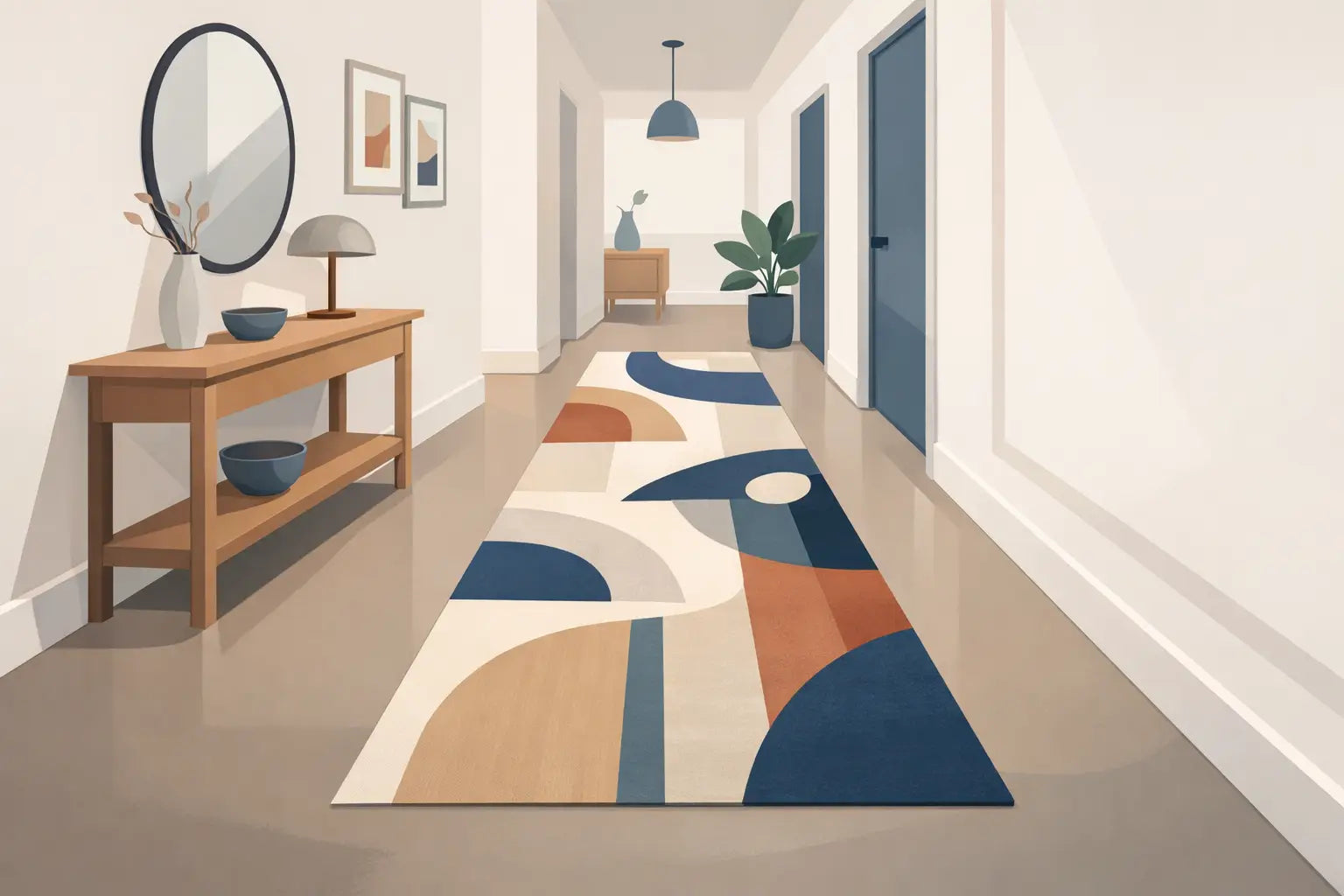
A hallway can be purely practical, or it can set the mood for everything that follows. Contemporary runner rugs turn this often-overlooked stretch of flooring into a welcoming passage with color, softness, and a sense of intention. Whether your home leans tailored and minimal or collected and expressive, the right runner gives everyday movement through the house a more finished feel.
Why Contemporary Runner Rugs Make Such a Difference
Runners do more than fill a narrow space. They create visual continuity between rooms, soften hard flooring underfoot, and help a long hallway feel less like an afterthought. In an entry corridor, they offer a gracious first impression. Along a kitchen galley or beside a bed, they add comfort exactly where it is most appreciated.
What makes a runner feel contemporary is not one strict look. It may be a clean geometric motif, a softly abstract wash of color, a tonal grid, or a modern interpretation of a time-honored pattern. The common thread is an artful balance: enough character to make the space memorable, with a clarity that feels at home in current interiors.
This flexibility makes contemporary runners especially useful in homes that blend styles. A warm ivory runner with a subtle charcoal line can bring calm to a modern farmhouse hallway. A painterly rust and blue design can connect a vintage wood console to crisp white walls. The rug becomes the element that makes different furnishings feel thoughtfully chosen rather than accidentally assembled.
Start With the Hallway, Not the Rug
The most beautiful design will feel wrong if the scale is off. Before choosing a pattern or palette, measure the clear walking area of your hallway. A runner should generally leave several inches of flooring visible along both sides, creating a framed effect instead of wall-to-wall coverage. In many homes, that means a 2'3" x 7' or 2'6" x 8' runner works well, while longer corridors may call for 10-, 12-, or 14-foot lengths.
Length matters just as much as width. A runner should visually follow the hall without crowding doorways, floor vents, or the base of a staircase. Leave a comfortable margin at each end when possible. If a hall is unusually long, one generous runner often looks more composed than several smaller rugs, though two matching runners can be practical when a doorway naturally divides the space.
For a kitchen, measure with cabinet doors and appliance clearances in mind. In a bedroom, a runner beside the bed should extend beyond the foot of the mattress enough to feel intentional, not like a narrow strip tucked into place. These details are simple, but they are what give a room that polished, designer-finished appearance.
A quick rule for visual balance
If the runner makes the hallway look narrower, it is likely too wide. If it appears to float in a broad passage, it may be too slim or too short. The best proportion gives the floor room to breathe while still offering a clear path through the space.
Choose a Pattern With Everyday Life in Mind
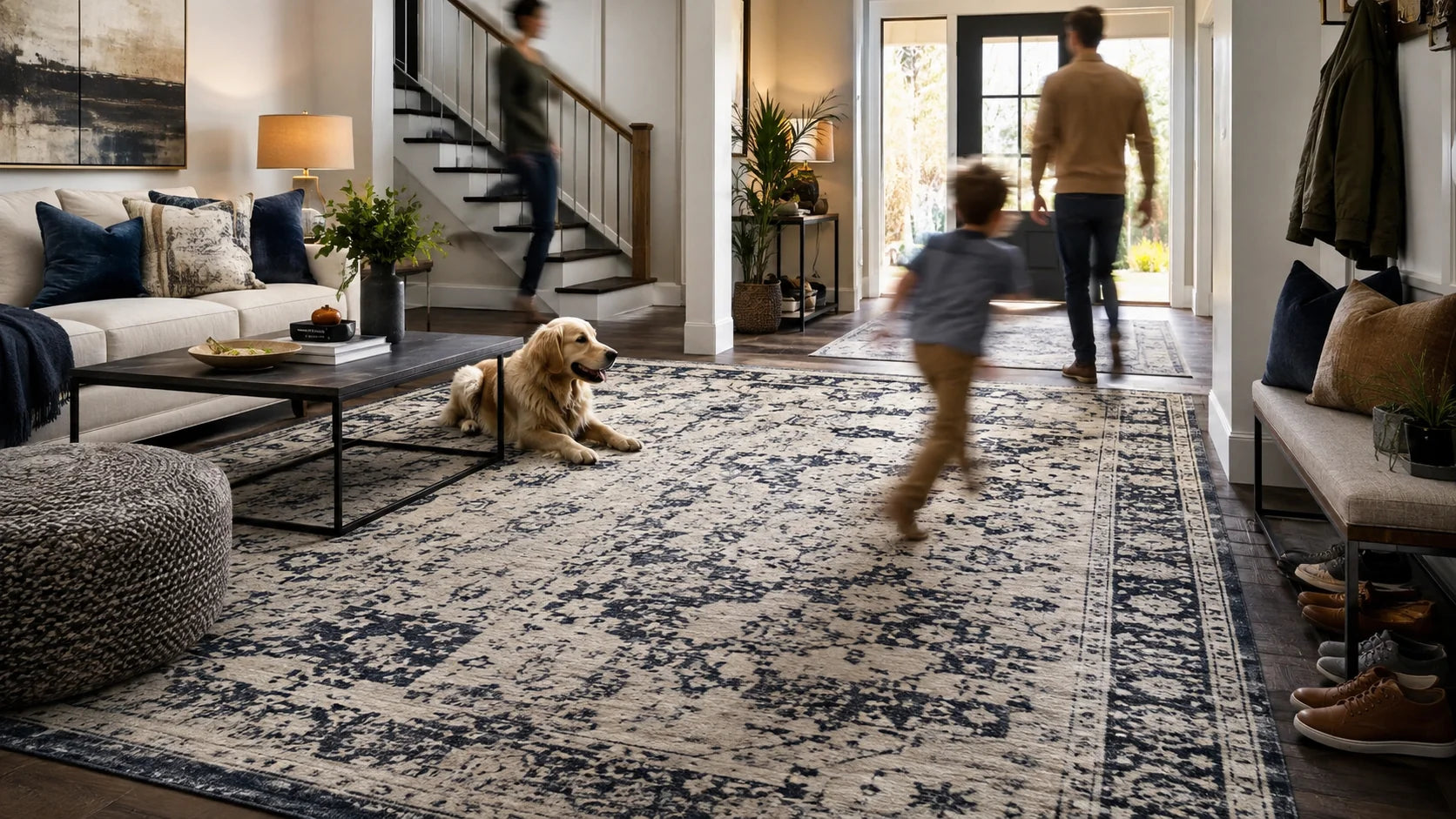
A runner is one of the most hardworking rugs in the home. Shoes, pets, backpacks, grocery bags, and daily foot traffic all pass through it. That makes pattern a practical decision as well as a decorative one.
For busy entryways and family hallways, medium-to-deep tones and layered designs tend to be forgiving. Distressed motifs, abstract patterns, and variegated color fields are especially helpful because they disguise the small signs of real life between cleanings. A pale, solid runner can look striking in a low-traffic upstairs hall, but it may require more attention near a front door or kitchen.
Geometric contemporary runner rugs bring rhythm and structure to a space with clean-lined furniture. Their repeat patterns can make a long hallway feel more orderly, particularly when the rest of the home uses quiet solids. Abstract designs are a beautiful choice when you want movement without visual rigidity. They can introduce color in a softer, more painterly way and work well with organic shapes, warm woods, and mixed metals.
If you are drawn to traditional architecture but prefer a fresher interior, consider a vintage-inspired runner in an edited palette. Designs with faded terracotta, moss, denim, sand, or smoky blue offer familiar warmth without making the room feel overly formal. The contrast between a classic-looking pattern and a contemporary surrounding is often where a hallway finds its character.
Material and Construction: Match the Rug to the Route
The right material depends on where the runner will live and how much maintenance suits your household. There is no universal best choice, only the best fit for the room.
Wool has a naturally inviting texture, substantial feel, and long-standing appeal for residential interiors. It is a lovely option for a quieter hallway, bedroom, or landing where you want softness and a more elevated finish. Wool can shed when new, particularly in hand-tufted constructions, and it benefits from thoughtful care, so it may not be the easiest answer for every heavily used entry.
Polypropylene and other performance fibers are often ideal for high-traffic routes. They are valued for durability, color retention, and easier cleanup, making them a reassuring option for homes with children, pets, or a frequently used exterior door. These rugs can still look refined, especially when the weave, palette, and pattern are well considered.
Low-pile runners are usually the most practical for hallways. They allow doors to swing more easily, feel stable underfoot, and are easier to vacuum. A plush pile feels wonderful in a bedroom, but in a tight corridor it can create a heavier look and may not suit every door clearance. Flatwoven styles offer another smart option, delivering a clean profile and relaxed texture, although they almost always benefit from a quality rug pad.
Color Can Guide the Eye Through Your Home
A runner does not have to match every room it touches. In fact, a little variation often makes a home feel more personal. The goal is connection, not duplication.
Look for one or two colors that already appear nearby: the black frame of an entry mirror, the walnut tone of a console, the muted green in a living room pillow, or the warm brass of a light fixture. A runner that echoes those elements will feel anchored, even if it introduces a new accent color of its own.
For a bright, airy hallway, ivory, oatmeal, pale gray, and soft taupe can create tranquil harmony. Add dimension through texture or a delicate pattern so the rug does not disappear against the floor. Darker runners in indigo, charcoal, cocoa, or richly layered earth tones bring definition and are particularly effective in expansive white spaces that need grounding.
Do not overlook the directional effect of pattern. Lengthwise stripes and repeated motifs can emphasize a hallway's graceful proportions. A more open, irregular pattern can visually relax a narrow passage and make it feel less tunnel-like. If the hall already has bold wallpaper, a solid or subtly textured runner may provide the calm counterpoint the room needs.
The Rug Pad Is Part of the Finished Look
A runner that shifts underfoot can make even a beautifully styled hall feel unsettled. A properly sized rug pad adds grip, helps the rug lie smoothly, and provides a little welcome cushioning. It can also reduce friction between the rug and flooring, which supports the long-term appearance of both.
Choose a pad designed for your flooring type, especially if you have hardwood, luxury vinyl, or other finished surfaces that need protection. Keep it slightly smaller than the runner on all sides so it stays hidden. This small layer is easy to overlook when shopping online, yet it is one of the most practical ways to make a runner feel secure and substantial from day one.
Style the Space Around the Runner
Once the rug is in place, resist the urge to overfill the hallway. A contemporary runner already creates a strong visual line, so a slim console, a sculptural lamp, framed art, or a well-placed mirror may be all the space needs. Let the rug carry some of the narrative.
In a more open entry, repeat its colors with a small bowl, a vase of branches, or a single piece of artwork. In a quiet upstairs hall, consider a gallery wall that grows gradually over time. The most inviting homes rarely feel decorated all at once. They feel lived in, edited, and artfully crafted around the people who move through them.
At Rug Resources, choosing a runner can be as considered as choosing the larger rug that anchors your living room. Measure carefully, select a material that suits your daily routine, and give yourself permission to choose the pattern that makes you pause when you walk by. A hallway is not merely the space between rooms - it is part of your home's story.

Share:
Vintage Style Rug Trends for a Layered Home
Vintage vs Modern Rugs: Which Style Fits?