

A room can have beautiful furniture, thoughtful lighting, and a perfectly chosen paint color, yet still feel unfinished until the rug arrives. The most compelling vintage style rug trends answer that missing-layer problem with softened pattern, nuanced color, and the kind of visual history that makes a home feel collected rather than newly assembled. They offer old-world character without requiring an actual antique - a welcome balance for homes that need to look polished while living comfortably.
Vintage Style Rug Trends Are Moving Beyond the Perfect Match
The appeal of a vintage-inspired rug is not about making every room look formal or period-specific. It is about bringing depth to spaces that might otherwise feel too crisp, too coordinated, or a little flat. Faded motifs, irregular-looking color variation, and timeworn finishes create a gentler transition between upholstery, wood tones, art, and everyday objects.
Current interiors are also less interested in strict matching. A warm terracotta accent in a rug does not need to match every pillow. A touch of faded blue can coexist with olive, cream, walnut, or black. This relaxed approach gives homeowners and renters more freedom to choose pieces they love and build a room over time.
The best vintage-inspired designs feel intentional, not overly distressed. Look for a pattern that remains legible from across the room, with color variation that adds movement without making the rug appear muddy. The goal is a surface with character - one that grounds the room rather than competing with it.
Muted Earth Tones Bring Warmth Without Heaviness
Beige and gray are no longer the only neutral foundation colors. One of the strongest vintage style rug trends is a move toward warm, quietly dimensional palettes: sand, tobacco, cinnamon, clay, faded rose, moss, denim, and deep brown. These colors work especially well with natural materials such as oak, linen, leather, woven shades, and aged brass.
A rug in rust and cream can bring warmth to a light-filled living room without overwhelming it. A washed blue and tobacco design can make a bedroom feel serene while still offering enough contrast to define the bed area. In dining rooms, a deeper multicolor palette is often a practical choice because its layered pattern is more forgiving of the small marks that come with daily life.
If your furnishings are primarily neutral, consider a rug with several low-saturation colors rather than one dominant bright hue. This creates a collected look while keeping the room flexible for seasonal pillows, artwork, and future furniture updates. If your sofa is already richly colored, a lighter ivory, taupe, or faded blue vintage-style rug can restore visual breathing room.
The return of chocolate brown
Chocolate brown deserves special attention. It is appearing in furniture, wall color, and decorative accents because it gives a room the grounded ease that cooler neutrals sometimes lack. A vintage-inspired rug with espresso, walnut, or cocoa details is a natural partner for this shift. It can tie together wood furniture and darker accents while keeping the overall effect warm rather than stark.
Traditional Motifs in More Relaxed Rooms
Persian-inspired medallions, botanical borders, Heriz-style geometry, and ornate allover patterns remain central to the category. What has changed is where these motifs are being used. They now appear just as naturally beneath a clean-lined sectional or a contemporary platform bed as they do alongside traditional furniture.
That contrast is part of the charm. A detailed vintage-style rug lends softness and history to modern spaces with simple silhouettes. Conversely, in a room with antique or classic furnishings, a softly faded design can keep the look from feeling too precious or overly formal.
For a more open floor plan, an allover pattern often works better than a large centered medallion. Allover designs maintain visual interest across a broad footprint and are less dependent on furniture placement. A medallion rug can be beautiful in a living room or bedroom, but it is worth checking where the central motif will land. Ideally, it should not be entirely hidden beneath a coffee table or cut off awkwardly by the front edge of a sofa.
Low-Pile and Performance Materials Make the Look Livable
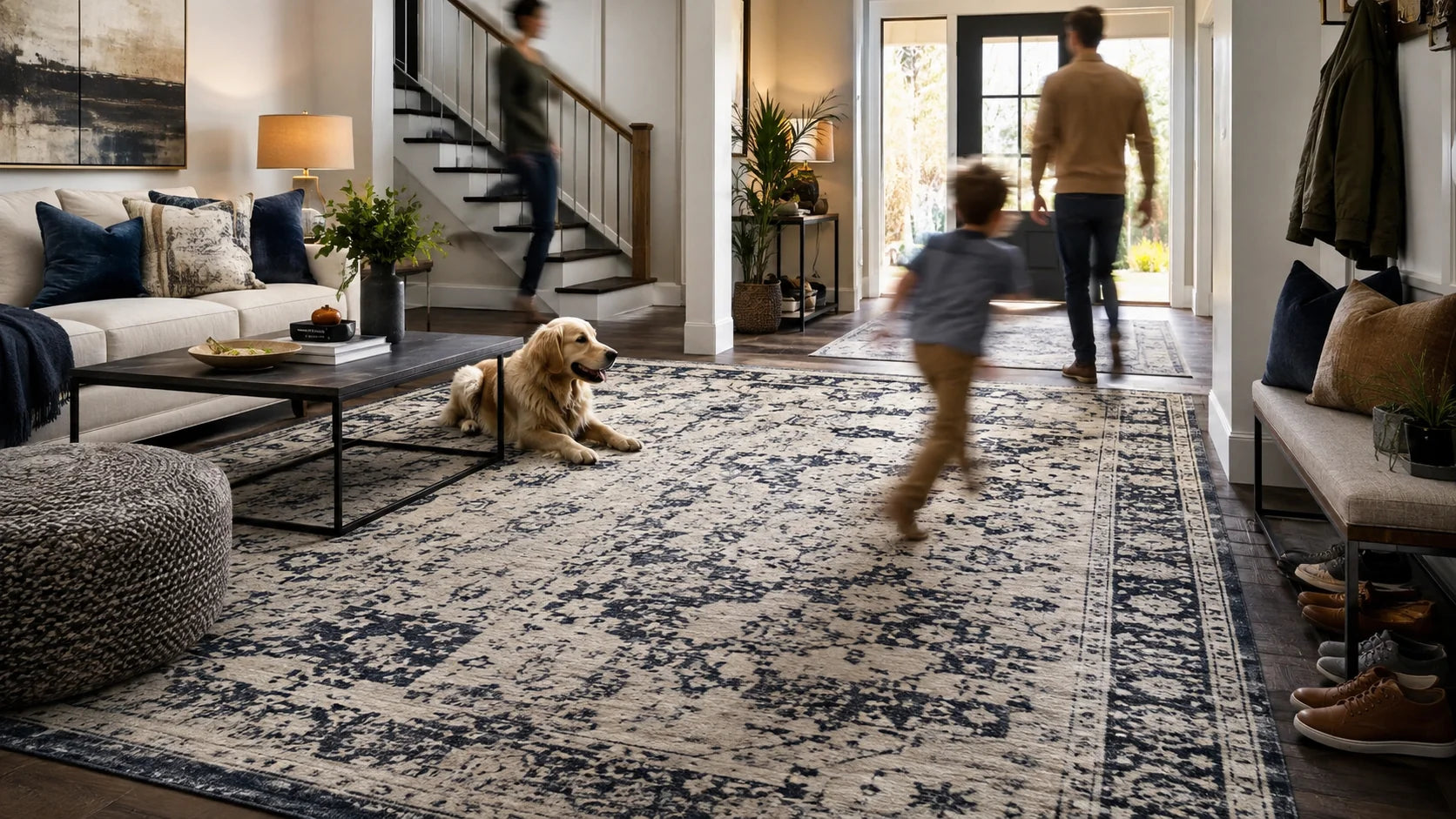
A beautiful rug has to work with the pace of the room. That is why vintage-inspired collections are increasingly available in low-pile, power-loomed, washable, and performance-minded constructions. These options deliver the visual richness of an heirloom textile while offering more approachable care for entryways, family rooms, kitchens, and homes with pets.
A lower pile is often a smart choice for a dining area, hallway runner, or space where doors need to clear the rug. It also makes chair movement easier and can feel more stable underfoot in busy areas. In a bedroom or a less-trafficked sitting room, a plusher pile can bring an extra sense of comfort, especially when paired with a quality rug pad.
Material choice depends on how the room is used. Wool offers natural resilience and a distinctive hand, but it may require more attentive care than a synthetic blend. Polyester and polypropylene can be excellent options for active households because they are designed for durability and easier maintenance. There is no single best choice - the right construction is the one that supports both your aesthetic and your routine.
Layering Creates a More Collected Finish
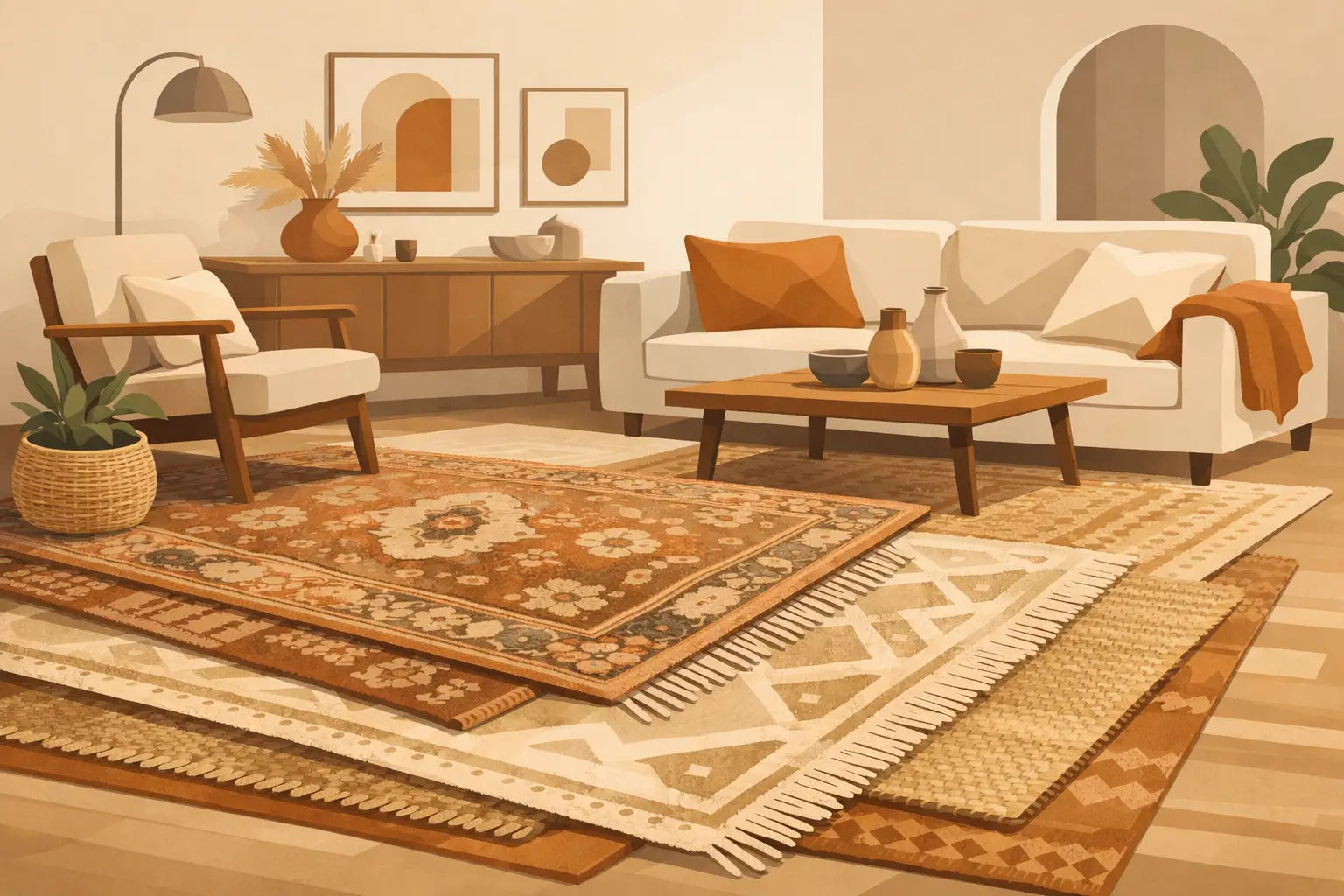
Layering is still relevant, though the approach has become more refined. Instead of treating every layered rug as a casual bohemian statement, homeowners are using a larger neutral base to frame a smaller vintage-inspired piece. The result can make a modestly sized patterned rug feel more substantial while adding softness to a spacious room.
This works particularly well when you love the look of a detailed rug but need a larger footprint to anchor a seating area. Start with a durable, low-profile neutral rug in jute, wool, or a woven texture, then center the vintage-style rug above it. Keep the borders even enough to look deliberate, and let the top rug remain the focal point.
Layering is not essential, however. In a room with plenty of texture already - boucle chairs, patterned drapery, carved wood, or prominent art - one well-scaled rug usually has more impact than two. The room should feel artfully composed, not crowded.
Choose Scale Before You Choose the Pattern
Trend-conscious style only works when the proportions are right. A rug that is too small can make even a beautifully furnished room feel disconnected. In a living room, aim for at least the front legs of major seating pieces to rest on the rug. In a bedroom, allow enough rug to extend beyond both sides and the foot of the bed, creating a soft landing when you wake up.
Runners deserve the same consideration. A hallway runner should leave a visible border of flooring on both sides and avoid crowding doorways. For kitchens, a runner placed along the prep area introduces pattern and comfort where you spend the most standing time. A vintage-style motif can be especially effective here because it makes a hardworking zone feel considered rather than purely utilitarian.
Before ordering, measure the room, account for door swings, and use painter's tape to outline the rug size on the floor. This simple step reveals whether an 8 x 10, 9 x 12, or runner format will create the balance you want. A rug pad is also worth planning for, particularly on hard surfaces. It helps reduce slipping, adds cushioning, and supports the rug's placement over time.
Let Character Lead the Room
The most enduring trend is choosing a rug that gives a room a point of view. Vintage-inspired rugs do that beautifully because they carry visual complexity without demanding constant attention. A faded floral can soften a tailored sofa. A warm medallion can make a new dining table feel established. A muted runner can turn an overlooked hallway into part of the home's story.
When you are deciding between two designs, choose the one that makes you pause. The right rug should not merely fill the floor. It should give the room a more settled, personal feeling - and make the pieces around it look even more at home.

Share:
Loloi Area Rug Review for Stylish Lived-In Rooms
Contemporary Runner Rugs That Define a Hallway