

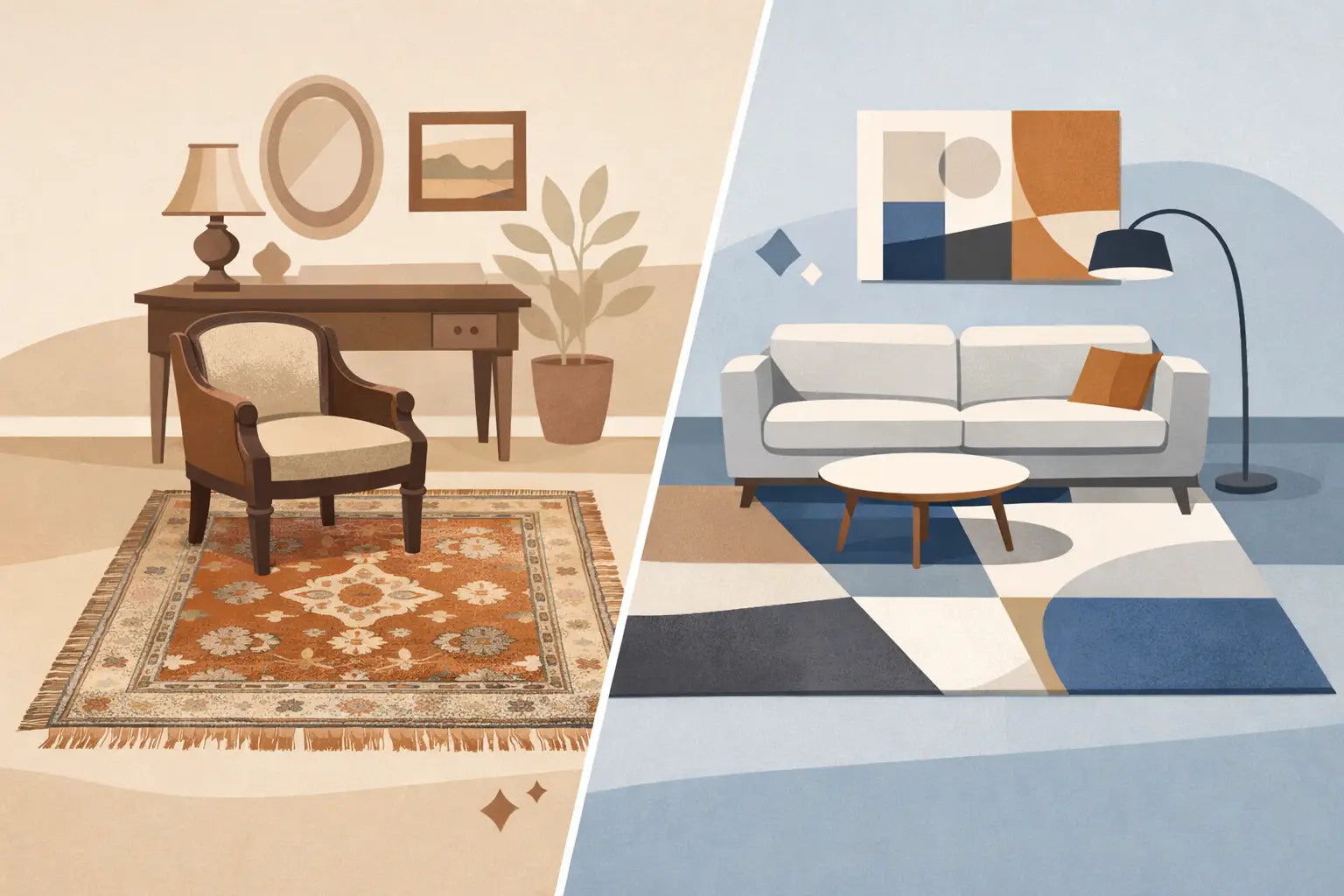
A rug can make a newly furnished room feel collected, or make a beloved room feel suddenly current. When comparing vintage vs modern rugs, the most compelling choice is rarely about following a rule. It is about deciding what story you want the room to tell: layered and storied, crisp and expressive, or thoughtfully balanced somewhere in between.
A vintage-inspired rug brings the warmth of time, softened color, and an inviting sense of history. A modern rug can introduce clean geometry, sculptural texture, or a confident wash of color that gives a room fresh perspective. Both can be beautiful in the same home. The difference lies in how they interact with your architecture, furnishings, light, and daily life.
Vintage vs Modern Rugs: The Visual Difference
Vintage rugs, including true antiques and vintage-inspired designs, tend to feel nuanced rather than uniform. Their patterns may reference Persian, Turkish, Moroccan, or European traditions, often with medallions, florals, borders, and gently faded fields of color. Even when newly made, a well-designed vintage-look rug has a lived-in quality that makes a space feel relaxed and personal.
Modern rugs usually favor a more edited point of view. Think abstract washes, linear motifs, bold blocks of color, organic curves, quiet solids, and high-low texture. Their beauty often comes from proportion, material, and negative space rather than ornament. A modern design can make a room feel more open, especially when the furnishings already have strong silhouettes.
Neither style is limited to one kind of home. A vintage rug can add needed softness to a streamlined condo, while a modern rug can bring clarity to a traditional living room with detailed millwork. The best results come from contrast with intention, not strict style matching.
When a Vintage Rug Creates the Right Mood
Choose a vintage or vintage-inspired rug when you want a room to feel grounded, welcoming, and quietly collected. These rugs are especially effective in living rooms, bedrooms, dining rooms, and entryways where comfort matters as much as visual impact.
Their layered pattern can also be wonderfully practical. A muted rust, denim, sand, or moss-toned design tends to disguise everyday crumbs, pet hair, and the small marks of a busy household more gracefully than a pale solid rug. In a high-traffic area, that visual forgiveness can be just as valuable as a durable fiber.
Vintage style is a natural fit for homes with warm woods, leather seating, antique or heirloom accents, linen upholstery, and brass details. It also gives newer furniture a little more soul. A simple cream sofa and oak coffee table can feel far more established when anchored by a faded medallion rug with depth and movement.
Look for color variation, not just a distressed finish
Not every faded rug has the same effect. The most versatile vintage-inspired pieces have variation that feels artful: a softened palette, subtle shifts in tone, and pattern that remains visible from across the room. If a rug is too uniformly distressed, it can disappear beneath the furniture. If the contrast is too sharp, it may compete with the rest of the space.
For an easy starting point, pull one or two quieter colors from the rug into your pillows, art, or curtains. You do not need to match every shade. A vintage rug often looks best when its palette is echoed loosely, allowing its character to remain the focal point.
When a Modern Rug Brings a Room Into Focus
Modern rugs are ideal when you want the floor to feel like part of the design conversation. They can create a calm backdrop, add a graphic moment, or give an otherwise classic room a welcome edge. In open-plan spaces, a modern area rug can define a seating zone without making the room feel visually heavy.
A neutral modern rug in ivory, taupe, charcoal, or soft gray works beautifully with contemporary furniture and layered textures. Consider a tonal geometric weave or a plush high-low design if you want dimension without introducing another major color. This approach is especially effective in bedrooms and serene living spaces where the goal is tranquil harmony.
For rooms that need energy, an abstract design can do more than a colorful accent pillow ever could. A rug with inky blue, terracotta, olive, or black can establish a clear palette and make a simple room feel intentionally finished. It is a smart choice for apartments, studios, and newer homes where architectural details are minimal and the furnishings need to carry the personality.
Modern does not have to mean stark
The common hesitation around modern rugs is that they might make a room feel cold. That usually happens when every surface is sleek, hard, and sharply defined. Balance a contemporary rug with tactile elements such as boucle, wood, wool throws, woven shades, or a ceramic table lamp.
Material matters, too. A handwoven wool rug, a textured loop pile, or a soft polyester blend can bring comfort to even the most minimalist design. Modern style is not about removing warmth. It is about giving warmth a more edited frame.
Let the Room Lead the Decision
Before choosing between vintage vs modern rugs, look at what the room already has. If your furniture is low-profile, tailored, and neutral, a vintage-inspired rug can supply the pattern and visual history that keeps the space from feeling flat. If your room includes carved wood, traditional upholstery, and ornate lighting, a modern rug may provide the breathing room that lets those special pieces shine.
Architecture is another useful guide. Historic homes often welcome vintage patterns naturally, but an unexpected contemporary rug can make original details feel fresh rather than overly formal. In a newer build, a traditional-style rug can offset clean lines and add a sense of permanence. The goal is a home that feels designed over time, not assembled from a single showroom floor.
Scale is every bit as important as style. In a living room, choose a size large enough for at least the front legs of your seating to rest on the rug. In a dining room, allow room for chairs to stay on the rug when pulled back. A beautiful design in the wrong dimensions will never deliver the polished effect you imagined.
Consider Texture, Material, and Everyday Use
A rug should support the rhythm of your home, not ask you to tiptoe around it. Wool offers natural softness, resilience, and a substantial feel underfoot, making it a lovely choice for living rooms and bedrooms. Low-pile synthetic constructions are often easier to clean and can be especially practical for family rooms, play spaces, and busy hallways.
For an entry or runner, a lower profile helps doors clear easily and makes vacuuming simpler. In bedrooms, a fuller pile or plush texture can add that first-soft-step comfort in the morning. If you love the look of a high-pile modern rug but have pets, young children, or frequent entertaining, consider whether a lower-pile option will better suit your routine.
A quality rug pad is worth planning for, regardless of style. It helps prevent slipping, adds cushioning, and can support the rug’s shape over time. It also makes a thin, flatwoven vintage-inspired rug feel more comfortable beneath your feet.
The Most Personal Choice: Mixing Old and New
You do not have to choose one rug style for the entire house. A home often feels more inviting when rooms evolve with their purpose. A vintage-inspired runner can bring character to a hallway, while a modern textured rug keeps the primary bedroom restful. A classic patterned dining room rug can coexist beautifully with an abstract piece in a sunroom or office.
Even within one room, old and new can create an artfully crafted balance. Pair a faded traditional rug with a sculptural sofa, clean-lined chairs, and contemporary art. Or place a modern tonal rug beneath an antique wood table and a vintage-style chandelier. The dialogue between eras is what makes the room memorable.
At Rug Resources, the most successful rug choices begin with the way you want to live in a space, then build toward the look you love. Let your rug be more than a finishing touch. Choose the one that gives your room a sense of comfort, character, and a story worth coming home to.

Share:
Contemporary Runner Rugs That Define a Hallway
Hallway Runner Buying Guide for a Beautiful Entry