

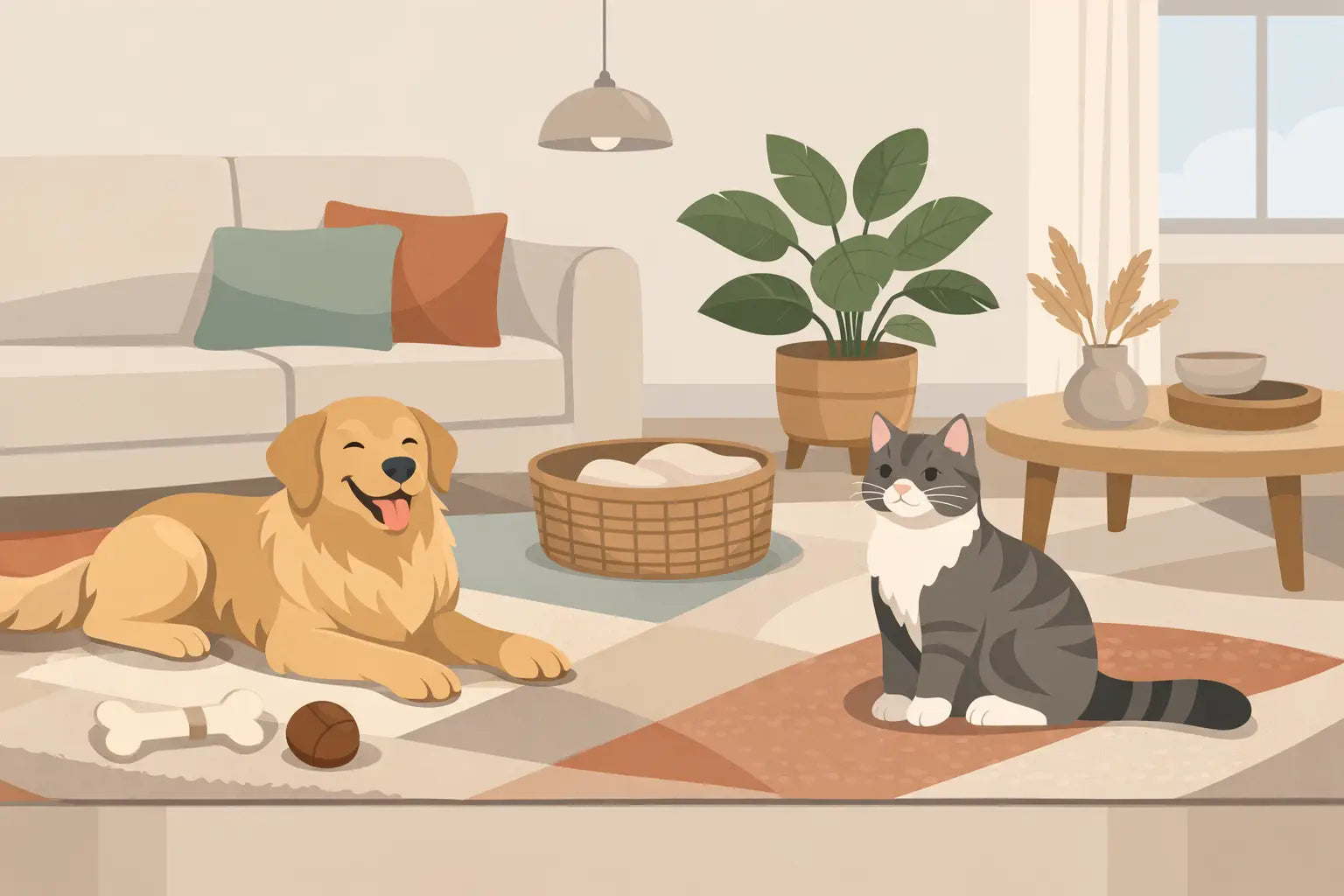
A pale ivory rug beneath a sunlit window can look exquisite - until a wet paw crosses it after the morning walk. The good news is that choosing pet friendly rug colors does not mean settling for a room that feels overly dark, busy, or purely practical. The right palette can soften a living room, ground a hallway, and make the everyday evidence of a well-loved pet far less noticeable.
Color is one of the most useful tools in a pet-friendly home, but it works best when considered alongside pattern, texture, pile height, and the way your household actually lives. A rug that hides a few stray hairs beautifully may be less forgiving with muddy footprints. Another may disguise spills while showing every bit of white fur. Thoughtful choices create a room that feels artfully finished, even between cleanings.
What Makes a Rug Color Pet Friendly?
The most practical rug colors are usually neither the lightest nor the darkest options. Mid-tones have a natural advantage because they create less contrast with dust, shedding, and small marks. Think warm taupe, mushroom, slate blue, heathered gray, muted olive, denim, terracotta, or a soft charcoal with lighter variation woven through it.
That variation matters. A solid rug can be striking in a carefully composed space, but it tends to reveal life more quickly than a tonal or patterned design. Rugs with layered shades, subtle distressing, or a small-scale motif create visual movement that helps camouflage pet hair and the occasional tracked-in mess without making the room feel visually crowded.
The most successful choice often echoes the tones already present in your pet's coat and your home's finishes. A sandy beige-and-gray rug can be remarkably forgiving in a home with a golden retriever, while a charcoal-and-cream design may suit a household with a black cat. This is not about matching perfectly. It is about reducing high contrast, so the rug looks composed rather than constantly in need of attention.
The Best Pet Friendly Rug Colors for Everyday Rooms
Warm Neutrals With Depth
Warm neutrals are a favorite for good reason. Greige, camel, stone, taupe, and mushroom create a serene foundation for everything from traditional furnishings to relaxed modern interiors. For pet households, the key is choosing a neutral with visible dimension rather than a flat, uniform field of color.
A taupe rug with cream, brown, and soft gray threads has an easy, collected quality and is more forgiving than a solid ivory rug. It also gives you flexibility as your décor evolves. Add linen upholstery and natural wood for tranquil harmony, or layer in black accents and sculptural lighting for a more contemporary point of view.
Be cautious with very pale oatmeal or cream in high-traffic zones. These shades can work beautifully in a bedroom or formal sitting area, especially with a low-shed pet, but a busy entryway or family room may call for a deeper neutral base.
Heathered Gray and Soft Charcoal
Gray remains a versatile choice, particularly when it is softened with warm undertones. A heathered gray rug can disguise a mix of dust, darker fur, and day-to-day traffic while still feeling light enough for an open-concept room. Look for designs that blend silver, stone, ivory, and charcoal instead of a single cool gray.
Soft charcoal brings more drama and can anchor a room with pale walls, creamy upholstery, or warm wood floors. It is especially effective for darker-coated pets, though it may show white fur more readily. A charcoal rug with a faded pattern or flecks of lighter yarn offers a better balance than a deep, solid black surface.
Blue That Feels Calm, Not Precious
Blue rugs have a quiet sophistication that suits bedrooms, living rooms, and home offices alike. Dusty blue, denim, slate, and blue-gray are particularly gracious choices for homes with pets because their muted character is naturally forgiving. They offer more personality than a neutral without demanding constant perfection.
A vintage-inspired blue rug with hints of ivory, sand, and faded rust can make a room feel collected over time. In a casual family room, it pairs especially well with cognac leather, warm oak, and textured throw pillows. For a more coastal or transitional look, a soft blue-gray rug offers an airy foundation while still holding up visually to everyday use.
Earthy Greens, Rusts, and Clay Tones
If your home leans warm, organic, or globally inspired, earthy color can be a particularly smart direction. Muted olive, sage, clay, rust, and tobacco brown disguise outdoor debris more naturally than crisp, cool hues. They also bring a sense of warmth that makes pet-friendly spaces feel inviting rather than overly managed.
Olive is surprisingly adaptable. It works with creamy walls and natural fibers, but it can also add richness beneath black metal details and modern furniture. Rust and terracotta rugs are especially welcoming in dining rooms, dens, and layered living spaces, where their nuanced warmth makes a few everyday marks less apparent.
Multicolor and Vintage-Inspired Palettes
For many pet owners, the most forgiving option is a multicolor rug with a thoughtfully edited palette. A design that combines muted blue, terracotta, tan, charcoal, and ivory has the ability to conceal a wide range of pet hair and minor mishaps while adding real character to the room.
Vintage-inspired rugs are especially practical because their faded, timeworn look is part of the design story. A little lived-in texture does not interrupt the effect - it belongs there. This makes them an excellent fit for central gathering spaces, active households, and hallways where a rug needs to work as hard as it looks beautiful.
Pattern Can Matter More Than the Exact Shade
When selecting pet friendly rug colors, consider the scale of the pattern as carefully as the palette. Small, intricate motifs, tonal medallions, and gently distressed designs tend to be the easiest to live with. They diffuse visual contrast and make stray fur or minor spots less obvious from across the room.
Large, high-contrast geometric patterns can be equally compelling, but they are less forgiving if a stain lands in a pale section or if your pet sheds heavily against one dominant color. This does not mean avoiding bold rugs. It simply means choosing a bold design with several tones rather than a stark two-color composition.
Texture adds another useful layer. A low-profile woven rug or a subtly ribbed surface can make natural variation feel intentional. Very high pile, by contrast, may hold onto fur and make cleanup more involved, especially in a home with long-haired pets. For a living room or hallway that sees frequent activity, a lower pile is often the more practical choice.
Colors to Approach With Care
Pure white, pale cream, and solid black are not forbidden, but they demand a more particular lifestyle. White and cream can show muddy paws, food crumbs, and darker shedding quickly. Black and deep navy can reveal light-colored fur, lint, and dust just as easily.
If you love a light rug, choose one with a warm beige ground and a layered pattern rather than a bright, unbroken ivory field. If a dark rug suits your aesthetic, select charcoal, deep brown, or midnight blue with softened tonal accents. These alternatives retain the richness of a darker palette without creating such a sharp contrast with everyday debris.
Also consider where the rug will live. A pale wool rug may be a beautiful choice for a quiet primary bedroom, while a busier, earth-toned runner makes more sense near the back door. The best rug is not only beautiful in a product image - it feels right for the rhythm of the room.
Build a Pet-Friendly Palette Around Your Home
Start with the practical facts: your pet's fur color, the entrances they use, and the rooms where they spend the most time. Then look at the tones already carrying the space - flooring, sofa fabric, cabinetry, and wall color. A rug should connect these elements while offering enough visual complexity to make everyday wear feel less conspicuous.
Before committing, imagine the rug at its least pristine. Will a few loose hairs disappear into its palette? Would a faint paw print blend into the pattern? Can you picture it after a lively weekend with guests, pets, and real life unfolding around it? Those questions often lead to a better choice than selecting color from a swatch alone.
At Rug Resources, a beautifully layered rug can bring designer-led character to a hardworking room without asking your household to be anything other than itself. Choose a color story with depth, a pattern that welcomes a little life, and a texture suited to your daily routine. Your home can still feel polished - even when your favorite companion has claimed the best seat in the room.

Share:
High Traffic Rug Materials That Work Hard
Traditional vs Contemporary Rugs for Your Home