

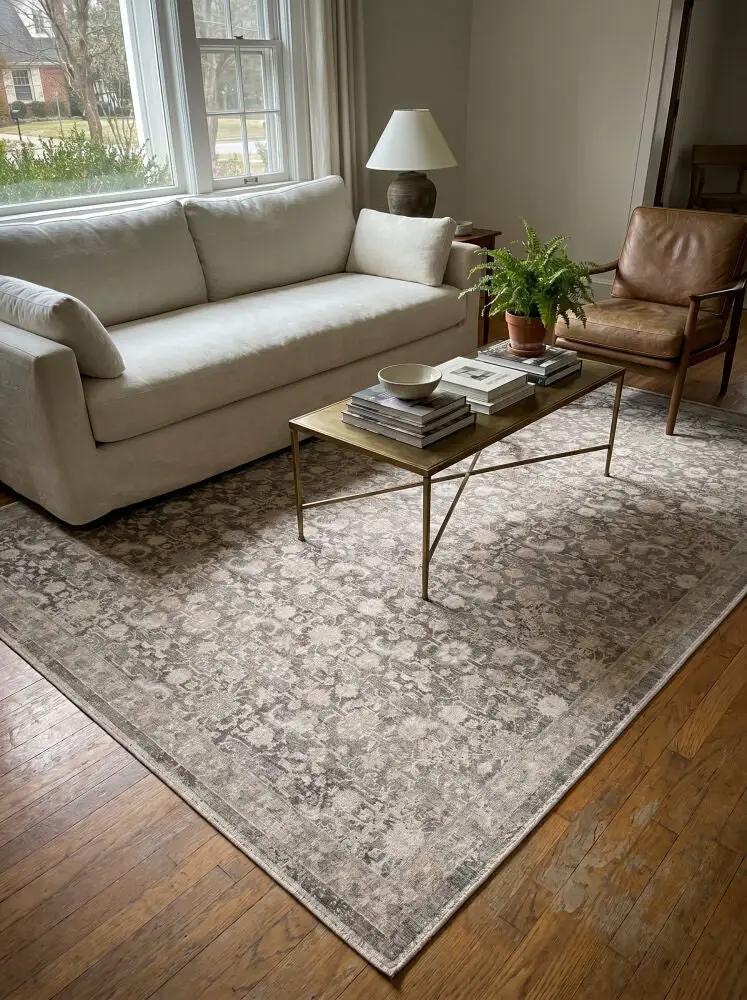
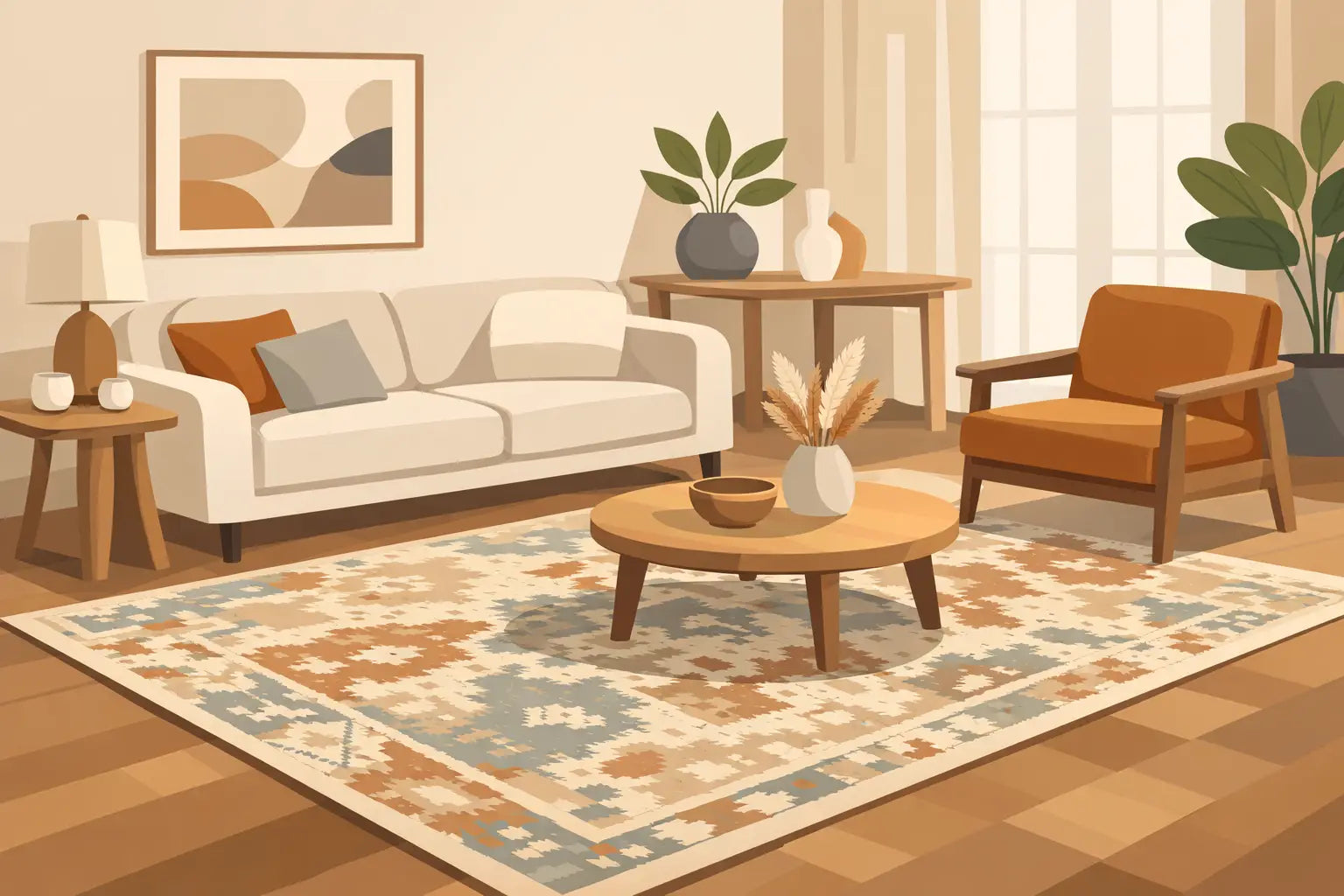
A rug can make a thoughtfully furnished room feel finished, or make it feel like the furniture is simply waiting for a plan. This Loloi area rug review looks beyond the beautifully styled product photography to the details that matter once a rug arrives at your door: material, texture, scale, durability, and how it lives with the people, pets, and everyday moments in your home.
Loloi has earned a loyal following for rugs that feel visually collected rather than overly coordinated. The brand’s assortment spans softly faded traditional patterns, modern abstracts, warm neutrals, bold graphic motifs, and designer-led collections with a distinct point of view. That breadth is a strength, but it also means there is no single answer to whether a Loloi rug is “good.” The right choice depends on the collection, construction, and room you have in mind.
What Makes Loloi Rugs Stand Out?
Loloi rugs often bring the character of an antique market find or a custom-designed textile into an accessible, room-ready format. Many designs use nuanced color variation, low-contrast patterning, and artful distressing to create depth. A blue rug may carry hints of slate, denim, ivory, and tobacco. A neutral design may lean warm with sand, clay, and soft mushroom tones rather than reading flat beige.
That layered approach is especially appealing in homes where the rug needs to connect different finishes. It can bridge a walnut coffee table, linen upholstery, brass lighting, and painted cabinetry without competing for attention. In a newer home, a faded medallion or painterly abstract can also soften crisp architecture and give the room a more personal narrative.
Design range is one of the brand’s clearest advantages. There are refined choices for a serene bedroom, durable-looking styles for a busy family room, and expressive runners that lend a hallway more intention. Rather than treating a rug as a final accessory, Loloi collections make it easier to begin with the floor and build a palette from there.
Loloi Area Rug Review: Materials and Construction
The most useful way to shop Loloi is by construction, not just by color or pattern. A hand-knotted wool rug, a hand-tufted wool blend, a power-loomed polyester rug, and a printed low-pile style can look equally beautiful online, yet they will feel and perform very differently at home.
Wool-forward rugs are often the most inviting choice for living rooms and bedrooms. Wool offers natural texture, a grounded hand, and a richness that tends to reward close viewing. It may shed at first, particularly with a fuller pile, and it requires patient vacuuming without an aggressive beater bar. For shoppers who value a substantial, heirloom-inspired feel, that maintenance is usually a fair trade.
Power-loomed rugs made with polyester, polypropylene, or other performance-oriented fibers are often a practical fit for active spaces. They can offer detailed pattern, saturated color, and a lower-profile surface that works well beneath doors and dining chairs. These rugs are generally easier to maintain, though they may not have the same organic variation or plushness as wool. In a playroom, breakfast nook, entry, or pet-friendly living room, the convenience can be exactly what the room needs.
Some Loloi collections are printed over a low pile, a construction that makes intricate vintage-inspired designs more attainable. These pieces can be strikingly convincing from across the room and are excellent when you want visual softness without a thick rug underfoot. The trade-off is tactile: the surface can feel smoother and flatter than a woven wool rug. If bare-foot comfort is your top priority, read pile and fiber details closely rather than relying on the pattern alone.
Hand-tufted rugs occupy a useful middle ground. They can provide a comfortable, dimensional feel and an elevated finish at a more approachable price point than hand-knotted construction. Because they are typically backed with adhesive, they are best suited to dry, indoor rooms and should be cared for according to the product’s specific instructions.
How Loloi Rugs Perform in Everyday Rooms
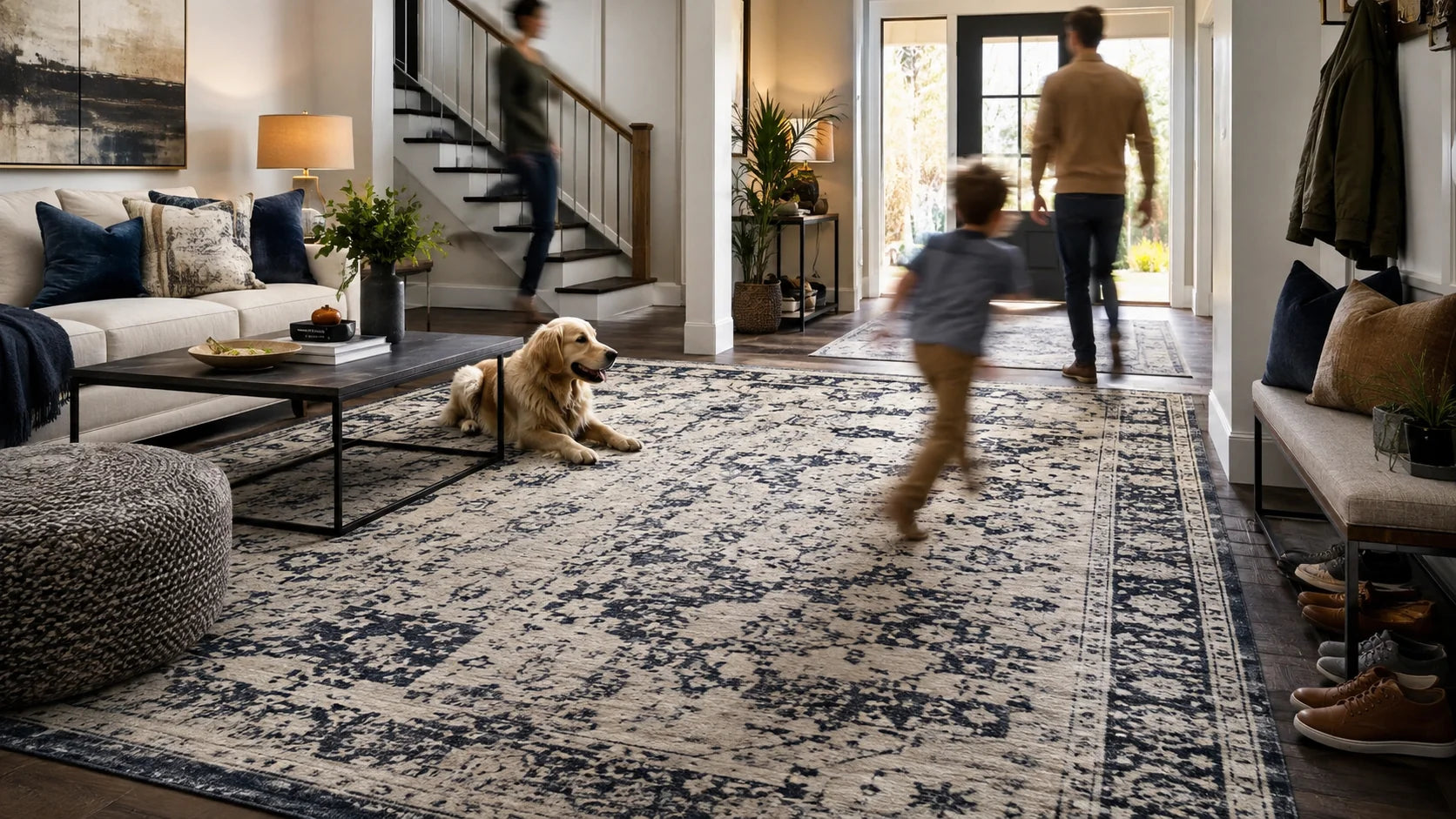
A lovely rug should support the rhythm of a home, not ask the household to tiptoe around it. Loloi’s varied constructions allow shoppers to match performance to place.
For a living room with children, pets, or frequent guests, a low-pile power-loomed rug is often the most relaxed choice. Look for pattern variation, mid-tone color, and a surface that will not catch easily on chair legs or toy wheels. A heathered charcoal, tobacco, denim, or multicolor design is generally more forgiving than a solid ivory rug, even when both suit the same overall style.
Bedrooms invite a different priority. Here, a wool or wool-blend rug can bring a softer landing beside the bed and a welcome sense of warmth. Choose a size that extends generously beyond the sides and foot of the bed so the room feels anchored when viewed from the doorway. A rug that is too small can make even beautiful furnishings feel disconnected.
In a dining room, low pile and scale matter more than plushness. Chairs should remain on the rug when pulled back from the table, and the surface should allow them to move without catching. Patterned Loloi rugs work particularly well here because they bring visual energy to a room often defined by hard surfaces.
Runners are another category where the brand’s design depth shines. An entry, kitchen, or hallway can handle a more expressive pattern than a larger room, especially if surrounding walls and furnishings are simple. Select a runner that leaves a visible border of flooring along both sides. That negative space keeps the passage feeling tailored rather than crowded.
Color and Texture: Expect Artful Variation
One reason shoppers gravitate toward Loloi is the sense of movement within many designs. But artful variation also means a rug may look somewhat different under your lighting than it does on a screen. Natural daylight, warm bulbs, dark flooring, and nearby paint colors all influence what you see.
Before choosing, consider the color that will read first from a few steps away. If the rug will sit beneath a cream sofa, ask whether its dominant undertone is cool gray, warm beige, blush, olive, or blue. Then notice the smaller accents that can be echoed through pillows, artwork, or drapery. This is a more dependable approach than trying to match every color exactly.
Texture deserves the same attention. A high-low pattern creates dimension and can make a neutral room feel more layered. A flatwoven or low-pile rug feels crisp and practical. A dense wool surface is warmer and more enveloping. None is inherently better. The best texture is the one that supports the mood and function of your space.
Sizing and Rug Pad Considerations
Even a beautifully chosen Loloi rug can fall short if the size is underscaled. In a living room, aim to place at least the front legs of major seating on the rug. In a larger room, placing all furniture legs on the rug creates a more generous, tailored composition. When in doubt, tape out the dimensions on the floor before ordering. It is one of the simplest ways to avoid a rug that feels like an afterthought.
A rug pad is equally worthwhile. It helps reduce shifting, adds a layer of cushioning, protects flooring, and can help a low-pile rug feel more substantial. Choose a pad appropriate for your floor type and rug construction, especially on hardwood, tile, and other smooth surfaces. For a thicker rug, a slimmer pad may offer the right balance; for a flatwoven style, added cushion can make a noticeable difference.
Care Expectations Before You Buy
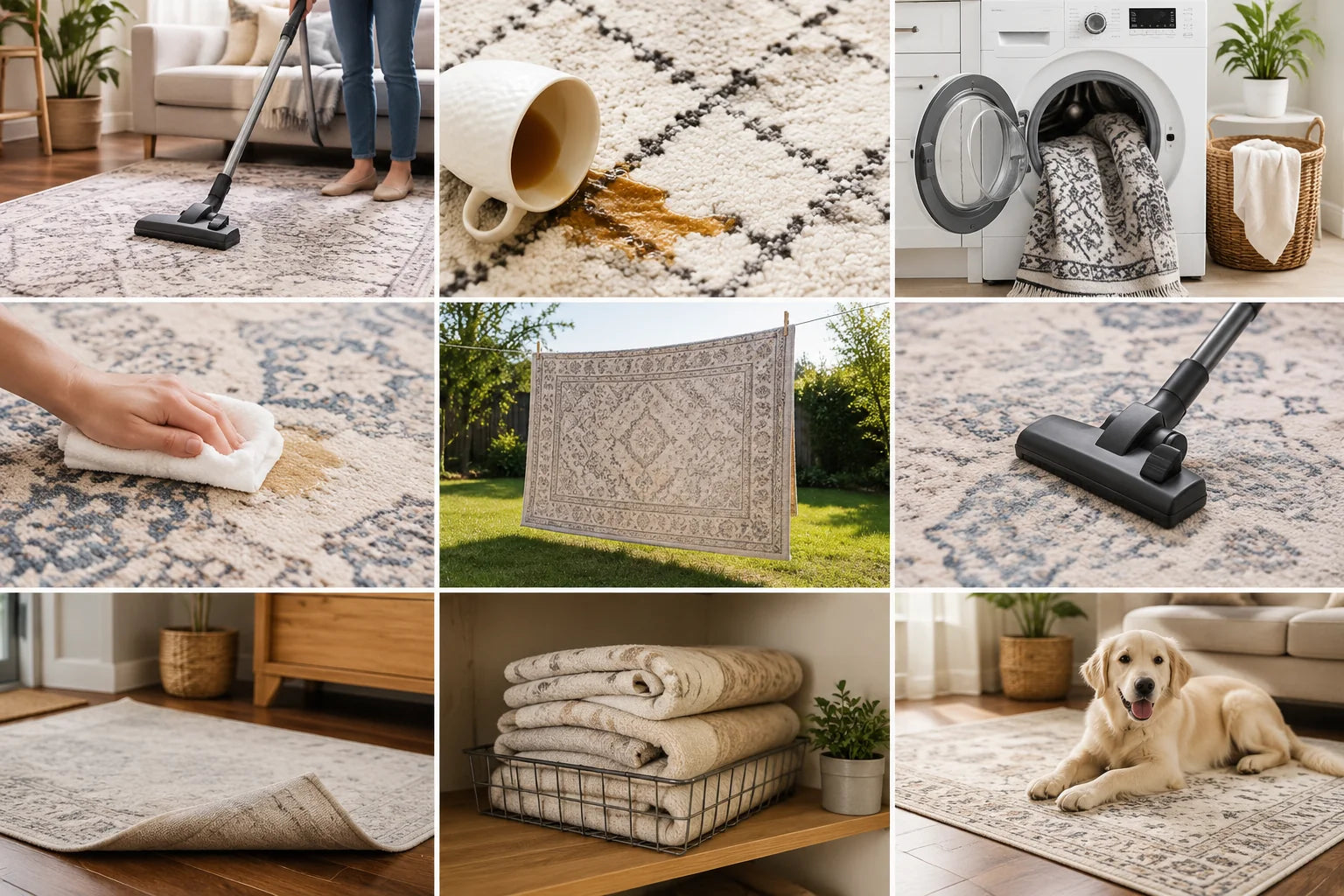
No rug is truly maintenance-free, but the right material keeps care manageable. Vacuum regularly, address spills promptly by blotting rather than rubbing, and rotate the rug periodically to encourage even wear. Wool rugs may shed during their early months, while synthetic constructions may show lint or require a little extra attention in high-use paths.
For meaningful stains or full-room cleaning, professional care is often the safest choice, particularly for wool, viscose, hand-tufted, and specialty constructions. Always follow the care guidance tied to the individual rug. Fiber content and construction should guide cleaning decisions more than a rug’s appearance.
Loloi rugs are most compelling when you choose with a clear sense of how the room is meant to feel. A softly worn traditional rug can bring quiet history to a clean-lined living room. A modern abstract can give a calm bedroom just enough movement. A practical low-pile runner can make an ordinary hallway feel deliberately dressed. With the right size, construction, and rug pad, the result is not simply a pretty floor covering, but a room with greater warmth, balance, and a point of view.

Share:
Do Rug Pads Matter? What They Do for Your Home
Vintage Style Rug Trends for a Layered Home