

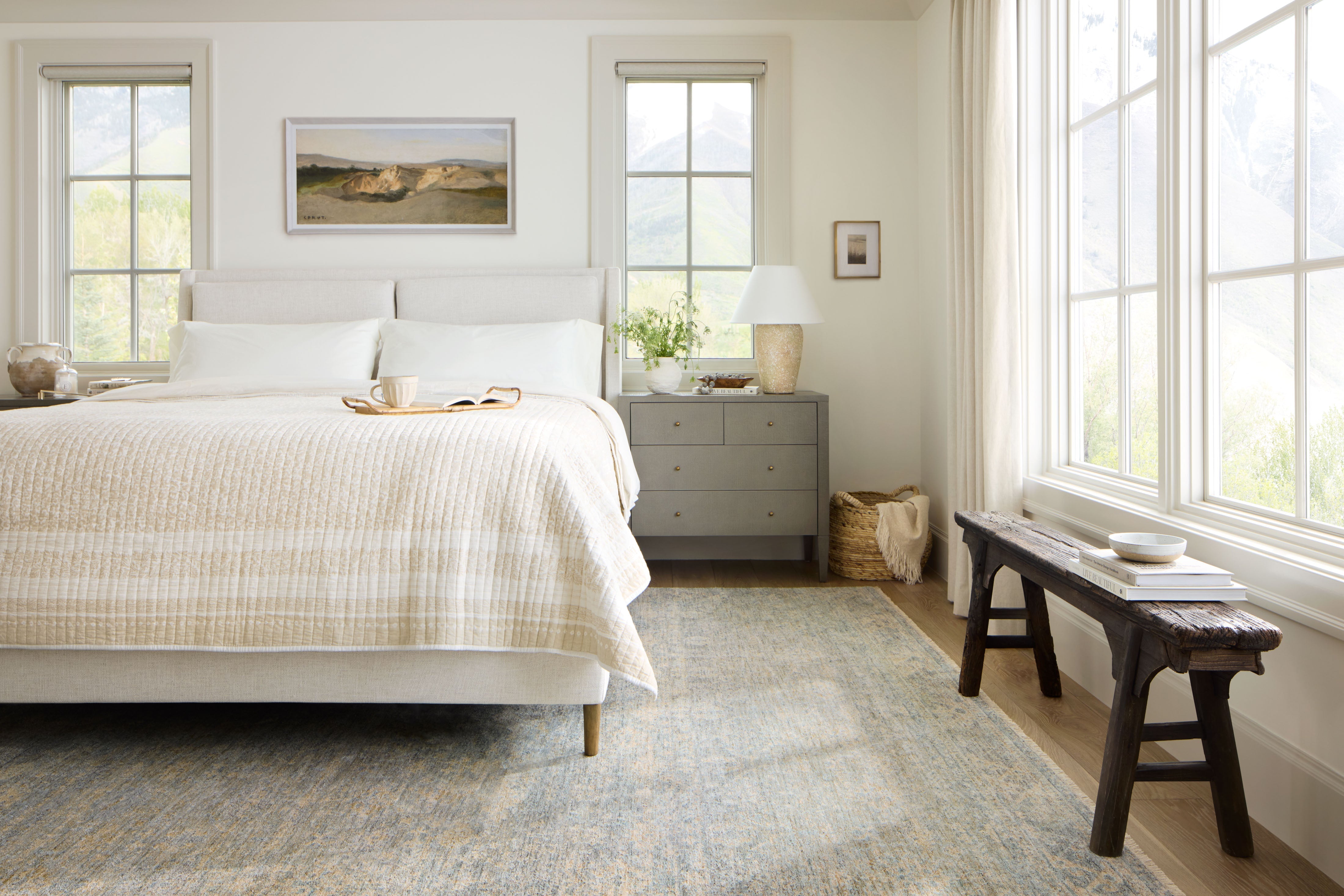
A small room can feel finished or off-balance based on one choice: the rug. When square footage is limited, neutral rugs for small spaces do more than soften the floor. They shape how the room reads, where the eye travels, and whether the whole space feels calm, crowded, or quietly pulled together.
That is why neutral is rarely the safe choice people assume it is. In a compact living room, bedroom, entryway, or studio, the right neutral rug can add structure without visual noise. It can brighten a darker corner, smooth out a busy mix of furniture, and give even a modest footprint a more intentional point of view. The key is choosing a neutral that has presence, not just absence of color.
Why neutral rugs for small spaces make sense
Small rooms benefit from restraint, but they still need personality. A neutral rug creates breathing room around furniture and decor, which matters when every piece is working hard. Cream, ivory, taupe, beige, sand, gray, greige, and warm stone tones tend to feel expansive because they reflect light and keep contrast from becoming too sharp.
That said, not every neutral rug makes a room feel larger. A pale rug can open up a space beautifully, but if it is too close in tone to the floor and walls, the room may lose definition. A darker neutral can anchor a room with more confidence, though in a very tight or dim area it may feel heavier than you want. The sweet spot often comes from subtle contrast - enough to frame the room, not enough to chop it up.
Texture matters just as much as color. In a small room, a flat neutral surface can feel a little cold unless the rug has some character. Think tonal pattern, soft ribbing, low-high pile, heathered yarns, or a lightly distressed finish. These details bring depth without making the room feel busy.
The best color direction for a small room
A neutral palette is broad, and choosing the right branch of it depends on the room itself. Warm neutrals tend to make a space feel softer and more inviting. Ivory, oatmeal, camel, and sandy beige work especially well in bedrooms, cozy living rooms, and homes with wood furniture or warmer paint colors. They bring a gentle glow that reads inviting rather than stark.
Cooler neutrals such as stone, silver-gray, and greige can feel cleaner and more architectural. They suit modern interiors, small dining spaces, and rooms with black accents, glass, or cooler wall colors. If your room gets strong natural light, cooler neutrals can look crisp and refined. In a darker room, they can sometimes read flat, so it helps to look for a rug with visible variation in tone.
One of the most versatile choices is a mixed neutral rug that blends warm and cool notes. A woven pattern with ivory and taupe, or gray and beige, is easy to live with because it bridges different finishes in the room. That flexibility is especially helpful in apartments and smaller homes, where one rug may need to connect several styles at once.
Size is where most small-space rug plans go wrong
The biggest mistake in a small room is usually not choosing a neutral rug. It is choosing one that is too small. A tiny rug floating in the middle of the room makes the footprint feel more fragmented. A better approach is to let the rug support the furniture layout so the room feels grounded.
In a small living room, a rug that allows the front legs of the sofa and chairs to sit on it usually creates a more generous, cohesive look. In a bedroom, a larger rug tucked under the lower two-thirds of the bed often feels more polished than a small accent rug on one side. In a dining nook, the rug should extend enough for chairs to remain on it when pulled out.
There are exceptions. A petite vintage-style neutral rug can be charming in a narrow entry, layered over a larger natural fiber base, or used to define a reading corner. But when the rug is intended to be the main anchor, scaling up almost always serves a small room better than scaling down.
Which rug styles work best in compact interiors
Not all neutral rugs for small spaces create the same effect. Some quietly recede, while others add just enough pattern to keep a room from feeling one-note.
Solid rugs are often the first choice for small rooms because they look clean and calming. They work well when your furniture already carries visual weight, such as tufted upholstery, wood grain, or patterned pillows. A solid rug with tonal variation or a soft sheen tends to feel richer than a completely flat finish.
Subtle patterned rugs are often the smarter choice if the room needs energy. Faded medallions, understated geometrics, borders, and organic linear motifs can make a compact room feel layered and thoughtful without crowding it. The best versions keep contrast low, so the pattern reads as texture from across the room.
Natural-looking weaves are another strong option. Rugs with a sisal-inspired look, understated boucle texture, or handwoven character bring dimension and casual elegance. They are especially useful in small entries, home offices, and sun-filled rooms where texture does a lot of the design work.
Plush rugs can be beautiful in small bedrooms and lounge spaces, but pile height should match real life. A soft, thicker rug adds comfort and luxury underfoot, though it may not be the best fit beneath doors, in dining areas, or in high-traffic zones. Low-pile and easy-care constructions tend to be more practical in hard-working rooms.
How to match the rug to the room, not just the mood board
A beautiful rug still has to function. In small spaces, there is less room to hide a mismatch between style and lifestyle.
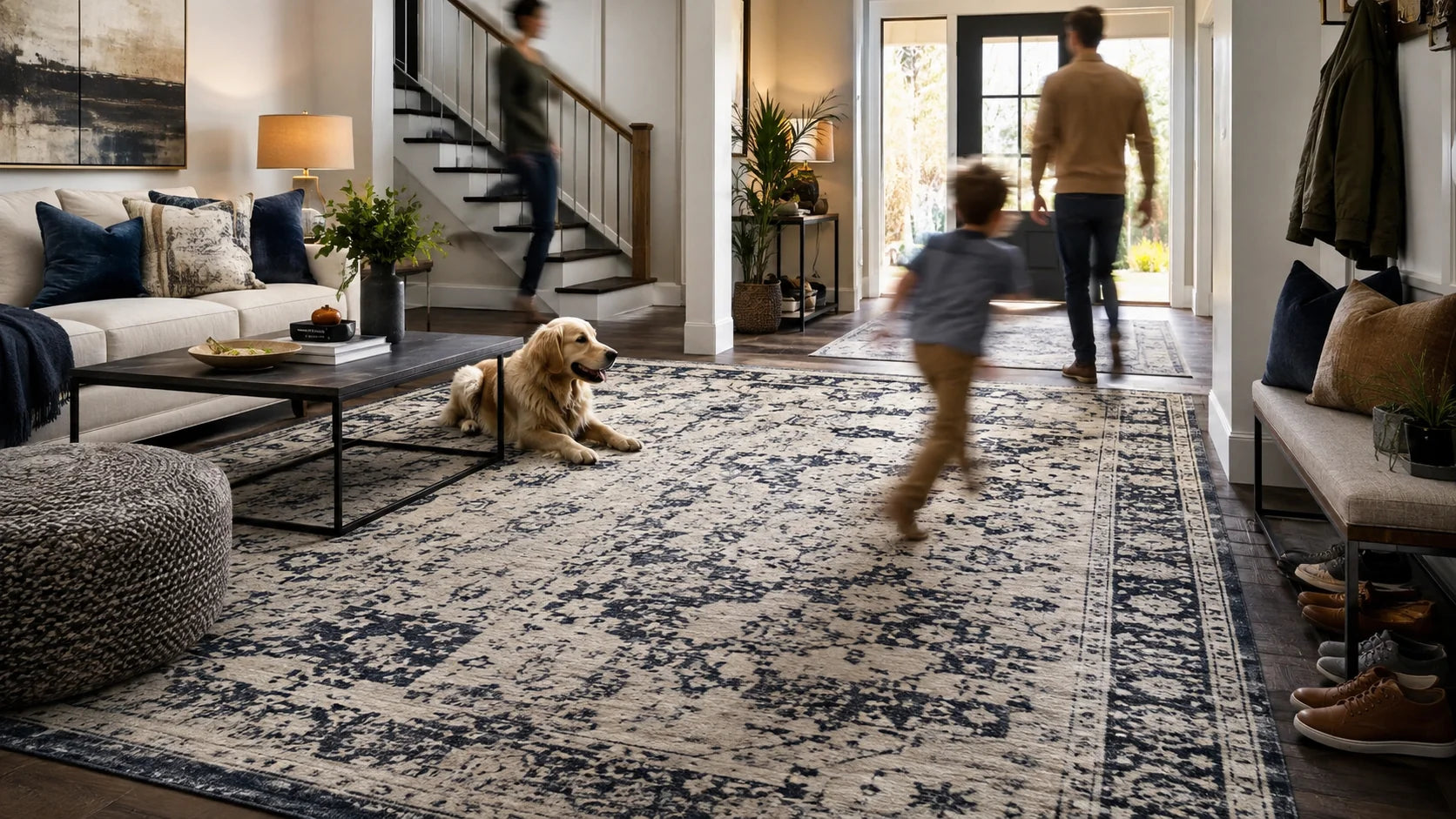
If you are shopping for a busy living room, family room, or entry, durability matters as much as color. A low-pile neutral rug with visual variation will usually disguise everyday wear better than a bright ivory plush style. For homes with kids or pets, a rug that balances softness with easier maintenance can be the more satisfying long-term choice.
In a bedroom, you can lean more into softness and serenity. Warm neutrals, subtle patterns, and a slightly more inviting texture create a restful foundation. In a small apartment bedroom, this kind of rug can also soften the sharp edges of storage furniture and make the room feel less utilitarian.
For studios and open-plan layouts, neutral rugs are especially effective because they define zones without making the space feel chopped up. One rug can anchor a seating area while still blending with the sleeping or dining zone nearby. If the room needs visual separation, a border design or tonal pattern can create that structure gently.
A few practical details that matter online
When buying a rug online, small rooms leave less margin for error, so details count. Pay attention to pile height, material cues, and actual color notes in the product description. A rug described as ivory may lean creamy yellow, soft gray, or pale beige in person, and those undertones affect everything around it.
Customer reviews can be especially useful for small-space shopping because they often reveal whether the rug reads lighter or darker in real homes, how it performs in traffic, and whether the texture feels as expected. In-stock visibility, fast shipping, and a comfortable return window also make the process easier when timing matters or you are trying to coordinate several pieces at once.
This is where a design-led retailer can make the search feel less overwhelming. Curated assortments, clear room styling, and practical specifications help narrow the field from hundreds of rugs to the ones that genuinely suit your space.
The quiet power of a well-chosen neutral rug
The best neutral rug does not disappear. It steadies the room. It gives the eye a place to rest, lets your furniture feel more considered, and brings warmth that square footage alone cannot provide. In a small space, that kind of quiet clarity is not a compromise. It is often what makes the room feel complete.
If you are choosing with both beauty and daily life in mind, trust the rug that makes the room feel lighter, calmer, and more connected the moment you picture it in place. That is usually the one worth bringing home.

Share:
How to Style Rugs by Color at Home
How to Find Designer Rugs for Less