

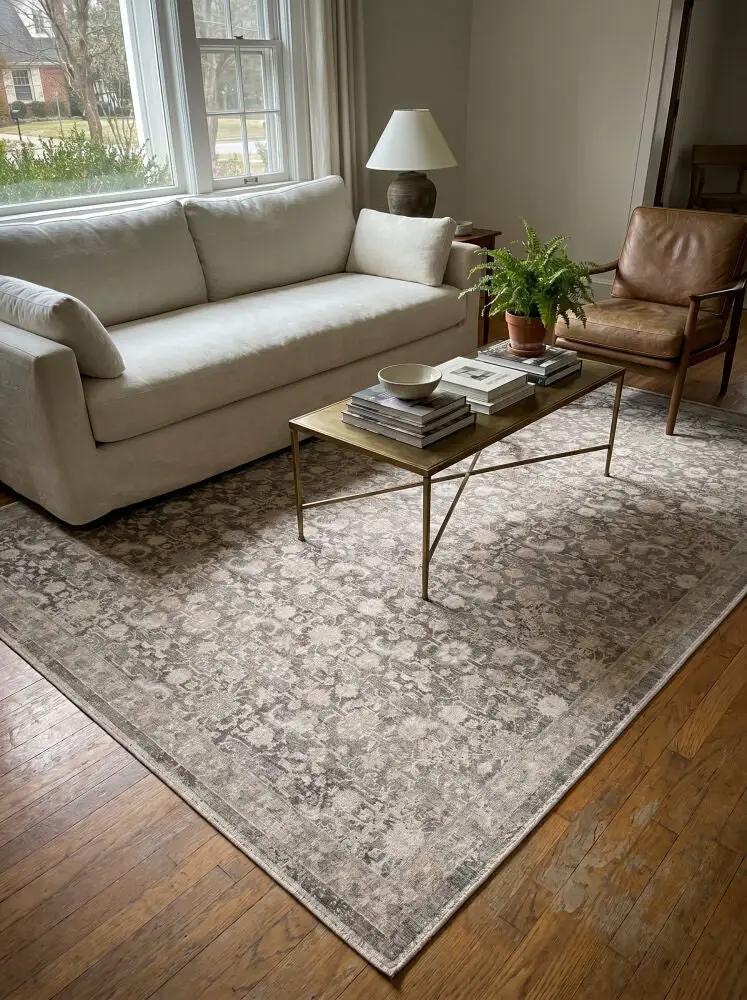

A beautiful rug can set the entire mood of a room, but rug pad thickness determines much of what you feel underfoot every day. The right pad gives a living room rug a grounded, luxurious presence, helps a bedroom feel softer at first step, and keeps a hallway runner securely in place. The wrong one can create door-clearance issues, make furniture feel unsteady, or add more cushion than a space really needs.
Choosing a pad is less about finding the thickest option and more about matching the pad to the rug, the floor, and the life happening around it. A slim pad can be exactly right for a busy entry. A thicker option can make a low-pile rug feel beautifully inviting. Here is how to choose with both comfort and practicality in mind.
What Rug Pad Thickness Really Changes
Rug pads do more than prevent slipping. They create a protective layer between your rug and flooring, reducing friction that can wear down fibers and finishes over time. They also help a rug lie flatter, soften sound in active rooms, and add a more substantial feel to lightweight constructions.
Thickness is the element that changes the experience most noticeably. A thinner pad offers grip and protection with very little added height. A thicker pad creates more cushioning, which can make a room feel warmer and more comfortable, especially with a flatweave, vintage-style, or low-pile rug.
That added height comes with trade-offs. A plush pad may be wonderful beneath a bedroom rug, yet less practical beneath a dining table where chairs need to glide and sit evenly. It can also raise the rug enough to interfere with doors or create a more pronounced edge in a narrow passageway.
Rug Pad Thickness by Room
The best choice often begins with the room rather than the rug alone. Consider how people move through the space, what sits on top of the rug, and whether doors, drawers, or furniture legs need extra clearance.
Living Rooms: Comfort With a Grounded Feel
For most living rooms, a medium-thickness rug pad offers the most balanced result. It adds welcome softness for lounging, playing on the floor, or resting bare feet after a long day, without making a seating arrangement feel unstable. This works especially well under low- to medium-pile area rugs, where the pad can add a softer, more layered finish to the room.
If your rug already has a deep, dense pile, a thinner pad may be the better pairing. Too much combined height can make sofas and coffee tables feel slightly less anchored. The goal is a comfortable landing underfoot, not a surface that feels overly springy.
Bedrooms: A Softer First Step
Bedrooms are one of the best places to consider a thicker cushion pad, particularly under a flatwoven wool rug, a refined neutral rug, or a low-profile design with an artful pattern. The additional softness makes the space feel more serene and considered, even before the rest of the room comes together.
A thicker pad works well when the rug sits beside or beneath the bed and is not supporting a large concentration of heavy furniture. If the entire bed frame rests on the rug, choose a quality pad with enough density to support the weight without compressing too dramatically over time.
Dining Rooms: Keep It Low and Stable
Dining rooms call for a lower-profile choice. Chairs need to move across the rug without catching at the edge, wobbling, or sinking into excessive cushioning. A thin, firm pad provides the floor protection and rug stability you want while preserving a smooth surface for everyday meals and special gatherings.
This is particularly true for rugs under round dining tables, where chairs move in multiple directions. A pad that is too thick can make the room feel less polished in use, even if it initially feels luxurious underfoot.
Hallways, Entries, and Kitchens: Prioritize Safety
Runners and smaller rugs in high-traffic areas usually benefit from a thin, non-slip pad. In a hallway, the goal is secure footing and a low profile that does not interrupt the natural flow from one room to the next. At an entry, a thinner pad helps reduce the risk of a raised edge while supporting the rug through daily arrivals, shoes, pets, and bags.
Kitchen rugs follow a similar logic. A little cushion can be pleasant while standing at the counter, but the pad should remain slim enough to avoid catching toes or conflicting with nearby cabinet doors.
How Thick Is Too Thick?
There is no single measurement that suits every room, but a practical range helps narrow the choice. Thin rug pads are often around 1/16 to 1/8 inch thick and are ideal for grip, floor protection, and low-clearance areas. Medium pads are commonly around 1/4 inch, offering a comfortable lift for many living spaces. Thicker cushioned pads may reach 3/8 inch or more and are best reserved for rooms where softness matters more than furniture movement or door clearance.
Before choosing, measure the gap beneath nearby doors. This quick check can prevent a frustrating surprise after you place your rug. Also consider the total height of the rug and pad together. A low-pile rug paired with a 1/4-inch pad can feel inviting and tailored. A high-pile rug paired with the same pad may feel much taller than expected.
Furniture is another deciding factor. Heavy pieces can sit comfortably on a dense, thinner pad, while lightweight accent tables may become less stable on a highly cushioned option. If only the front legs of a sofa sit on the rug, try to keep the surface level and supportive so the arrangement retains its intentional, balanced look.
Match the Pad Material to Your Flooring
Thickness matters, but material matters just as much. A rug pad should be compatible with the floor beneath it, particularly on hardwood, engineered wood, laminate, luxury vinyl, and finished tile. Look for pads made with materials intended to protect hard-surface floors and avoid anything that may discolor, adhere to, or leave residue on the finish.
Natural rubber and felt combinations are popular because they pair cushioning with grip. Felt provides the soft, insulating layer, while rubber helps keep the rug from shifting. For a very thin need, a low-profile non-slip pad can provide practical stability without meaningfully changing the rug’s appearance or height.
On wall-to-wall carpet, the purpose changes. You do not need a non-slip surface in the same way, but a pad can still help prevent a rug from creeping, wrinkling, or bunching. Choose a pad designed for carpet-on-carpet use and favor a low profile so the rug remains smooth and secure.
Size Matters as Much as Thickness
Even the right pad will not perform well if it is too large. A rug pad should sit slightly inside the rug's perimeter, usually about one inch on each side. This keeps the pad hidden, helps the rug’s edges taper naturally toward the floor, and avoids a visible ridge around the border.
For runners and smaller accent rugs, precise sizing is especially valuable. When the pad extends too close to the edge, it can make a rug look lifted rather than artfully placed. A neatly sized pad lets the rug’s color, texture, and border details take center stage.
A Few Signs Your Current Pad Needs Replacing
A rug pad is easy to overlook because it is out of sight, but it deserves attention when your rug starts shifting, curling, or feeling uneven. If the pad has flattened significantly, developed brittle areas, transferred residue, or no longer holds the rug in place, it is time for a fresh layer of support.
You may also notice that a room no longer feels as comfortable as it once did. Replacing a worn pad can revive the feel of an existing rug, helping it lie smoothly and feel more substantial without changing the design you already love.
The most successful rooms balance visual beauty with the details that make a home easy to live in. Choose a rug pad that supports how you use your space, and your favorite rug will feel as good as it looks.

Share:
How to Shop Rugs by Room With Confidence
Why Do Rugs Shed? What’s Normal and What Isn’t