

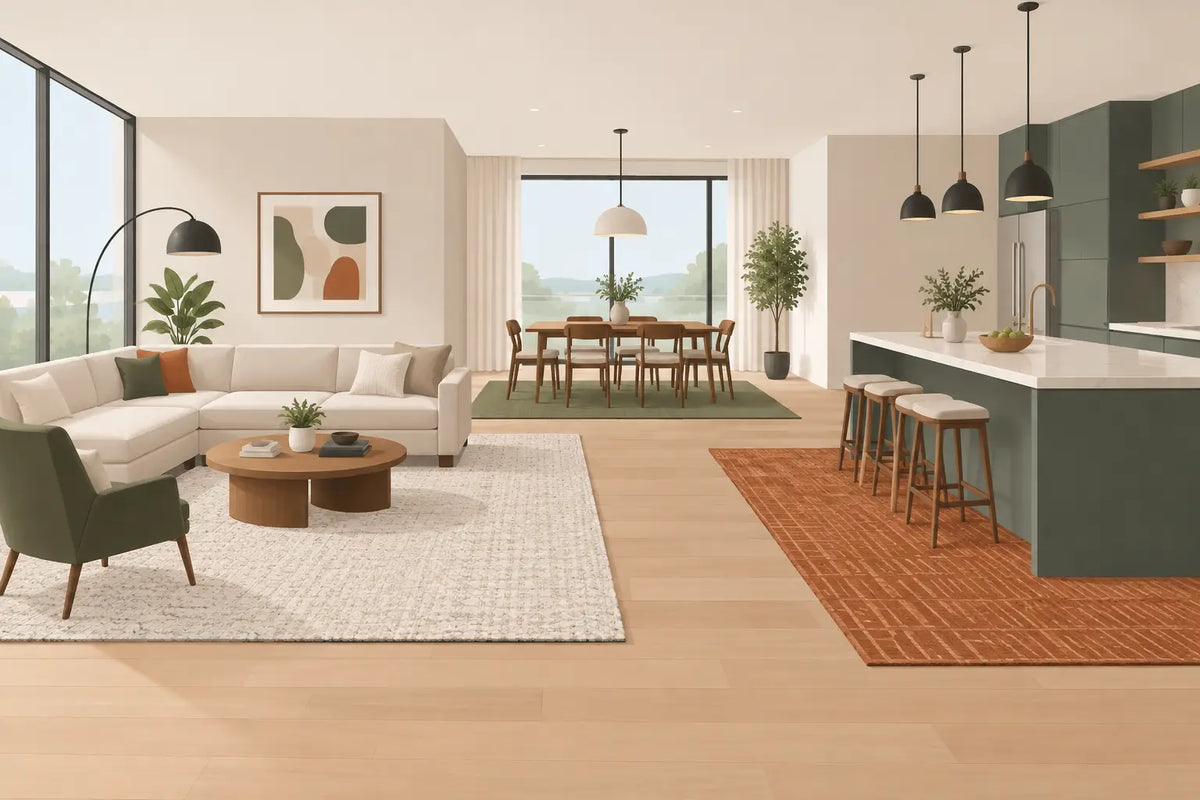
A floating sofa, a dining table in full view, and a kitchen that opens directly into both can make a home feel wonderfully expansive. It can also make every furnishing decision more visible. Rugs for open floorplans bring order to that openness, giving each activity its own sense of place without interrupting the light, movement, or easy conversation that make an open layout so appealing.
The right rug does more than soften the floor. It establishes a living area, grounds a dining table, creates a quiet reading corner, and carries color from one zone to the next. The goal is not to cover every inch of flooring. It is to create a home that feels intentionally connected rather than loosely furnished.
How Rugs for Open Floorplans Define Each Zone
In a room with walls, architecture naturally tells you where one space ends and another begins. In an open floorplan, the rug often does that work. A large area rug beneath the sofa and chairs signals that this is the place to gather. A second rug beneath the dining table gives meals their own setting. A runner can guide the eye through a wide passage or soften the path between kitchen and living room.
Think of these rugs as visual boundaries, not barriers. There should be enough distinction for each zone to feel purposeful, but the entire space should still read as one story. A living room rug might hold the room's largest pattern, while the dining rug echoes one of its quieter colors. Or, a textured neutral in the dining area can let a more expressive living room rug take the lead.
The biggest mistake is treating every rug as an isolated purchase. Before choosing any one design, stand where you can see the whole room. Notice the repeated finishes, from wood tones and cabinet color to upholstery, window treatments, and artwork. Those details will help you create connection without making every rug identical.
Start With Layout, Then Choose Size
A beautiful rug that is too small can make an open room feel fragmented. In most living zones, the rug should be large enough to anchor the front legs of the sofa and accent chairs at minimum. If the room allows, placing all furniture legs on the rug creates an especially tailored, generous look.
For a standard seating arrangement, an 8-by-10 or 9-by-12 rug often gives the furnishings enough presence. Larger great rooms may need a 10-by-14 rug or a custom-feeling arrangement of multiple well-proportioned rugs. Leave a visible border of flooring around the edges so the room still feels open and the rug reads as an intentional composition.
Dining rugs have a simple rule: allow at least 24 inches beyond the table on all sides. That extra room lets chairs slide out without catching on the rug edge. Measure with chairs pulled back, not tucked in. A rug that looks appropriately sized under a table can quickly feel undersized once dinner guests sit down.
Round rugs can be particularly lovely beneath a round dining table, in an entry moment, or under a small conversation area. They soften a room filled with rectangular cabinetry, islands, and windows. Just make sure the shape supports the furniture arrangement rather than competing with it.
Let furniture lead the placement
Avoid centering a rug only in the room's overall footprint. In an open layout, the center of the floor is not always the center of the living zone. Instead, center the rug on the sofa, fireplace, media wall, or main seating arrangement. This makes the arrangement feel settled, even when the space itself is expansive.
If the back of a sofa faces the dining area or kitchen, a rug beneath it is especially useful. It gives the sofa a visual foundation and makes the transition feel designed from every angle.
Build Connection Without Buying Matching Rugs
Matching rugs can make an open space feel overly coordinated, particularly when both are large. A more collected approach uses rugs that share a design thread: a common color family, similar warmth, related patterns, or compatible texture.
For example, a traditional-inspired rug in muted terracotta, ivory, and soft blue can sit beautifully near a subtle striped or solid rug in warm ivory. A modern geometric rug can pair with a low-contrast abstract design if both feature the same charcoal, sand, or olive notes. The rugs do not need to be from the same collection to feel harmonious.
Choose one rug to be the visual anchor. This is usually the larger living room rug, since it is seen from the widest range of sightlines. Let the neighboring rug play a supporting role with a quieter pattern, more restrained palette, or lower contrast. When both rugs are highly detailed and equally bold, the room can start to feel visually busy.
Texture is another graceful way to create continuity. A wool-blend rug with gentle movement in the living area can pair with a flatwoven dining rug in a related neutral. The materials differ in performance, but the shared warmth keeps the room cohesive.
Choose Materials for How Each Zone Is Used
Open floorplans often concentrate daily life in a few hardworking areas. A rug near the kitchen may receive crumbs, splashes, and frequent foot traffic. The dining space needs a surface that handles chair movement well. The living room may call for softness underfoot, especially in a home where movie nights, playtime, and relaxed weekends all happen in the same place.
Low-pile and flatwoven rugs are practical choices beneath dining tables because chairs move more easily across their surface. They also tend to make cleanup less intimidating. In busy homes, washable options and performance fibers offer welcome reassurance in areas that see spills, pets, or little feet moving through all day.
For the living zone, a medium-pile rug can add comfort and a more layered feeling. Wool is valued for its naturally resilient character and rich texture, while synthetic fibers can offer durability, color clarity, and accessible everyday care. There is no single best material for every open plan. The right choice depends on where the rug will sit and what happens there most often.
A rug pad is worth considering beneath every large area rug, especially on hard flooring. It adds cushioning, helps prevent shifting, and supports a more polished appearance by keeping edges smooth and corners in place. Select a pad slightly smaller than the rug so it stays hidden from view.
Use Color to Direct the Eye
An open floorplan gives color more reach. A deep navy, clay red, or bold botanical pattern does not stay contained in one room when there are few walls. That can be a beautiful advantage, but it is worth choosing with the full visual field in mind.
If your kitchen has a strong island color, bring a small accent from it into the living room rug. If the dining chairs are black, a rug with a fine charcoal detail can create a subtle bridge. Repetition does not have to be literal. A warm beige rug can connect to cream upholstery, oak floors, brass lighting, and natural woven shades all at once.
For homes that need more calm, choose rugs in related neutrals with different undertones and textures. Layered shades of ivory, oatmeal, taupe, and soft gray can feel tranquil rather than flat when pattern scale and pile variation are considered. In this setting, one rug with gentle movement may be all the visual interest the room needs.
Respect Walkways and Everyday Movement
A floorplan can look balanced on paper but feel awkward if the rugs interrupt how people actually move through it. Keep primary paths clear between the kitchen, dining table, seating area, and exterior doors. A rug should define a destination, not become an obstacle course between destinations.
Where a walkway needs softness or visual guidance, a runner is often more effective than extending a large rug into the path. Choose a runner with enough width to feel substantial, but leave a breathing room of visible floor along both sides. This creates a pleasing corridor effect without narrowing the room.
Pay attention to door clearance, too. Flatwoven and low-profile rugs are often the easiest choice near doors, bar stools, and rolling furniture. In homes with pets or children, secure corners and non-slip pads become part of the design decision, not an afterthought.
Give the Room a Layered, Lived-In Finish
The most inviting open spaces rarely look as though everything arrived at once. A thoughtfully chosen rug can make a newer home feel grounded, give a rental more personality, or add warmth to a room with sleek finishes. Consider the mood you want each zone to hold: restful and tonal, lively and social, tailored and timeless, or relaxed with global character.
When shopping, use your measurements first, then narrow by the colors, pile height, and traffic needs that fit your household. Seeing a rug in a carefully styled image is helpful, but the dimensions and material details are what determine how beautifully it will live in your home. Rug Resources makes that process easier with curated styles designed for every kind of gathering space, from polished dining areas to family-friendly great rooms.
A well-placed rug gives an open floorplan something walls cannot: a sense of intimacy that still leaves room to breathe. Let each zone have its own character, then choose the threads of color, texture, and scale that make the whole home feel like it belongs together.


Share:
Runner Rugs That Make Every Hallway Feel Designed
Anchoring Furniture With Rugs That Fit the Room